
Blog
T.J. McConnell, an Indiana Pacers point guard, has astonished the sports world with a selfless act that goes beyond the game of basketball. After signing his NBA deal, T.J. McConnell took the daring and humane decision to give his full $20 million signing bonus to eliminate homelessness across the United States. The move has been regarded as one of the most kind gestures ever by a professional athlete

T.J. McConnell Donates Entire $20 Million Signing Bonus to End Homelessness in the U.S.
T.J. McConnell, the trusted point guard for the Indiana Pacers, has sent shockwaves through both the sports and humanitarian communities with an unprecedented act of generosity. After inking a lucrative NBA contract, McConnell made the heartfelt decision to donate his entire $20 million signing bonus to fight homelessness across the United States.
The announcement was made shortly after the details of his new contract were released. While the NBA world was buzzing about the financial terms of the deal, few could have anticipated the life-changing commitment that McConnell was preparing to make off the court.
Rather than celebrating his success in traditional fashion, McConnell chose to make an immediate impact on a national issue that has long needed attention. His decision to give away such a massive sum is being hailed as one of the most compassionate gestures in modern sports history.
The funds are being allocated directly to non-profit organizations, housing initiatives, and community development programs aimed at providing permanent shelter, support services, and rehabilitation for unhoused individuals and families.
McConnell emphasized that the gesture wasn’t about publicity or accolades, but rather a sincere desire to use his platform and resources to bring about tangible change. In interviews, he expressed that witnessing the daily struggles of unhoused people had left a lasting impact on him.
“I don’t want to be just another athlete with money,” McConnell stated. “I want to be someone who made a real difference. No one should have to sleep on sidewalks or in shelters night after night.”
This act of generosity has drawn praise from fans, fellow athletes, political leaders, and social workers alike. Many have called it a defining moment in how sports figures can leverage their influence for meaningful causes.
McConnell’s contribution is expected to create thousands of housing units in cities heavily affected by homelessness, including Los Angeles, New York City, Seattle, and Chicago. Local governments have expressed willingness to partner with the initiative to expand its reach.
Several national non-profits confirmed that McConnell’s donation is the single largest private contribution they have ever received from an individual athlete. Many are now planning to scale up operations and launch new initiatives made possible by his gift.
NBA Commissioner Adam Silver released a statement applauding McConnell, calling the act “inspirational” and “a powerful reminder that the spirit of giving knows no boundaries.” The league has also expressed interest in supporting the cause through its own charitable arms.
McConnell’s teammates were reportedly moved by the announcement, with several stating they have been inspired to pursue their own philanthropic ventures. The ripple effect of his action is already beginning to influence the locker room and beyond.
Media outlets have flooded the story with positive coverage, drawing attention to the growing crisis of homelessness in America and how collective efforts can help alleviate the burden. McConnell has declined major interviews, choosing to let the work speak for itself.
What makes this gesture even more remarkable is that it wasn’t pre-arranged or incentivized. McConnell reportedly made the decision privately and informed his financial team only after the deal had been finalized.
His family, known for its modest values and emphasis on empathy, supported the decision wholeheartedly. Friends and mentors say that giving back has always been a central part of McConnell’s personal philosophy.
Social media has erupted with messages of admiration and thanks, with hashtags like #McConnellCares and #EndHomelessnessNow trending nationally. Thousands of people, including those who have experienced homelessness, have expressed gratitude for his selfless act.
This moment has sparked a larger conversation about how athletes and celebrities can use their wealth and visibility to address systemic social issues. McConnell’s action is serving as a blueprint for others with means and influence.
While homelessness is a deeply complex issue, experts agree that large-scale funding directed toward permanent housing and support services can significantly reduce the number of people living without shelter.
McConnell has expressed hopes that others in professional sports and business will join the effort, stating, “This isn’t just about writing a check. It’s about building a movement that makes compassion a priority in our country.”
The Indiana Pacers organization has stood firmly behind their player, issuing a statement recognizing the gesture and pledging to support local housing initiatives in Indianapolis as part of McConnell’s larger vision.
As the NBA season continues, McConnell remains focused on basketball, but his legacy now extends far beyond the hardwood. With this one act, he has reshaped the narrative around what athletes can contribute to society.
T.J. McConnell may never lead the league in points or assists, but with his bold, compassionate gesture, he’s secured a different kind of greatness—one that will change lives, restore dignity, and bring hope to those who need it most.
Why Basketballs Are Orange: The Vision of Tony Hinkle from Logansport, Indiana
The distinctive orange color of the modern basketball is often taken for granted, but its origin traces back to one of Indiana’s most influential sports figures, Paul D. “Tony” Hinkle. A native of Logansport, Indiana, Hinkle revolutionized the visibility and design of basketball equipment, leaving a legacy that still impacts the sport today.
Born to Edgar Clayton and Winnie Hinkle, Tony Hinkle displayed athletic promise from an early age. After completing high school at Calumet High School in Chicago in 1917, he enrolled at the University of Chicago. During his college years from 1917 to 1921, he excelled as a three-time letterman in basketball and was named to the Helms All-America team in both 1919 and 1920.
As a college player, Hinkle also helped lead his team to a Big Ten Conference championship in the 1919–20 season. Although they narrowly missed the national title, losing to Penn, Hinkle’s leadership and competitive spirit were already evident. Twice named an All-Big Ten player and team captain, he began establishing himself as a figure destined for coaching greatness.
Hinkle’s journey with Butler University began in 1921, when he joined the institution while it was still located at its Irvington campus. The university would move to its Fairview Park campus in 1928, marking a new era for both Butler and Hinkle’s coaching career.
Over nearly 50 years, Tony Hinkle served Butler as an athletic administrator, teacher, and coach across football, basketball, and baseball. Yet it was basketball where he left his most lasting mark, developing a reputation for leading underdog teams with fearless determination and strategic brilliance.
One of the crowning achievements of his coaching career came in 1929 when he led the Butler Bulldogs to a 17–2 record and a national championship. Under his leadership, Butler earned the nickname “Big Ten killers” for consistently toppling major conference opponents.
Over the course of his career, Hinkle’s basketball teams recorded 560 victories and 392 losses, while his total coaching wins across all sports approached 1,000. These numbers alone speak to his excellence and adaptability as a coach in multiple athletic disciplines.
Yet perhaps his most universally recognized contribution to the sport came in the late 1950s when he addressed a simple but significant problem: basketball visibility. Up until that time, most basketballs were a dull brown, which Hinkle believed made them difficult for players and fans to track during games.
Always a forward thinker, Hinkle envisioned a brighter, more visible ball that would enhance gameplay and viewing. Collaborating with the Spalding Company, he set out to design a ball that could easily be seen from every corner of the court.
The result of this partnership was the now-iconic orange basketball, first introduced at the 1958 NCAA Finals in Louisville, Kentucky. The bright orange hue quickly caught on due to its improved visibility and aesthetic appeal.
The NCAA embraced the new ball, and it wasn’t long before basketball organizations across the country followed suit. Today, the orange basketball is standard at nearly all levels of competition, a tribute to Hinkle’s vision and ingenuity.
Beyond the orange basketball, Hinkle’s influence extended to the very strategy of the game. He developed the “Hinkle System,” an innovative offensive approach built on motion, passes, screens, and picks that became a model for coaches nationwide.
Over 200 high school and collegiate coaches who trained under Hinkle carried his methods into their own programs, spreading his teachings across generations of players and coaches.
Hinkle’s stature in the sport was recognized through numerous leadership positions, including a term as President of the National Association of Basketball Coaches from 1954 to 1955. He also served on the board and chaired the National Basketball Committee’s Rules Committee for the U.S. and Canada.
His contributions were acknowledged with some of the highest honors in the sport, including induction into the Indiana Basketball Hall of Fame in 1962, the Naismith Memorial Basketball Hall of Fame in 1964, and the Indiana Football Hall of Fame in 1974.
On the campus of Butler University, Hinkle’s legacy is physically represented by Hinkle Fieldhouse, formerly Butler Fieldhouse, one of the most iconic basketball venues in America. Renamed in his honor in 1966, it was once the largest basketball arena in the country and famously featured in the movie Hoosiers.
Hinkle remained an integral part of Butler’s athletics program until his retirement in 1970, after 41 seasons as head basketball coach. His life and career continued to inspire long after his passing in 1992.
Today, Tony Hinkle rests alongside his wife, Jane Murdock Stewart Hinkle, at Crown Hill Cemetery in Indianapolis. Yet his legacy lives on in every pass, dribble, and shot made with an orange basketball—a symbol of clarity, innovation, and one man’s enduring love for the game.
-
 Blog7 months ago
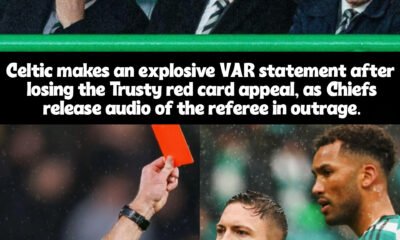
Celtic issues a fiery VAR statement after Trusty’s red card appeal is dismissed, as furious chiefs release referee audio publicly.
-

 Blog3 weeks ago
Former official calls on SFA to contact Rangers over fan scenes during Celtic match, labeling them “completely unacceptable.”
-

 Blog8 months ago
Celtic informed their January signing under Martin O’Neill that he wouldn’t play a single minute this season.
-
 Blog7 months ago
Celtic issued an £83 million warning amid looming UEFA threats.
-

 Blog7 months ago
SFA Expected to Review Missed Penalty in Rangers v Celtic Clash
-

 Blog6 months ago
Police respond after reported disorder following Middlesbrough vs Millwall clash
-

 Blog2 weeks ago
Middlesbrough receive a warning following Steve Gibson’s submission of a £1.5bn proposal.
-
 Blog1 year ago
“Courtside to Aisle-Side: Tyrese Haliburton and Jade Jones Set New Wedding Date”