
Blog
“What Do You Think About Marrying Him After the Olympic Season?” Mikaela Shiffrin Answers the Question of Her Future

By any measure, Mikaela Shiffrin has lived her life at full speed. But when the conversation turns from medals to marriage, from finish lines to forever, the greatest skier of her generation pauses—not out of uncertainty, but out of intention.
Love Asked at the Finish Line
The question came softly, almost cautiously, as if the person asking knew it carried the weight of more than curiosity.
What do you think about marrying him after the Olympic season?
For an athlete whose life has been measured in hundredths of a second, whose greatness has been debated in statistics and history books, the question wasn’t about timing on snow. It was about timing in life.
Mikaela Shiffrin didn’t smile nervously. She didn’t deflect. She didn’t rush an answer.
Instead, she answered like someone who has learned—through triumph and heartbreak—that the most meaningful decisions deserve patience, honesty, and courage.
Her response was not a headline-grabbing declaration or a fairytale promise. It was something deeper. Something truer.
A Heart That Has Known Pressure and Pain
To understand Shiffrin’s answer, you have to understand the road she has walked.
She grew up under the weight of expectations that would crush most people. A prodigy. A champion before she was fully grown. A name spoken with reverence long before she had the chance to discover who she was outside the gates and bib numbers.
And then came loss.
The sudden death of her father changed everything. It cracked open a part of her life that had always been protected by routine and certainty. For the first time, skiing—her sanctuary—felt fragile. Life felt fragile.
Love, during moments like that, stops being abstract. It becomes essential.
So when Mikaela speaks about her future now—about partnership, commitment, and the possibility of marriage—she speaks as someone who understands how precious stability truly is.
“Right Now, My Focus Is Still the Mountain”
Her answer begins where her life has always begun: with purpose.
She made it clear that the Olympic season demands everything she has—physically, emotionally, mentally. This is not just another chapter in her career. It may be one of the final ones. Every training run matters. Every decision carries weight.
“I owe it to myself,” she has said in different ways over time, “to be fully present where I am.”
For Mikaela Shiffrin, presence is not avoidance. It is respect. Respect for the sport that shaped her. Respect for the goals she has chased since childhood. Respect for the woman she has become.
Marriage, she suggests, should never compete with purpose. It should walk beside it.
Love That Understands the Cost of Greatness
What makes her answer quietly romantic is not what she promises—but what she protects.
She speaks of her partner not as a distraction, but as a source of grounding. Someone who understands that greatness demands sacrifice. Someone who doesn’t ask her to choose between love and ambition.
That kind of love doesn’t need a deadline.
It doesn’t need an Olympic calendar to define it.
Instead, it waits. It supports. It grows.
And in that patience, there is something profoundly intimate.
After the Olympics, a Different Kind of Finish Line
When Mikaela allows herself to imagine life after the Olympic season, her tone shifts—not into uncertainty, but into openness.
She doesn’t rule out marriage. She doesn’t rush toward it either.
She talks about wanting to feel the next chapter before she names it.
After years of chasing podiums, she knows what it’s like to cross a finish line and immediately be asked, What’s next?
This time, she wants to answer on her own terms.
She wants space to breathe. To rest. To be more than an athlete. To wake up without a stopwatch defining the day.
And in that space, she admits, love could take on a new shape.
Romance Rooted in Reality
What makes Shiffrin’s response so compelling is that it isn’t built on fantasy.
She doesn’t talk about fairy tales or perfect moments. She talks about timing. Emotional readiness. Shared understanding.
She talks about wanting a marriage that begins from calm—not exhaustion.
From choice—not pressure.
From wholeness—not sacrifice.
That is romance grown from experience, not naivety.
Determination That Extends Beyond Sport
There is a quiet determination in how she speaks about her future—one that mirrors the same resolve that carried her through injury, loss, and unimaginable pressure.
She refuses to let the world dictate when her life milestones should happen.
Just as she refused to let doubt define her skiing, she refuses to let expectation define her love.
Marriage, she implies, is not an escape from competition. It is not a reward for finishing a career.
It is a commitment that deserves the same discipline, focus, and respect she has always given her craft.
A Woman Choosing Her Own Pace
In a sports world that often rushes athletes from one role to the next—champion, retiree, spouse, symbol—Mikaela Shiffrin is doing something radical.
She is slowing down.
Not because she lacks confidence.
But because she finally has enough of it.
She trusts herself to know when the moment is right. She trusts her partner to walk with her through uncertainty. She trusts that love doesn’t expire just because the Olympics demand her attention now.
The Most Important Gold Medal Is Still Ahead
When the Olympic season ends, Mikaela Shiffrin will still be Mikaela Shiffrin.
A legend. A daughter. A woman who has learned how to carry joy and grief in the same heart.
If marriage comes after that, it will not be because the calendar allowed it.
It will be because her heart was ready.
And perhaps that is the most powerful answer she could give.
Not a yes.
Not a no.
But a reminder that some finish lines are worth waiting for.
Lindsey Vonn: 5 Qualities That Make Me the Best in This World Cup Super-G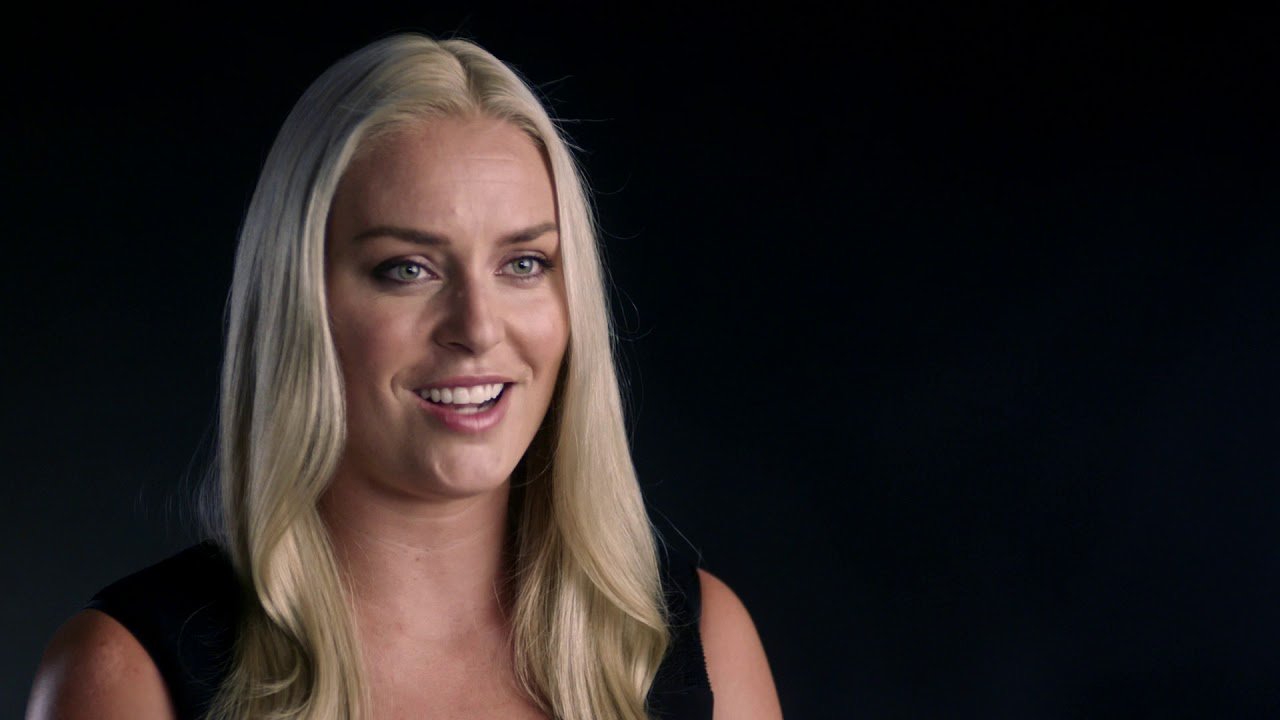
Lindsey Vonn, the four-time overall World Cup champion and Olympic gold medalist, has long been synonymous with speed skiing excellence. At 41, she continues to defy age and expectations, consistently placing at the top in downhill and super-G races. Sitting down with Vonn after her recent second-place finish in the World Cup super-G at Tarvisio, Italy, she spoke candidly about what keeps her competitive at the highest level and what qualities she believes give her the edge over younger rivals.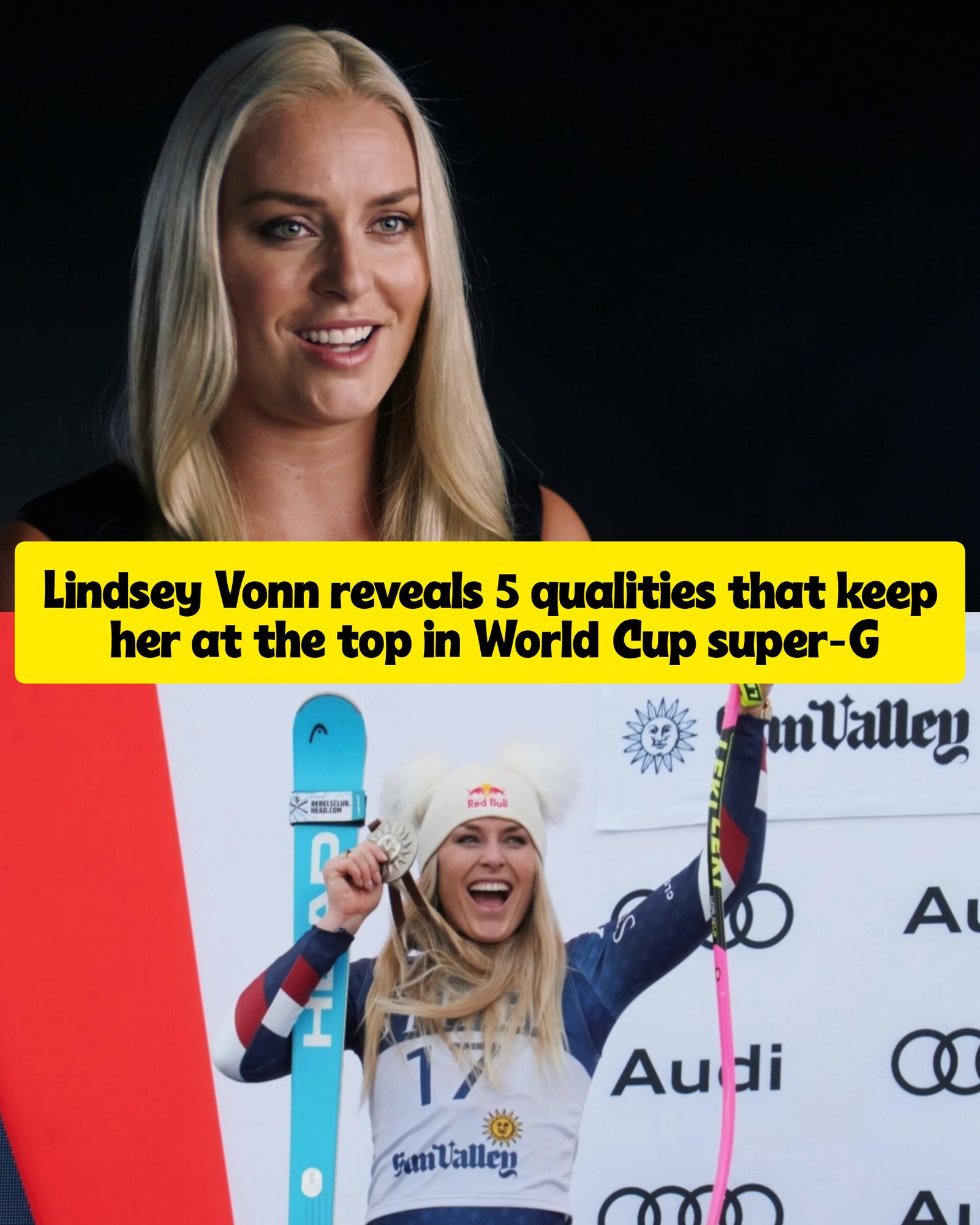
1. Experience and Race Intelligence
“When you’ve been in this sport for as long as I have,” Vonn begins, “you develop an intuition for racing that you just can’t teach. I know the lines, I know how to read the course, and I know where I can push without risking everything. That experience comes from decades of training, crashing, winning, losing, and learning.”
She emphasizes that while raw talent is important, it’s the combination of instinct and tactical thinking that separates her from the pack. “In super-G, you have to balance aggression with control,” she says. “I know when to attack the turns, when to stay tucked, and when to make a small adjustment that could save a hundredth of a second. That kind of judgment only comes from doing it thousands of times.”
2. Mental Toughness
Vonn’s mental strength is legendary, and it’s something she believes has been honed over years of high-pressure racing. “People see the podium finishes, but they don’t always see the mental work that goes into getting there,” she explains. “Every time you step onto the start gate, there’s pressure—expectations from yourself, your team, your country. You can’t let it distract you. Mental toughness is being able to compartmentalize, stay calm, and execute your plan, even when everything feels chaotic.”
She recounts the recent Tarvisio race, where fog and poor visibility made conditions tricky: “Those are the moments where experience and mental strength really come into play. Younger skiers may panic or second-guess themselves, but I’ve been through enough of those situations to know how to handle them and stay competitive.”
3. Physical Conditioning and Durability
Even at 41, Vonn’s body is a finely tuned machine. She credits years of rigorous training, recovery, and attention to detail for keeping her at peak performance. “Speed skiing is brutal on the body. Downhill and super-G push you to the limit with high G-forces and enormous speeds. To survive the season, let alone perform at the top, you need conditioning, core strength, leg power, and balance. I focus on all of it, year-round, and I don’t take it lightly.”
Vonn also notes the importance of recovery and injury prevention. “I’ve had my share of injuries, from knees to shoulders, but the difference now is that I know how to train smart. It’s not about brute force anymore—it’s about longevity, quality movement, and keeping your body ready for every race.”
4. Adaptability Across Courses and Conditions
Another key quality, Vonn says, is her ability to adapt to changing conditions. “No two courses are the same. Weather, snow conditions, and visibility can all change in seconds. You have to be ready to adjust your strategy and still perform at your best. That’s why experience matters—you’ve raced in everything from perfect bluebird days to heavy fog and icy slopes. Adaptability is what allows you to stay competitive, no matter what the course throws at you.”
She points to her recent rivalry with rising star Emma Aicher as an example: “Emma is fast, she’s fearless, and she’s learning every day. But I’ve seen courses, I’ve felt conditions, and I’ve adjusted my skiing hundreds of times under pressure. That adaptability gives me an edge even when younger athletes are at their peak physically.”
5. Passion and Love for the Sport
Perhaps the most essential quality, according to Vonn, is passion. “I love skiing. That’s why I’m still here, pushing myself at 41. It’s not just about medals or records—it’s about the thrill of racing, the joy of being on the mountain, and the camaraderie of the sport. That love fuels everything I do, from early morning training sessions to late nights analyzing video footage of courses.”
Vonn explains that her passion also drives resilience. “When I’ve faced setbacks or injuries, it’s my love for skiing that brings me back. That fire, that desire to keep improving, is what keeps me competitive against younger athletes who may have speed but not the same lifelong dedication.”
Looking Ahead to the Olympics
With the Milan–Cortina Winter Olympics just weeks away, Vonn is focused on using these qualities to challenge for a medal. “I feel confident because I know what I bring to the table: experience, mental toughness, physical preparedness, adaptability, and passion. These are my strengths, and I trust them. I don’t just hope to compete—I plan to ski my best and fight for every hundredth of a second.”
Vonn also acknowledges the rising talent in the sport, citing Emma Aicher and Keely Cashman as examples of athletes who are pushing the level higher. “It’s exciting. Competition drives you to be better. You can’t rest on past achievements—you have to keep proving yourself. That’s what makes this season so thrilling.”
Final Thoughts
When asked if she believes these qualities truly make her the best in the World Cup super-G right now, Vonn smiles and replies, “I wouldn’t say it’s about being the best—I’d say it’s about being consistent, resilient, and smart. But if that combination is what defines a top athlete, then yes, I think I’m in a strong position. I’ve earned every podium, every medal, and every victory through these qualities. And I’m not done yet.”
As the countdown to the Olympics continues, Lindsey Vonn remains a force to be reckoned with. Her blend of experience, mental fortitude, physical preparation, adaptability, and passion ensures she’s not only competing with the best but setting a benchmark for the next generation of speed skiers. In a season that has already showcased both emerging stars and veteran consistency, Vonn’s presence proves that age, when combined with the right qualities, is no barrier to excellence.
Beyond Shiffrin and Vonn: U.S. teammates stepping up in crucial Olympic season
Mikaela Shiffrin may be stealing the spotlight in slalom, and Lindsey Vonn continues to defy time in downhill, but the strength of the U.S. women’s ski team this Olympic season runs far deeper than its two biggest stars.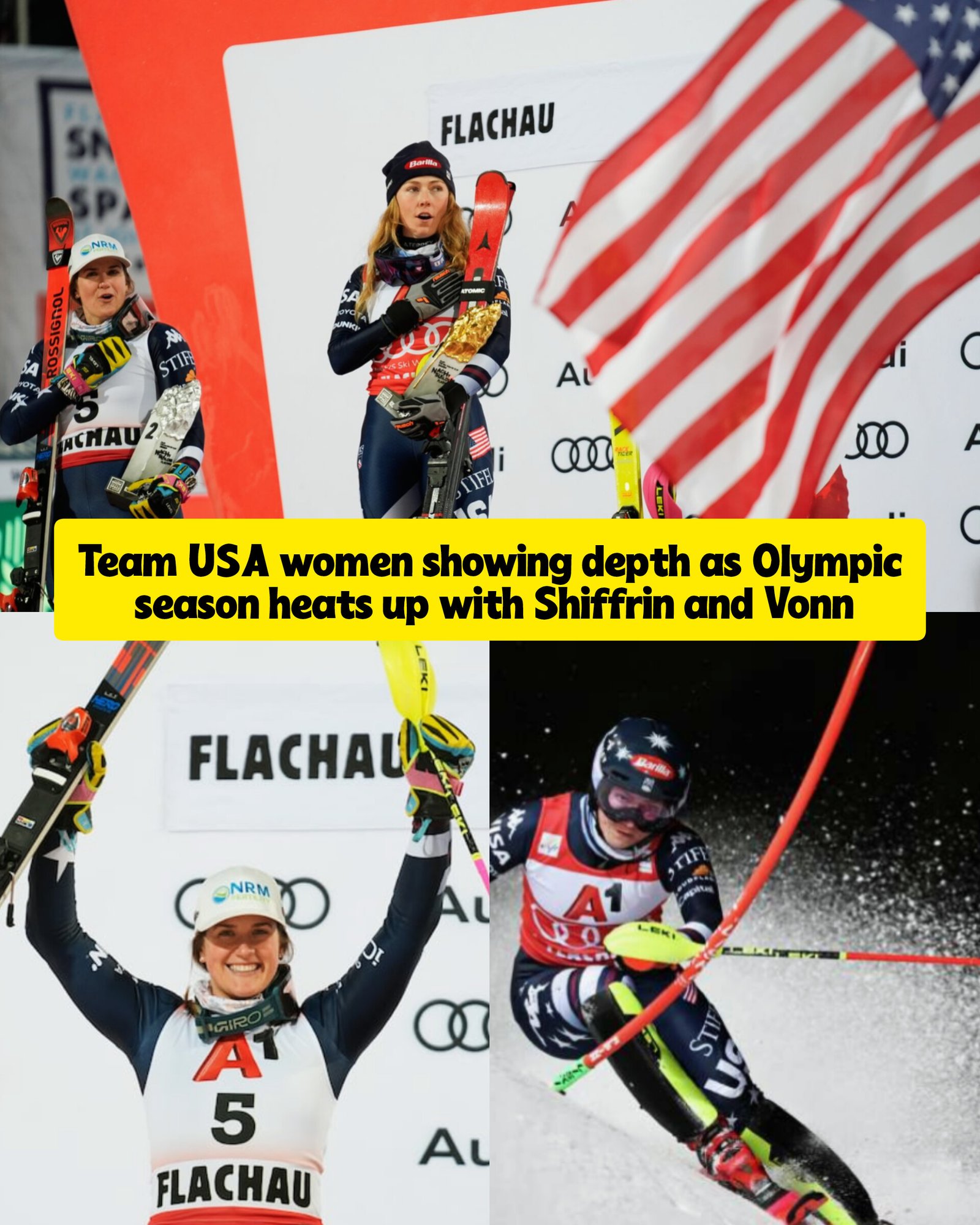
As the World Cup circuit rolls through Europe with the Milan–Cortina Winter Olympics now just weeks away, American skiers are consistently making their presence felt across multiple disciplines. Their depth was on full display once again Tuesday night in Flachau, Austria, where the United States claimed two podium spots in a single race for the second time in less than a week.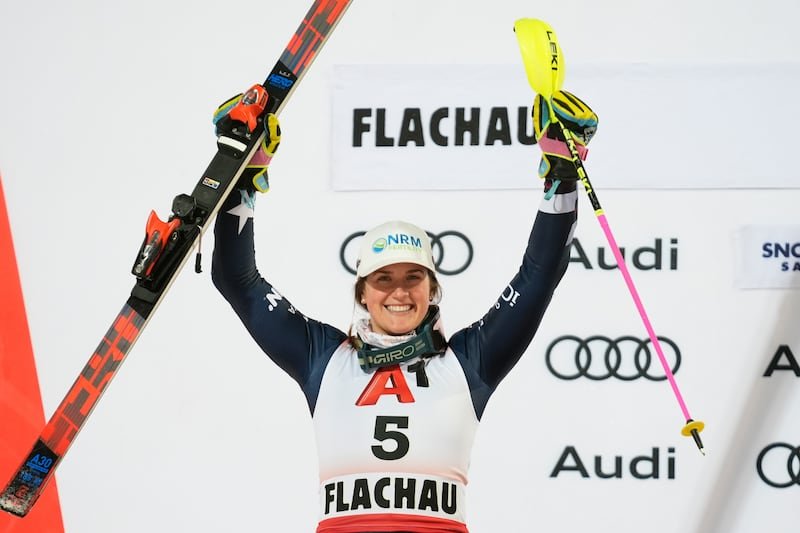
Shiffrin and Minnesota native Paula Moltzan delivered a commanding one-two finish in the women’s night slalom, thrilling a packed crowd at the Griessenkar course. The result reinforced the U.S. team’s dominance in technical events and highlighted how American skiers are peaking at exactly the right time.
“It’s incredibly special to share moments like this with Paula,” Shiffrin said after the race, praising her teammate’s continued rise.
Just days earlier, another American duo had stood on the podium in Austria. At the downhill event in Altenmarkt-Zauchensee, Lindsey Vonn captured victory with a fearless run, while Jacqueline Wiles secured third place, underlining the United States’ strength in speed events as well.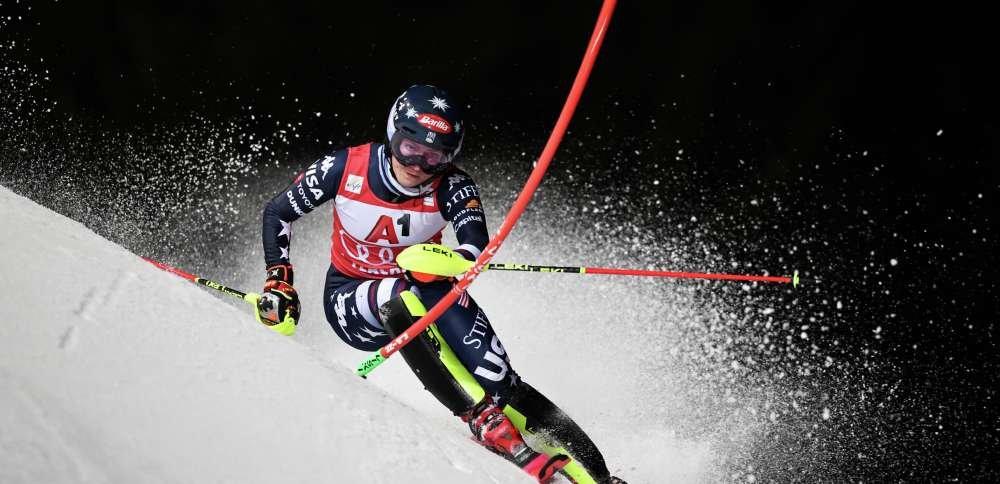
Shiffrin’s latest triumph was a familiar story this season. The reigning slalom queen extended her advantage from the first run and navigated a demanding course that featured several artificial terrain rolls designed to disrupt rhythm and balance. She crossed the line 0.41 seconds ahead of Moltzan, sealing yet another dominant performance.
Austria’s Katharina Truppe delighted the home crowd by finishing third, 0.65 seconds back, while Switzerland’s Camille Rast — one of the few racers to beat Shiffrin this winter — placed fourth. Another American, Nina O’Brien, produced the second-fastest time in the final run, surging up 10 positions to finish 13th overall.
With just one World Cup slalom remaining before the Olympic opening ceremony on February 6, Shiffrin’s form appears nearly untouchable. The Flachau victory marked her 107th career World Cup win, her 70th in slalom, and her sixth triumph at the Austrian venue — numbers that continue to stretch records she already owns.
For Moltzan, the night represented another important step forward. While she is still chasing her first World Cup victory, the second-place finish was the fourth runner-up result of her career and her third podium of the current season. She has steadily narrowed the gap to Shiffrin and continues to build confidence heading into the Games.
“I’m really thankful for the progress I’ve made,” Moltzan said. “Closing the gap to Mikaela has been a major focus for me this year.”
Moltzan’s recent success adds to a résumé that already includes a giant slalom bronze medal at last season’s world championships. Combined with Shiffrin’s consistency, Vonn’s remarkable comeback, and solid contributions from skiers like Wiles and O’Brien, the United States enters the Olympic season with one of the deepest women’s teams in the world.
While individual stars will always draw attention, the broader picture shows a U.S. squad firing on all cylinders. As the countdown to Milan–Cortina continues, American women are not just winning races — they are setting the tone for what could be a historic Olympic campaign.
Heartwarming moment between Lindsey Vonn and her dad: “I’ve never heard him cry like that”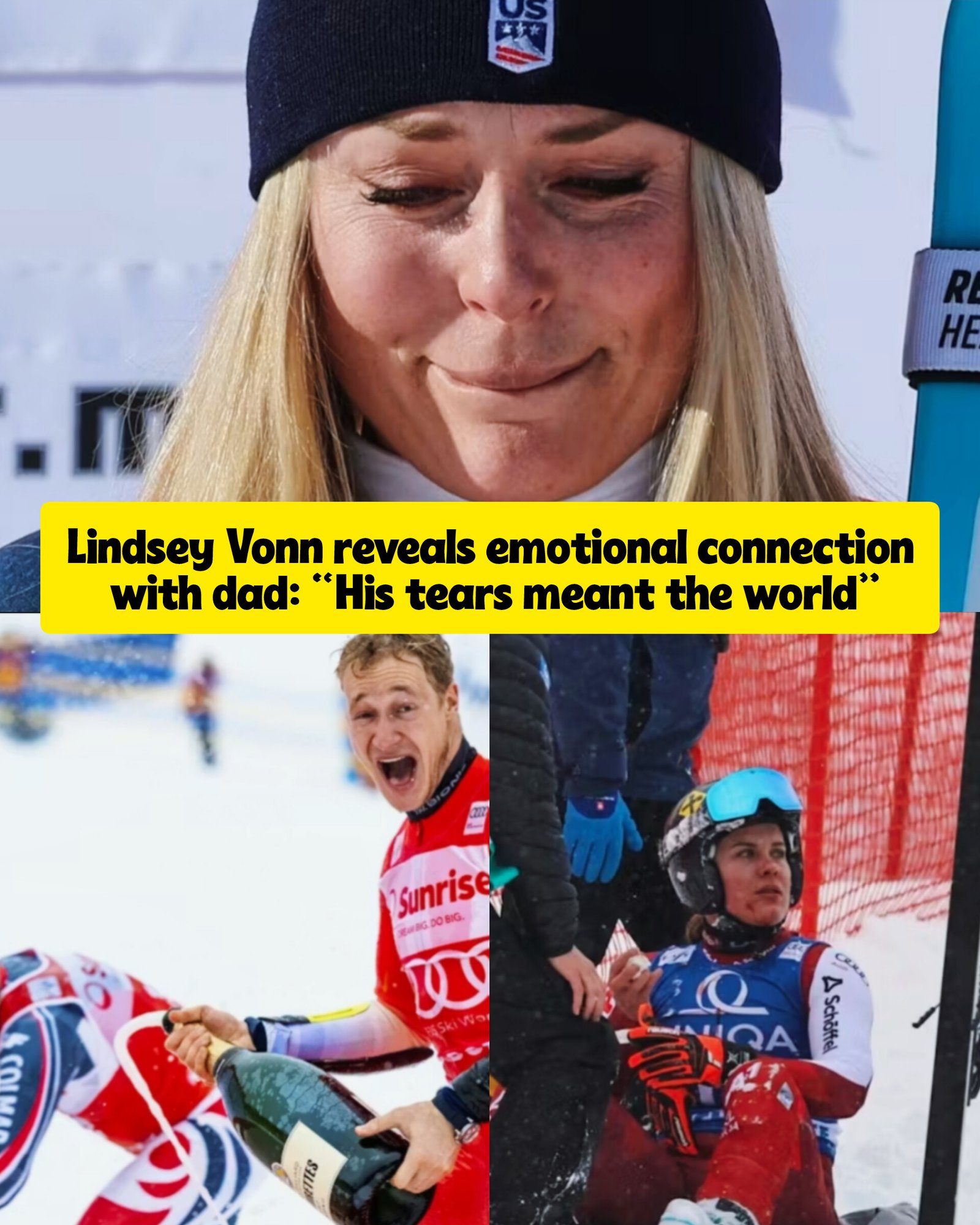
Lindsey Vonn once again reminded the skiing world why her name is etched so deeply into the sport’s history. At 41 years old, the American icon delivered a stunning performance in St. Moritz, winning the opening speed race of the 2024/25 World Cup season and becoming the oldest female winner in World Cup history. Beyond the statistics and records, however, the victory carried powerful emotional weight—especially for Vonn and her family.
Vonn dominated the race, finishing nearly a second ahead of Austrian surprise package Magdalena Egger, with Mirjam Puchner completing the podium more than a second back. The margin underlined just how competitive Vonn still is, even at an age when most elite skiers have long since retired. Speaking immediately after the race, she admitted the day had been overwhelming in the best possible way.
She described feeling immense pride—not only in herself but also in the team that has supported her through years of setbacks, injuries, and doubts. According to Vonn, nothing about the journey back to the top had been easy, which made the moment even sweeter. She said everything finally felt aligned again and made it clear she is fully prepared for the season ahead, including her ultimate goal of competing at the Olympic Games.
One of the most touching moments of the day came after the race, when Vonn spoke by phone with her father, Alan Kildow. The conversation left a deep impression on her. She revealed that he was overcome with emotion, crying harder than she had ever heard before. For Vonn, that reaction made the victory even more meaningful and highlighted how far their relationship has come.
The bond between Vonn and her father has not always been an easy one. Alan Kildow was instrumental in recognizing her talent at a young age and played a major role in shaping her early career. When Lindsey was just 11 years old, the family relocated from Burnsville, Minnesota, to Vail, Colorado, a move designed to give her the best possible environment to develop as a skier. The decision paid off in sporting terms, as Vonn quickly emerged as an exceptional young talent, winning numerous junior races and standing out among her peers.
However, the intensity of that support also created strain. The heavy focus on performance and success placed enormous pressure on Lindsey at a young age. Over time, family tensions grew, and her parents eventually divorced. Vonn has since spoken openly about how difficult that period was, explaining that her father’s strong emphasis on results sometimes made her feel overwhelmed. There were moments when their relationship fractured completely, and communication between them stopped altogether.
It took years for that rift to begin healing. A turning point came around 2011, during Vonn’s separation from her then-husband, Thomas Vonn. During that challenging chapter of her life, she slowly reconnected with her father. What followed was a gradual rebuilding of trust and understanding. With distance and maturity, Vonn has come to reflect on her upbringing with greater balance—recognizing that her father’s dedication made her extraordinary career possible, while also acknowledging the personal cost it sometimes carried.
Today, that relationship appears to be on far steadier ground. The emotional phone call after her St. Moritz victory symbolized not just sporting success, but reconciliation and shared pride. For Vonn, knowing how deeply the moment affected her father added another layer of meaning to an already historic win.
And the weekend may not be over yet. St. Moritz still has more racing to come, with another downhill scheduled for Saturday and a super-G on Sunday. Vonn hinted that she believes there is even more speed to be found, suggesting she could improve on certain sections of the course. While she admitted she hadn’t expected to be quite so fast already, she also issued a subtle warning to her rivals that she may not be done collecting trophies just yet.
At 41, Lindsey Vonn continues to defy expectations—physically, mentally, and emotionally. Her latest victory was not just a triumph of skill and experience, but also a reminder of resilience, reconciliation, and the enduring power of belief.
-

 Blog7 months ago
Celtic issues a fiery VAR statement after Trusty’s red card appeal is dismissed, as furious chiefs release referee audio publicly.
-

 Blog1 week ago
Former official calls on SFA to contact Rangers over fan scenes during Celtic match, labeling them “completely unacceptable.”
-

 Blog7 months ago
Celtic informed their January signing under Martin O’Neill that he wouldn’t play a single minute this season.
-

 Blog7 months ago
Celtic issued an £83 million warning amid looming UEFA threats.
-

 Blog7 months ago
SFA Expected to Review Missed Penalty in Rangers v Celtic Clash
-

 Blog6 months ago
Police respond after reported disorder following Middlesbrough vs Millwall clash
-

 Blog1 year ago
“Courtside to Aisle-Side: Tyrese Haliburton and Jade Jones Set New Wedding Date”
-

 Blog7 months ago
£6m star is looking to leave Rangers this summer and has already announced his next club publicly.