
Blog
I now hate the San Antonio Spurs, and it’s definitely not in a good way.

I don’t usually write like this. At Blazer’s Edge, we aim for thoughtful analysis—measured takes about the Portland Trail Blazers and the broader NBA that you could comfortably debate at the barbershop, reference around the office, or even cite in a classroom without embarrassment.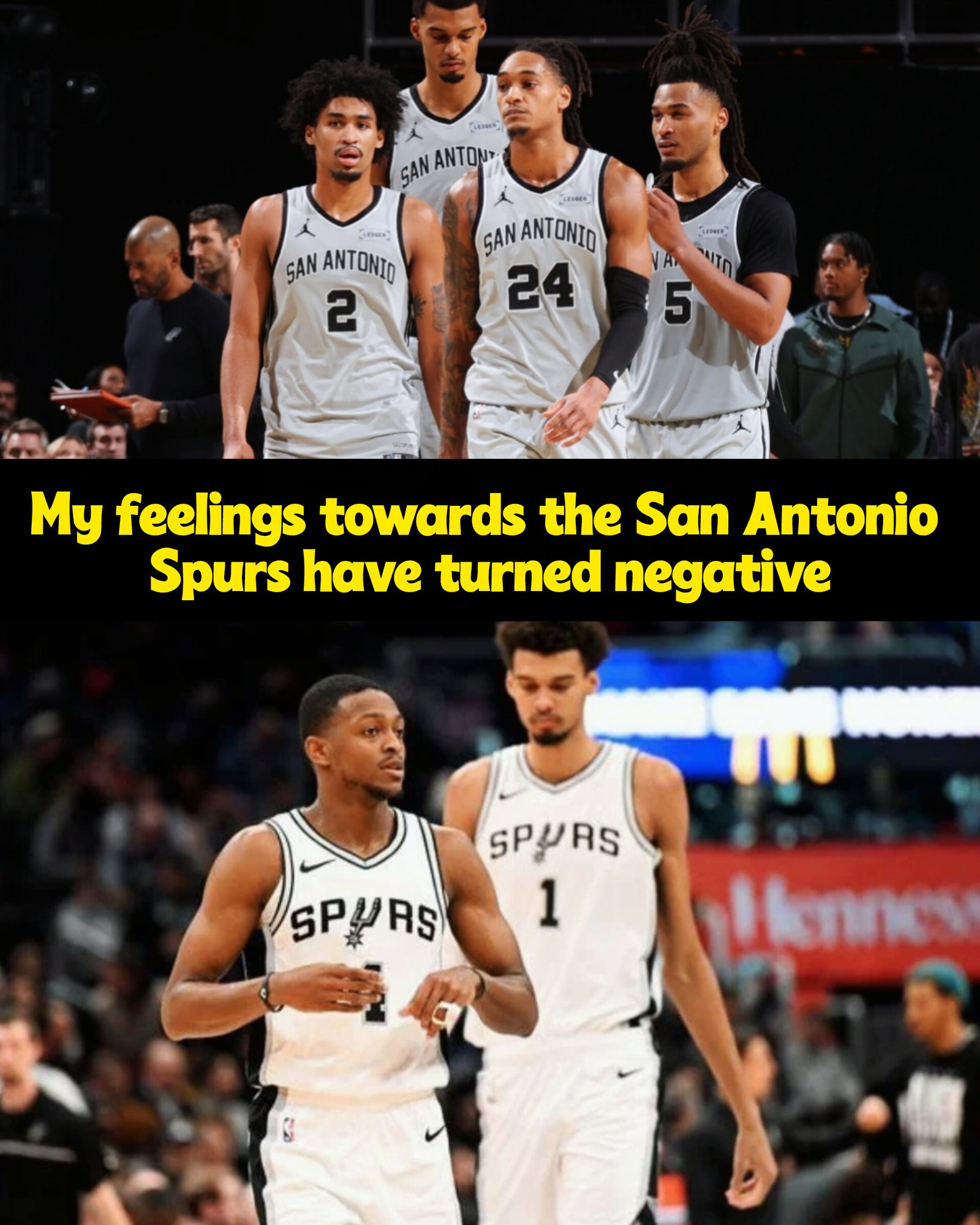
Apparently this week is different.
A few days ago, I vented about Peacock’s new broadcast overlay. Today, I have to admit something that’s been bothering me since last night, something that refuses to fade.
I hate the San Antonio Spurs.
And not in the fun way.
They’ve now won eleven straight games. They sit second in the Western Conference, breathing down the necks of the defending champion Oklahoma City Thunder. What’s unfolding in San Antonio looks like the start of another golden era—something that could echo the dominance of their Tim Duncan–led dynasty from the late 1990s and 2000s.
But instead of the usual competitive resentment, I feel something else entirely.
Before you smirk and say, “That’s sports—you’re supposed to hate the good teams,” let me clarify. This isn’t the theatrical villain kind of dislike. It’s not the grudging admiration reserved for iconic antagonists like The Joker in Batman, vintage Ric Flair in wrestling, or even the Los Angeles Lakers. Those rivalries add flavor. They sharpen the experience. Lakers versus Blazers feels meaningful, even when Portland falls short.
That’s not what this is.
This isn’t dramatic. It’s not passionate. It’s dismissive. It’s the emotional equivalent of wrinkling your nose.
Imagine reaching into the back of your refrigerator in June and finding a half-finished carton of eggnog from Christmas two years ago. You pour it—curdled chunks and all—over a bowl of leftover broccoli, then microwave it for two minutes.
Whatever you’re feeling when that timer dings? That’s my reaction to the Spurs right now.
Yes, they’re winning. Great. I genuinely like Victor Wembanyama. I have no issue with San Antonio drafting him. I hope he remains healthy. I hope he becomes the generational superstar everyone predicts. Wemby himself deserves nothing but respect.
But here’s the problem: it wasn’t just him.
It was the repeated lottery fortune. The ping-pong balls bouncing perfectly—not once, but over and over. After landing Wembanyama, they followed it up with Stephon Castle. Then Dylan Harper. A massive lottery win, followed by another, followed by another.
We all saw it coming. Of course this winning streak was inevitable. Stack that much top-end talent through repeated lottery luck and success becomes automatic.
Some will argue, “They still had to draft well.”
Did they?
Let’s be honest. How many general managers in 2023 would have passed on Wembanyama at No. 1? How many draft boards in 2025 didn’t have Harper near the top?
Exactly.
Now here’s what gets overlooked. Before the jackpot years, the Spurs were in the lottery for several seasons. In 2022, before Wembanyama arrived, they selected Jeremy Sochan ninth overall. He’s already gone—waived outright. The year prior, with the 12th pick, they chose Joshua Primo. He’s no longer in the league. Go back another year and you find Devin Vassell, who at least remains on the roster.
Vassell is solid. But step back and evaluate that stretch: one decent hit out of three lottery picks, with two already gone. That’s not drafting brilliance. That’s middling at best.
When they held mid-tier lottery slots, they produced mid-tier outcomes. Nothing revolutionary. Nothing prophetic.
And that’s what makes this surge feel hollow.
I’m not trying to convince anyone to stop watching the NBA. I’m not even telling Spurs fans not to enjoy this. They’re playing high-level basketball. Celebrate it.
I just can’t.
That microwave eggnog smell lingers. It fills the house. Until it dissipates, I don’t want to be near it.
And yes, that taints the viewing experience. Every spectacular Wembanyama moment now comes with an asterisk in my mind. The path was paved by extraordinary luck—luck that people will later rewrite as genius.
That’s what bothers me most.
I feel a similar, though slightly weaker, reaction toward the Dallas Mavericks after their Luka Dončić trade and the subsequent acquisition of Cooper Flagg. They operate in the same tax-friendly state advantages that benefit San Antonio and also allow the Houston Rockets to reload with stars like Kevin Durant. It’s as if structural boosts keep compounding for the same markets.
Maybe these emerging powers will eventually win me over. In wrestling, Dwayne “The Rock” Johnson and Roman Reigns were initially resented because of perceived favoritism from management. Over time, their undeniable talent turned public opinion.
But wrestling is scripted storytelling masquerading as competition.
The NBA is supposed to be competition with storytelling layered on top.
That distinction matters.
The league talks about tanking reforms and lottery odds. That’s important. But it also needs to examine consecutive lottery wins and tax disparities. It’s one thing if bad teams linger at the bottom because of poor decisions—that’s survivable. We can tolerate a slice of irrelevant games.
It’s another thing when the league’s elite feels artificially constructed—like filet mignon served with a drizzle of rancid sauce.
Right now, that’s how it feels with the Spurs. The Mavericks aren’t far behind. I’m halfway there with the Heat, another non-tax state team poised to translate financial flexibility into title runs. The Rockets could easily join that group. And if that trend continues, the Lakers won’t be far from the conversation either.
At that point, nearly one-sixth of the league—and a large chunk of its contenders—becomes emotionally unpalatable.
Maybe I’d feel differently if Portland had benefited from similar lottery fortune. Critics will say that’s hypocrisy. Fair enough.
But I’d like to believe I’d still admit the truth: that such a meteoric rise had more to do with extraordinary luck than with superior culture or wisdom.
The past can’t be undone. The Spurs won those lotteries. The ping-pong balls bounced their way. Congratulations. Applause. Enjoy the spotlight. You’re set up for contention for years.
Just don’t let this pattern become the norm.
I can stomach losing to greatness built over time. I can endure heartbreak against excellence forged through strategy and development.
What I can’t stomach is feeling queasy about the very idea of winning at the highest level.
Sports need something to chase. Something aspirational. If fans begin recoiling from the top instead of reaching toward it, that’s a deeper problem than tanking or rebuilding cycles.
Losing games hurts. That’s natural.
But when the victories themselves start feeling spoiled, that’s when the league should worry.
-
 Blog7 months ago
Celtic issues a fiery VAR statement after Trusty’s red card appeal is dismissed, as furious chiefs release referee audio publicly.
-

 Blog1 week ago
Former official calls on SFA to contact Rangers over fan scenes during Celtic match, labeling them “completely unacceptable.”
-

 Blog7 months ago
Celtic informed their January signing under Martin O’Neill that he wouldn’t play a single minute this season.
-
 Blog7 months ago
Celtic issued an £83 million warning amid looming UEFA threats.
-

 Blog7 months ago
SFA Expected to Review Missed Penalty in Rangers v Celtic Clash
-

 Blog6 months ago
Police respond after reported disorder following Middlesbrough vs Millwall clash
-

 Blog1 year ago
“Courtside to Aisle-Side: Tyrese Haliburton and Jade Jones Set New Wedding Date”
-
 Blog7 months ago
£6m star is looking to leave Rangers this summer and has already announced his next club publicly.