
Blog
Rangers victory overshadowed by refereeing controversy

Rangers secured an emphatic 4-1 win over Aberdeen, but the match was not without controversy, as a second-half incident involving Thelo Aasgaard drew sharp criticism from pundits and former officials alike.
Both Michael Stewart and Keith Hackett voiced strong disapproval of a decision made by referee Matthew MacDermid, describing it as incorrect and difficult to justify.
Disputed free-kick decision in second half
The controversial moment occurred in the 57th minute, with Rangers holding a narrow 2-1 advantage early in the second half. During the passage of play, MacDermid awarded a free kick to Aberdeen after judging that Emmanuel Gyamfi had been fouled just outside the penalty area.
The decision followed an attempt by Gyamfi to win a penalty, which was widely viewed as a clear dive. Despite minimal, if any, contact from Aasgaard, the referee ruled in favour of Aberdeen, granting them a set-piece opportunity in a potentially dangerous position.
Although the resulting free kick ultimately came to nothing and had no direct impact on the final scoreline, the call itself sparked frustration and debate among observers. Rangers would go on to extend their lead and secure a comfortable victory, but the incident remained a talking point.
Michael Stewart’s reaction to the call
Pundit Michael Stewart was particularly critical of the decision, expressing disbelief at how the referee could have interpreted the situation as a foul. From his perspective, the level of contact involved did not justify awarding a free kick.
Speaking during coverage on Premier Sports, Stewart dismissed the decision outright, stating that it should never have been given. He went further in his criticism, describing the call as “embarrassing” and reiterating that there was insufficient contact to warrant any infringement.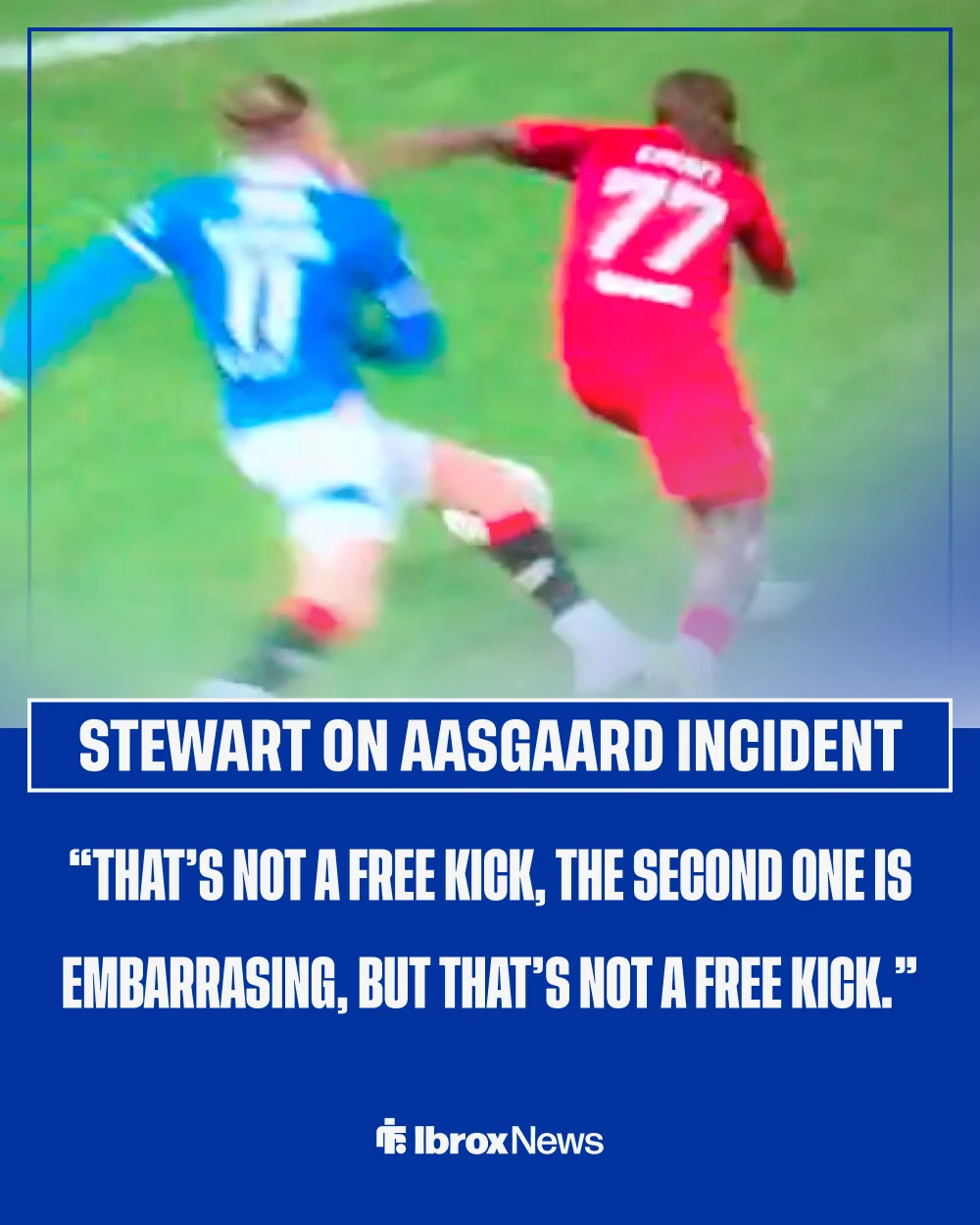
Stewart’s reaction highlighted a broader concern about officiating standards, as he questioned how such a judgment could be made in a professional match. His astonishment was evident, as he emphasised just how surprising he found the referee’s decision.
Keith Hackett backs criticism
Former referee Keith Hackett echoed Stewart’s views, fully agreeing with the assessment that the decision was incorrect. In his analysis, Hackett suggested that the error may have been the result of a lapse in concentration on the part of the referee.
He argued that the incident did not meet the criteria for a foul and therefore should not have resulted in a free kick. According to Hackett, maintaining focus is essential for referees at this level, and any momentary loss of concentration can lead to mistakes such as this.
Hackett’s comments reinforced the idea that the decision was not only questionable but avoidable. In his view, a more attentive approach from the official would likely have prevented the error altogether.
Wider implications for officiating standards
The incident has added fuel to ongoing concerns within Rangers about the standard of refereeing in the Scottish Premiership. Club officials have already been vocal about the need for improvements, and this latest controversy is likely to strengthen their case.
Rangers have reportedly proposed holding discussions with other clubs in the division to address these issues collectively. Their aim is to push for higher standards and greater consistency among officiating teams, reducing the frequency of contentious decisions.
The club is understood to have engaged in dialogue with Willie Collum, who oversees refereeing standards for the Scottish Football Association. The matter has also been raised at board level, underlining the seriousness with which Rangers view the situation.
Potential impact on the title race
While this particular decision did not alter the outcome of the match, it serves as a reminder of how influential refereeing calls can be. In a tightly contested title race, even a single incorrect decision has the potential to change the course of a game—and, by extension, the destination of the championship.
Rangers’ victory moved them to within three points of Heart of Midlothian in second place, keeping the pressure on their rivals. However, had Aberdeen capitalised on the free-kick opportunity, the momentum of the match could have shifted.
Calls for improvement going forward
This episode is likely to be cited by Rangers as further evidence that improvements are necessary within Scottish officiating. The club’s efforts to initiate discussions and drive change may gain additional support in light of such incidents.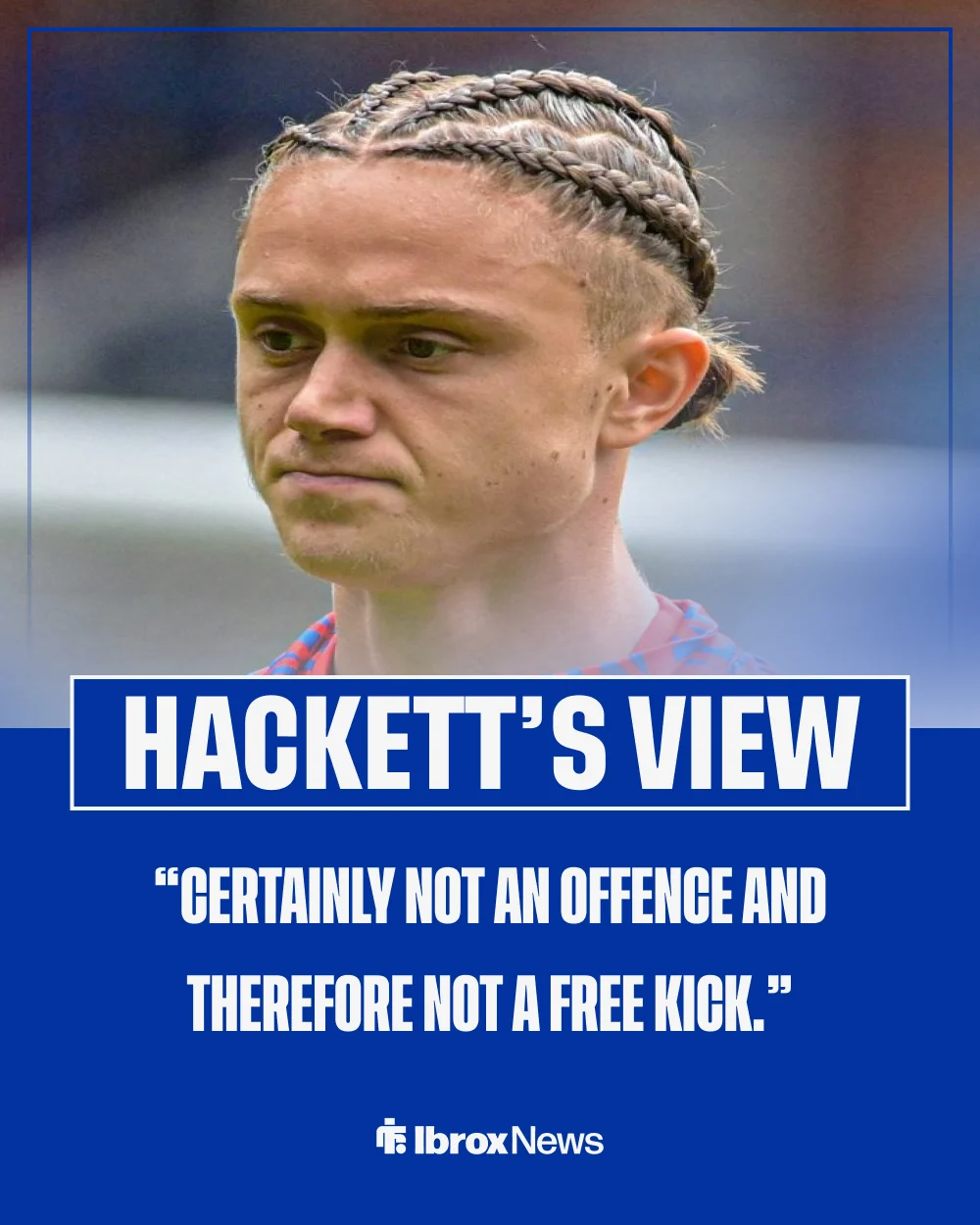
Ultimately, there is a growing sense that higher standards must be achieved to ensure fairness and integrity in the competition. With so much at stake, particularly in the closing stages of the season, accurate and consistent decision-making is more important than ever.
Ensuring that referees are equipped to make the right calls in crucial moments will be key to maintaining confidence in the game. As debates continue, this incident stands as another example of why those conversations are taking place.
SFA referee chief states Celtic should have been awarded a penalty in their costly loss to Hibs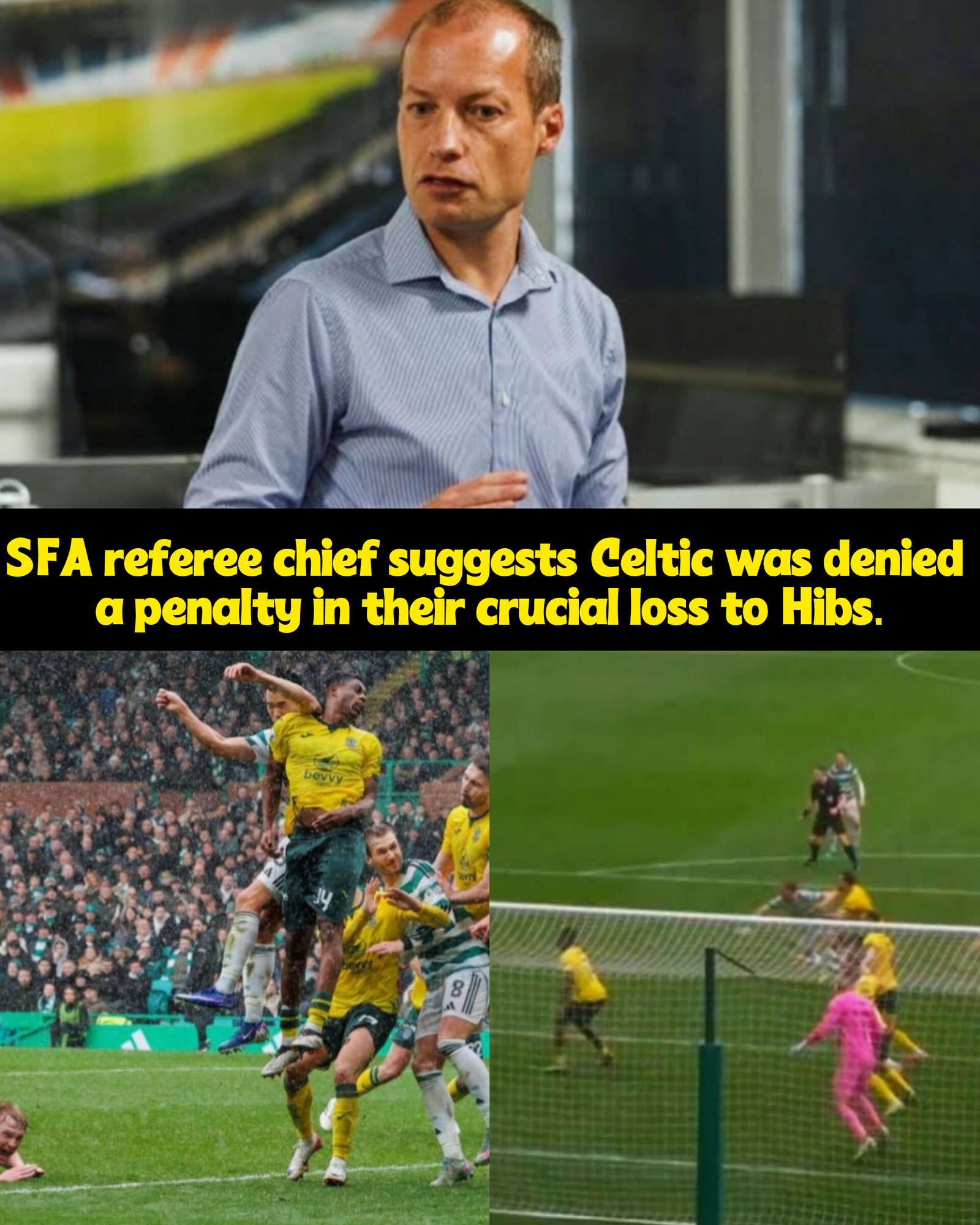
The head of refereeing at the Scottish Football Association, Willie Collum, has acknowledged that Celtic were wrongly denied a penalty during their recent defeat to Hibernian.
Collum admitted that the decision not to award a spot-kick in the match was incorrect and stated that the incident should at the very least have resulted in an on-field review by the referee. His comments come after the controversial moment during the clash at Parkhead, which ultimately saw Celtic fall to a 2-1 loss.
Match context and implications
The defeat proved significant in the context of the title race, as it allowed Heart of Midlothian to extend their advantage over Celtic. The result was a major blow for the Glasgow side, who were hoping to maintain momentum in their pursuit of the championship.
David Gray’s Hibernian side capitalised on key moments during the match, but the controversy surrounding the penalty decision has since dominated discussion. Celtic supporters, in particular, have expressed frustration, feeling their team was unfairly treated at a crucial stage of the game.
The disputed incident explained
The flashpoint came shortly after Auston Trusty had been sent off, leaving Celtic down to ten men. At that moment, the scoreline was balanced at 1-1, and the match remained finely poised.
The contentious incident involved Jack Iredale and Liam Scales inside the penalty area. Following a corner delivery, Iredale was seen pulling Scales, an action that many believed warranted a penalty at the time.
Despite protests from Celtic players, no spot-kick was awarded, and play continued. However, subsequent analysis—and now Collum’s own admission—has confirmed that the challenge should have been punished.
Key moments in the match
Earlier in the game, Felix Passlack had given Hibernian the lead, putting the visitors ahead and setting the tone for a competitive encounter. Celtic responded just before the interval, with Benjamin Nygren finding the equaliser to bring the sides level heading into half-time.
The game then took another dramatic turn when Trusty was dismissed for an off-the-ball incident involving Jamie McGrath. The sending-off left Celtic at a disadvantage for the remainder of the match and heightened the importance of key refereeing decisions.
As the match progressed, Celtic pushed for a late winner despite being a man down. However, their hopes were ultimately dashed when Kai Andrews scored what proved to be the decisive goal for Hibernian.
Collum clarifies VAR failure
Reflecting on the controversial moment, Collum explained that the Video Assistant Referee team had discussed several relevant factors, including the nature of the holding, the proximity of the players, and the area into which the ball was being delivered.
Based on these considerations, he made it clear that the correct outcome should have been a penalty. Furthermore, he stressed that the situation met the threshold for an on-field review, which would have given the referee an opportunity to reassess the decision using pitchside footage.
Collum emphasised that the level of contact and its impact were significant enough to justify awarding a spot-kick. In his view, the holding was both clear and sustained, leaving little doubt that the infringement met the criteria for a foul.
Strong criticism of decision-making process
In his analysis, Collum was particularly critical of how the VAR team handled the situation. He noted that their communication initially appeared to build a convincing argument for awarding a penalty, only for them to ultimately decide against recommending a review.
This inconsistency drew scrutiny from observers, including programme host Gordon Duncan, who pointed out that the VAR officials seemed to move away from a well-supported case for a spot-kick.
Collum agreed that this lack of decisiveness was problematic, suggesting that the process would have been a strong example of effective VAR usage had the officials followed through on their initial reasoning.
Need for clearer communication and criteria
A key takeaway from Collum’s comments was the importance of clarity in VAR decision-making. He stressed that officials must provide clear explanations when deciding whether or not to award penalties, rather than relying on vague descriptions.
According to Collum, simply stating that an incident is “not enough” to warrant a penalty is insufficient. Instead, referees and VAR teams must articulate precisely why a decision has been reached, using established criteria to justify their conclusions.
He revealed that guidance has now been issued to improve communication standards, ensuring that both VAR officials and on-field referees offer more detailed and transparent reasoning in future incidents.
Impact on Celtic’s title ambitions
The failure to award a penalty ultimately had a significant impact on the outcome of the match. With the game level at the time of the incident, a converted spot-kick could have put Celtic in a strong position to secure victory.
Instead, the missed decision allowed Hibernian to remain in the contest and eventually claim all three points. The result has left Celtic trailing in the title race, increasing the pressure on them in the remaining fixtures.
While refereeing errors are an inherent part of football, Collum’s admission underscores the importance of getting key decisions right, particularly in high-stakes matches. For Celtic, the sense of injustice may linger, but the focus will now shift to recovering ground and keeping their championship hopes alive.
Dundee United confronts Celtic’s intimidating pattern as referee and VAR details emerge for the Tannadice clash
Dundee United F.C. are preparing for a daunting challenge as they welcome Celtic F.C. to Tannadice, with a worrying trend surrounding the visitors adding extra concern ahead of the clash.
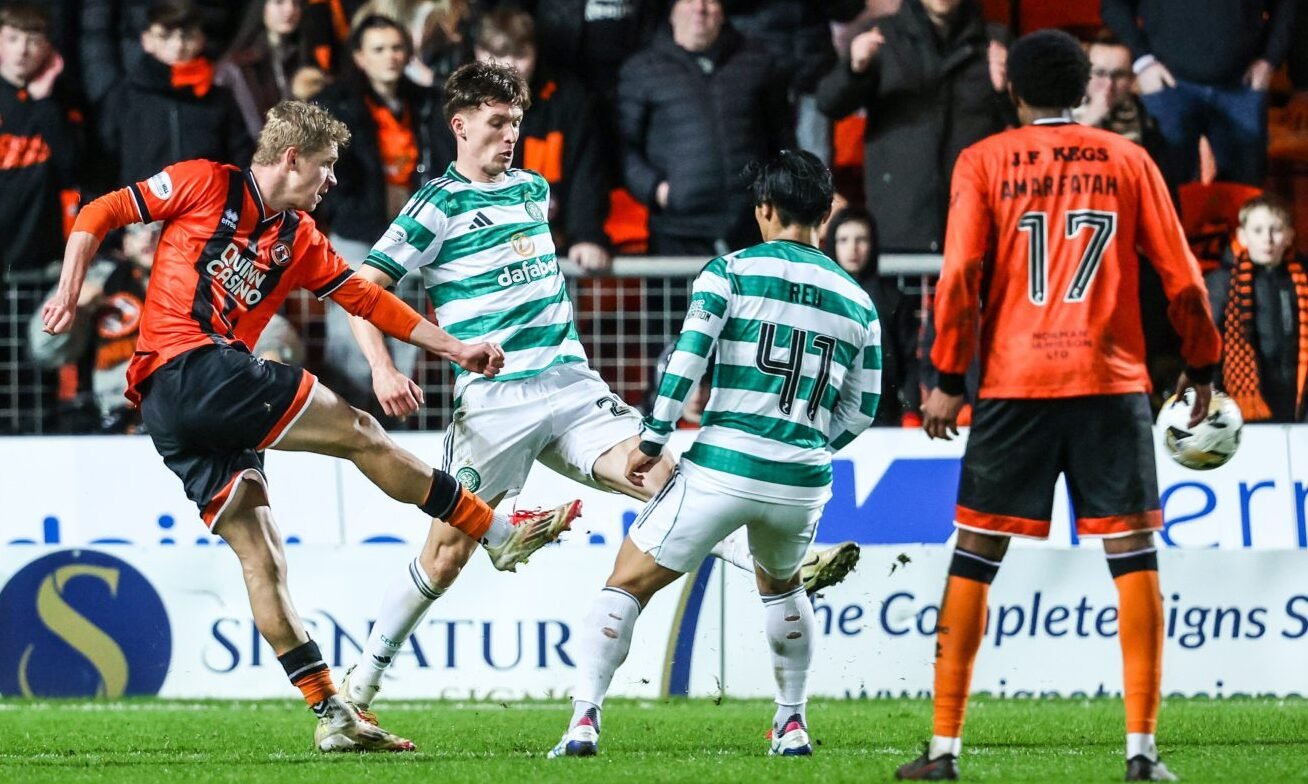
Sapsford lashes home the winning goal the last time Celtic visited Tannadice. Image: SNS
United wary of Celtic’s comeback strength
One of the most troubling aspects for Dundee United going into this encounter is Celtic’s proven ability to recover from losing positions. The Hoops have repeatedly shown resilience this season, turning games around when behind, which poses a serious threat to a United side that has struggled to hold onto leads.
That contrast in form could prove decisive. While Celtic have built a reputation for fighting back, United have found themselves on the opposite end of that spectrum, often surrendering advantages at crucial moments.
Tannadice clash comes after derby disappointment
The Tangerines head into this fixture looking to respond after a frustrating late collapse in their recent derby against Dundee F.C.. That result will still be fresh in the minds of players and supporters alike, making this upcoming contest an opportunity for redemption.
Facing Celtic, however, presents a much tougher test. The visitors arrive with strong momentum and a track record that suggests they rarely allow opponents any margin for error.
Historic milestone within reach for United
Despite the challenge, Dundee United have a significant incentive. They are aiming to secure back-to-back home victories over Celtic for the first time in more than three decades, with the last such achievement dating back to 1991.
Achieving that feat would mark a notable moment for the club and provide a major boost to their campaign. However, their recent form suggests it will not be easy, with just one win recorded in their last six matches across all competitions.
Key statistics highlight contrasting trends
A deeper look at the numbers paints a clear picture of the contrasting fortunes between the two sides.
Dundee United have dropped more points from winning positions than any other team in the Scottish Premiership this season, losing a total of 22 points after taking the lead. This statistic underlines their ongoing difficulties in managing games effectively.
In contrast, Celtic have recovered 13 points from losing positions, further emphasising their resilience and ability to turn matches in their favour.
Celtic’s strong away form underlines threat
Since Martin O’Neill began his tenure with Celtic, the team’s away form has been particularly impressive. Starting with a 1-0 victory over St Mirren F.C. in November, the Hoops have accumulated more away points than any other side in the league, collecting 20 points on their travels.
This consistency away from home adds another layer of difficulty for Dundee United, who will need to produce a disciplined and focused performance to compete.
Home record offers limited comfort for United
Although playing at Tannadice could be seen as an advantage, Dundee United’s home record does not provide overwhelming reassurance. They have earned just over half of their total points at home this season, with 18 out of 34 points coming on their own ground.
This represents the lowest home-to-total points ratio of any team in the division, suggesting that their home advantage has not been as significant as it might be for other clubs.
Celtic’s dominance in head-to-head encounters
Recent history between the two sides further highlights the scale of the challenge facing Dundee United. Celtic have lost just one of their last 25 meetings with United across all competitions.
During that period, the Hoops have recorded 19 victories and five draws, while also keeping 18 clean sheets. Such dominance illustrates how difficult it has been for United to break down Celtic and secure positive results.
Chance to build on previous home success
There is, however, a glimmer of hope for Dundee United. Their 2-1 victory over Celtic in December demonstrated that they are capable of causing an upset.
If they can repeat that result, it would mark consecutive home league wins against Celtic for the first time since April 1991, when they achieved three in a row.
Replicating that success will require a complete performance, particularly in maintaining concentration and defensive solidity throughout the match.
Match officials confirmed for Tannadice showdown
Attention will also be on the officiating team for this important fixture. Nick Walsh has been appointed as the referee, having previously overseen the reverse fixture between the sides in January.
That match was not without controversy, as Walsh opted against sending off Julián Araujo following a challenge on Will Ferry, a decision that drew criticism at the time.
Running the lines will be Daniel McFarlane and David McGeachie, while David Dickinson will take on VAR duties.
Dickinson will be assisted in the VAR hub in Baillieston by Andrew Dallas, completing the officiating lineup for the encounter.
High stakes as contrasting narratives collide
This fixture brings together two teams with very different narratives. Celtic’s ability to grind out results and recover from adversity stands in stark contrast to Dundee United’s struggles to maintain leads.
For United, the key will be maintaining focus and discipline for the full duration of the match. Any lapse could be punished by a Celtic side that has consistently demonstrated its capacity to capitalise on opposition mistakes.
Conclusion
As Dundee United prepare to host Celtic at Tannadice, the statistics and recent history suggest a formidable challenge lies ahead. While the home side have shown they can compete, their vulnerability when leading remains a major concern.
Celtic, on the other hand, arrive with confidence, strong away form, and a proven ability to turn games around. With both teams chasing important objectives, the stage is set for a compelling encounter, where fine margins and key moments are likely to determine the outcome.
Former SFA referee criticizes Celtic’s VAR decisions and questions John Beaton’s calls, calling them ‘just stupid’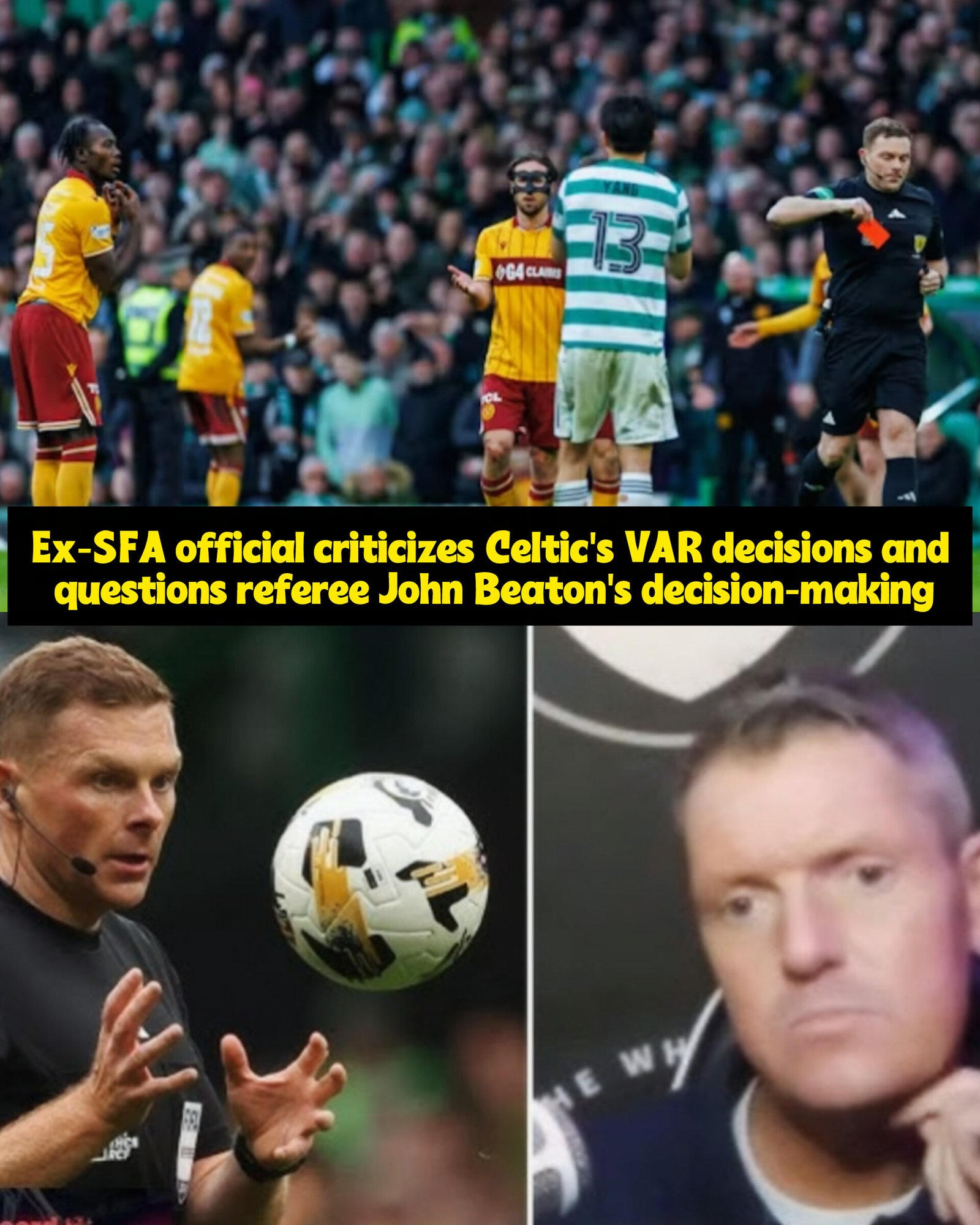
Des Roache has delivered his verdict on three major VAR incidents involving Celtic F.C. during their victory over Motherwell F.C. at Celtic Park over the weekend.
The former Scottish Football Association referee was asked to assess the controversial moments from the match, including the VAR intervention that resulted in Celtic being awarded a penalty and a red card being shown to Emmanuel Longelo.
Roache was also invited to give his opinion on two further incidents involving Celtic players, including a possible red-card situation concerning Daizen Maeda and another involving Alex Oxlade-Chamberlain. During the discussion, Roache did not hold back in his criticism, even describing one of Maeda’s actions as “just stupid.”
Roache criticises Beaton over penalty decision
The first major talking point involved referee John Beaton, who required assistance from the Video Assistant Referee before ultimately awarding Celtic a penalty. The incident occurred after Longelo brought down Maeda during a clear goalscoring opportunity.
The challenge was considered a classic case of denying an obvious goal-scoring opportunity, commonly known in football as DOGSO. As a result, the correct disciplinary action was a penalty kick for Celtic along with a red card for the Motherwell defender.
However, Roache expressed concern that Beaton did not make the call immediately despite being close to the incident. Speaking about the situation, the former referee acknowledged that VAR ultimately helped ensure the correct outcome was reached.
According to Roache, that is precisely why the VAR system exists—to help officials make accurate decisions in crucial moments.
Nevertheless, he questioned why the on-field referee had not recognised the foul himself. Roache pointed out that Beaton appeared to have a clear view of the incident and was positioned only a short distance away.
He estimated that the referee was approximately ten to twelve yards from the moment of contact, with no obstruction blocking his line of sight. Given that positioning, Roache believed there was little justification for the referee needing help from the video review system.
He further explained that the situation was fairly straightforward from a refereeing perspective. In his view, there was no confusion about what had happened because Longelo clearly impeded Maeda during a promising attacking move.
Roache also suggested that Beaton may have been momentarily distracted by tracking the ball in the air, something he felt was unnecessary in that situation. Since the ball was simply descending toward the players, Roache believed the referee should have focused entirely on the physical challenge taking place.
For Roache, the outcome was obvious. He stated there should have been no hesitation in identifying the foul and issuing the appropriate punishment.
In his opinion, the correct decision—a penalty kick combined with a red card—was clear from the moment the challenge occurred.
Debate over Oxlade-Chamberlain challenge
The second controversial moment involved Celtic midfielder Alex Oxlade-Chamberlain and his challenge on Motherwell player Elijah Just.
Roache took a more balanced approach when discussing this particular incident. While he acknowledged that the tackle looked questionable, he stopped short of claiming it was definitively worthy of a red card.
He described the challenge as “naughty,” suggesting it was careless and perhaps unnecessary. At the same time, Roache said he did not believe Oxlade-Chamberlain had any real intention of causing harm to his opponent.
From Roache’s perspective, the midfielder’s actions did not appear malicious, and he doubted that the player had deliberately tried to injure anyone.
Even so, the former referee acknowledged that the incident could easily have resulted in a harsher punishment. He admitted that if the referee had decided to show a red card for the tackle, there likely would not have been many complaints.
In other words, Roache felt the situation fell into a grey area where a dismissal would not have been unreasonable under the laws of the game.
Maeda incident also scrutinised
The third key moment discussed by Roache involved Daizen Maeda and an alleged elbow on a Motherwell player during the match.
Some observers suggested that the Japanese forward could have been sent off for the incident. However, Roache disagreed with those calls for a red card.
He explained that while the action looked questionable, it did not meet the threshold required for violent conduct or serious foul play.
Instead, Roache felt the situation was more accurately described as reckless behaviour rather than something truly dangerous.
According to him, Maeda may have extended his arm while challenging for the ball, which could easily be interpreted as careless. He suggested that the Celtic player was fortunate to avoid at least a yellow card for the action.
Roache added that the incident became more puzzling when Maeda later became involved with Motherwell’s Ibrahim Said while the opposing player was on the ground.
The Celtic forward was seen pushing Said, something Roache believed was unnecessary and out of character.
He admitted that he had rarely witnessed that kind of behaviour from Maeda in previous matches. Because of that, the former referee appeared somewhat surprised by the player’s actions.
Despite his criticism, Roache remained firm in his view that the incident did not warrant a red card.
Instead, he suggested that the most appropriate punishment would have been a yellow card for unsporting conduct. In his opinion, Maeda’s behaviour was simply foolish rather than violent.
Roache emphasised that the action lacked the level of aggression normally associated with serious foul play.
Title race heating up
The victory over Motherwell allowed Celtic to close the gap at the top of the Scottish Premiership table.
The Hoops are now just two points behind league leaders Heart of Midlothian F.C. as the competition approaches the decisive split in the standings.
With only three fixtures remaining before the league divides into the top and bottom halves, the pressure is mounting for the clubs chasing the title.
Both Celtic and Rangers F.C. remain firmly in the race, and neither side can afford to drop points during the final stages of the campaign.
In total, there are eight games left for the top contenders to determine who will ultimately secure the championship.
As the tension continues to build, every decision—whether from players, managers, or referees—could prove crucial in deciding the outcome of the title battle.
For now, however, Celtic appear determined to maintain their momentum and continue applying pressure on the teams above them.
If their recent form continues, it may be difficult for their rivals to keep pace as the season moves toward its dramatic conclusion.
-
 Blog7 months ago
Celtic issues a fiery VAR statement after Trusty’s red card appeal is dismissed, as furious chiefs release referee audio publicly.
-
 Blog3 weeks ago
Former official calls on SFA to contact Rangers over fan scenes during Celtic match, labeling them “completely unacceptable.”
-

 Blog8 months ago
Celtic informed their January signing under Martin O’Neill that he wouldn’t play a single minute this season.
-

 Blog7 months ago
Celtic issued an £83 million warning amid looming UEFA threats.
-
 Blog7 months ago
SFA Expected to Review Missed Penalty in Rangers v Celtic Clash
-

 Blog6 months ago
Police respond after reported disorder following Middlesbrough vs Millwall clash
-

 Blog2 weeks ago
Middlesbrough receive a warning following Steve Gibson’s submission of a £1.5bn proposal.
-

 Blog1 year ago
“Courtside to Aisle-Side: Tyrese Haliburton and Jade Jones Set New Wedding Date”