
Blog
Ian Crocker’s commentary has sparked a debate about Celtic Sky Sports coverage.

A debate surrounding Celtic and their media coverage has emerged following commentary from Ian Crocker on Sky Sports, sparking discussion among fans and pundits alike.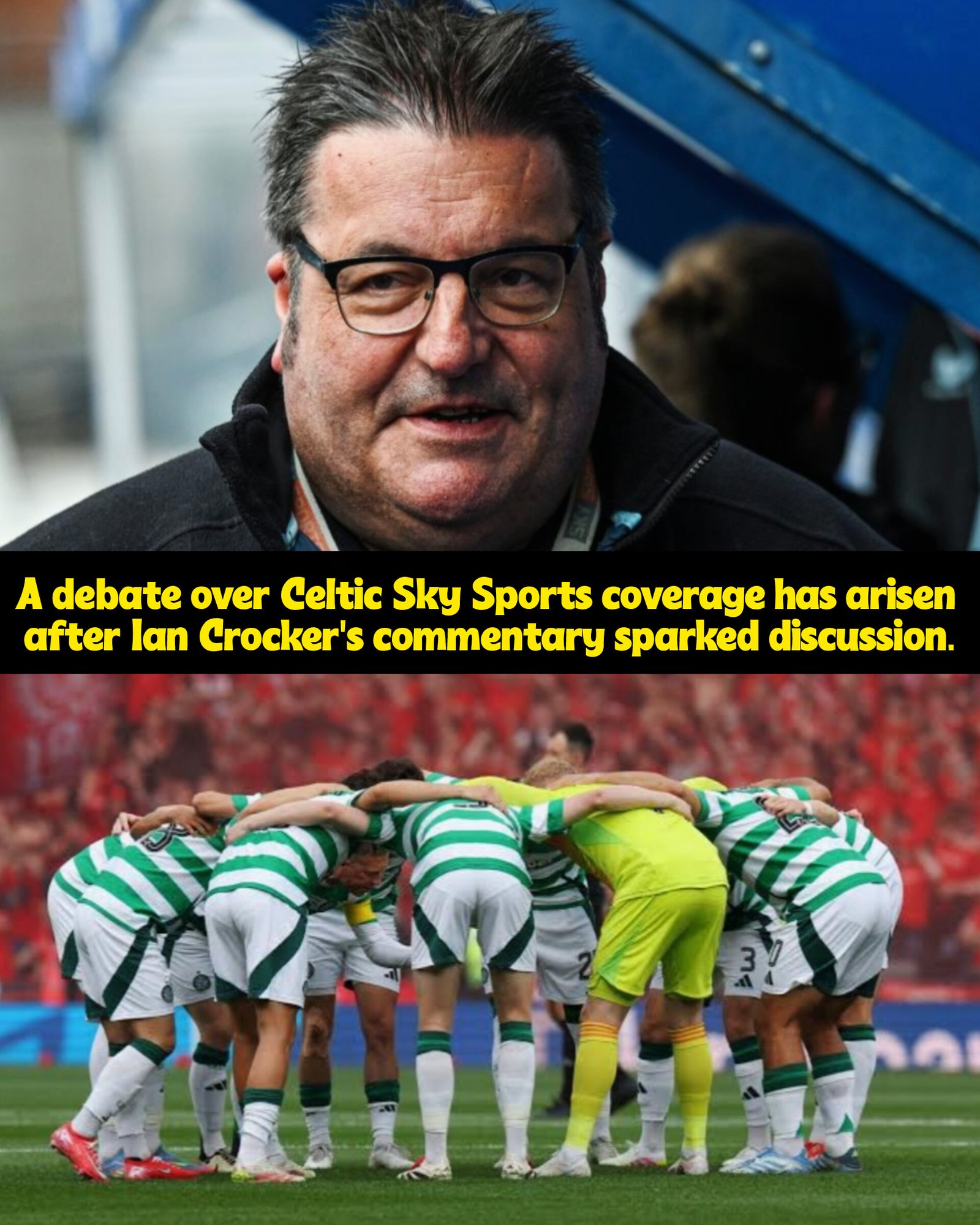
For much of the last 20 years, Scottish football has largely been defined by Celtic’s dominance. The club has enjoyed an era of sustained success that has set them apart from the rest of the competition, making them the benchmark for excellence in the Scottish game.
However, this current season has taken a dramatically different turn. Instead of the usual one-sided title race, the campaign has delivered a far more competitive and unpredictable storyline, capturing the attention of football followers beyond Scotland.
Celtic’s struggles throughout the season, combined with the impressive performances of Heart of Midlothian, have contributed to a rare situation in which three teams are battling for the league title. As the competition heads into the decisive post-split fixtures, the intensity of the race has only increased, making it one of the most intriguing seasons in recent memory.
Amid this backdrop, discussion has arisen about how Celtic have been portrayed in television coverage, particularly on Sky Sports. The topic was brought up during an episode of the Let Me Be Frank podcast, where former Celtic striker Frank McAvennie was asked to give his opinion.
The conversation focused specifically on Celtic’s recent victory over Dundee FC and the manner in which Crocker delivered his commentary during the match. Some supporters felt that his tone and remarks suggested a broader narrative—that it would benefit Scottish football if Celtic failed to win the title this season.
McAvennie, however, was quick to dismiss those claims. He rejected the idea that there was any unfair or biased coverage against Celtic and instead pointed to the team’s own performances as the primary issue. According to him, Celtic’s struggles this season have been clear, and criticism of their displays is justified.
Crocker, who has long been a prominent voice in Scottish football broadcasting, is well known to fans of Celtic, Rangers FC, and Hearts, among others. His commentary style and presence have made him a familiar figure, even if opinions about him differ among supporters.
During the discussion, journalist Simon Houston suggested that Crocker’s commentary may reflect a wider sentiment within Scottish football—that there is a growing desire to see a different team lift the title. This idea stems from the dominance Celtic have enjoyed in recent years, which has left little room for variety at the top.
Houston pointed out that many Celtic fans on social media had criticized Crocker, claiming he seemed overly enthusiastic in highlighting statistics that painted the team in a negative light. He also noted that Crocker’s tone appeared to shift noticeably during the match after a Dundee player was sent off, further fuelling the debate.
McAvennie, however, dismissed these concerns, suggesting that such interpretations were subjective and not necessarily reflective of reality. He made it clear that he did not believe Crocker was intentionally portraying Celtic in a negative way.
When Houston expanded on his point, asking whether commentators like Crocker were simply mirroring the feelings of neutral fans—many of whom might prefer a new champion—McAvennie acknowledged that such a scenario could indeed be seen as beneficial for Scottish football.
At the same time, he emphasized that Celtic’s own performances this season have not been good enough by their usual high standards. He argued that the quality of football on display has fallen short, which naturally leads to more critical commentary.
McAvennie also highlighted the role of commentators in making matches engaging for viewers. With the league title now being contested by three teams, the narrative has become more exciting, and broadcasters are likely to emphasize that competitiveness to maintain interest.
Houston used a well-known journalism analogy to further explain his argument. He referred to the idea that an unusual or unexpected event makes for a more compelling story. In this context, Celtic winning the league—given their dominance—could be seen as routine, whereas another team claiming the title would represent a more newsworthy development.
He illustrated this by noting that Celtic have won 14 of the last 15 league titles, making their success almost predictable. By contrast, a different club emerging as champions would be a significant and unusual occurrence, attracting greater attention and interest.
Houston suggested that commentators like Crocker might be influenced by this narrative, consciously or unconsciously shaping their coverage to reflect the broader appeal of a potential shift in power within Scottish football.
McAvennie responded with a touch of humor, referencing the idea that a good story can sometimes take precedence over strict adherence to facts. Despite this, he did not agree that Crocker was pushing any particular agenda.
He also pointed out Crocker’s personal connection to English football, noting that the commentator is a supporter of West Ham United—a club McAvennie himself once played for. This remark was made lightheartedly but served to underline his belief that Crocker’s commentary should not be viewed through a lens of bias against Celtic.
Ultimately, McAvennie’s stance was clear: while the idea of a new champion might appeal to many, the focus should remain on performances on the pitch. Celtic’s difficulties this season have been evident, and any criticism directed at them is rooted in their form rather than any external agenda.
The debate, however, highlights the broader conversation about media narratives in football and how dominant teams are perceived. As the title race continues to unfold, discussions about coverage, bias, and storytelling are likely to remain part of the wider football discourse.
Kelechi Iheanacho Cleared of Foul in Celtic Winner as Referee Weighs in on VAR Controversy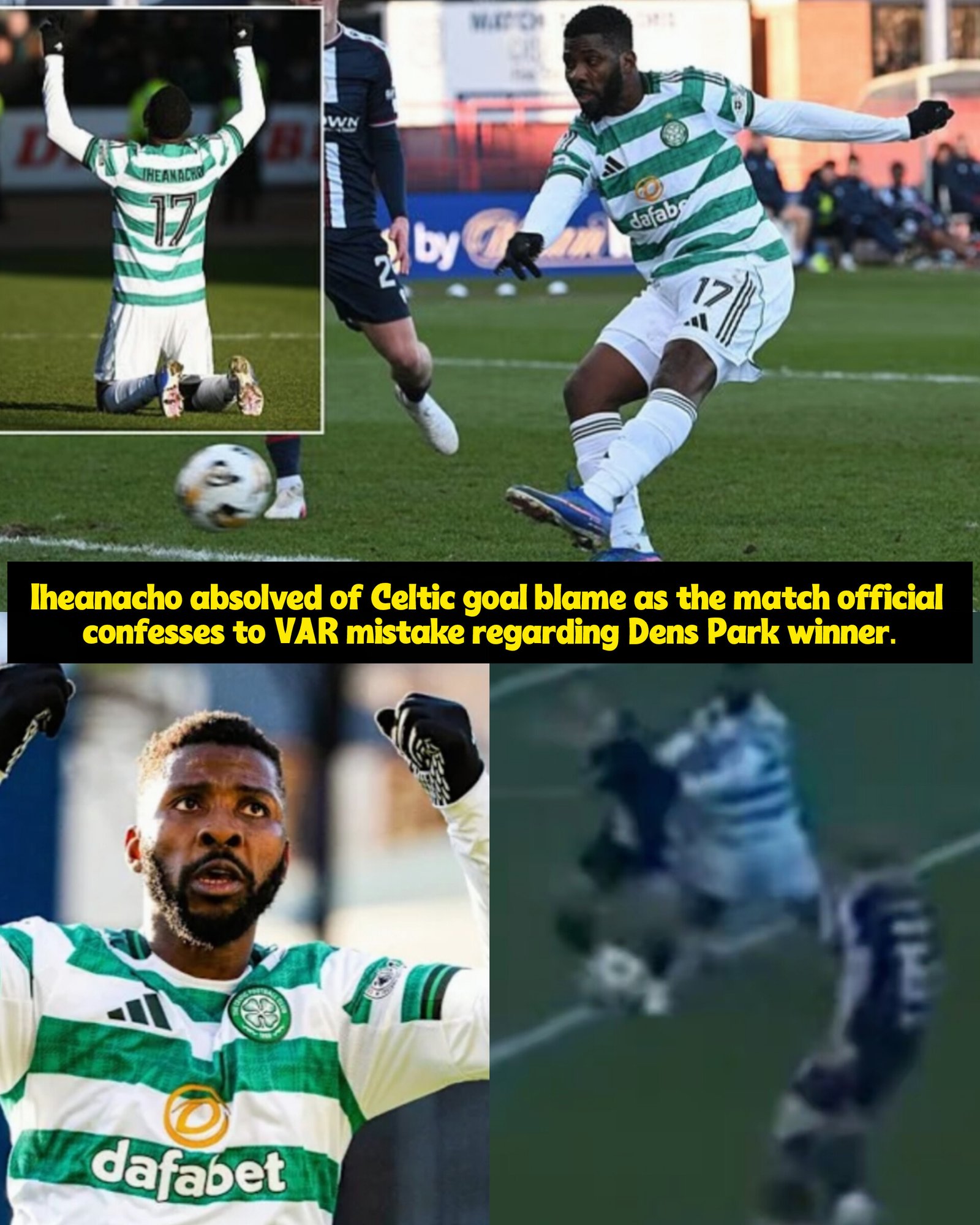
Debate surrounding the legitimacy of Celtic’s decisive goal against Dundee has been firmly addressed, with strong backing for the decision to allow the strike to stand. The winning effort, scored by Kelechi Iheanacho, had sparked widespread discussion, but has now been defended by an experienced refereeing voice.
Referee Dismisses Claims of Foul in Build-Up
Des Roache, speaking on Hotline LIVE, made it clear that he does not believe any infringement occurred in the lead-up to the goal. While acknowledging that opinions may differ, he insisted there was not enough in the incident to justify disallowing the strike.
The controversy centres on whether Iheanacho unfairly challenged a defender before finding the net. However, Roache maintained that the contact observed fell well within the acceptable physical nature of football.
Match Context: Crucial Goal at Dens Park
The moment came in a high-stakes encounter at Dens Park, where Celtic F.C. were locked at 1-1 with Dundee F.C..
Iheanacho, introduced from the bench, made an immediate impact by scoring from close range. His goal proved decisive, securing a vital win that significantly boosted Celtic’s position in the title race.
The result narrowed the gap between Celtic and league leaders Heart of Midlothian F.C. to just three points, intensifying the competition at the top of the table.
Fan Reaction and VAR Scrutiny
Despite the importance of the goal, it quickly became a subject of controversy. Some supporters, particularly those aligned with Rangers F.C., argued that Iheanacho had pushed defender Ryan Astley in the build-up.
These claims led to calls for the goal to be overturned following a VAR review. Critics felt that the contact warranted a foul, which would have resulted in the goal being disallowed.
However, the match officials did not intervene, and the decision stood, further fuelling debate among fans and pundits.
Roache Explains Why Goal Was Correctly Given
Roache addressed the incident in detail, explaining that while still images might make the contact appear questionable, the reality of the situation must be judged within the flow of the game.
He pointed out that football is inherently physical, and minor contact between players is to be expected. In his view, the challenge did not cross the threshold required to award a foul.
Importantly, he also highlighted the lack of reaction from Dundee players at the time. According to Roache, not one player appealed for a foul during the passage of play—something he believes is highly telling.
VAR’s Role in Subjective Decisions
A key aspect of the discussion involved the role of VAR in such situations.
Roache emphasised that VAR is designed to intervene only in cases of “clear and obvious errors.” Because the incident in question falls into a subjective category, it does not meet the criteria for overturning an on-field decision.
He explained that if the referee had initially awarded a foul, VAR would likely have supported that call as well. This, he noted, underlines the subjective nature of the decision.
Acknowledging the Grey Area
While firmly stating that he did not consider the challenge a foul, Roache acknowledged that different interpretations are possible.
He admitted that, in a different scenario where a foul had been given, VAR might still have backed the referee’s decision by pointing to a perceived push or nudge.
This highlights the grey area that often surrounds physical challenges in football, where marginal contact can be interpreted in multiple ways.
Impact of VAR on Player Reactions
Roache also touched on the broader impact of VAR on the game, particularly on how players react to key moments.
He noted that Iheanacho appeared hesitant after scoring, seemingly waiting to see whether the goal would be allowed. According to Roache, this reflects a growing uncertainty among players, who are increasingly cautious in celebrating due to the possibility of VAR intervention.
This hesitation, he suggested, is indicative of the current environment in football, where decisions are frequently subject to review.
Lack of Appeals Strengthens Case
Another significant factor in Roache’s analysis was the absence of protests from Dundee players, including both defenders and the goalkeeper.
He argued that if there had been a genuine foul, players in close proximity would have reacted immediately. The fact that no such appeals were made further supports the decision to let the goal stand.
For Roache, this lack of complaint is one of the clearest indicators that the incident did not warrant a foul.
Conclusion: Decision Stands Firm
In conclusion, Roache expressed complete confidence in the decision to award the goal. He reiterated that, in his opinion, the contact involved did not constitute a foul and fell within the acceptable limits of the game.
While acknowledging that VAR decisions can often be contentious, he believes this particular call was handled correctly. The combination of minimal contact, lack of player اعتراض, and the subjective nature of the incident all contributed to the outcome.
For Celtic, the goal remains a crucial moment in their campaign, while the debate surrounding it serves as yet another example of the complexities introduced by VAR in modern football.
Chris Sutton delivers a blunt assessment of Celtic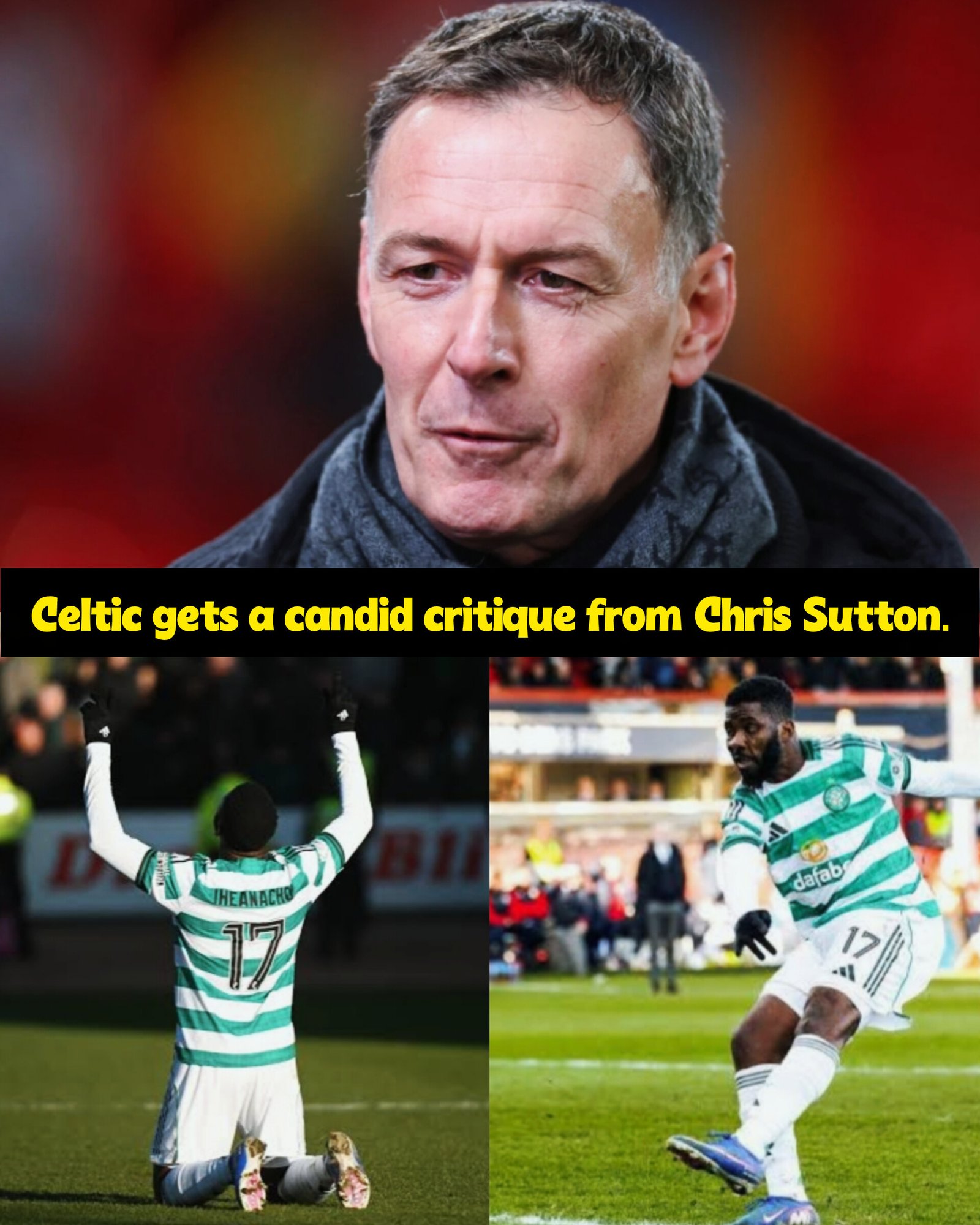
Chris Sutton offered a straightforward and unfiltered assessment following Celtic F.C.’s victory at Dens Park, making it clear that the outcome was far more important than the overall performance as the title race continues to intensify.
The former striker did not attempt to gloss over the display. Instead, he focused on the bigger picture, recognising that at this stage of the season, securing three points outweighs any concerns about how convincingly they were achieved.
Celtic began the match in a manner that hinted they could take firm control. An early goal from Yang Hyun-jun handed them the advantage, setting the tone for what initially looked like a potentially comfortable afternoon. With that early breakthrough, there was an expectation that they might go on to dominate proceedings and extend their lead.
However, despite creating opportunities, their finishing once again proved to be an issue. The inability to convert chances allowed Dundee F.C. to remain firmly in the contest. Rather than putting the game beyond reach, Celtic’s wastefulness kept their opponents within touching distance.

5th April 2026; Dens Park, Dundee, Scotland; Scottish Premiership Football, Dundee versus Celtic; Benjamin Nygren of Celtic and Hyunjun Yang of Celtic celebrate with Kelechi Iheanacho of Celtic after he shoots and scores in the 82nd minute to make it 2-1
Sutton has consistently highlighted this particular weakness in recent weeks. While he acknowledges that Celtic are capable of controlling spells within matches, he has repeatedly pointed out that failing to take chances leaves games hanging in the balance. This fixture was a clear example of that pattern repeating itself.
The turning point came when Dundee found an equaliser from the penalty spot. That moment shifted the dynamic of the match, introducing uncertainty into what had previously seemed a manageable situation for Celtic. Although they continued to see plenty of the ball, their play in the attacking third lacked sharpness.
As the game progressed, the tempo dipped noticeably. The urgency and cutting edge required to break down the opposition were not consistently present, leading to periods where Celtic appeared to be going through the motions rather than asserting full control.
This performance, in many ways, encapsulated the current state of the team. Sutton’s perspective reflects a broader truth about where Celtic find themselves. While there are elements of their play that can be criticised, the primary focus at this stage of the campaign is on results rather than style.
Earlier in the day, Heart of Midlothian F.C. had dropped points, presenting Celtic with an opportunity to strengthen their position in the title race. Sutton understands the significance of such moments, recognising that chances like these are rare in a tightly contested run-in and must be seized when they arise.
From that standpoint, Celtic did what was required. Regardless of the imperfections in their performance, they capitalised on the situation and collected a vital three points.
The decisive moment came through Kelechi Iheanacho, whose goal embodied the kind of efficiency that Sutton has previously called for. There was no unnecessary complexity involved—just a well-delivered cross into the box and a finish taken early and decisively.
That type of clinical approach is something Celtic have lacked at times throughout the season. On this occasion, however, they managed to produce it when it mattered most, and it ultimately proved to be the difference between the two sides.
Sutton has not shied away from questioning Celtic’s attacking edge in the past. His criticism has often centred on their inability to convert dominance into goals, a flaw that has cost them in certain matches. In this instance, while the issue was still evident, they showed just enough cutting edge to secure the win.
It is important to note that this result does not resolve all of the underlying concerns. The same problems remain, particularly when it comes to translating control of possession into a consistent goal threat. These are areas that will need to be addressed if Celtic are to maintain their push for the title.
Nevertheless, Sutton’s overall message is clear and pragmatic. At this stage of the season, performances can be analysed and dissected, but they are ultimately secondary to the points on the board. The ability to grind out results, even when not at their best, is what often defines successful title challenges.
In a tightly contested race, there is little room for perfection. What matters most is finding ways to win, regardless of how polished or convincing those victories may appear. Celtic managed to do exactly that at Dens Park.

6th October 2024; Victoria Park, Dingwall, Scotland: Scottish Premiership Football, Ross County versus Celtic; Ex Celtic striker Chris Sutton on Sky Sports
While there will undoubtedly be further scrutiny of their performance levels, Sutton’s viewpoint emphasises the importance of perspective. The season is reaching a critical phase, and every point carries immense weight.
For Celtic, this was a reminder that success is not always about dominance or flair. Sometimes, it is simply about getting the job done. And in Sutton’s eyes, that is precisely what they achieved—even if the manner of the victory left plenty to discuss.
-
 Blog7 months ago
Celtic issues a fiery VAR statement after Trusty’s red card appeal is dismissed, as furious chiefs release referee audio publicly.
-
 Blog1 week ago
Former official calls on SFA to contact Rangers over fan scenes during Celtic match, labeling them “completely unacceptable.”
-

 Blog7 months ago
Celtic informed their January signing under Martin O’Neill that he wouldn’t play a single minute this season.
-
 Blog7 months ago
Celtic issued an £83 million warning amid looming UEFA threats.
-
 Blog7 months ago
SFA Expected to Review Missed Penalty in Rangers v Celtic Clash
-

 Blog6 months ago
Police respond after reported disorder following Middlesbrough vs Millwall clash
-

 Blog1 year ago
“Courtside to Aisle-Side: Tyrese Haliburton and Jade Jones Set New Wedding Date”
-
 Blog7 months ago
£6m star is looking to leave Rangers this summer and has already announced his next club publicly.