
Blog
Lindsey Vonn addressed graduates, emphasizing that falling is inevitable, but it doesn’t influence your true self.

Olympic skiing icon Lindsey Vonn delivered a heartfelt message of perseverance, resilience and self-belief ahead of addressing the graduating Class of 2026 at the USC Annenberg School for Communication and Journalism commencement ceremony.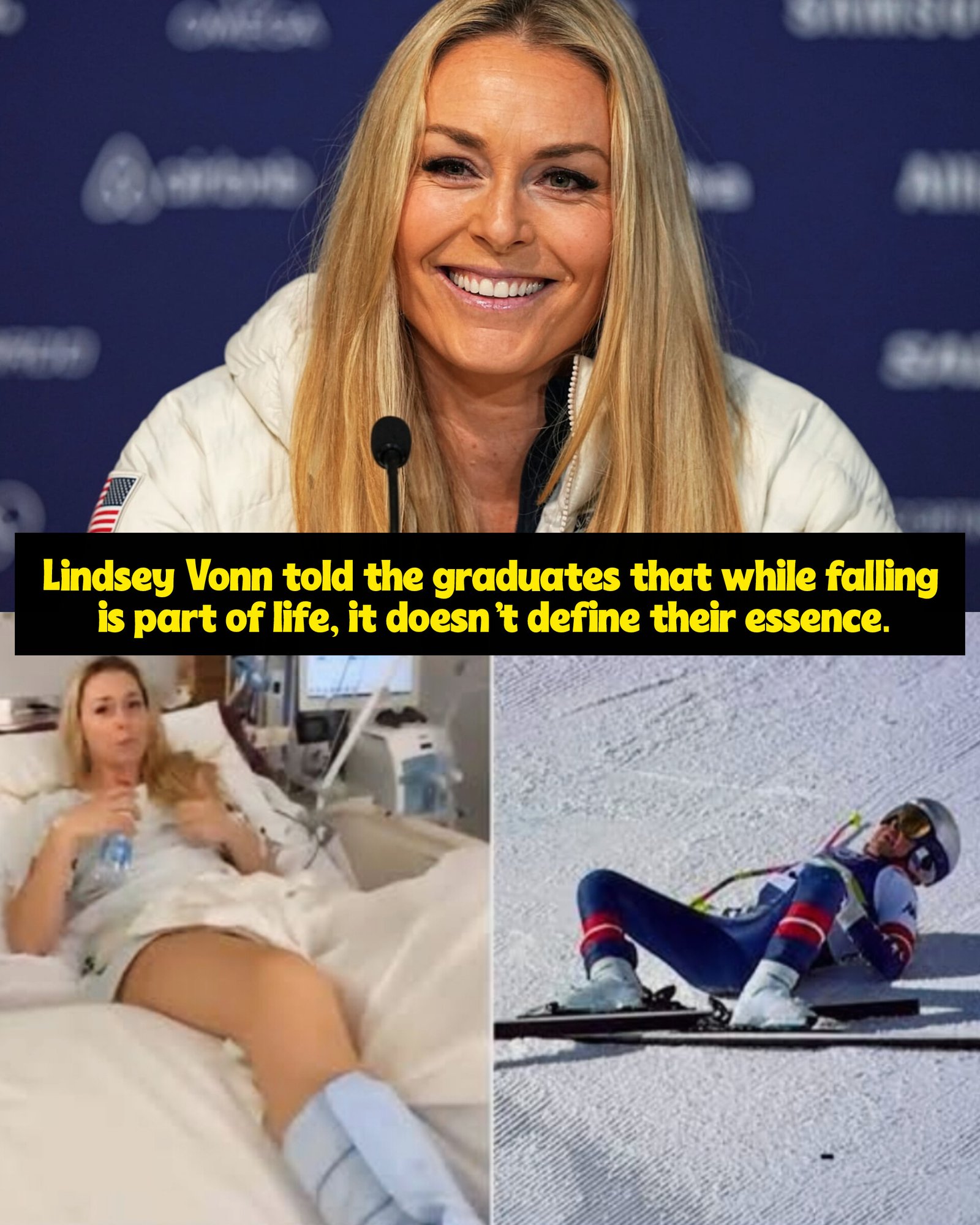
The Olympic gold medalist and bestselling author spoke openly about failure, recovery and identity before stepping onto the stage at Alumni Memorial Park, where she was selected to give the keynote speech to graduates from one of the most respected communication and journalism schools in the United States.
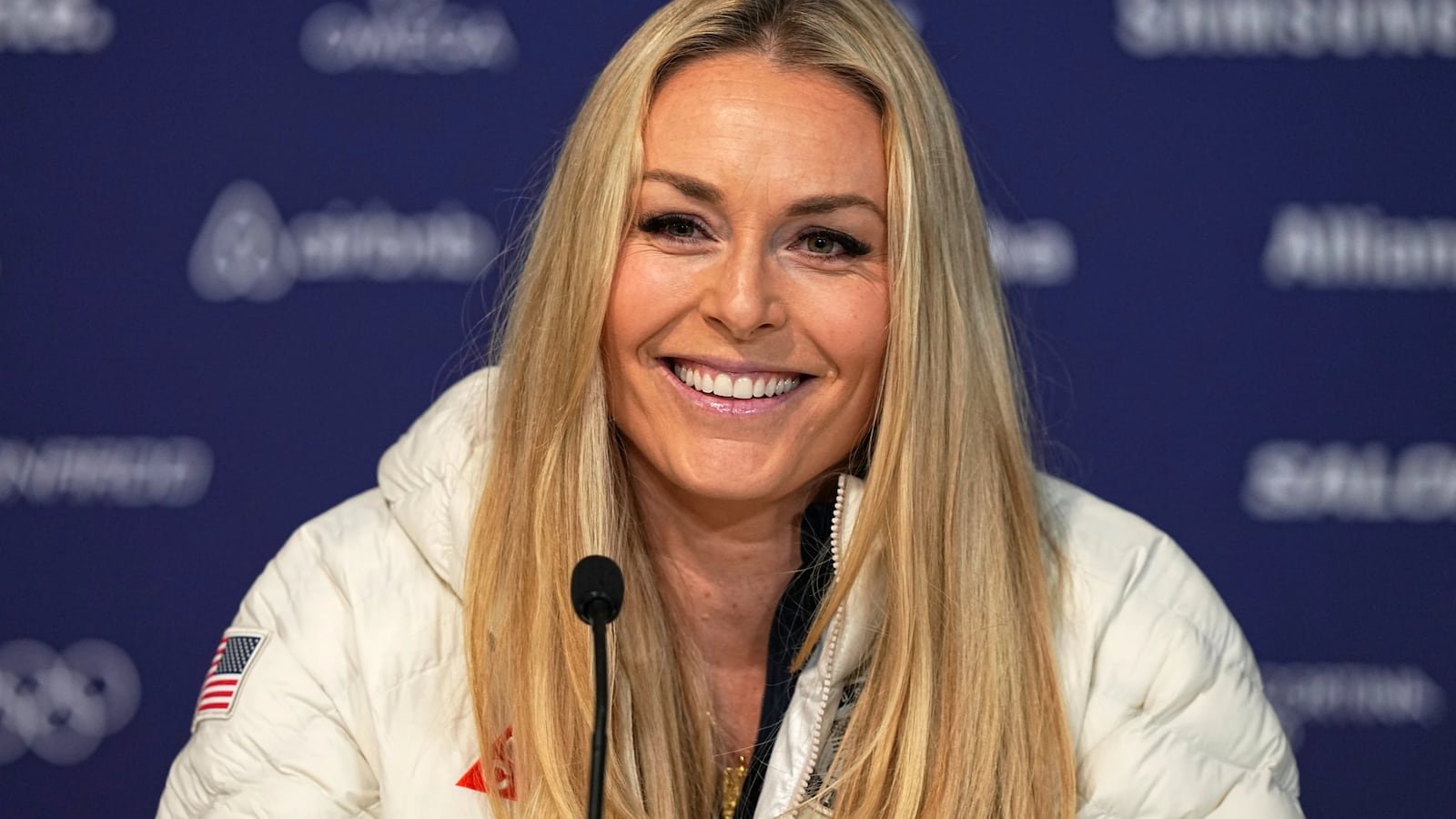
Lindsey Vonn smiles during a press conference at the 2026 Winter Olympics. (Photo by AP Photo/Fatima Shbair)
For Vonn, the moment carried special significance because attending college was never part of her own path.
The former ski champion explained that standing before students who had completed years of academic achievement felt both humbling and inspiring, especially because she never experienced university life herself.
She admitted the invitation meant a great deal to her personally and described it as a genuine honour to celebrate alongside the graduating students and their families.
Vonn praised the accomplishments of the Class of 2026 and expressed admiration for the work and dedication required to graduate from such a prestigious institution.
Ahead of the ceremony, she revealed that the central theme of her address would focus on resilience and the importance of continuing forward when life becomes difficult.
According to Vonn, one of the biggest lessons she has learned throughout her career is that failure should never be viewed as the opposite of success.
Instead, she believes setbacks are an essential part of growth and achievement.
She explained that what truly matters is how people respond during the hardest moments of their lives.
For Vonn, character is not defined by victories alone, but by the willingness to continue fighting after disappointment, injury or failure.
That was the message she hoped graduates would remember long after commencement day had ended.
She encouraged students to keep moving forward even when circumstances do not unfold according to plan, stressing that perseverance is often the deciding factor between giving up and ultimately succeeding.
The message carried extra weight coming from one of the most successful and resilient athletes in Olympic history.
Throughout her career, Vonn repeatedly battled through devastating injuries that would have ended many sporting careers.
Her journey included shattered bones, torn ligaments, surgeries and lengthy rehabilitation periods that forced her away from the slopes during key moments of her career.
The American skiing legend acknowledged that those setbacks often pushed her to emotional and physical limits.
However, she explained that the experience of being sidelined ultimately forced her to confront difficult personal questions beyond sport itself.
According to Vonn, one of the greatest challenges she faced was learning to separate her identity from athletic achievement.
For much of her life, racing had defined her purpose and sense of self.
But during periods when injuries prevented her from competing, she was forced to examine who she was outside of skiing.
That process, she admitted, was painful but ultimately transformative.
Vonn believes those moments helped her become stronger emotionally and more grounded as a person.
Rather than relying solely on success or medals to define her value, she gradually learned to appreciate herself beyond competition.
When she eventually returned to racing, she felt mentally stronger and more balanced than before.
Vonn also reflected on the connection between her experiences and the work being pursued by journalism and communication graduates at USC Annenberg.
As a New York Times bestselling author, she has spent years turning her sporting experiences into stories that connect with people far outside the world of skiing.
She explained that her career was never straightforward or conventional.
There were triumphs, but also fear, doubt, heartbreak and disappointment.
For Vonn, those imperfections are exactly what make stories meaningful and authentic.
She argued that genuine storytelling is built on honesty rather than perfection.
The former Olympic champion believes audiences connect most deeply with stories that reveal vulnerability, struggle and humanity.
Because of that, she encouraged graduates to embrace authenticity in their own work as journalists, storytellers and communicators.
According to Vonn, the difficult moments people experience are not distractions from the story — they are often the story itself.
She explained that the periods of uncertainty and setback in her own life eventually became the moments that shaped her most profoundly.
That perspective became especially relevant during her remarkable comeback at the 2026 Winter Olympics earlier this year.
Nearly six years after retiring from professional skiing, Vonn returned to Olympic competition in Milano Cortina 2026, determined to test herself once again on the world stage.
Her comeback captured global attention because of both her age and the long history of injuries she had already endured throughout her career.
However, the return proved physically punishing.
On February 8, just seconds into her downhill run, Vonn suffered a serious crash that resulted in a broken left leg.
What made the incident even more extraordinary was the revelation that she had already been competing with a ruptured ACL in the same leg only days earlier.
The Olympic legend admitted the outcome of the Games was not what she had envisioned.
Yet despite the disappointment and pain, she described the experience itself as one of the most meaningful chapters of her career.
Simply returning to the Olympic starting gate after years away from competition carried deep emotional significance for her.
Vonn explained that standing there again, after everything she had endured physically and mentally, reminded her of why she fell in love with skiing in the first place.
Although she did not achieve the results she wanted, the fact she still believed she could compete at the highest level meant a great deal to her personally.
That belief, she said, came from trusting herself and the people around her.
She credited the doctors, trainers and medical staff who supported her recovery process and helped restore her confidence.
At the same time, Vonn emphasised that she personally felt mentally prepared to compete despite the risks involved.
Standing in the start gate, she genuinely believed she still had the ability to win.
The confidence to return after retirement and injury reflected the same resilience she hoped to pass on to the graduating class.
While Vonn spent much of her career performing in front of huge global audiences, she admitted delivering a commencement speech brings a completely different type of pressure.
In elite sport, she explained, success often depends on trusting preparation and executing under intense conditions.
Speaking to graduates, however, feels less like performance and more like personal connection.
Vonn said she was excited not simply to speak, but to share an important life moment with students, parents and families celebrating years of hard work and achievement.
She viewed the occasion as an opportunity to offer encouragement during a pivotal transition in the graduates’ lives.
As students prepare to leave university and enter uncertain professional and personal futures, Vonn wanted her words to provide reassurance and perspective.
Her final message to the Class of 2026 reflected the same determination that defined her legendary skiing career.
She reminded graduates that life ahead will inevitably contain obstacles, setbacks and difficult periods.
However, she stressed that maintaining belief in oneself and refusing to surrender during adversity can carry people further than they ever imagined.
For Vonn, resilience is not simply about surviving failure — it is about continuing to move forward despite it.
That philosophy helped transform her into one of the greatest alpine skiers in history, winning Olympic medals, World Cup titles and global recognition throughout her remarkable career.
Now, standing before the graduates of USC Annenberg, Vonn hoped to leave students with the same lesson that shaped her own journey: falling is part of life, but it does not define who you are.
-

 Blog7 months ago
Celtic issues a fiery VAR statement after Trusty’s red card appeal is dismissed, as furious chiefs release referee audio publicly.
-

 Blog1 week ago
Former official calls on SFA to contact Rangers over fan scenes during Celtic match, labeling them “completely unacceptable.”
-

 Blog7 months ago
Celtic informed their January signing under Martin O’Neill that he wouldn’t play a single minute this season.
-

 Blog7 months ago
Celtic issued an £83 million warning amid looming UEFA threats.
-

 Blog7 months ago
SFA Expected to Review Missed Penalty in Rangers v Celtic Clash
-

 Blog6 months ago
Police respond after reported disorder following Middlesbrough vs Millwall clash
-

 Blog1 year ago
“Courtside to Aisle-Side: Tyrese Haliburton and Jade Jones Set New Wedding Date”
-

 Blog7 months ago
£6m star is looking to leave Rangers this summer and has already announced his next club publicly.