
Blog
BBC heavyweight criticizes Ally McCoist for inappropriate commentary as Rangers legend is called out.

Ally McCoist has become one of the most recognisable and popular voices in football broadcasting, but the former Rangers striker recently found himself at the centre of an unexpected social media debate after receiving criticism from businessman and television personality Alan Sugar.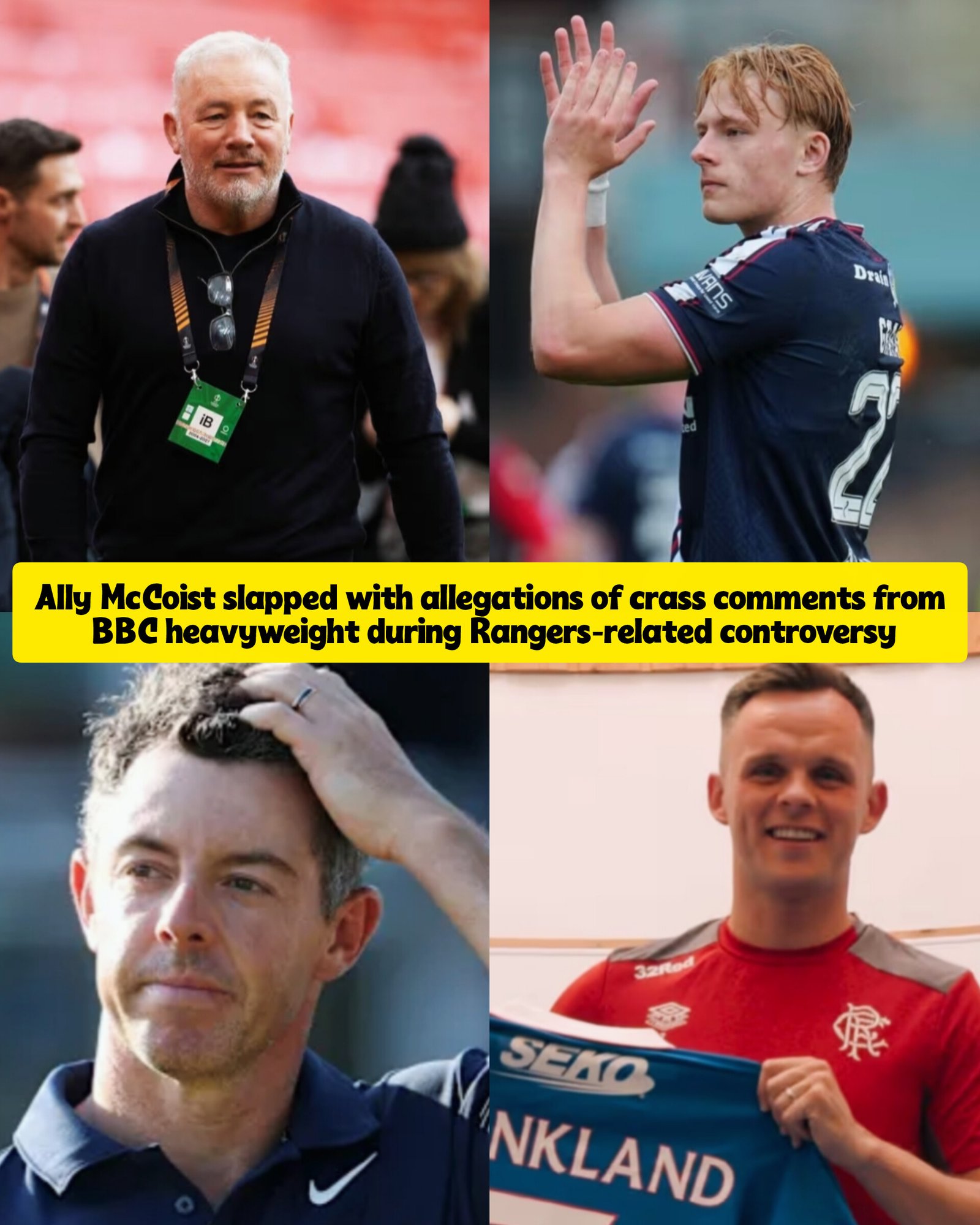

McCoist, widely regarded as one of the leading football pundits and co-commentators in British broadcasting, was covering the UEFA Champions League Final when Sugar took to social media to share his thoughts on the veteran broadcaster’s performance.
Although Sugar initially appeared to acknowledge McCoist’s extensive football knowledge and experience, his comments quickly attracted attention because they included a pointed remark about the former Scotland international’s accent.
The Apprentice star suggested that while McCoist clearly possesses tremendous football expertise, there were moments during the match when he struggled to understand what the commentator was saying. The observation immediately generated discussion among football supporters and media followers online.
The comments were made while McCoist was working on coverage of the Champions League Final involving Paris Saint-Germain and Arsenal. The former Rangers hero was part of TNT Sports’ broadcast team, continuing a role that has helped establish him as one of the most respected and recognisable figures in football media.
Over recent years, McCoist has successfully transitioned from an iconic playing and managerial career into one of the sport’s most celebrated broadcasters. His enthusiasm, humour, football knowledge and natural storytelling ability have made him a favourite among viewers across the United Kingdom and beyond.
Working alongside lead commentator Darren Fletcher, McCoist has become TNT Sports’ principal co-commentator for many of the biggest fixtures in European football. His coverage of major domestic and continental matches has earned widespread praise from supporters, fellow broadcasters and former players alike.
Despite that popularity, Sugar’s social media post focused on McCoist’s strong Scottish accent rather than his football analysis.
In his message, Sugar acknowledged that McCoist was an experienced football figure and someone with considerable expertise in the game. However, he added that there were occasions during the Champions League Final when he found it difficult to understand the former striker’s commentary.
The remark quickly spread across social media platforms and generated a strong reaction from football fans. Many supporters viewed the criticism as unnecessary and rushed to defend McCoist, arguing that his accent is an important part of his identity and one of the reasons he is so well liked by audiences.
A significant number of responses praised McCoist’s broadcasting style, with fans highlighting his authenticity and passion for the game. Others pointed out that football broadcasting benefits from a wide variety of regional accents and personalities, helping create a richer viewing experience for supporters.
Many users also noted that McCoist’s accent has never prevented him from becoming one of the most sought-after commentators in British sport. Instead, they argued that his distinctive voice has become one of the defining features of modern football coverage.
The reaction illustrated just how popular McCoist has become since moving into media work. While football fans often disagree on players, managers and pundits, there appears to be widespread affection for the former Rangers captain and Scotland international.
His journey into broadcasting has been remarkable. Following an extraordinary playing career in which he established himself as one of Rangers’ greatest-ever goalscorers, McCoist gradually built a reputation as a thoughtful and entertaining television personality.
Initially appearing as a pundit and studio analyst, he quickly demonstrated an ability to communicate football concepts in a way that resonated with viewers. His humour, honesty and enthusiasm allowed him to stand out in an increasingly crowded broadcasting landscape.
As a result, television networks increasingly entrusted him with high-profile assignments. Over time, McCoist evolved from being a guest analyst into one of the leading co-commentators in the sport.
Today, he is regularly selected to cover some of the biggest matches in world football. His work spans domestic competitions, European tournaments and international fixtures, ensuring his voice is familiar to millions of viewers.
The Champions League Final represented yet another major occasion in a season packed with significant assignments for the Scottish broadcaster.
Before covering the showdown between Paris Saint-Germain and Arsenal, McCoist had already played a prominent role in TNT Sports’ coverage of two other major European finals.
He was behind the microphone for Aston Villa’s triumph in the UEFA Europa League, providing analysis and commentary throughout the club’s memorable success on the continental stage.
He also worked on Crystal Palace’s victory in the UEFA Conference League, another landmark occasion that attracted significant viewing audiences across Europe.
Those assignments further underlined the level of trust TNT Sports places in McCoist as one of its flagship commentators. Broadcasters consistently select him for the sport’s most prestigious events because of his ability to combine insight, entertainment and emotion.
For many viewers, McCoist’s commentary style offers a refreshing contrast to more traditional approaches. Rather than relying solely on technical analysis, he often shares anecdotes, expresses genuine excitement and reacts naturally to dramatic moments as they unfold.
That authenticity has become one of his defining characteristics. Fans frequently praise his ability to capture the emotion of football while still providing thoughtful observations about tactics, players and key incidents.
His chemistry with lead commentator Darren Fletcher has also been widely recognised as a major factor behind the success of TNT Sports’ football coverage. The pair have formed a strong partnership that many supporters regard as one of the best commentary teams currently working in the game.
Because of that popularity, Sugar’s criticism attracted significant pushback almost immediately.
Supporters argued that McCoist’s Scottish accent is neither a flaw nor a barrier to effective communication. Instead, they suggested it reflects the diversity that exists within British football culture.
Others pointed out that audiences regularly listen to commentators and pundits from a variety of regions and backgrounds, each bringing their own distinctive way of speaking to broadcasts.
Several fans also highlighted that McCoist’s appeal stems in part from the fact that he has never attempted to alter his personality or manner of speaking to fit a particular broadcasting stereotype. His natural delivery and genuine enthusiasm are among the qualities that have made him so successful.
The discussion ultimately became less about commentary and more about the broader appreciation of regional accents in media. Many supporters viewed McCoist’s continued prominence as evidence that authenticity remains highly valued by audiences.
While Sugar’s comments generated headlines, they did little to diminish McCoist’s standing within the football community. If anything, the strong reaction from supporters served as a reminder of how highly regarded he is among fans of clubs across the football spectrum.
His broadcasting career continues to flourish, and he remains one of the most recognisable voices in the sport. Whether covering Champions League finals, domestic cup competitions or major international tournaments, McCoist consistently attracts praise for his passion and knowledge.
Having already conquered football as a player and later as a manager, he has successfully built a third act as one of the industry’s leading broadcasters. Few former footballers have managed to make such a seamless transition from the pitch to the commentary box.
The debate sparked by Sugar’s social media post is unlikely to have any lasting impact on McCoist’s reputation. Instead, it highlighted the affection many supporters have for the Rangers legend and the value they place on commentators who remain true to themselves.
As football’s biggest competitions continue to be broadcast to global audiences, McCoist’s familiar voice is expected to remain a central part of the viewing experience. His passion for the game, combined with his unmistakable Scottish character, has helped transform him into one of the most beloved figures in modern football broadcasting.
For many fans, that authenticity is precisely what makes Ally McCoist such an effective commentator in the first place.
-
 Blog7 months ago
Celtic issues a fiery VAR statement after Trusty’s red card appeal is dismissed, as furious chiefs release referee audio publicly.
-

 Blog1 week ago
Former official calls on SFA to contact Rangers over fan scenes during Celtic match, labeling them “completely unacceptable.”
-

 Blog7 months ago
Celtic informed their January signing under Martin O’Neill that he wouldn’t play a single minute this season.
-

 Blog7 months ago
Celtic issued an £83 million warning amid looming UEFA threats.
-

 Blog7 months ago
SFA Expected to Review Missed Penalty in Rangers v Celtic Clash
-

 Blog6 months ago
Police respond after reported disorder following Middlesbrough vs Millwall clash
-

 Blog1 year ago
“Courtside to Aisle-Side: Tyrese Haliburton and Jade Jones Set New Wedding Date”
-

 Blog7 months ago
£6m star is looking to leave Rangers this summer and has already announced his next club publicly.