
Blog
‘There is clear evidence’ | Backing for disputed Motherwell handball decision involving Celtic

Scottish FA head of refereeing Willie Collum has publicly supported the controversial decision to award Celtic a dramatic late penalty against Motherwell, insisting that match officials were correct in concluding that Sam Nicholson committed a punishable handball offense during the closing moments of the Premiership clash at Fir Park.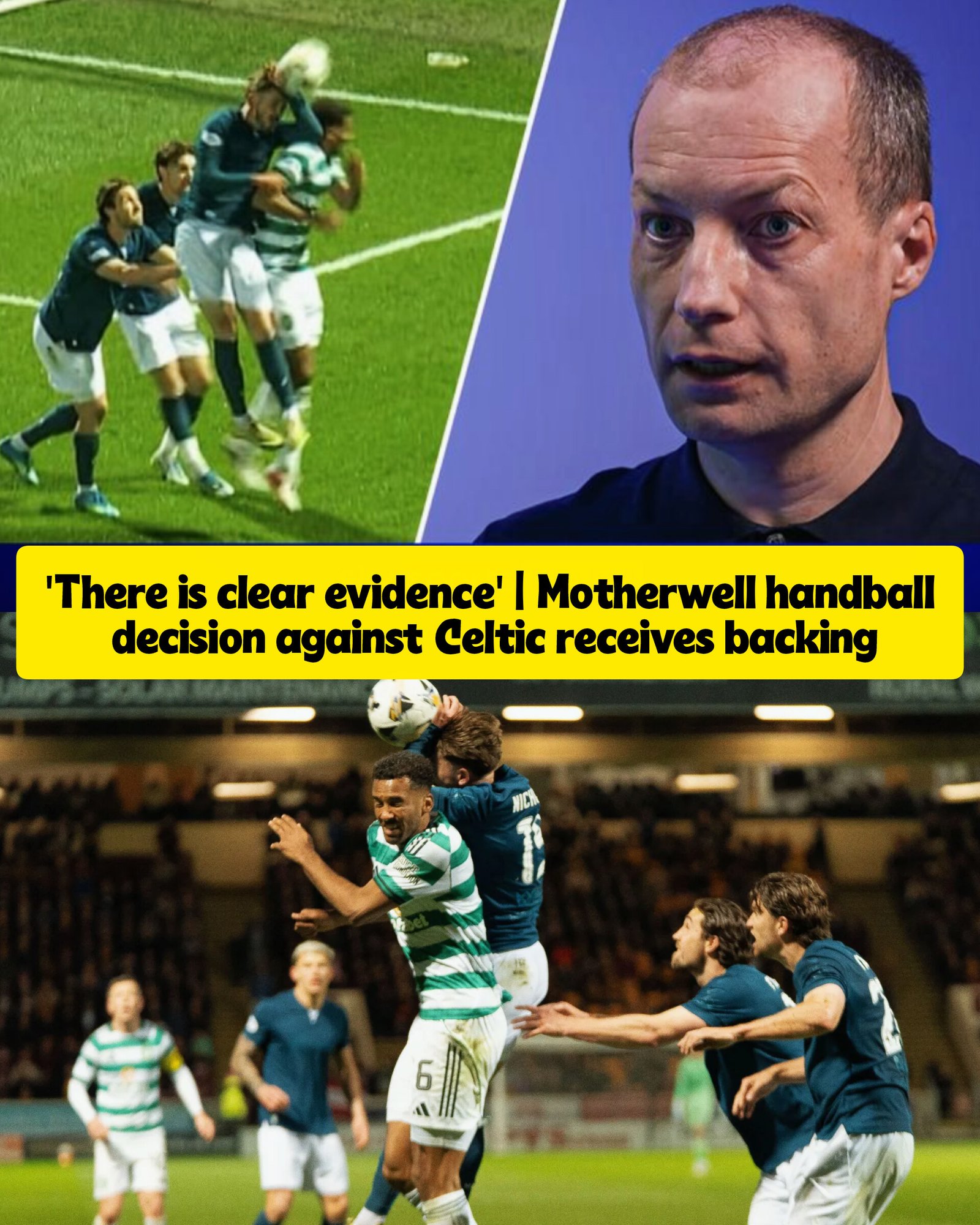
The incident, which took place deep into stoppage time on May 13, sparked intense debate across Scottish football and drew strong reactions from supporters, managers, and pundits alike. The penalty ultimately proved decisive and became one of the most discussed refereeing decisions of the season.

Motherwell’s Sam Nicholson was given a controversial handball for this challenge in the boxCredit: Alamy

Willie Collum has given his verdictCredit: Kenny Ramsay
While Motherwell maintained that the decision was incorrect and Hearts manager Derek McInnes voiced his frustration over the outcome, Collum has now explained why the Scottish FA fully supports the judgement reached by both referee John Beaton and VAR official Andrew Dallas.
Controversial Incident Continues to Divide Opinion
The handball decision immediately generated widespread controversy after Nicholson was penalised for handling the ball during a crucial phase of the match.
Many observers questioned whether there was enough evidence to conclude that the ball had actually struck the Motherwell player’s hand.
The controversy intensified because of the significance of the moment.
The match was entering its final seconds, and the award of a penalty provided Celtic with a golden opportunity to secure victory.
Supporters of rival clubs, particularly Hearts, reacted angrily to the decision, believing it had major implications in the title race.
Motherwell players and fans also felt aggrieved, with Nicholson himself publicly rejecting the suggestion that he had handled the ball.
Despite the criticism, the Scottish FA’s refereeing department has stood firmly behind the officials involved.
Collum Insists Officials Saw Clear Evidence
Speaking about the incident, Collum explained that the refereeing team was convinced the footage provided sufficient evidence to support the handball call.
According to the head of refereeing, a combination of video angles and still images left little doubt in the minds of those reviewing the incident.
Collum stressed that one particular image clearly showed the relationship between the player’s head, arm, and the ball.
From the perspective of the officials involved, that evidence was considered strong enough to confirm contact.
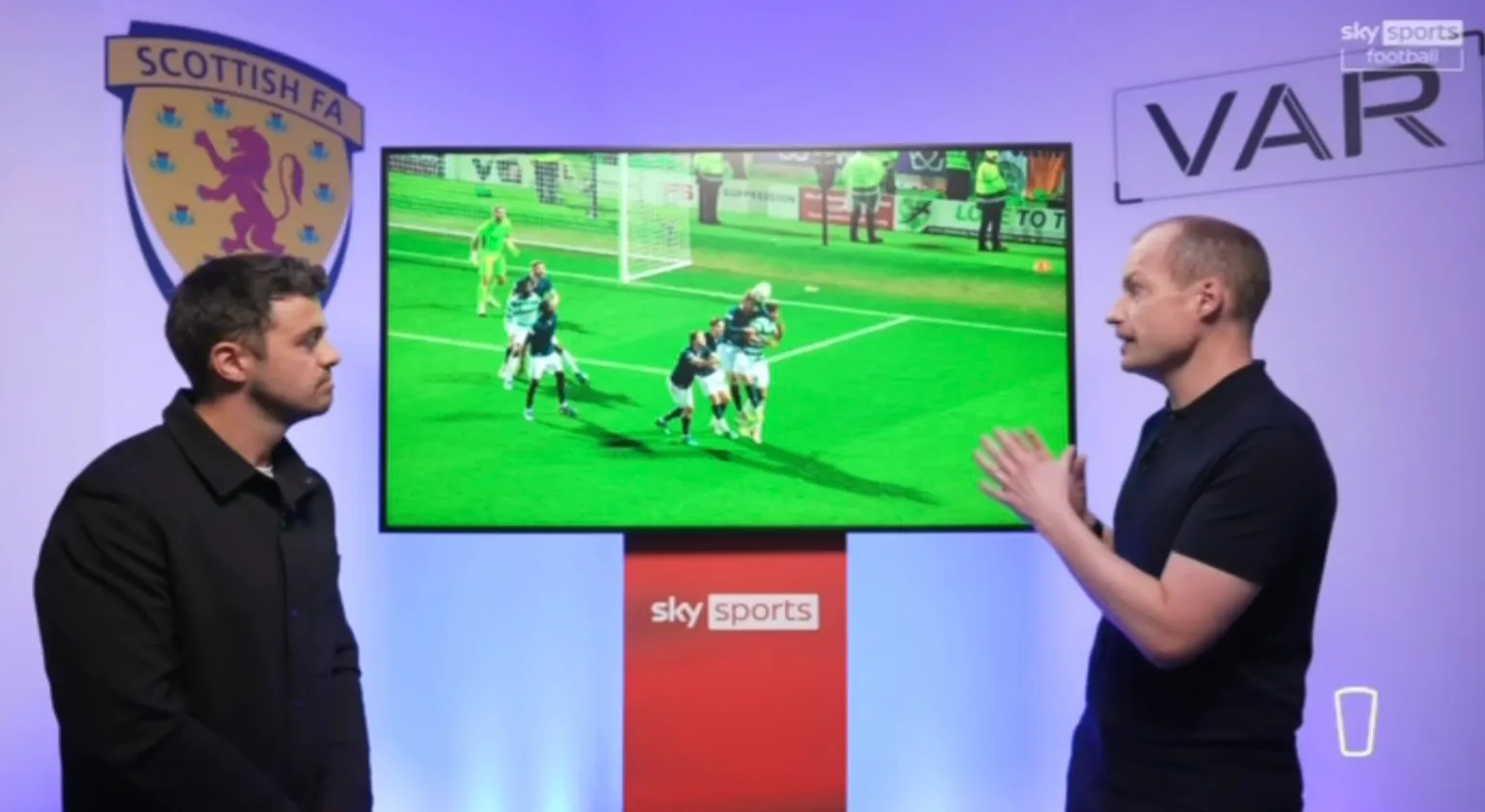
Gordon Duncan and Willie Collum discussing the incidentCredit: Sky Sports
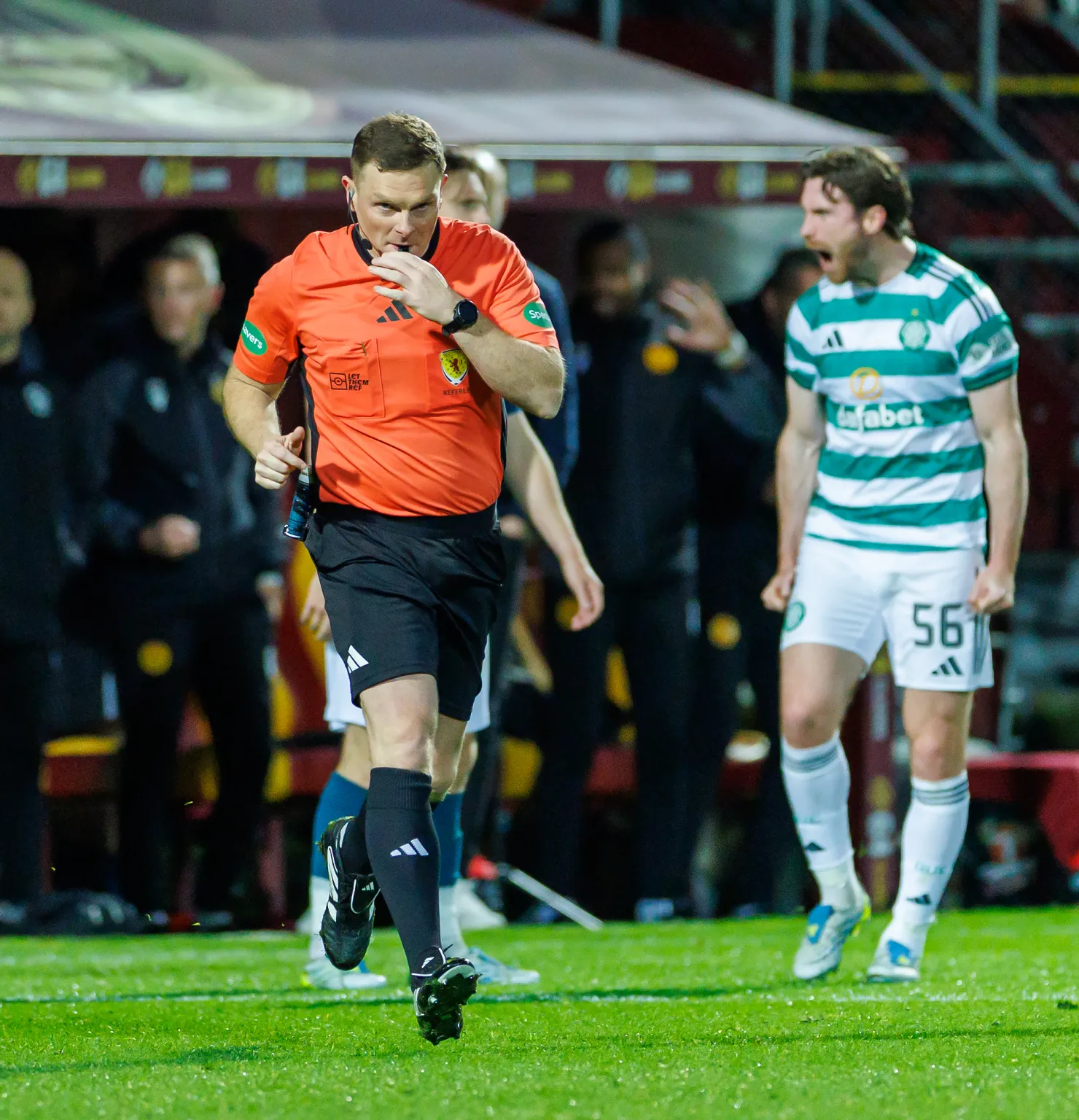
John Beaton awarded a penalty after lookin at the monitorCredit: Kenny Ramsay
He emphasised that both the VAR team and the referee reached the same conclusion after carefully reviewing the available footage.
For that reason, the Scottish FA remains confident that the correct outcome was reached.
Importance of the Decision-Making Process
Collum also highlighted the thorough process that took place before the penalty was awarded.
Given the importance of the moment and the timing of the incident, officials were aware that any decision would attract significant scrutiny.
The review occurred in the 95th minute, adding further pressure to the situation.
According to Collum, both the VAR and assistant VAR conducted a detailed examination before recommending an on-field review.
Only after they were satisfied that a punishable handball had occurred did they advise Beaton to visit the pitchside monitor.
Once there, the referee reviewed the footage for himself and reached the same conclusion.
Collum stressed that the agreement between the officials involved strengthened confidence in the final decision.
Motherwell and Hearts Left Furious
The speed with which the review was completed became another source of frustration for many supporters.
Some fans believed the process appeared rushed and questioned whether enough time had been spent evaluating the evidence.
Motherwell supporters felt their team had been unfairly punished.
Meanwhile, Hearts followers were equally frustrated because of the broader implications for the title race.
Derek McInnes was among the most vocal critics of the decision.
The Hearts manager described the call in strong terms and expressed disbelief that such a penalty had been awarded.
His comments reflected the anger felt by many who believed the evidence was inconclusive.
Nevertheless, Collum rejected suggestions that the officials acted hastily or improperly.
Why the Referee’s Review Was Brief
Addressing criticism of the short review at the monitor, Collum explained that much of the investigative work had already been completed before the referee was called across.
According to him, VAR officials only recommend an on-field review after they have established key facts regarding an incident.
In handball situations, one of those facts is determining whether contact with the hand actually occurred.
By the time Beaton approached the monitor, the VAR team had already completed extensive analysis.
As a result, the referee’s primary responsibility was not to establish whether the ball had touched the hand but to assess the position of the arm and determine whether the action was punishable.
Collum stated that this explains why the review itself appeared relatively brief.
The groundwork had already been done.
Nicholson’s Denial Doesn’t Change Officials’ View
One of the most notable aspects of the controversy was Nicholson’s insistence that the ball never touched his hand.
The Motherwell player strongly disputed the decision and maintained that he had been unfairly penalised.
Despite those claims, Collum reiterated that the officials remain convinced that contact occurred.
The refereeing chief explained that the evidence reviewed by match officials left them satisfied that the ball had indeed struck Nicholson’s arm.
While acknowledging that players may have different perceptions of incidents during matches, Collum stressed that the video evidence available to referees was the determining factor.
From the officials’ perspective, there was no uncertainty regarding whether contact had taken place.
Discussion Over Arm Position
Another major aspect of the debate centred on whether Nicholson’s arm was in an unnatural position.
Under the Laws of the Game, the position of a player’s arm is often crucial when determining whether a handball offense has occurred.
Collum argued that Nicholson’s arm was already positioned unnaturally before the ball arrived.
He rejected suggestions that the incident resulted from a foul by a Celtic player.
Instead, he described it as a normal challenge between two players contesting possession.
According to Collum, Nicholson assumed the risk by having his arm raised in a way that officials considered unnatural.
Because of that positioning, the referees believed the handball offense met the necessary criteria for punishment.
Consistency in Applying Handball Laws
Collum also emphasised the importance of consistency.
He argued that the decision reflected the same approach that Scottish referees have adopted throughout the season.
According to the SFA’s interpretation of the rules, players who place their arms in elevated or unnatural positions increase the likelihood of being penalised if the ball makes contact.
The refereeing chief stated that Nicholson’s case was no exception.
He also pointed out that certain mitigating factors did not apply.
For example, he argued that the player was not attempting to avoid contact with the ball and was not using his arm to protect his face.
Because those exceptions were absent, officials believed the incident met the threshold for a handball offense.
No On-Field Decision Initially Made
Another issue raised by critics was whether VAR should have intervened at all.
Some argued that the original decision on the field should have been respected.
However, Collum responded by noting that there was no original decision regarding the handball.
The referee had not seen the incident during live play.
As a result, no judgement had been made either way.
Collum explained that because the incident had gone unnoticed by the on-field officials, VAR intervention was entirely appropriate.
The technology exists specifically to identify important incidents that referees may miss during matches.
In this case, he argued, that is exactly what happened.
Hearts Penalty Claim Also Reviewed
The Motherwell-Celtic handball incident was not the only controversial decision discussed by Collum.
The refereeing chief also addressed a separate penalty claim involving Hearts.
The incident occurred during Motherwell’s 1-1 draw with Hearts on May 9.
Alexandros Kyziridis went to ground following contact from Tawanda Maswanhise inside the penalty area.
VAR official Greg Aitken recommended that referee Steven McLean review the incident.
Audio released from the review process showed Aitken advising that a penalty should be awarded.
However, after watching the footage, McLean chose not to overturn his original decision.
Collum Believes Hearts Should Have Received Penalty
Unlike the Motherwell handball incident, Collum openly admitted that he disagreed with the final outcome.
The SFA official stated that, in his personal opinion, Hearts should have been awarded a penalty.
He explained that when a referee is called to the monitor in such circumstances, the expectation is often that the footage will reveal sufficient evidence to justify changing the original decision.
Collum suggested that this should have happened in the Hearts incident.
Nevertheless, despite his disagreement, he accepted the referee’s authority to make the final judgement.
The decision therefore stood, even though Collum personally believed a different outcome would have been preferable.
Longelo Handball Decision Supported
Another controversial incident involved a handball appeal against Emmanuel Longelo.
In this case, the ball struck Longelo high on the arm, prompting calls for a penalty.
However, Collum supported the officials’ decision not to award a spot-kick.
The refereeing chief explained that the available footage did not provide sufficiently conclusive evidence to justify intervention.
As a result, the original on-field decision remained unchanged.
The incident highlighted the complexities involved in interpreting handball situations and demonstrated how different circumstances can lead to different outcomes.
Johnston Avoids Red Card in Old Firm Debate
Collum also addressed an incident involving Celtic defender Alistair Johnston during a match against Rangers.
The challenge involved a follow-through on Mikey Moore and sparked debate regarding whether a red card should have been shown.
Some observers felt Johnston’s challenge crossed the threshold for serious foul play.
However, the refereeing department disagreed.
Collum explained that officials look for excessive force, brutality, and actions that endanger an opponent’s safety when considering red cards.
In this case, they concluded that the challenge did not reach that level.
Instead, it was deemed reckless rather than dangerous enough to warrant dismissal.
For that reason, the decision not to issue a red card was supported.
Celtic Should Have Been Awarded Easter Road Penalty
Collum also reviewed an incident from Celtic’s 2-1 victory over Hibernian at Easter Road.
During that match, Benjamin Nygren pushed Josh Campbell inside the penalty area.
According to Collum, the challenge should have resulted in a penalty being awarded to Celtic.
He argued that Campbell made no genuine attempt to play the ball and instead used both hands to push his opponent.
Because of that action, Collum believed the officials made the wrong call.
In his view, the penalty should have been awarded either immediately on the field or following a VAR review.
Hibs Goal Allowed to Stand
While Collum felt Celtic deserved a penalty in that match, he supported the decision to allow Joe Newell’s goal to stand.
Some supporters argued that the goal should have been disallowed because of a possible handball during the attacking phase.
However, Collum stated that the evidence available was not conclusive enough to overturn the goal.
Without definitive proof of a handball offense, officials were correct to allow play to continue.
As a result, the goal remained valid.
Ongoing Debate Around VAR
The latest explanations from Willie Collum underline the continuing challenges faced by referees and VAR officials in Scottish football.
Every major decision is examined from multiple angles, and even detailed reviews often fail to eliminate disagreement.
While Collum has firmly defended the controversial penalty awarded to Celtic against Motherwell, many supporters remain unconvinced.
What is certain is that the debate surrounding VAR, handball interpretations, and refereeing consistency is unlikely to disappear anytime soon.
As technology continues to play a growing role in football, decisions such as these will remain at the centre of discussion long after the final whistle has blown.
-
 Blog7 months ago
Celtic issues a fiery VAR statement after Trusty’s red card appeal is dismissed, as furious chiefs release referee audio publicly.
-

 Blog1 week ago
Former official calls on SFA to contact Rangers over fan scenes during Celtic match, labeling them “completely unacceptable.”
-

 Blog7 months ago
Celtic informed their January signing under Martin O’Neill that he wouldn’t play a single minute this season.
-
 Blog7 months ago
Celtic issued an £83 million warning amid looming UEFA threats.
-
 Blog7 months ago
SFA Expected to Review Missed Penalty in Rangers v Celtic Clash
-

 Blog6 months ago
Police respond after reported disorder following Middlesbrough vs Millwall clash
-

 Blog1 year ago
“Courtside to Aisle-Side: Tyrese Haliburton and Jade Jones Set New Wedding Date”
-

 Blog7 months ago
£6m star is looking to leave Rangers this summer and has already announced his next club publicly.