
Blog
Billionaire launches verbal assault on Celtic ‘bigots’ following Robbie Keane protests.

Controversy Surrounds Robbie Keane’s Celtic Links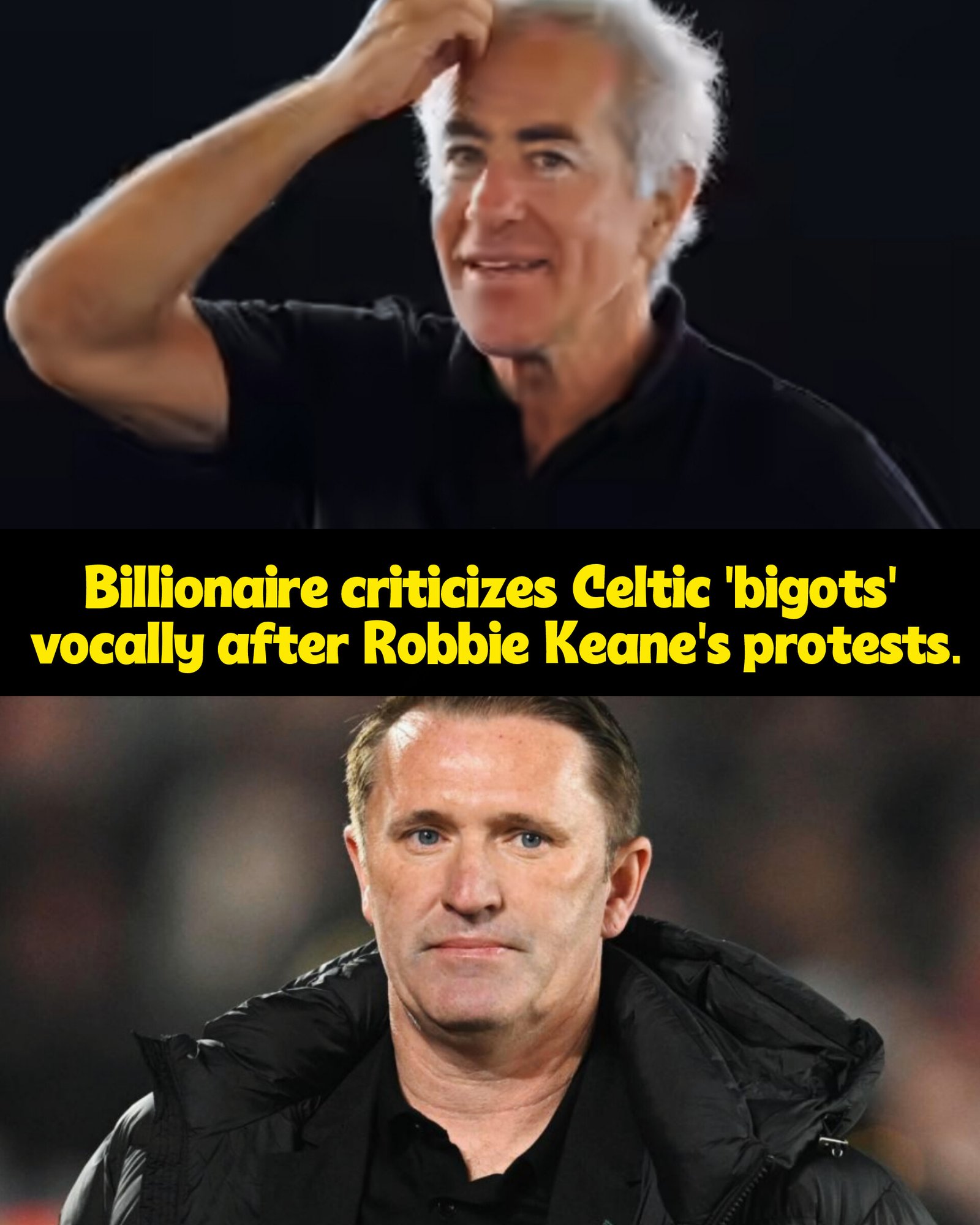
A major row has erupted after some Celtic supporters voiced opposition to the possibility of former striker Robbie Keane becoming the club’s next manager. The backlash has drawn strong criticism from influential figures, including billionaire businessman and World Jewish Congress president Sylvan Adams, who has launched a fierce defence of the Irish football legend.
Keane, who enjoyed a brief but memorable spell as a player at Celtic, was reportedly among the leading candidates to take over the managerial position at Parkhead. However, sections of the club’s support made their feelings clear after his name emerged in connection with the vacancy.
The concerns stemmed from Keane’s previous role as manager of Israeli club Maccabi Tel Aviv. Some supporters argued that his association with the club made him an unsuitable choice to lead Celtic, leading to vocal opposition across fan groups and social media platforms.
Martin O’Neill Emerges as Preferred Choice
As the debate intensified, former Celtic manager Martin O’Neill increasingly appeared to be the favourite to take the role on a permanent basis.
O’Neill remains one of the most respected figures in Celtic’s modern history, having overseen one of the club’s most successful periods during his previous spell in charge. Reports suggested he was competing with Keane for the position, but growing resistance to the former Republic of Ireland captain may have shifted momentum in O’Neill’s favour.
Meanwhile, Keane remains without a managerial role after departing Hungarian side Ferencváros, leaving uncertainty surrounding his next move in football.
Sylvan Adams Launches Strong Defence
The criticism directed at Keane has sparked a passionate response from Sylvan Adams, the Israeli-Canadian billionaire entrepreneur and philanthropist.
Adams, who serves as president of the World Jewish Congress, is known for his extensive support of educational, medical and sporting initiatives in both Israel and Canada. Over the years, he has contributed hundreds of millions of pounds to a wide range of charitable projects.
Reacting to the situation surrounding Keane, Adams accused certain Celtic supporters of engaging in what he described as blatant discrimination under the guise of political activism.
‘A Circus’ Around a Football Legend
Adams expressed disbelief at the controversy, arguing that Keane’s achievements within football should be the focus rather than his previous employment.
He highlighted the Irishman’s remarkable career, pointing out that Keane remains the Republic of Ireland’s all-time leading goalscorer and enjoyed success at some of the biggest clubs in English football.
According to Adams, it was extraordinary that a figure with such credentials could face opposition simply because he had spent time managing in Israel.
He described the situation unfolding in Scotland as a “circus,” suggesting that a small but vocal section of supporters had attempted to derail Keane’s managerial prospects.
Criticism of the Campaign Against Keane
The billionaire was particularly critical of efforts to prevent Keane from securing the Celtic position.
In his view, targeting an individual because of professional work undertaken in Israel crossed a line from political disagreement into outright prejudice.
Adams argued that coaching a football club in Israel should not be considered controversial and insisted that attempts to punish Keane for doing so were unfair and discriminatory.
He maintained that opposition to the former striker had little to do with footballing ability and instead reflected deeper biases against anyone connected with Israel.
Claims of Bigotry
One of Adams’ strongest criticisms was his assertion that the campaign against Keane amounted to bigotry.
He argued that anyone seeking to damage the Irishman’s reputation solely because he worked in Israel was engaging in discriminatory behaviour while attempting to present it as a moral stance.
According to Adams, condemning someone for accepting a coaching role at an Israeli club represented an unacceptable form of exclusion.
He insisted that Keane’s professional decisions should not be used as grounds to question his suitability for a managerial position elsewhere.
Comparing the Situation to Historical Exclusion
Adams went even further by drawing comparisons between the current debate and some of the darker chapters in European history.
He suggested that efforts to judge people based on associations or affiliations echoed forms of ideological purity tests that had been widely condemned in the past.
In his opinion, the criticism directed at Keane reflected a mindset that sought to exclude individuals not because of their actions or abilities, but because of perceived political connections.
The businessman argued that such attitudes were incompatible with the principles of inclusion and fairness that sport should represent.
Sport Should Unite Rather Than Divide
A central theme of Adams’ comments was his belief that sport has historically succeeded because it breaks down barriers rather than creating them.
He pointed to examples throughout history where athletes and sporting competitions challenged discrimination and brought people together across political, cultural and social divides.
For Adams, football should remain a space where individuals are judged on merit and performance rather than external political considerations.
He argued that excluding someone from opportunities because of where they have worked undermines the values that have helped make sport a global force for unity.
Reference to Jesse Owens and the Olympic Ideal
In making his case, Adams referenced one of the most famous moments in sporting history.
He cited the achievements of legendary American athlete Jesse Owens at the 1936 Berlin Olympics, where Owens famously challenged Nazi racial ideology through his performances on the track.
According to Adams, sport reached one of its greatest moments when athletes were judged by talent and achievement rather than political or racial criteria.
He argued that the opposition to Keane represented a move in the opposite direction, where individuals were being evaluated based on associations rather than merit.
Support for Robbie Keane
Despite the controversy, Adams made it clear that he fully supports Keane and believes the former striker deserves respect for both his playing and coaching career.
He praised Keane’s contributions to football over many years and described him as a genuine football hero.
For Adams, the discussion should focus on Keane’s credentials, experience and suitability for the managerial role rather than his previous employment in Israel.
As debate continues among Celtic supporters and the club weighs its managerial options, the comments from Adams have added another high-profile voice to an already heated discussion.
Whether or not Keane eventually lands a major managerial role, the controversy has highlighted the deep divisions that can emerge when football, politics and public opinion intersect.
-

 Blog7 months ago
Celtic issues a fiery VAR statement after Trusty’s red card appeal is dismissed, as furious chiefs release referee audio publicly.
-

 Blog1 week ago
Former official calls on SFA to contact Rangers over fan scenes during Celtic match, labeling them “completely unacceptable.”
-

 Blog7 months ago
Celtic informed their January signing under Martin O’Neill that he wouldn’t play a single minute this season.
-

 Blog7 months ago
Celtic issued an £83 million warning amid looming UEFA threats.
-

 Blog7 months ago
SFA Expected to Review Missed Penalty in Rangers v Celtic Clash
-

 Blog6 months ago
Police respond after reported disorder following Middlesbrough vs Millwall clash
-

 Blog1 year ago
“Courtside to Aisle-Side: Tyrese Haliburton and Jade Jones Set New Wedding Date”
-

 Blog7 months ago
£6m star is looking to leave Rangers this summer and has already announced his next club publicly.