
Blog
Celtic is offering Martin a £40 million war chest — Macca’s just joking around.

The suggestion that Celtic are preparing to hand Martin O’Neill a £40 million transfer budget this summer has certainly raised a few eyebrows, and it’s difficult to take the claim too seriously. Former Celtic hero Frank McAvennie may be hopeful that such a figure is on the table, but anyone familiar with how the club has operated over the years will understand why many supporters remain sceptical.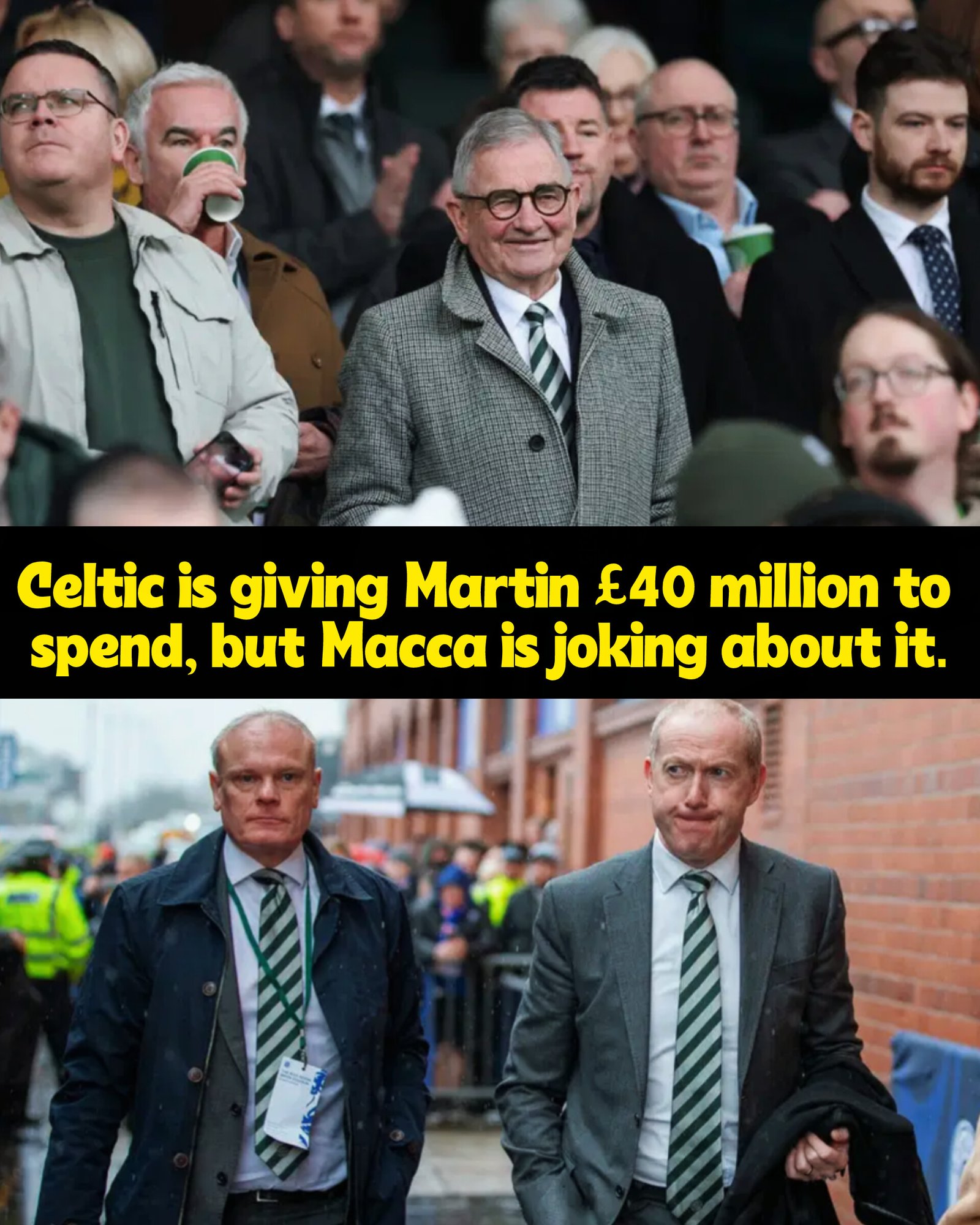
McAvennie recently stated his belief that O’Neill could be backed with as much as £40 million in the transfer market. While it is an attractive idea and one that would excite the Celtic support, it feels highly unrealistic when viewed against the club’s recent history. Celtic have rarely shown a willingness to spend at that level, even during periods when finances have been particularly healthy.
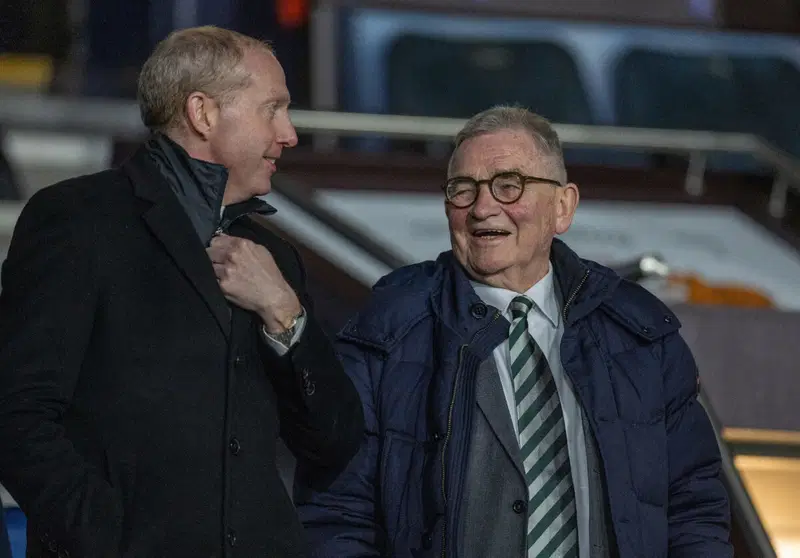
18th January 2026; Rugby Park, Kilmarnock, Scottish Cup Football, Auchinleck Talbot versus Celtic; Celtic CEO Michael Nicholson speaks to interim chairman Brian Wilson. Photo Vagelis Georgariou.
That is not to say O’Neill will be left without support. There is every chance that the club will provide funds for new signings and attempt to strengthen the squad ahead of another demanding campaign. However, a transfer budget of £40 million appears far beyond what many supporters would realistically expect.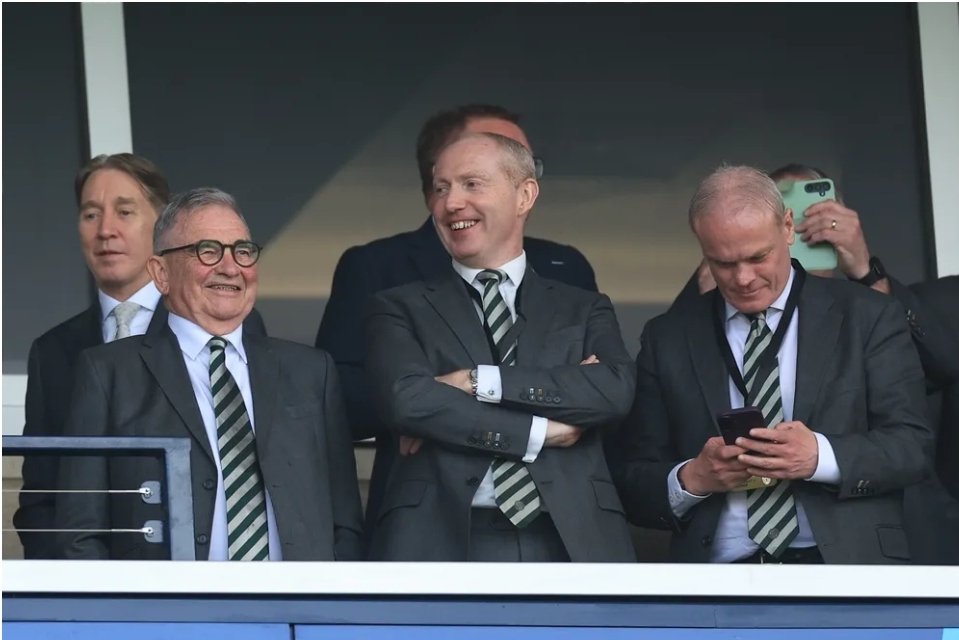
A more likely scenario is that any significant spending will be heavily dependent on outgoing transfers. Celtic have often operated by reinvesting a portion of the money generated through player sales, and there is little evidence to suggest that approach is about to change. If substantial funds become available, they will probably come from departures rather than direct investment from the club’s own reserves.
The possibility of a major sale remains very real. Arne Engels, for example, has attracted considerable attention and could command a fee in excess of £25 million if Celtic decide to cash in. Qualification for the Champions League group stage would also provide a significant financial boost. Even with those potential sources of income, however, it remains difficult to imagine the club sanctioning spending on the scale being suggested.
Most Celtic supporters would love to see the club operate with greater ambition in the transfer market. The club regularly records healthy profits, particularly through player trading, and many fans feel those profits should be reinvested more aggressively into the first-team squad. Supporters often point out that Celtic’s strong financial position should allow the club to compete for a higher calibre of player.

23.05.2026 Celtic v Dunfermline Athletic, Scottish Cup Final – Martin O’Neill with the Scottish Cup. Photo Kenny Ramsay
There is also an argument that increased investment could still be achieved while remaining compliant with UEFA’s financial regulations. Celtic have consistently generated substantial revenue and have often sold players for impressive sums. From the fans’ perspective, there appears to be room for more ambitious recruitment without jeopardising financial stability.
Unfortunately, previous transfer windows have left many supporters unconvinced that such a change in strategy is likely. The current board has frequently prioritised caution, and that has shaped expectations regarding what may happen this summer.
Recent transfer speculation has only reinforced those doubts. The players currently being linked with Celtic are largely individuals who would be available for relatively modest fees. Names such as Elias Filet and Benjamin Tahirovic suggest a continuation of the club’s traditional recruitment model, where value and potential resale profit remain major considerations.
Many supporters would prefer Celtic to pursue players operating at a higher level. Kasper Hogh is one example frequently mentioned, with the striker likely to cost somewhere in the region of £10 million. While that type of signing would send a strong message about the club’s ambitions, experience suggests that deals of that magnitude are far from guaranteed.
The feeling among some supporters is that Celtic’s cautious approach extends beyond player recruitment. Questions have also been raised about the club’s ability to secure Martin O’Neill’s preferred coaching appointments. If negotiations over backroom staff become difficult, critics argue it raises concerns about the likelihood of completing expensive transfer deals.
This perceived reluctance to spend has become a recurring source of frustration. Many fans believe the club remains overly cautious despite its financial strength, with cost-cutting measures evident across various departments. Critics argue that such an approach can undermine progress on the football side of the business.
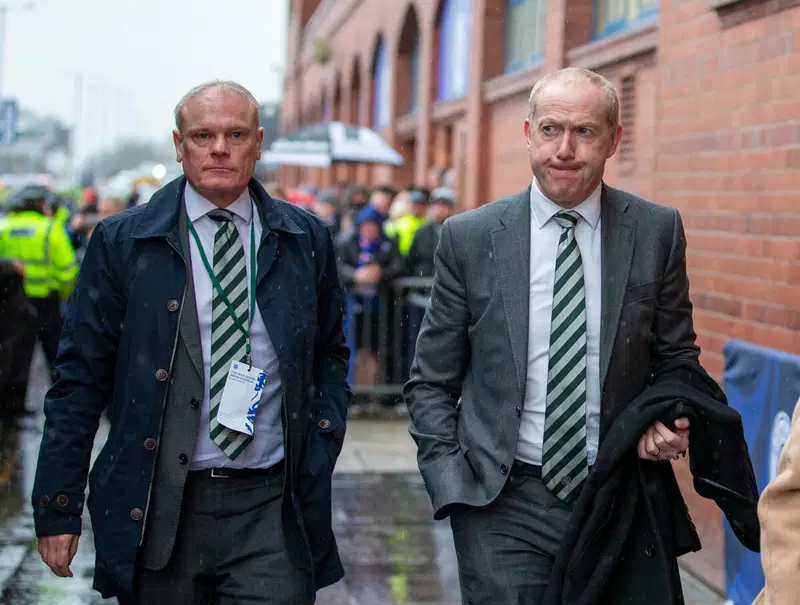
1st March 2026; Ibrox Scottish Premiership the Rangers versus Celtic; Chris McKay and Michael Nicholson of Celtic arrive ahead of the game. Vagelis Georgariou
At the same time, there is a perception among some supporters that executive salaries, bonuses and pension arrangements have not been subjected to the same level of restraint. That contrast has only added to frustrations among sections of the fanbase who want to see greater investment directed toward improving the squad.
Leadership has also become a topic of discussion. Michael Nicholson, Celtic’s chief executive, has faced criticism from some supporters who believe he should be more visible during key moments. This week, it was interim chairman Brian Wilson who publicly responded to criticism and controversy surrounding events following Celtic’s title celebrations against Hearts.
Wilson’s intervention was welcomed by many supporters, who appreciated his willingness to defend the club. Nevertheless, some feel that such responsibilities should fall primarily to the chief executive. Given Nicholson’s position and influence within the organisation, critics argue he should be taking a more prominent role in addressing important issues and representing the club publicly.
Ultimately, supporters remain divided between hope and expectation. Brian Wilson and Dermot Desmond have both spoken positively about Celtic’s ambitions and future plans, raising hopes that meaningful investment could follow. However, years of cautious decision-making have left many fans reluctant to believe significant change is on the horizon.

Celtic chairman Brian Wilson during the Scottish Premiership match between Celtic and Falkirk at Celtic Park on February 01, 2026. (Photo by Ian MacNicol/Getty Images)
While everyone connected with the club would welcome a genuinely ambitious transfer window, there remains considerable doubt about whether Celtic will back those words with the level of action required. Until substantial investment is actually delivered, many supporters will continue to question whether the club is prepared to match its ambitions with meaningful spending.
-

 Blog7 months ago
Celtic issues a fiery VAR statement after Trusty’s red card appeal is dismissed, as furious chiefs release referee audio publicly.
-

 Blog3 weeks ago
Former official calls on SFA to contact Rangers over fan scenes during Celtic match, labeling them “completely unacceptable.”
-

 Blog8 months ago
Celtic informed their January signing under Martin O’Neill that he wouldn’t play a single minute this season.
-

 Blog8 months ago
Celtic issued an £83 million warning amid looming UEFA threats.
-

 Blog7 months ago
SFA Expected to Review Missed Penalty in Rangers v Celtic Clash
-

 Blog6 months ago
Police respond after reported disorder following Middlesbrough vs Millwall clash
-

 Blog2 weeks ago
Middlesbrough receive a warning following Steve Gibson’s submission of a £1.5bn proposal.
-

 Blog1 year ago
“Courtside to Aisle-Side: Tyrese Haliburton and Jade Jones Set New Wedding Date”