
Blog
Sir Alex Ferguson prohibited Manchester United legend from participating in Roy Keane’s testimonial against Celtic.

Roy Keane’s Legendary Manchester United Career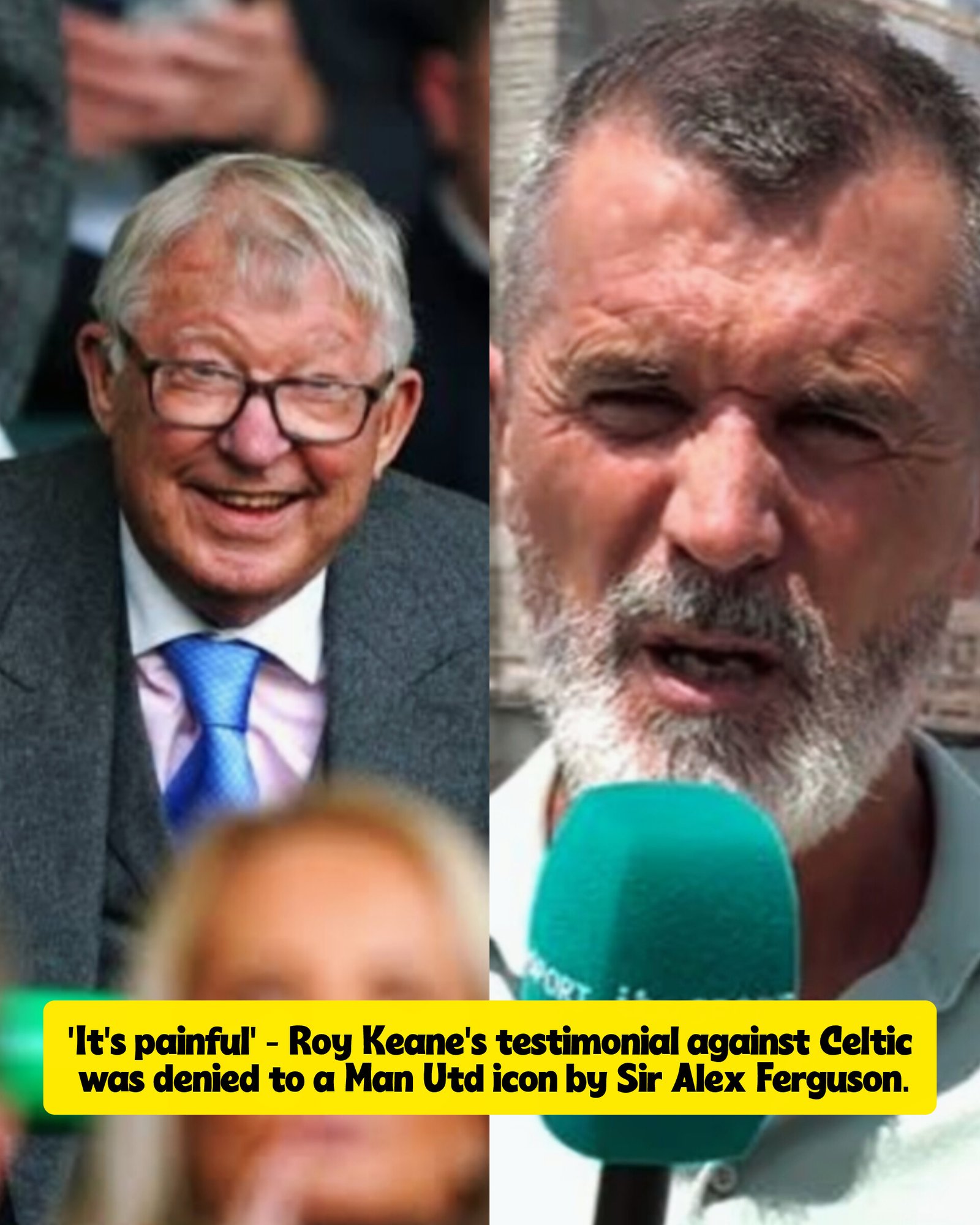
For more than a decade, Roy Keane was one of the most influential figures in Manchester United’s modern history. The Irish midfielder established himself as the heartbeat of the team and played a crucial role during one of the most successful periods the club has ever experienced.
During his time at Old Trafford, Keane collected an impressive list of honours. He helped Manchester United win seven Premier League titles, four FA Cups and the UEFA Champions League, cementing his place among the club’s all-time greats.
His leadership qualities, determination and relentless desire to win made him a fan favourite and an essential component of Sir Alex Ferguson’s side.
Ferguson first brought Keane to Manchester United from Nottingham Forest in 1993, beating several clubs to secure his signature. It did not take long for the midfielder to establish himself as a key player.
His influence continued to grow over the following years, and by 1997 Ferguson had entrusted him with the captain’s armband.
From that point onward, Keane became the driving force behind much of United’s success. His standards, commitment and demanding personality set the tone for the rest of the squad.
Relationship With Ferguson Eventually Broke Down
Despite enjoying tremendous success together, Keane and Ferguson’s relationship eventually deteriorated.
The midfielder was never afraid to speak his mind and often expressed strong opinions regarding teammates and performances.
One of the major turning points came when Keane participated in an interview for the club’s television channel.
Although the interview was never broadcast publicly, reports revealed that the midfielder had heavily criticised several teammates and questioned their commitment and quality.
When Ferguson became aware of the comments, he was furious.
The interview created significant tension behind the scenes and added to existing issues between player and manager.
Ultimately, the situation became unsustainable and led to Keane’s departure from Manchester United in November 2005.
The exit marked the end of a remarkable 12-and-a-half-year association with the club.
Testimonial Organised to Honour Keane
Given everything Keane had achieved during his time at Old Trafford, it was only fitting that he received a testimonial match to celebrate his contribution.
The occasion was organised as a tribute to one of Manchester United’s greatest servants and offered supporters an opportunity to show their appreciation for everything he had done.
The match was scheduled against Celtic, a club with strong connections to Keane due to his Irish roots and his eventual move to Glasgow after leaving United.
Many former teammates, friends and supporters viewed the testimonial as an important occasion to honour a player who had given so much to the club.
However, one notable absence became a major talking point before the game.
Ruud van Nistelrooy Was Not Allowed to Participate
The player in question was Ruud van Nistelrooy, one of Manchester United’s most prolific goalscorers.
Despite his close friendship with Keane, the Dutch striker was not permitted to take part in the testimonial match.
The decision was made by Ferguson and Manchester United, although it was not necessarily connected directly to Keane himself.
Instead, it stemmed from uncertainty surrounding Van Nistelrooy’s own future at Old Trafford.
At the time, speculation regarding a possible departure was intensifying, and tensions had developed between the striker and the club.
As a result, United chose not to include him in the squad for the testimonial.
The decision left Van Nistelrooy deeply disappointed.
Not only was he unable to participate in a special event honouring one of his closest friends, but he also felt unfairly caught in the middle of an ongoing dispute.
Van Nistelrooy Admitted He Was Hurt
Speaking at the time, the Dutch forward made no attempt to hide his frustration.
He explained that he had wanted to be there to pay tribute to Keane and felt upset that he had been denied that opportunity.
Van Nistelrooy admitted that missing the occasion was particularly painful because it prevented him from showing his respect to a player he considered a close friend.
He acknowledged that he had spoken to Keane about the situation and believed the midfielder understood the circumstances.
Nevertheless, he remained disappointed by the decision and the position in which he found himself.
For Van Nistelrooy, the issue was not about football or transfers but about wanting to be present on an important night for someone he respected.
Keane Also Regretted the Situation
Roy Keane himself was equally disappointed that Van Nistelrooy was unable to take part.
The former captain revealed that he had spoken directly with the striker and expressed sympathy regarding the situation.
Keane described the absence as unfortunate and admitted that he would have preferred his former teammate to be involved.
However, he stopped short of criticising Manchester United or discussing the details of Van Nistelrooy’s ongoing issues with the club.
Instead, Keane simply acknowledged that every situation has multiple perspectives.
He suggested that there were likely different sides to the story and hinted that the full truth might only become known in the future.
At the time, Van Nistelrooy remained a Manchester United player and was still under contract with the club.
Keane therefore chose not to make any controversial comments regarding the dispute.
Instead, he wished his former teammate well and focused on the testimonial itself.
Ferguson Had Already Excluded Van Nistelrooy
The testimonial controversy was not the first indication that relations between Ferguson and Van Nistelrooy had become strained.
Earlier in the same period, the striker had been left out of Manchester United’s squad for their final Premier League match of the season against Charlton Athletic.
The decision came amid growing speculation regarding his future and further fuelled rumours of tension behind the scenes.
Missing that fixture carried additional significance because it denied Van Nistelrooy the opportunity to say a proper farewell to the Old Trafford supporters.
Had he featured against Charlton, it would almost certainly have been his final appearance at the stadium.
Instead, he watched from the sidelines as Manchester United completed their season without him.
That meant his final match for the club ultimately came earlier that month in a goalless draw against Middlesbrough.
Few supporters realised at the time that it would be the last occasion they would see the striker represent the club.
Ferguson Hinted at Problems Within the Squad
Following the Charlton match, Ferguson addressed the media and provided some insight into his decision.
While he did not go into specific detail, the Manchester United manager acknowledged that certain issues had arisen during the week.
According to Ferguson, those matters had raised concerns regarding the spirit and harmony within the dressing room.
Given the importance of the occasion and the atmosphere surrounding the club, he felt it was best to leave Van Nistelrooy out of the squad.
The manager also confirmed that discussions would take place with club directors regarding the situation.
His comments suggested that the issues extended beyond football matters alone and reflected wider concerns about squad dynamics.
End of an Era at Old Trafford
Not long after those events, Van Nistelrooy’s time at Manchester United officially came to an end.
In July 2006, he completed a move to Spanish giants Real Madrid, bringing his highly successful spell in England to a close.
Although his departure was surrounded by controversy, there was no questioning his impact on the pitch.
The Dutch striker left Old Trafford with an outstanding record of 150 goals in 219 appearances.
His finishing ability, movement and consistency made him one of the most feared forwards in European football during his prime.
Despite the tensions that marked the final chapter of his Manchester United career, Van Nistelrooy remains one of the club’s greatest goalscorers.
His absence from Roy Keane’s testimonial remains one of the more unusual episodes from that period, highlighting how strained relationships behind the scenes ultimately affected two of Manchester United’s biggest stars during the closing stages of their time at Old Trafford.
-
 Blog7 months ago
Celtic issues a fiery VAR statement after Trusty’s red card appeal is dismissed, as furious chiefs release referee audio publicly.
-
 Blog1 week ago
Former official calls on SFA to contact Rangers over fan scenes during Celtic match, labeling them “completely unacceptable.”
-

 Blog7 months ago
Celtic informed their January signing under Martin O’Neill that he wouldn’t play a single minute this season.
-
 Blog7 months ago
Celtic issued an £83 million warning amid looming UEFA threats.
-
 Blog7 months ago
SFA Expected to Review Missed Penalty in Rangers v Celtic Clash
-

 Blog6 months ago
Police respond after reported disorder following Middlesbrough vs Millwall clash
-

 Blog1 year ago
“Courtside to Aisle-Side: Tyrese Haliburton and Jade Jones Set New Wedding Date”
-
 Blog7 months ago
£6m star is looking to leave Rangers this summer and has already announced his next club publicly.