
Blog
Police criticize Celtic in a confidential briefing sent to ministers ahead of the title decider.

Confidential police documents released through Freedom of Information legislation have revealed concerns raised about Celtic’s handling of supporter celebrations before last season’s Scottish Premiership title decider. According to the internal briefing, Police Scotland believed the club failed to provide a workable alternative to the unofficial street gatherings that have repeatedly resulted in disorder across Glasgow city centre following league title victories.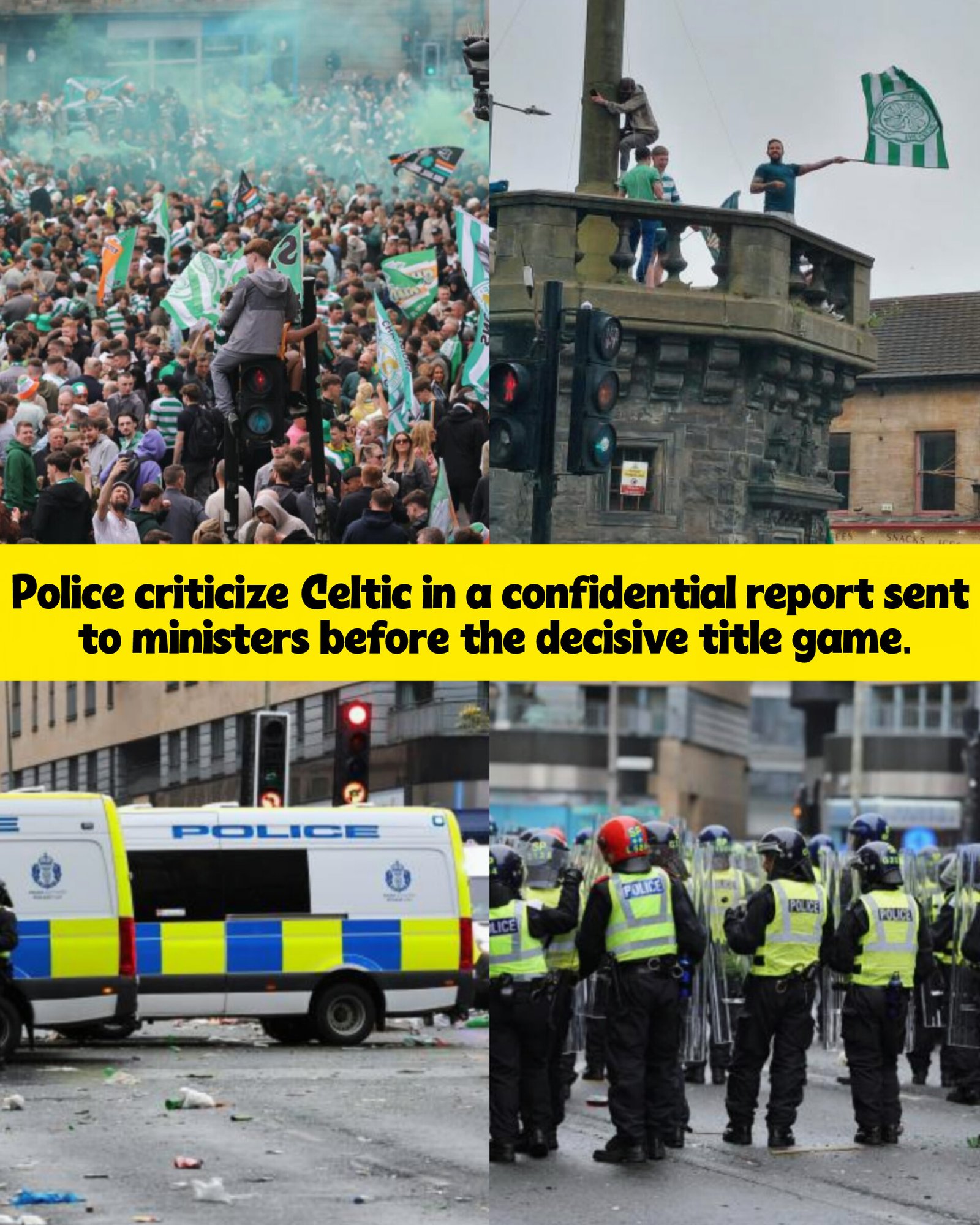
The report, prepared just days before Celtic secured another league championship, was shared with Scottish Government ministers and outlined the police service’s expectations, concerns, and operational planning surrounding the anticipated celebrations. It also highlighted months of discussions involving Police Scotland, Glasgow City Council, and Celtic that ultimately failed to produce an agreed solution.
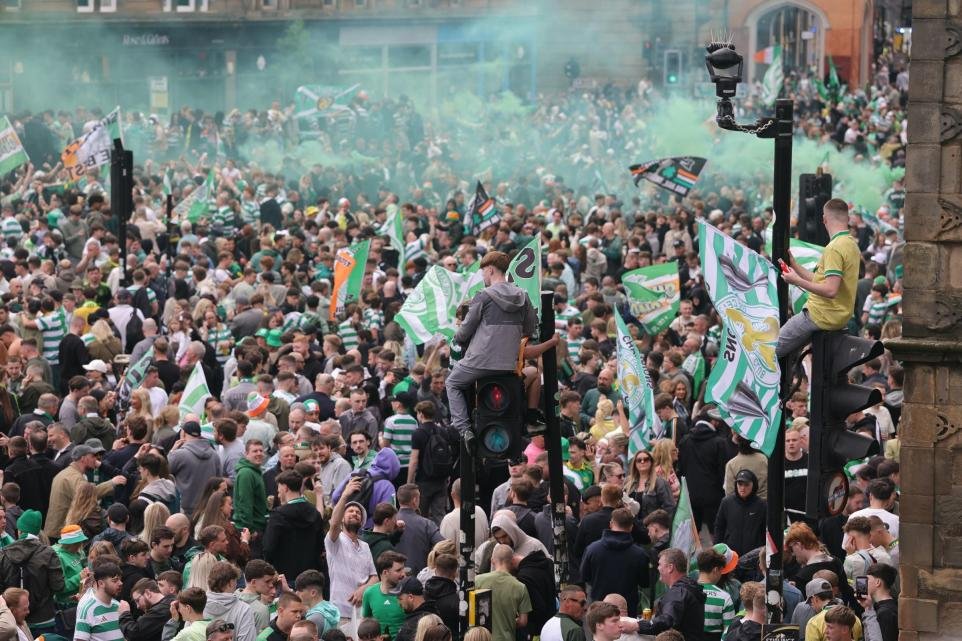
Celtic fans celebrate at Trongate in May (Image: STEVE WELSH)
Internal Police Report Released
The document formed part of Police Scotland’s operational planning for the closing stages of the Premiership season.
Prepared by Assistant Chief Constable Mark Sutherland, the report was distributed to ministers two days before Celtic clinched a fifth consecutive Scottish Premiership title with a dramatic 3-1 victory over Hearts at Celtic Park.
The briefing, which was later obtained through Freedom of Information requests, focused on what Police Scotland described as Operation Veetch, the force’s strategy for managing events surrounding the league title conclusion.
It contained detailed assessments of expected supporter behaviour, public safety concerns, and the planning discussions that had taken place in the months leading up to the decisive fixture.
Police Point to Previous Years of Disorder
Within the report, officers explained that Celtic’s recent title successes had consistently been followed by large, unofficial gatherings in Glasgow’s Merchant City and Trongate districts.
According to Police Scotland, these celebrations have become an annual occurrence whenever Celtic secure the championship before the final round of fixtures.
The briefing noted that previous gatherings had featured widespread alcohol consumption, open drug use, pyrotechnics, and dangerous behaviour among sections of supporters.
Police also highlighted repeated incidents involving assaults, breaches of public order, vandalism, and anti-social behaviour.
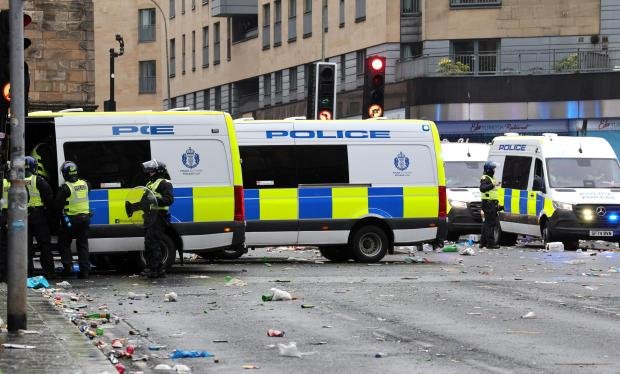
Police in Glasgow following disorder after Celtic’s title win (Image: Steve Welsh/PA Wire)
Beyond the criminal activity, the report stated that cleanup operations following some celebrations had cost more than £100,000, while multiple police officers had suffered injuries policing the events.
The briefing further noted that residents, local businesses, and community organisations had repeatedly voiced concerns over the disruption caused by the annual gatherings.
Talks Held After Previous Celebrations
Following the disorder associated with the previous year’s title celebrations, efforts were made to prevent similar scenes from occurring again.
The report explained that then Justice Secretary Angela Constance chaired discussions involving both Celtic and Rangers following the 2025 celebrations.
According to Police Scotland, both Glasgow clubs agreed to work alongside public authorities in an effort to identify safer ways of managing future title celebrations.
Glasgow City Council subsequently organised a series of meetings involving representatives from both clubs, council officials, and Police Scotland.
Those discussions continued over several months as authorities attempted to develop an agreed solution before the conclusion of the following league season.
Police Claim Celtic Failed to Produce a Workable Solution
Despite what the report described as constructive discussions involving all parties, Police Scotland concluded that no acceptable alternative had been secured.
The internal briefing stated that Celtic did not identify or commit to what officers considered a viable option capable of replacing the unofficial street gatherings.
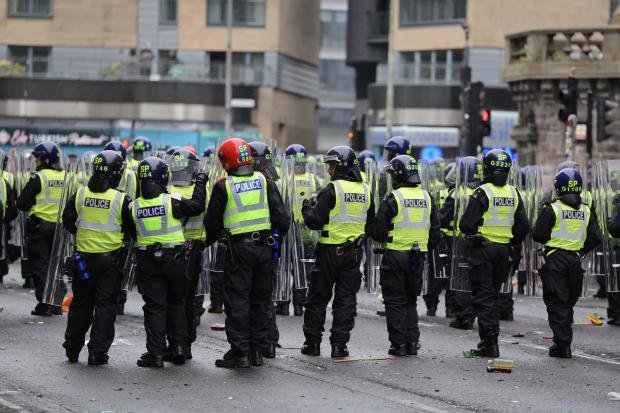
Mercat Cross (Image: Newsquest)
According to the report, months of engagement involving the police and Glasgow City Council ultimately failed to produce a formal agreement regarding an organised celebration.
That conclusion formed one of the central criticisms contained within the confidential document shared with government ministers.
Officers Predicted Major Public Order Challenges
The report also included operational assumptions regarding supporter behaviour if Celtic secured the championship.
Police anticipated heightened emotions among supporters throughout the day and warned ministers that significant public safety risks would likely arise.
Among the expected issues were the widespread use of pyrotechnics around Celtic Park before and after the match.
The briefing further predicted that supporters would likely enter the pitch following the final whistle if Celtic secured the title.
Away from the stadium, officers also anticipated that thousands of supporters would gather in Glasgow city centre, particularly around Merchant City and Trongate.
Those predictions would later prove largely accurate.
Celebrations Unfold as Expected
Celtic eventually confirmed the championship by defeating Hearts 3-1 at Celtic Park.
Supporters entered the playing surface shortly after Callum Osmand scored the club’s decisive third goal during stoppage time, prompting large-scale celebrations inside the stadium.
Hearts later stated that their players left the venue immediately after the match because they felt the atmosphere had become intimidating and threatening.
Elsewhere in Glasgow, despite public appeals from Celtic asking supporters not to attend unofficial gatherings, thousands of fans made their way into the city centre.
An estimated crowd of approximately 3,000 supporters assembled around Merchant City and Trongate.
Community representatives later described parts of the area as effectively becoming inaccessible because of the scale of the celebrations.
Riot Police Deployed During Disorder
As events escalated throughout the evening, Police Scotland deployed specialist public order officers to restore control.
Serious disorder developed in several locations, creating challenges for emergency services and local businesses.
According to reports, two police officers sustained serious injuries while carrying out their duties during the operation.
In addition, three members of the public required hospital treatment following incidents connected to the celebrations.
The scale of the disorder reinforced many of the concerns outlined within the confidential police briefing prepared before the match.
Comparison Drawn With Edinburgh Planning
The report contrasted Glasgow’s preparations with those taking place in Edinburgh.
Police explained that authorities in the Scottish capital had been working closely alongside Hearts over a prolonged period regarding potential title celebrations.
Plans had reportedly been developed for a civic reception and open-top bus parade should Hearts have won the Premiership.
Police confirmed that a dedicated command structure had already been established to support those arrangements.
Officials described the Edinburgh planning process as a collaborative partnership involving the club, local authority, and emergency services.
By comparison, the report stated that no similar agreement had been reached between Glasgow City Council and Celtic.
Operational Details Remain Confidential
While significant sections of the report have now been released, portions concerning policing tactics and resource deployment remain heavily redacted.
Police Scotland relied on exemptions contained within Freedom of Information legislation to withhold operational details.
The force argued that publishing information regarding policing capacity and tactical planning could assist individuals intending to commit offences at future events.
As a result, many aspects of Operation Veetch remain confidential.
Debate Continues Over Organised Celebrations
Calls for officially organised title celebrations have continued for several years.
Supporters and community representatives have repeatedly suggested that structured events could reduce disorder by providing a safer environment for fans.
However, Glasgow City Council has consistently maintained that any organised celebration would require financial support from the football clubs themselves rather than local taxpayers.
Following this year’s celebrations, council officials questioned whether individuals intent on causing disorder would attend a controlled fan event in any case.
A council spokesperson argued that people responsible for violence, vandalism, and attacks on emergency workers would be unlikely to choose an organised venue, while responsible organisers would not willingly admit those intent on causing trouble.
Council Highlights Glasgow’s Unique Situation
Council representatives also pointed to Glasgow’s unique football landscape.
They noted that a Glasgow club has won the Scottish league championship every season for approximately four decades, making annual supporter celebrations almost inevitable.
Because of that sustained success, officials argued the city cannot reasonably be expected to fund major public events every year.
Instead, they said the council has continued offering technical advice and planning assistance while encouraging clubs to participate in long-term solutions.
Although acknowledging that the behaviour of a minority of supporters remained unacceptable, council officials also observed that attendance at this year’s unofficial gathering was lower than in previous seasons.
Police Investigation Continues
Police Scotland’s investigation into the disorder remains ongoing.
Numerous arrests have already been made as detectives continue examining incidents involving violence, vandalism, anti-social behaviour, and attacks on officers.
Investigators recently released CCTV images of an additional 28 individuals they wish to identify, bringing the total number of people publicly sought in connection with the investigation to 56.
Chief Superintendent Emma Croft, who oversees policing in Greater Glasgow, confirmed that extensive inquiries remain underway.
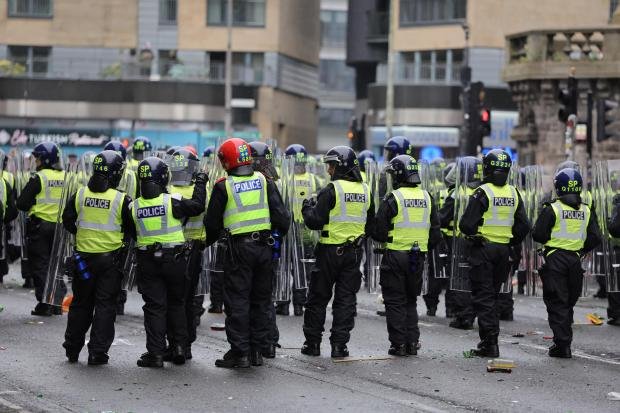
Police look on as Celtic fans celebrate in Glasgow (Image: STEVE WELSH)
She stressed that the disorder had significant consequences for local communities, businesses, football supporters, and police officers alike.
Croft urged anyone who recognises individuals featured in the published CCTV images to contact Police Scotland as officers continue working to identify those responsible.
With investigations still active and discussions regarding future title celebrations continuing, authorities, football clubs, and local government face renewed pressure to establish a long-term solution capable of preventing similar scenes when the next championship is decided.
-
 Blog7 months ago
Celtic issues a fiery VAR statement after Trusty’s red card appeal is dismissed, as furious chiefs release referee audio publicly.
-
 Blog1 week ago
Former official calls on SFA to contact Rangers over fan scenes during Celtic match, labeling them “completely unacceptable.”
-

 Blog7 months ago
Celtic informed their January signing under Martin O’Neill that he wouldn’t play a single minute this season.
-
 Blog7 months ago
Celtic issued an £83 million warning amid looming UEFA threats.
-
 Blog7 months ago
SFA Expected to Review Missed Penalty in Rangers v Celtic Clash
-
 Blog6 months ago
Police respond after reported disorder following Middlesbrough vs Millwall clash
-

 Blog1 year ago
“Courtside to Aisle-Side: Tyrese Haliburton and Jade Jones Set New Wedding Date”
-
 Blog7 months ago
£6m star is looking to leave Rangers this summer and has already announced his next club publicly.