
Blog
“Why should they get a voice?” – Sutton rejects Boyd’s claim about Celtic fans

Chris Sutton has strongly challenged Kris Boyd after the former Rangers striker questioned why Celtic supporters believe they deserve a say in how their football club is run.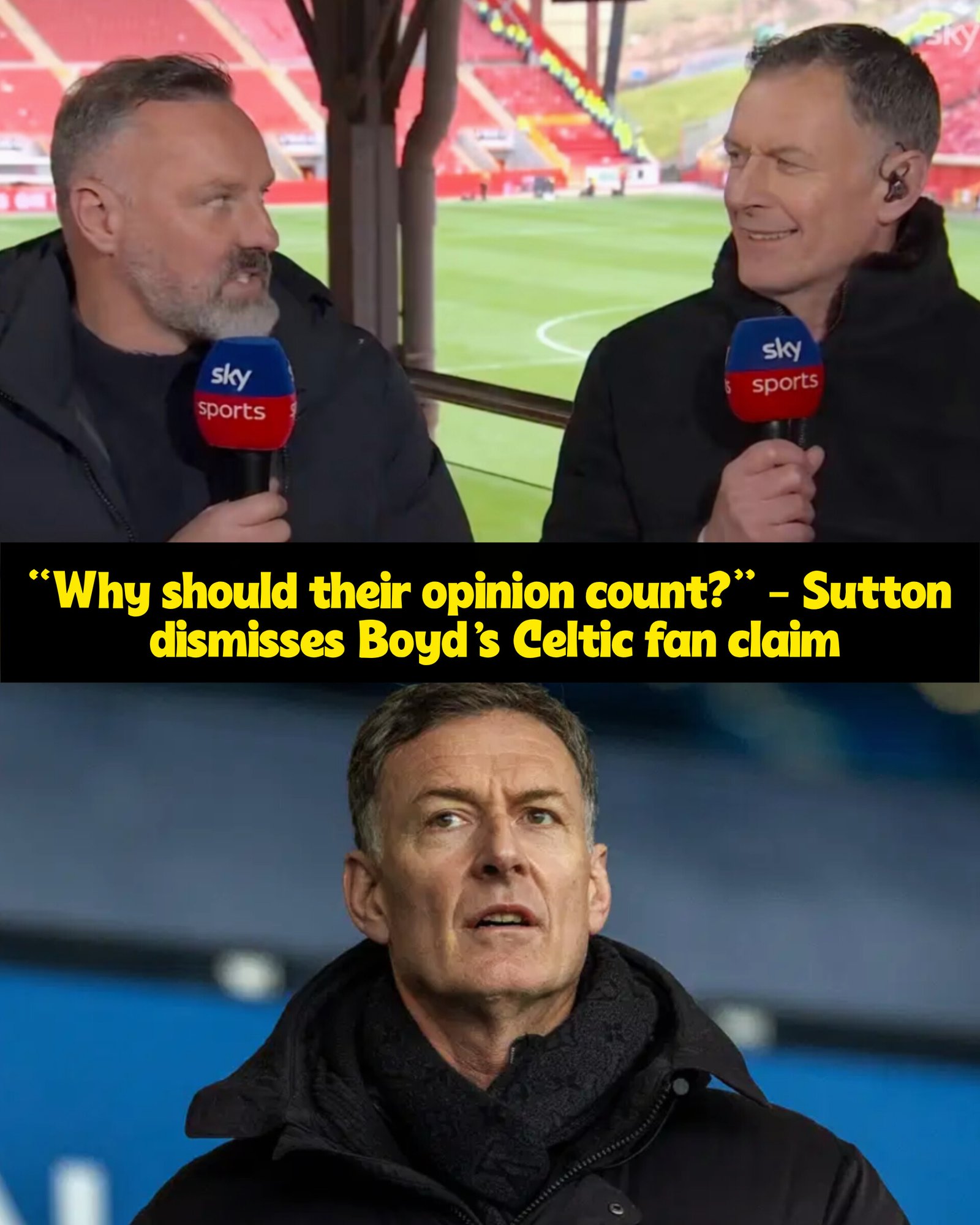
The disagreement took place during Sky Sports’ coverage of Celtic’s 2-0 victory over Motherwell on Sunday, with the discussion focusing on the growing tension between the club’s leadership and sections of its support.
Relations between Celtic’s hierarchy and supporters have become increasingly strained, with concerns surrounding communication, decision-making and the way the board responds to criticism from the stands.
During the broadcast, Boyd questioned why Celtic fans appeared to believe they should have a greater voice in the club’s affairs than supporters elsewhere.
“Chris, most clubs are the same. Why do Celtic fans think they are different? Most clubs are the same,” Boyd asked.
Sutton immediately challenged the former Rangers forward to explain what he meant by suggesting Celtic supporters considered themselves different from fans of other clubs.
“What do you mean by Celtic fans think they are different?” Sutton responded.
Boyd then clarified his position, asking why Celtic supporters believed they were entitled to influence the running of their club.
“Why do they think that they deserve a voice? It’s not a hard question,” he insisted.
However, Sutton was not convinced by the comparison Boyd was making and questioned whether the situation at Celtic could fairly be compared with the circumstances at other clubs.
“I don’t actually know the context with which you are comparing it,” Sutton explained.
He subsequently pointed towards Rangers as an example, arguing that communication between the club’s leadership and its supporters had been more evident during a difficult period last season.
Although Rangers experienced their own problems, Sutton suggested that senior figures had made an effort to communicate with the fanbase.

15th February 2026; Rugby Park, Kilmarnock, Scotland: Scottish Premiership Football, Kilmarnock versus Celtic; Ex Celtic star Chris Sutton
“If you are comparing it to Rangers, for example, and last season wasn’t great, but there was communication from the high end of the club to the fanbase,” he said.
“That doesn’t happen at Celtic.”
Sutton’s argument centred on what he believes is a significant difference between the two clubs: the willingness of senior executives to engage directly with supporters and explain important decisions.
The former Celtic striker believes the absence of visible communication from the Parkhead hierarchy has contributed to the current frustration among fans.
Rather than dismissing supporters’ concerns, he argued that the club’s leadership should take greater responsibility for addressing the issues that have damaged relations between the board and sections of the Celtic support.
Sutton questions Celtic hierarchy over Martin O’Neill
Sutton also turned his attention to the position of Celtic manager Martin O’Neill, questioning why he had been left to answer difficult questions about the recent protest targeting principal shareholder Dermot Desmond.
The demonstration took place at St Andrews during the Alfred Dunhill Links Championship, where Desmond was playing golf. Supporters wearing balaclavas targeted the Celtic shareholder with tennis balls as part of their protest.
The incident generated considerable controversy and prompted a strong response from Celtic, who condemned the actions of those involved.
However, Sutton believes the responsibility for explaining the wider dispute should not rest almost entirely on O’Neill’s shoulders.
He questioned why the manager had been required to attend a press conference alone and respond to questions about an incident involving the club’s ownership and supporters.
“Why should Martin O’Neill sit through a press conference on his own and bat away questions about fans throwing tennis balls at Dermot Desmond?” Sutton asked.
He then challenged the absence of senior executives during a situation that had become a major talking point surrounding the club.
“Why should he sit through that? Why is Michael Nicholson not sat there next to him and showing him support and backing him, or somebody on the board?” Sutton continued.
The former Celtic player believes O’Neill has been left in an uncomfortable position, having to deal publicly with problems that extend beyond his managerial responsibilities.
“He’s just being hung out at the moment,” Sutton said.
Sutton also highlighted the important role O’Neill played in maintaining stability at Celtic during the previous season, suggesting that the manager had become a central figure in holding the club together.
“He was the glue which held everything together last season. He absolutely was. Why does he want to put himself through that?” he added.
His comments reflect concerns that O’Neill is being required to act as the public representative of the entire club while senior figures remain largely absent from difficult conversations.
Protest controversy adds to tensions at Celtic
Sutton has previously made his position on the St Andrews demonstration clear, explaining that he disagreed with the decision to target Desmond while the shareholder was playing golf.
He believes Desmond should have been allowed to enjoy his time on the course without being subjected to the protest.
Nevertheless, Sutton’s opposition to that particular demonstration has not prevented him from recognising that genuine frustration exists among sections of the Celtic fanbase.
The distinction is important because disagreeing with the methods used during a protest does not automatically mean dismissing the concerns that motivated it.
Celtic responded to the incident by issuing a lengthy statement condemning the behaviour of those involved and announcing an end to engagement with the Celtic Fans Collective.
The decision added another layer to the strained relationship between the club and sections of its support, particularly among those who believe there needs to be more meaningful dialogue between supporters and the people responsible for running Celtic.
One of the central complaints concerns the limited visibility of chief executive Michael Nicholson and other senior figures when major footballing and strategic issues arise.
Supporters frequently hear from O’Neill, who is expected to explain performances, results and decisions affecting the first team. However, questions about recruitment, boardroom strategy and the club’s wider relationship with its supporters extend beyond the manager’s responsibilities.
That distinction has become increasingly important as tensions continue to develop.
While the manager can reasonably be expected to answer questions about team selection, tactics and performances, supporters may also expect senior executives to explain decisions made at boardroom level.
Leaving O’Neill to respond to every difficult question risks placing additional pressure on a manager who is already responsible for preparing the team and delivering results.
Do Celtic supporters deserve a voice?
At the heart of the disagreement between Sutton and Boyd is a broader question about the relationship between football clubs and their supporters.
Boyd questioned why Celtic fans should believe they deserve a voice when other clubs face similar challenges. Sutton, however, argued that the comparison overlooked the particular communication problems currently affecting Celtic.
Supporters do not necessarily expect to control every decision made by a football club. However, their emotional attachment, continued attendance and financial contributions help sustain the institution they follow.
For many fans, being heard does not mean having the final say on transfers, appointments or strategic decisions. Instead, it means receiving clear explanations, having concerns acknowledged and being treated as an important part of the club’s identity.
That is why Sutton believes the question of whether Celtic supporters deserve a voice misses the wider issue.
The debate is not simply about whether fans should be allowed to influence decisions. It is also about whether the club’s leadership is doing enough to communicate with the people who support it.
Sutton’s intervention has therefore highlighted two connected problems: the growing division between Celtic’s hierarchy and sections of the fanbase, and the apparent burden being placed on O’Neill to explain controversies that extend beyond the football department.
Although supporters and club executives may not always agree, more direct communication could help address misunderstandings and rebuild trust.
For now, the disagreement between Sutton and Boyd has brought the issue into sharper focus. Whether Celtic’s senior leadership responds with greater engagement remains an important question for the club.
Ultimately, Sutton believes that supporters should not have to justify their desire to be heard. Their relationship with Celtic is central to the club’s identity, and acknowledging their concerns does not require the board to surrender its authority.
Instead, it requires a willingness to communicate, explain decisions and recognise the importance of the relationship between the club and its supporters.
-
 Blog8 months ago
Celtic issues a fiery VAR statement after Trusty’s red card appeal is dismissed, as furious chiefs release referee audio publicly.
-
 Blog4 weeks ago
Former official calls on SFA to contact Rangers over fan scenes during Celtic match, labeling them “completely unacceptable.”
-

 Blog8 months ago
Celtic informed their January signing under Martin O’Neill that he wouldn’t play a single minute this season.
-

 Blog8 months ago
Celtic issued an £83 million warning amid looming UEFA threats.
-

 Blog7 months ago
SFA Expected to Review Missed Penalty in Rangers v Celtic Clash
-

 Blog6 months ago
Police respond after reported disorder following Middlesbrough vs Millwall clash
-

 Blog3 weeks ago
Middlesbrough receive a warning following Steve Gibson’s submission of a £1.5bn proposal.
-

 Blog1 year ago
“Courtside to Aisle-Side: Tyrese Haliburton and Jade Jones Set New Wedding Date”