
Blog
Potential Celtic investment draws attention from credible parties.

Celtic have reportedly attracted attention from serious figures in the sports investment world, with former Scottish Premier League chief executive Roger Mitchell revealing further details about discussions surrounding the club at the Sport Summit Como.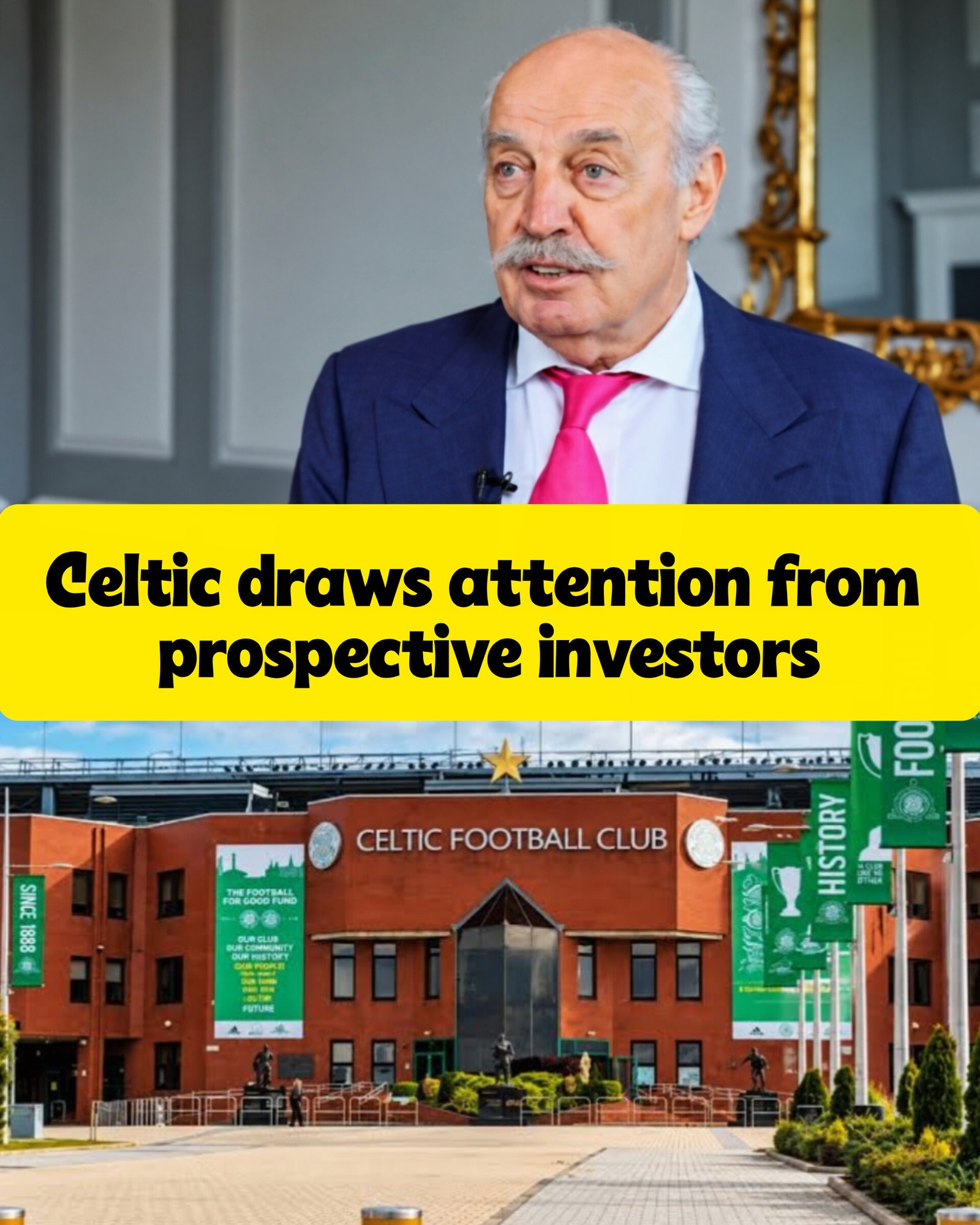
Mitchell has told CeltsAreHere that “serious people with capital won’t waste precious time on a non-runner” after previously revealing that Celtic had become part of an investment conversation involving sports operators and investors at the Italian event.
However, it is important to understand exactly what happened and, equally, what did not happen.
There has been no suggestion that Celtic received a formal takeover bid, that an offer was submitted, or that any potential investor made an approach to principal shareholder Dermot Desmond, Celtic plc, the club’s board or another shareholder.
Instead, Mitchell’s comments indicate that people with substantial financial resources and experience in the sports industry considered Celtic to be an interesting potential investment opportunity.
The former SPL chief executive had initially revealed that Celtic were discussed by people attending the Sport Summit Como. He subsequently provided more information about the reasons behind that conversation and explained why the Scottish club stood out to those examining possible investments in sport.
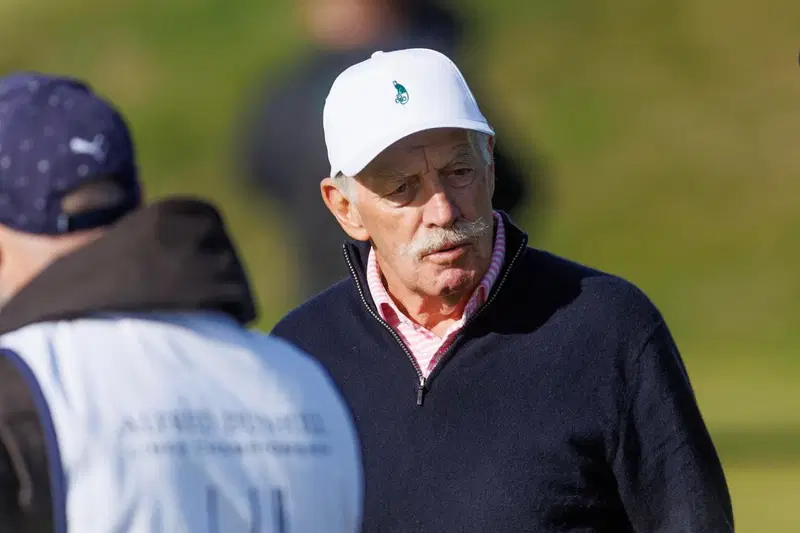
Dermot Desmond at St Andrews
Mitchell previously posted on X that the “investment case” for Celtic had been discussed at length during the event.
He claimed that one particularly serious individual later contacted him and suggested taking the idea further, telling him that they should “do this for real” and asking Mitchell to become involved.
However, Mitchell also acknowledged the obvious obstacle surrounding any potential investment in the club.
The response in such situations, according to Mitchell, is generally that “DD won’t sell”, referring to Dermot Desmond.
Mitchell also indicated that he would have been willing to speak to former Tottenham Hotspur and Chelsea manager Antonio Conte about the matter, although this did not develop into anything formal.
He later clarified the situation publicly, stating that nothing progressed because “DD won’t sell.”
That clarification is significant because it prevents the discussion from being interpreted as evidence that Celtic were close to a takeover or that an investor had formally attempted to purchase the club.
Mitchell’s wider argument is that serious sports investors recognise the considerable potential Celtic possess.
He has been critical of the way the club is currently operated, describing it as being affected by what he considers mediocrity throughout the organisation. His belief is that Celtic could become a significantly more valuable and successful operation if they were managed more effectively.
Mitchell’s latest explanation provides greater insight into why Celtic became part of the investment conversation in Como.
According to him, the group attending the event was examining different investment opportunities within the sports industry. The participants were assessing businesses using four categories: “Stars, Cashcows, Question marks, Dogs.”
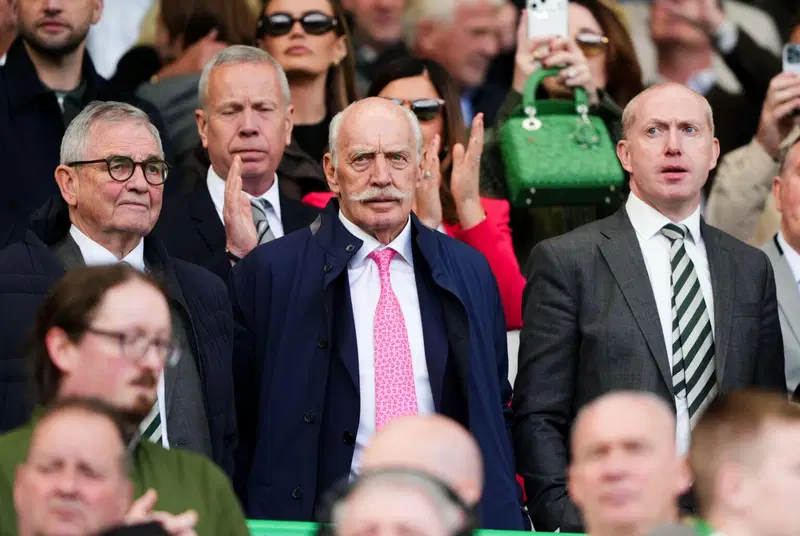
Celtic principal shareholder, Dermot Desmond, interim chairman Brian Wilson (left) and chief executive Michael Nicholson (right) during the William Hill Premiership match at Celtic Park, Glasgow. Picture date: Saturday May 16, 2026.
During that analysis, somebody brought Celtic into the discussion.
Mitchell explained that Celtic appeared attractive because of their current market capitalisation, the money held in the bank and the possibility that a stronger management structure could improve the club’s operations.
He also suggested that Celtic could provide additional upside if the European football landscape eventually changes significantly, describing a possible Super League opportunity as a “call option.”
The discussion reportedly lasted approximately ten minutes.
Although that may appear relatively brief, Mitchell believes the fact that the conversation happened at all demonstrates that Celtic were considered worthy of serious examination.
More importantly, one of the people involved contacted Mitchell the following day and asked to discuss the idea in greater detail.
That follow-up contact is perhaps the most significant part of Mitchell’s account because it suggests the conversation was not simply casual speculation between people attending a sports conference.
Nevertheless, Mitchell has made it clear that the matter ultimately went no further.
There was no formal investment process, no takeover proposal and no evidence that a deal was being negotiated behind the scenes.
The individual’s interest did not result in an approach to Celtic, largely because of the widely understood position surrounding Desmond’s ownership.
Therefore, Celtic supporters should distinguish between interest in the club as an investment concept and an actual attempt to purchase or invest in Celtic.
Mitchell is discussing potential rather than announcing a transaction.
His description of the Super League element should also be viewed carefully. He referred to it as a possible “call option” or additional bonus rather than suggesting that Celtic had been offered a place in a future European competition.
There is no indication that Celtic have been invited to join a proposed Super League, nor is Mitchell claiming that the club would automatically benefit from any future restructuring of European football.
Instead, the possibility represents another potential source of long-term upside that could make Celtic more attractive to investors.
The central argument behind the Como discussion appears to have been Celtic’s combination of size, financial position and untapped potential.
The club already possesses a substantial supporter base and significant commercial opportunities. Mitchell believes the existing valuation, combined with the cash held by Celtic, could make the club an interesting proposition for investors who believe better management could unlock additional value.
The potential for operational improvements was particularly important to the discussion.
Mitchell’s argument is not simply that Celtic are valuable because of their history and support. He believes investors could see an opportunity to improve the way the club is run and, as a result, increase its overall value and performance.
His latest statement that “serious people with capital won’t waste precious time on a non-runner” reflects that belief.
For Mitchell, the significance of the Como conversation is therefore not that Celtic were on the verge of changing ownership.
Rather, he sees it as evidence that experienced sports operators and investors can identify the club as an organisation with considerable room for growth.
For Celtic supporters, the distinction is crucial.
There is no confirmed takeover interest, no reported offer and no evidence that Desmond is preparing to sell his stake.
What does exist, according to Mitchell, is recognition among serious figures in the sports investment sector that Celtic could represent an attractive opportunity under the right circumstances.
The club’s valuation, cash reserves, potential operational improvements and possible future opportunities in European football all contributed to that assessment.
The conversation at Como may ultimately have lasted only around ten minutes, and the subsequent interest did not develop into a formal process.
Yet Mitchell believes its importance lies in who was having the conversation and why Celtic were considered worthy of discussion in the first place.
His message is straightforward: investors with serious financial resources do not normally spend valuable time analysing opportunities they believe have no potential.
From his perspective, Celtic’s appearance in that conversation shows that people with expertise and capital can see significant upside in the club.
For now, however, that remains an investment discussion rather than a takeover story. Celtic remain under the existing ownership structure, and Mitchell has confirmed that the Como interest “didn’t go anywhere.”
The bigger question for supporters is whether the potential identified by those investors can be realised under Celtic’s current leadership.
-
 Blog8 months ago
Celtic issues a fiery VAR statement after Trusty’s red card appeal is dismissed, as furious chiefs release referee audio publicly.
-

 Blog1 month ago
Former official calls on SFA to contact Rangers over fan scenes during Celtic match, labeling them “completely unacceptable.”
-

 Blog8 months ago
Celtic informed their January signing under Martin O’Neill that he wouldn’t play a single minute this season.
-
 Blog8 months ago
Celtic issued an £83 million warning amid looming UEFA threats.
-
 Blog8 months ago
SFA Expected to Review Missed Penalty in Rangers v Celtic Clash
-

 Blog6 months ago
Police respond after reported disorder following Middlesbrough vs Millwall clash
-
 Blog3 weeks ago
Middlesbrough receive a warning following Steve Gibson’s submission of a £1.5bn proposal.
-

 Blog1 year ago
“Courtside to Aisle-Side: Tyrese Haliburton and Jade Jones Set New Wedding Date”