
Blog
Celtic needs to publicly challenge Beaton – his decisions yesterday were so obvious.

Celtic F.C. secured a hard-fought victory against Motherwell F.C. in a challenging encounter, showing both determination and resilience to turn the match around after initially falling behind.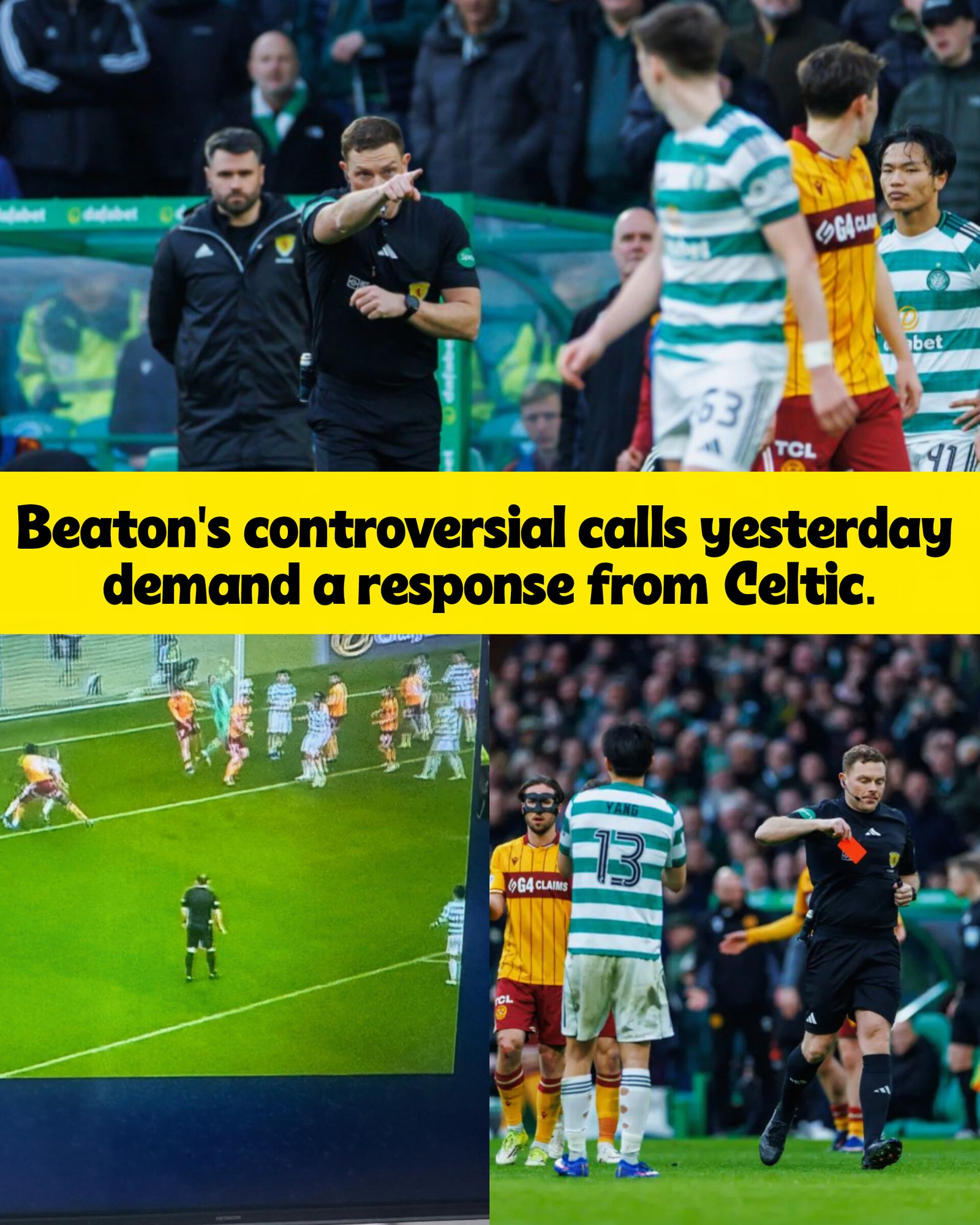
Motherwell deserve credit for the way they approached the contest. The visitors played with confidence and organisation, providing an entertaining style that stood out in the Scottish game. In a league where many teams rely on direct football and defensive tactics when travelling to venues like Celtic Park or Ibrox Stadium, their approach offered something refreshingly different.
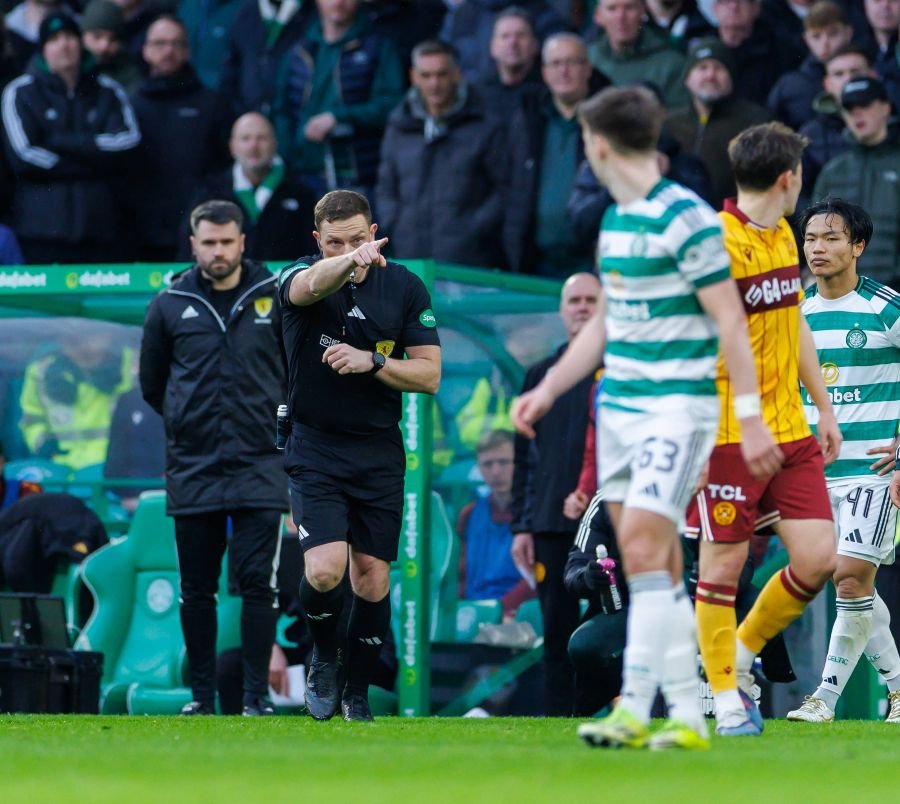
14.03.2026 Celtic v Motherwell, Scottish Premiership. John Beaton awards a penalty to Celtic after VAR check Photo Kenny Ramsay IMAGO.
For Celtic, recovering from a goal down in such a high-pressure fixture demonstrated the strong mentality within the squad. The players showed composure and belief to fight back, qualities that are crucial during the closing stages of a tight title race.
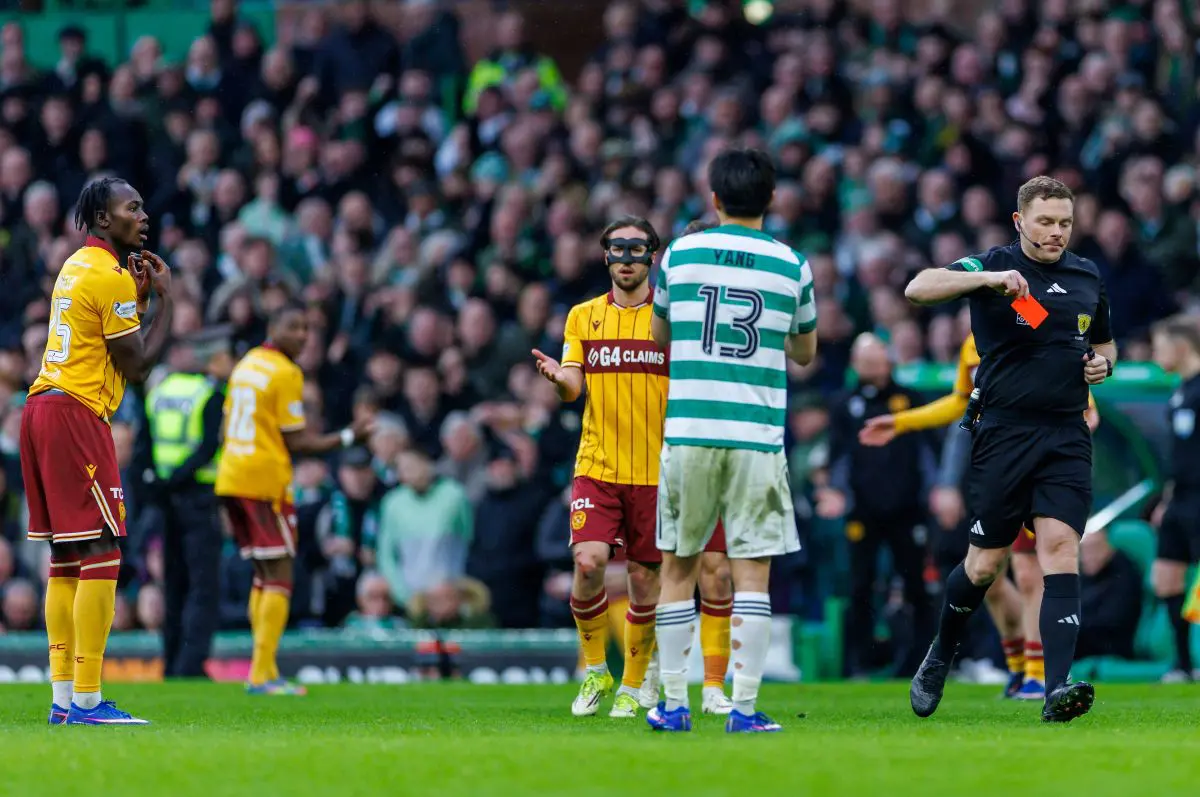
14.03.2026 Celtic v Motherwell, Scottish Premiership. Emmanuel Longelo receives a red card from John Beaton after a VAR review. Photo Kenny Ramsay IMAGO
However, the opposition on the pitch were not the only challenge Celtic felt they had to deal with during the match. Much of the post-match discussion centred on the performance of referee John Beaton, whose decisions drew criticism from many supporters.
Long-Standing Frustrations With Refereeing Decisions
Beaton has often been a controversial figure among sections of the Celtic support, who believe some of his decisions over the years have been questionable when officiating their matches.

Fabio Silva dives inside the Celtic penalty area and cons a penalty from referee John Beaton. Photo Stuart Wallace/Shutterstock
The referee has even been given the nickname “Cheatin’ Beaton” by some fans, reflecting the frustration that has built up over time due to incidents they feel have gone against the club.
For those supporters, this is not simply a conspiracy theory but something they believe is supported by numerous past decisions that have been widely debated.
Someone somewhere needs to explain why John Beaton does not immediately blow for a penalty here?
What does he think he is looking at, if not a clear foul on a player about to head into an empty net?
What exactlyis it that stops him from putting that whistle to his mouth? pic.twitter.com/jU1niDE6ON— Searriagh (@searriagh67) March 14, 2026
One issue that is frequently raised involves Beaton’s well-known support for Rangers F.C., Celtic’s main rivals. Because of that connection, some supporters question why officials who have publicly recognised allegiances to one of the Glasgow clubs are permitted to officiate matches involving either side.
Critics argue that such situations could easily be avoided by assigning referees from other parts of the country. They often point out that Scotland has officials from cities like Aberdeen, Dundee, and Inverness, yet a large number of referees appear to come from the Lanarkshire area.
This is the penalty Beaton didn’t think was a penalty
Var intervened as the cameras don’t lie
Thanks for watching Scotlands premier club https://t.co/Zf3ZhiXydL pic.twitter.com/pkr1i6ITXz
— ‘huvnae slept fur 3 munf,Ina’oof,ah joost’ #120 (@Ina_oof_a_joost) March 15, 2026
While that broader debate about refereeing appointments continues, the focus after this match remained firmly on Beaton’s decisions during the game itself.
Key Incidents During the Match
Throughout the encounter, many Celtic supporters felt the referee repeatedly made calls that favoured the visiting side.
Of course, Celtic were not blameless for the opening goal they conceded. Midfielder Reo Hatate was partly responsible, and goalkeeper Viljami Sinisalo also contributed with a risky pass that created problems for his defence.
Even so, the sense among fans was that their team had to overcome more than just the opposition.
One example frequently highlighted was the yellow card shown to Hatate. The midfielder had pointed out that a free kick was being taken from the wrong location after a foul.
Rather than instructing the Motherwell player to move back to the correct spot, Beaton instead booked Hatate for his protest. Many felt the Celtic player had simply been pointing out an obvious mistake.
Penalty Celtic. Maeda fouled by Modelos – red card & penalty – deemed obvious goal scoring opportunity & no attempt to play the ball pic.twitter.com/1fyGWdZ5N0
— The Global Tablet of Jurisprudence (@gtj1247) March 14, 2026
Other bookings handed out to Celtic players also caused frustration. A challenge involving defender Anthony Ralston drew particular criticism, as television replays appeared to show that he had clearly won the ball.
The Moment That Changed the Game
The most decisive moment of the match came later when an incident inside the penalty area forced a major intervention from the video assistant referee system.
As a cross arrived in the box, Celtic forward Daizen Maeda attempted to attack the ball. During the move, he was pulled back by Motherwell defender Emmanuel Longelo.
The contact prevented Maeda from reaching the ball and denied him what appeared to be a clear opportunity to score.
Despite having a clear view of the situation, Beaton initially awarded a goal kick to Motherwell and ignored Celtic’s appeals for a penalty.
From the stands, many spectators believed the foul was obvious. The reaction inside the stadium reflected the widespread belief that Maeda had been clearly impeded while trying to head the ball toward an open goal.
Fortunately for Celtic, the VAR officials intervened and asked Beaton to review the incident on the pitchside monitor.
After watching the replay, the referee overturned his original decision. A penalty was awarded and Longelo was shown a red card for denying a goalscoring opportunity.
Celtic Capitalise on the Decision
Once the decision had been corrected, Celtic had the chance to take control of the match.
Striker Tomáš Čvančara stepped forward to take the spot kick. Displaying composure under pressure, he converted the penalty confidently to give Celtic the lead.
It was another example of the striker keeping his nerve from the spot, following a similar successful penalty he had scored the previous week at Ibrox.
Later in the match, winger Yang Hyun-jun added another goal to secure the victory and ensure the home side claimed all three points.
VAR Corrects a Major Error
In the end, the penalty itself was not the controversial element of the incident. Once the replay was shown, it became clear that Maeda had been fouled and that the punishment of a penalty and red card was appropriate.
The real talking point was the fact that the offence had been missed initially, despite the referee being well positioned to see it.
Without the intervention of VAR, the decision might have stood as a goal kick, which could have dramatically altered the outcome of the match.
Ultimately, the technology ensured the correct call was made, allowing Celtic to go on and secure an important win.
Despite the debate surrounding the officiating, the match itself was an exciting contest and served as a strong example of the entertainment the Scottish game can provide.
-
 Blog1 month ago
Celtic issues a fiery VAR statement after Trusty’s red card appeal is dismissed, as furious chiefs release referee audio publicly.
-

 Blog2 months ago
Celtic informed their January signing under Martin O’Neill that he wouldn’t play a single minute this season.
-

 Blog1 month ago
Celtic issued an £83 million warning amid looming UEFA threats.
-
 Blog1 month ago
SFA Expected to Review Missed Penalty in Rangers v Celtic Clash
-

 Blog3 days ago
Police respond after reported disorder following Middlesbrough vs Millwall clash
-

 Blog10 months ago
“Courtside to Aisle-Side: Tyrese Haliburton and Jade Jones Set New Wedding Date”
-

 Blog1 month ago
£6m star is looking to leave Rangers this summer and has already announced his next club publicly.
-

 Blog2 weeks ago
Rangers victory overshadowed by refereeing controversy