
Blog
Celtic’s Stephen Welsh cleared of blame as former referees condemn Hearts’ penalty decision against Motherwell, calling it ‘absolutely unfair’

The decision to award a late penalty against Motherwell has sparked widespread debate, with many describing it as “absolutely unfair.” The incident involved Celtic loanee Stephen Welsh, who was penalised during a crucial moment in Motherwell’s clash with Hearts at Tynecastle. Welsh, currently on loan from Celtic, was judged to have committed a foul after making contact with Hearts forward Pierre Landry Kabore while attempting to clear the ball.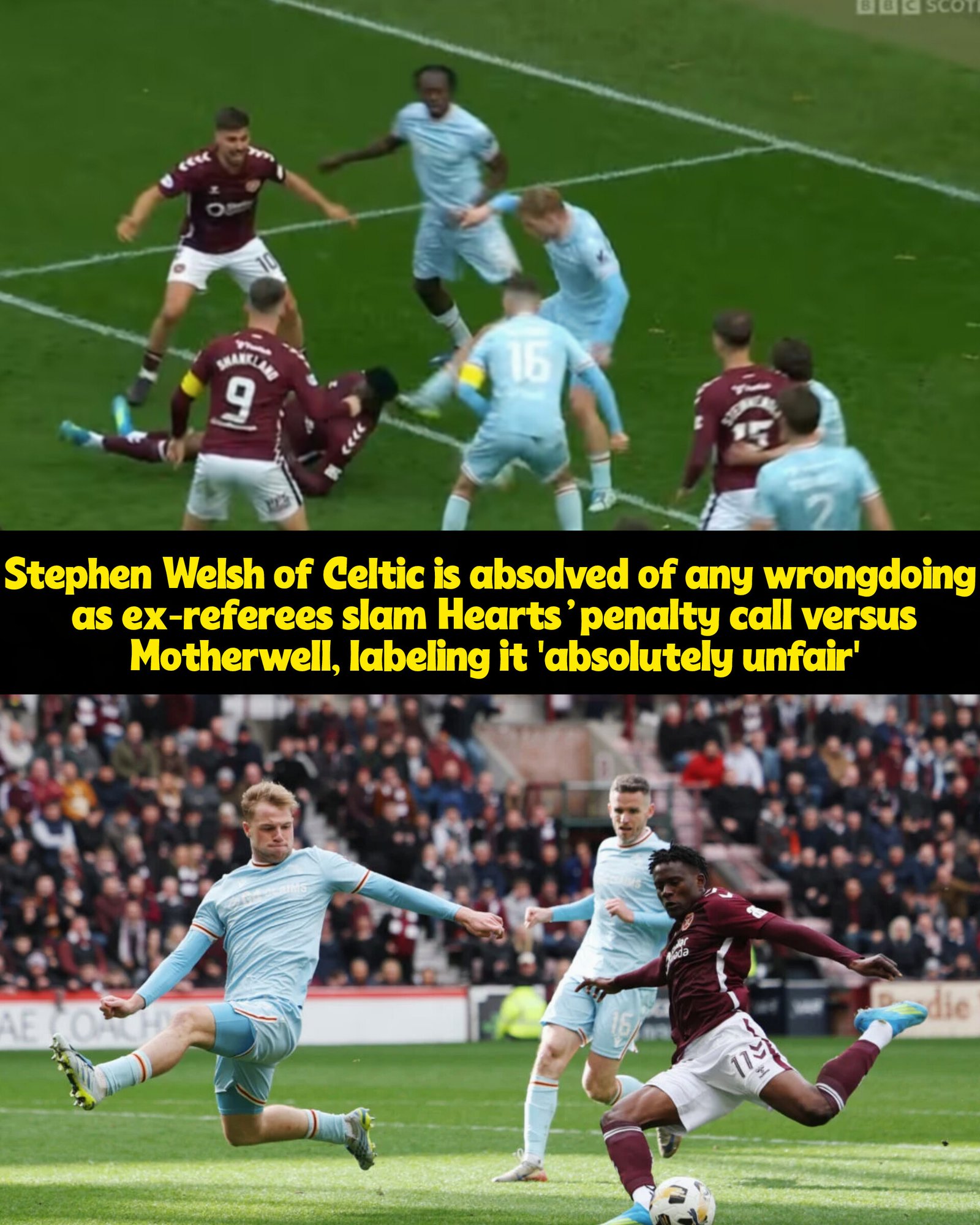
The moment proved decisive in the match, as it led to a penalty being awarded late in the game. However, the decision has not gone unchallenged, with former referees and fans alike questioning whether the correct call was made under the laws of the game.
VAR Intervention Changes The Course Of The Game
Initially, the on-field referee allowed play to continue, suggesting no foul had occurred. However, following a VAR review, the official was instructed to consult the pitchside monitor. After reviewing the footage, the referee overturned the original decision and awarded Hearts a penalty.
This came at a critical juncture, with the match finely balanced at 1-1 and only minutes remaining on the clock—around the 86th minute. The late nature of the decision amplified its impact, ultimately influencing the outcome of the contest.
The use of VAR in this situation has become a focal point of the debate, with many questioning whether the technology was applied correctly or whether it contributed to an already contentious interpretation of the incident.
Former Referees Strongly Disagree With The Call
Adding fuel to the controversy, former SFA referees Steve Conroy and Des Roache reviewed the incident and publicly criticised the decision. Speaking through The Ref’s View platform on social media, they delivered a firm verdict: the penalty should not have been awarded.
According to their interpretation, Welsh was simply attempting to perform a legitimate defensive action—clearing the ball from danger. They argued that Kabore, in trying to head the ball at a low height, effectively put himself in a risky position.
Their statement emphasised that the defender should not be penalised for executing a standard clearance, particularly when the attacking player’s actions contributed to the danger. They described the decision as “absolutely unfair,” fully exonerating Welsh of any wrongdoing.
Clash Between Decision And The Laws Of The Game
At the heart of the debate is the interpretation of IFAB laws, particularly those relating to dangerous play. These laws highlight that referees must consider not only the presence of contact but also the context in which it occurs.
One key aspect is whether a player has endangered themselves. In this case, critics argue that Kabore’s attempt to head a low ball created a dangerous scenario. Welsh, meanwhile, was acting within his rights to clear the ball, and there was no indication of reckless or excessive force in his movement.
This interpretation suggests that the responsibility for the incident may lie more with the attacking player than the defender. As a result, awarding a penalty purely based on contact, without accounting for how the situation developed, appears inconsistent with the spirit of the law.
Growing Debate Over Consistency In Decisions
The incident has quickly become one of the most talked-about refereeing calls of the weekend, drawing reactions from supporters of multiple clubs, including Celtic, Rangers, and Hearts. Beyond club loyalties, the discussion has centred on consistency and the application of rules.
Many observers believe that decisions like this highlight a broader issue within the Scottish Premiership. There is a growing perception that similar incidents are being judged differently, leading to confusion among players, coaches, and fans.
The Welsh case exemplifies this concern, as what was once considered a routine defensive action is now being scrutinised and, in some cases, punished. This shift in interpretation has raised questions about whether officials are adhering closely enough to the established laws of the game.
Wider Implications For Celtic And The League
For Celtic, the implications of the decision extend beyond this single match. Had the penalty not been awarded, the result could have impacted the standings in the Scottish Premiership, potentially narrowing the gap at the top of the table.
More broadly, the incident reflects a pattern that has emerged throughout the season, where marginal decisions have had significant consequences. Clubs are increasingly concerned about the consistency and accuracy of officiating, particularly in high-stakes moments.
The gap between how the rules are written and how they are interpreted on the pitch appears to be widening. This has led to frustration and calls for greater clarity, especially in the use of VAR and its role in influencing key decisions.
A Case That Highlights Ongoing Refereeing Concerns
Ultimately, the controversy surrounding Stephen Welsh’s penalty incident is about more than just one moment in a single game. It underscores deeper issues within refereeing standards and the interpretation of football’s laws.
The disagreement between former officials and the match decision illustrates the lack of consensus on how such incidents should be judged. When even experienced referees interpret the same situation differently, it raises legitimate concerns about consistency and fairness.
As debates continue, the Welsh incident serves as a clear example of the challenges facing modern officiating—where technology, interpretation, and the laws of the game must all align, but often do not.
-
 Blog2 months ago
Celtic issues a fiery VAR statement after Trusty’s red card appeal is dismissed, as furious chiefs release referee audio publicly.
-

 Blog2 months ago
Celtic informed their January signing under Martin O’Neill that he wouldn’t play a single minute this season.
-

 Blog2 months ago
Celtic issued an £83 million warning amid looming UEFA threats.
-
 Blog1 month ago
SFA Expected to Review Missed Penalty in Rangers v Celtic Clash
-

 Blog1 week ago
Police respond after reported disorder following Middlesbrough vs Millwall clash
-

 Blog10 months ago
“Courtside to Aisle-Side: Tyrese Haliburton and Jade Jones Set New Wedding Date”
-

 Blog2 months ago
£6m star is looking to leave Rangers this summer and has already announced his next club publicly.
-

 Blog3 weeks ago
Rangers victory overshadowed by refereeing controversy