
Blog
Chris Sutton labels Benjamin Nygren Celtic’s “most puzzling player” despite impressive 11.6km European running data

Benjamin Nygren has racked up 18 goals this season, yet the Celtic F.C. midfielder continues to divide opinion among pundits and supporters alike.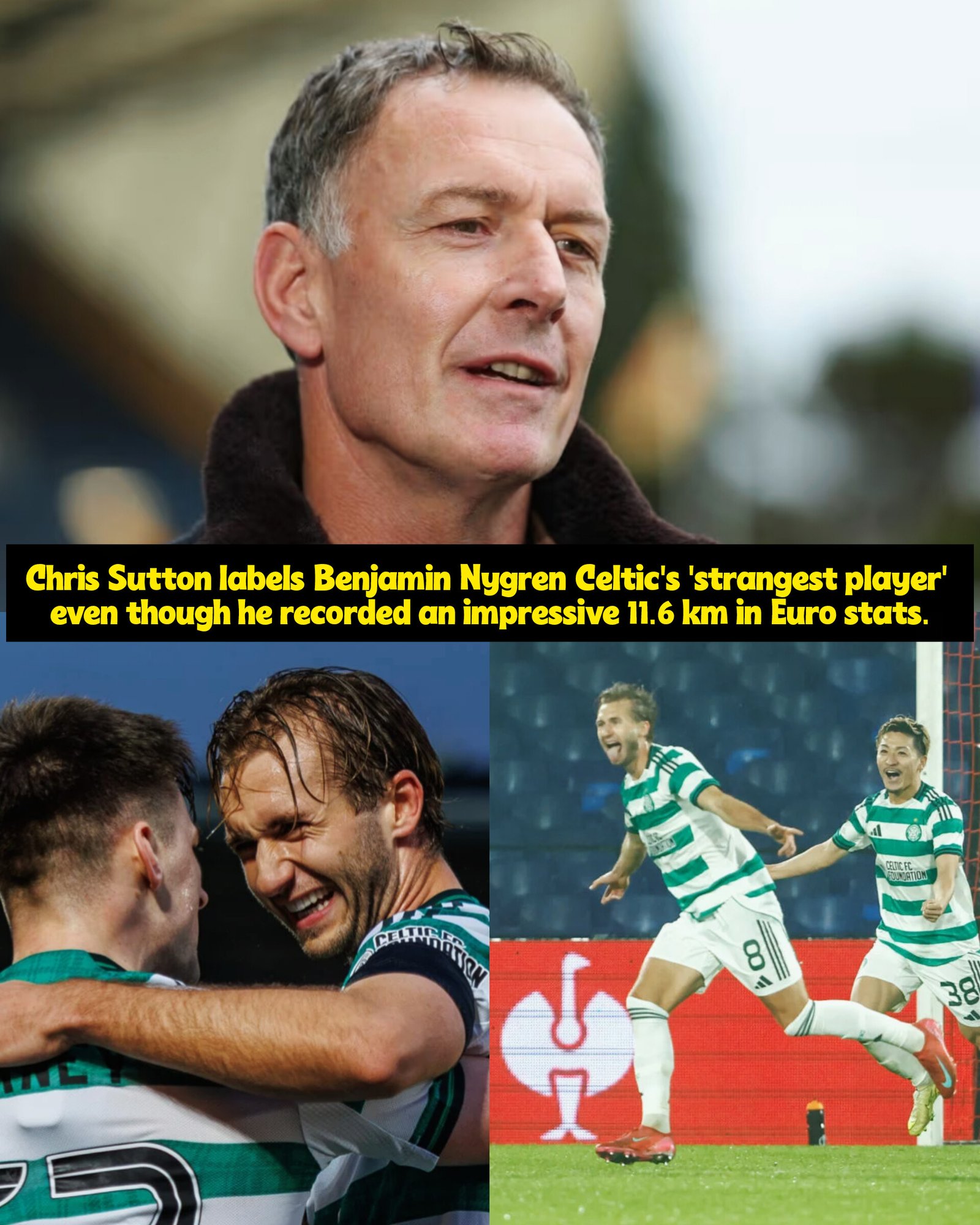
One of his most vocal critics remains Chris Sutton. Just over a month ago, the former striker claimed that Nygren “hasn’t been a success” since arriving at Celtic in the summer from FC Nordsjælland.
Now, following Celtic’s dramatic 2-2 draw against Rangers F.C. at Ibrox, Sutton has doubled down — this time branding Nygren “the strangest player in Scottish football.”
Speaking after the match, Sutton said:
“He’s the strangest player in Scottish football. You look at his goals record, and it’s amazing.
He has this tremendous instinct for goals. But actually, what you want from him in that midfield is to control games. I just don’t think he has the legs.”
Sutton Questions Nygren’s Role in Midfield
Nygren started centrally at Ibrox alongside Callum McGregor and Alex Oxlade-Chamberlain, with the latter withdrawn at half-time.
It was Reo Hatate who ultimately shifted the momentum of the contest, and Sutton focused heavily on Celtic’s lack of dynamism in midfield during his analysis on the Warm-Up.
Sutton suggested that the manager’s half-time alterations were effectively an admission that the initial setup was flawed.
“Martin O’Neill, the changes he made at half-time, was that an admission that he got things wrong in the first half?” Sutton asked. “I think so.”
He added that he sympathised with the manager to an extent, pointing to Hatate’s underwhelming campaign so far.
“When you look at Hatate’s performances this season, they have been so poor. He looks disinterested. He looks like he is sulking.”
Returning to Nygren, Sutton described him as an “enigma.” While acknowledging the Swede’s sharp eye for goal, he questioned whether the midfielder possesses the physical attributes required to dominate games from the centre of the pitch.
“Nygren is an enigma, isn’t he? He’s the strangest player in Scottish football. You look at his goals record, and it’s amazing.
He has this tremendous instinct for goals. But what you want from him in that midfield is to control games. I just don’t think he has the legs. I don’t know what his best position is. That’s something that has followed him throughout his career.”
Europa League Running Data Tells a Different Story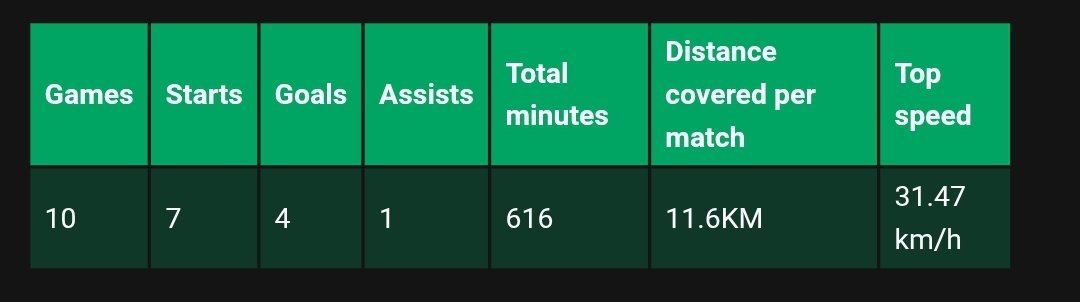
While domestic Scottish football does not consistently provide advanced in-game tracking data for public analysis, UEFA statistics from the UEFA Europa League paint a fascinating picture of Nygren’s physical output.
This season, the Swedish international featured in 10 Europa League matches, starting seven and playing more than 600 minutes in total — averaging roughly an hour per appearance.
His key European statistics are as follows:
- Games played: 10
- Starts: 7
- Goals: 4
- Assists: 1
- Total minutes: 616
- Average distance covered per match: 11.6 km
- Top speed recorded: 31.47 km/h
What stands out most is the distance covered. In elite European competition, dynamic midfielders typically register between 11.5 km and 12.5 km per 90 minutes. In that context, Nygren’s numbers firmly place him within the expected range for high-performing central players.
This suggests that, from a purely physical standpoint, Nygren is meeting the workload demands of top-level European football.
Perception vs Reality
Although Nygren is not renowned for explosive pace — with Europe’s quickest players often clocking between 35 km/h and 36.5 km/h — speed has never been marketed as his primary strength. Instead, his game revolves around intelligent movement, sharp positioning, and clinical finishing instincts.
The data indicates that he is covering ground at an elite level in continental competition. That raises an important question: is the narrative surrounding his supposed lack of “legs” more about perception than reality?
In Scotland, Nygren’s style may appear understated. He is not a high-octane, crunching-tackle midfielder who dominates through sheer athleticism. Rather, he glides into pockets of space, times late runs into the box, and capitalises on opportunities.
Perhaps the issue is not whether Nygren can run, but whether Celtic’s midfield structure consistently supports his strengths.
Does Nygren Need Different Support?
Rather than focusing solely on the individual, some may argue that Nygren requires more dynamic partners around him to maximise his effectiveness.
In Europe, where the tempo and spacing differ, he appears capable of matching elite midfield metrics. Domestically, however, games can often be tighter, more physical, and demand relentless transitions.
If Celtic surround him with high-energy players capable of shouldering defensive responsibilities and ball progression duties, Nygren’s instinctive attacking qualities could flourish even further.
At 18 goals for the campaign, the output is undeniable. Yet the debate continues regarding his optimal position and overall influence on matches.
Is he a central midfielder? An advanced playmaker? A second striker operating between the lines?
For now, Nygren remains one of Scottish football’s most intriguing figures — a player whose statistics suggest elite physical contribution in Europe, yet whose style still leaves some observers unconvinced.
Perhaps the answer lies not in whether he has the legs, but in whether the system around him allows those legs — and that instinct — to truly shine.
SFA Expected to Review Missed Penalty in Rangers v Celtic Clash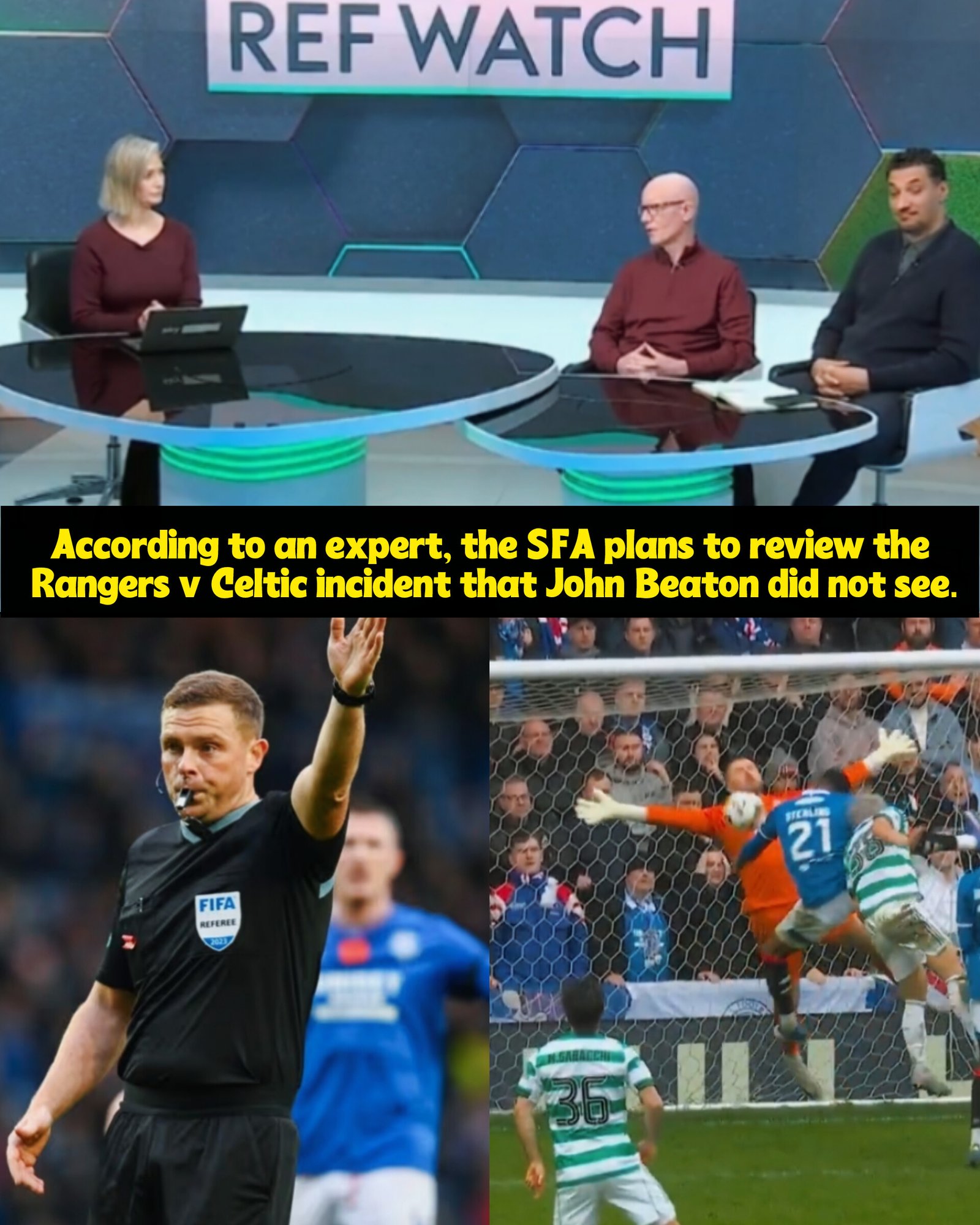
Former PGMOL chief Keith Hackett believes the Scottish FA will investigate a controversial penalty incident that referee John Beaton failed to award during Rangers’ 2-2 draw with Celtic at Ibrox on Sunday.
While much of the post-match discussion centred on the penalty that was given—eventually converted after a dramatic sequence involving Reo Hatate—attention has now shifted to another moment that went unpunished. Hackett has suggested that Willie Collum, the Scottish FA’s Head of Referees, will likely examine why a separate challenge inside the box did not result in a spot-kick.
McGregor Praises Celtic’s Character in Derby Fightback
Celtic captain Callum McGregor expressed pride in his team’s resilience after they recovered from a two-goal deficit to secure a 2-2 draw in the latest Glasgow derby.
Martin O’Neill’s side endured a torrid first half as Rangers stormed into control. The home side were ruthless, with 21-year-old Portuguese striker Youssef Chermiti netting twice to give Rangers a commanding advantage. At that stage, Celtic appeared to be facing an uphill battle, and the atmosphere inside Ibrox suggested a long afternoon for the visitors.
However, the match took a dramatic turn after the break. Celtic returned with renewed intensity and gradually clawed their way back into contention.
Second-Half Revival Turns the Tide
The comeback began in the 56th minute when left-back Kieran Tierney rose to head home, cutting the deficit and restoring belief among his teammates. The goal injected momentum into Celtic’s performance and unsettled Rangers, who had previously looked comfortable.
As the match edged toward its conclusion, Celtic pushed forward in search of an equaliser. Deep into stoppage time, substitute Reo Hatate became the central figure in chaotic scenes. Rangers goalkeeper Jack Butland initially saved Hatate’s penalty, then denied him again on the rebound. Yet amid the scramble, Hatate managed to bundle the ball over the line to level the score.
The late equaliser secured a valuable point for Celtic, though the result arguably favoured William Hill Premiership leaders Hearts. With nine games remaining, Rangers sit six points behind the Edinburgh club and two ahead of Celtic. Crucially, the Hoops have a game in hand, which they will play away to Aberdeen on Wednesday night.
Late Goals Highlight Growing Resilience
Celtic’s dramatic equaliser continued a recent pattern of late heroics. The Hoops have also scored crucial goals in the closing stages against Dundee, Livingston, and Kilmarnock in recent weeks. McGregor pointed to this trend as evidence of the squad’s growing mental strength.
He acknowledged that over the past month the team’s fighting spirit has become increasingly clear. Football rarely unfolds according to plan, he noted, and teams must often respond to unexpected adversity. Preparation can only take a side so far; in challenging moments, character and personality become decisive.
According to McGregor, situations like the one at Ibrox demand leaders willing to take responsibility, demand the ball, and guide the team back into the contest. Doing so in such a hostile environment made the achievement even more significant.
He stressed that the draw demonstrated Celtic remain firmly in the title race. With a game in hand offering the chance to close the gap, the captain believes his side can attack the final nine fixtures with renewed confidence and purpose.
Sending a Psychological Message
McGregor also suggested that Celtic’s refusal to surrender sends a powerful message to their rivals. While he admitted the team would prefer not to fall two goals behind, he emphasised that no match is ever perfect.
The crucial factor, he explained, is maintaining belief and resilience. Sunday’s equaliser underlined the squad’s determination and reinforced their ambition to retain the title. On the surface, the draw may appear to be a single point gained, but psychologically it could prove far more significant.
At full-time, a couple of thousand Celtic supporters celebrated the comeback. Next Sunday’s Scottish Gas Scottish Cup quarter-final at Ibrox will see an even greater away presence, with around 7,500 travelling fans allocated seats in the Broomloan stand in line with competition regulations.
McGregor believes that enhanced backing, combined with the siege mentality shown on Sunday, could influence the cup tie. He stated that the squad wants to build on the momentum generated in the league encounter and carry it into the knockout fixture.
Having a full stand of supporters behind them could provide the marginal gains required in a high-pressure match. Small details, he suggested, can shift momentum and tilt outcomes in tightly contested games. Above all, he reiterated that the players displayed immense character and that the draw ultimately represented a strong result given the circumstances.
Hackett Urges Review of Missed Spot-Kick
Despite the focus on the penalty that was awarded to Celtic, Hackett has called attention to an earlier incident involving Dujon Sterling and Sebastian Tounekti. Sterling appeared to grab Tounekti’s shirt before bringing him down inside the area, yet no penalty was given.
Hackett has told Football Insider that he expects Willie Collum to review the matter. In his view, the defender’s actions constituted holding and impeding an opponent with contact—an offence that should have resulted in a penalty kick.
He expressed hope that Collum would question both the on-field referee and the VAR officials to understand how such an incident went unpunished. According to Hackett, the evidence suggests a clear foul that warranted a spot-kick.
Title Race Implications
The draw leaves both Rangers and Celtic chasing Hearts at the top of the table. While neither side claimed maximum points, Celtic’s game in hand means the balance of the title race could still shift dramatically.
Had either side secured victory at Ibrox, it might have had season-defining consequences. Instead, the derby delivered controversy, drama, and a renewed sense of belief for Celtic.
As the campaign enters its decisive phase, scrutiny of refereeing decisions is likely to intensify. For Celtic, the focus will be on sustaining their resilience and capitalising on their game in hand. For the Scottish FA, attention may turn to reviewing contentious moments to ensure confidence in officiating remains intact.
Seething Scottish Premiership manager blames VAR for encouraging playacting after a ‘ridiculous’ ruling
Dundee United manager Jim Goodwin during a press conference at the The University of St Andrews Sports Centre, on March 02, 2026, in St Andrews, Scotland. (Photo by Ross Parker / SNS Group) | SNS Group
Dundee United manager Jim Goodwin has intensified his criticism of Scottish Premiership officiating after what he described as a “ridiculous” VAR decision handed Motherwell a decisive advantage in Saturday’s 2-0 defeat at Fir Park. The United boss insists a penalty was awarded for “nothing” and claims the current use of VAR is fuelling frustration throughout the game, even encouraging players to exaggerate contact in the hope of winning decisions.
The flashpoint came late in the first half of the Premiership encounter when referee Nick Walsh was instructed to review an incident on the pitchside monitor. Motherwell forward Tawanda Maswanhise had fallen to the ground following apparent contact from Vicko Sevelj’s elbow inside the penalty area. After reviewing the footage, Walsh pointed to the spot and cautioned Sevelj. Maswanhise converted the penalty to put Motherwell ahead before going on to score again early in the second half, taking his tally for the season to 21 goals and sealing a comfortable victory for the hosts.
Goodwin was outspoken immediately after the match, branding the decision “ridiculous,” and he remained equally forthright when addressing the issue ahead of Tuesday night’s home clash with St Mirren. Having had time to reflect, the United manager showed no sign of softening his stance.
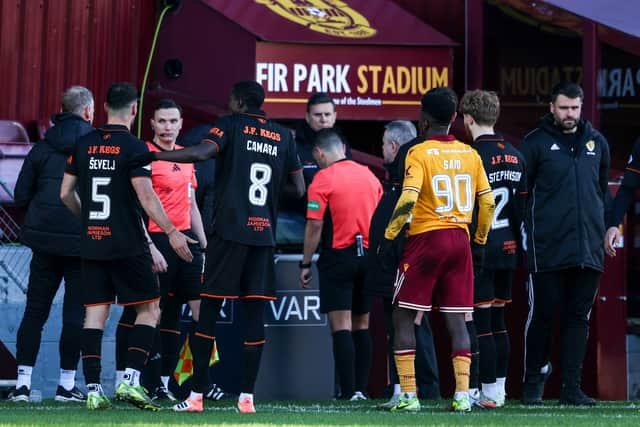
Referee Nick Walsh checks with VAR before awarding a penalty to Motherwell in their 2-0 win over Dundee United at Fir Park. (Photo by Craig Foy / SNS Group) | SNS Group
He stressed that the debate over officiating and VAR involvement has been a recurring theme throughout the campaign. According to Goodwin, the sense of dissatisfaction extends well beyond his own club. Managers, players and supporters alike are growing weary of what they perceive to be excessive interference and inconsistent judgments, whether from on-field officials or those operating the VAR system from Glasgow.
In Goodwin’s view, the penalty incident at Fir Park exemplified the problem. He argued that VAR need not have intervened at all, maintaining that Sevelj’s action did not warrant a spot-kick. The defender, he suggested, was merely attempting to fend off an opponent who had been grappling with him moments earlier. Goodwin contended there was no meaningful force in Sevelj’s movement and described the decision as a pivotal moment that dramatically altered the course of a challenging away fixture.
The United manager also pointed to what he believes was missing from the replay footage considered by VAR. He claimed that in the six or seven seconds leading up to the incident, Maswanhise had been tugging and pulling at Sevelj, provoking the reaction. That context, Goodwin implied, was overlooked when officials reviewed the slowed-down images. He suggested that when incidents are freeze-framed and examined in isolation, they can appear more severe than they seemed in real time, leading to judgments that do not reflect the overall passage of play.
Expanding on his broader concerns, Goodwin warned that the current approach risks encouraging players to go to ground too easily. If footballers know that minimal contact could be scrutinised repeatedly on video, he argued, they may be tempted to exaggerate situations in order to draw attention from VAR officials. In his opinion, this trend undermines the spirit of the game and contributes to widespread discontent about how matches are being controlled.
Despite the setback at Motherwell, Goodwin insisted he stands firmly by his initial reaction. He reiterated that he does not believe the challenge met the threshold for a penalty and lamented the timing of the decision in what was already a demanding contest. Travelling to Fir Park is never straightforward, he noted, and conceding under such circumstances made an uphill task even steeper.
The defeat leaves Dundee United facing a significant challenge in their pursuit of a top-half finish before the league split. With five matches remaining, they sit 12 points behind sixth-placed Falkirk, albeit with a game in hand over the Bairns. Results elsewhere at the weekend did little to aid United’s cause, and Goodwin acknowledged that the margin has widened once more.
Even so, the manager refused to concede defeat in the race for the top six. He accepted that the situation is far from straightforward and recognised that Falkirk require only one more victory from their remaining four fixtures to guarantee their position. Nonetheless, Goodwin emphasised that as long as qualification remains mathematically achievable, his side will continue to battle.
While the arithmetic may be daunting, he insisted there is no room for surrender. The squad’s focus, he suggested, must remain on their own performances and accumulating as many points as possible in the run-in. For Goodwin, the controversy surrounding VAR is a separate but pressing issue, one he believes must be addressed for the good of Scottish football.
In the meantime, Dundee United must quickly regroup ahead of their next assignment. With emotions still running high after the events at Fir Park, Goodwin will hope his players channel their frustration into a positive response on the pitch. Whether or not the debate over VAR subsides, United’s immediate priority is clear: keep fighting for every point while a top-half finish remains within reach.
-
 Blog2 months ago
Celtic issues a fiery VAR statement after Trusty’s red card appeal is dismissed, as furious chiefs release referee audio publicly.
-

 Blog2 months ago
Celtic informed their January signing under Martin O’Neill that he wouldn’t play a single minute this season.
-
 Blog2 months ago
Celtic issued an £83 million warning amid looming UEFA threats.
-
 Blog1 month ago
SFA Expected to Review Missed Penalty in Rangers v Celtic Clash
-

 Blog1 week ago
Police respond after reported disorder following Middlesbrough vs Millwall clash
-

 Blog10 months ago
“Courtside to Aisle-Side: Tyrese Haliburton and Jade Jones Set New Wedding Date”
-
 Blog2 months ago
£6m star is looking to leave Rangers this summer and has already announced his next club publicly.
-
 Blog3 weeks ago
Rangers victory overshadowed by refereeing controversy