
Blog
‘Disappointed We Couldn’t Race Today’ — Lindsey Vonn Explains Why the Week Still Meant Everything

Although the women’s Super-G at Zauchensee was ultimately called off due to worsening weather conditions, Lindsey Vonn walked away from the Austrian venue with far more positives than regrets. The American ski legend admitted her disappointment at not being able to race, yet she made it clear that the week would remain one of the most memorable of her comeback season.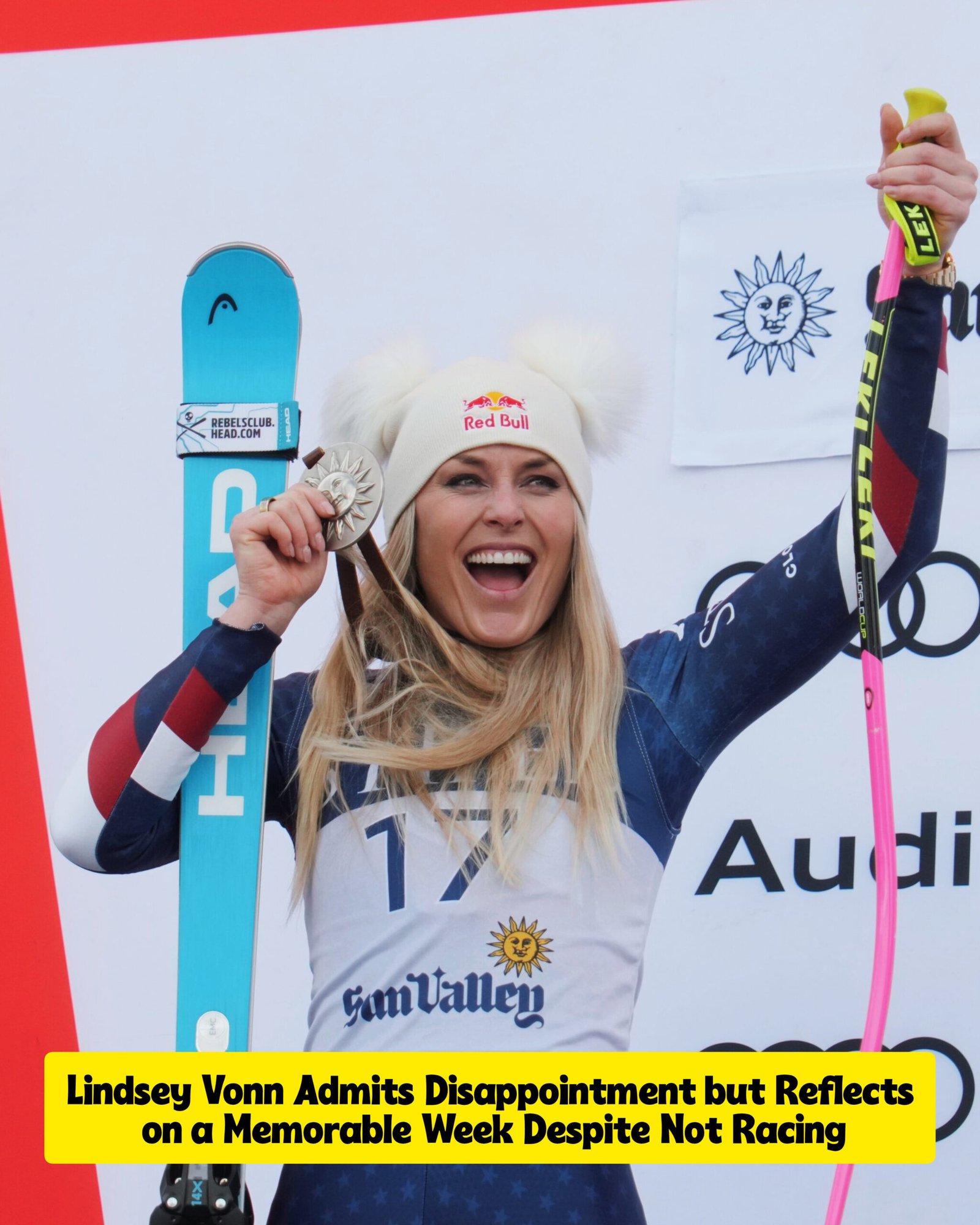
Vonn, who is in her second year back on the World Cup circuit, continues to defy expectations. Despite missing the Super-G on January 11, she capped off the Zauchensee stop by claiming her second victory of the season and sharing another podium with a close teammate. For an athlete who once believed her career had ended for good, the experience symbolised far more than just results on paper.
After battling a series of injuries that forced her retirement in 2019 and undergoing a partial knee replacement in 2024, Vonn’s return to elite competition has redefined what many believed was possible at the highest level of alpine skiing. At 41 years old, she has not only re-established herself among the world’s best but has also become a powerful source of inspiration for athletes facing similar setbacks.
A Season That Started With Momentum
Vonn’s latest campaign began in St. Moritz, where she lined up for the speed events and immediately looked comfortable on the demanding Swiss slopes. It didn’t take long for her to make a statement. She secured her first victory of the season in the downhill, setting the tone for what would follow.
The next day brought further proof of her consistency, as she finished second in another downhill race. Her momentum carried into Val d’Isère, where she added more podium finishes to her growing tally. Among those results was a third-place finish in the downhill and a bronze medal in the Super-G, confirming that she was competitive across multiple speed disciplines.
Each race added belief, not only for Vonn but also for those watching her comeback unfold. Her ability to remain competitive against a new generation of athletes underscored just how effectively she had adapted after years away from the sport.
Zauchensee: Expectations and Excellence
Arriving at Zauchensee, Vonn was widely regarded as one of the favourites. The steep, technical course has always suited her aggressive yet calculated style, and her recent form only strengthened expectations.
She delivered exactly what many anticipated in the downhill, producing a commanding performance that placed her on top of the podium. Norwegian skier Kajsa Vickhoff Lie finished second, while fellow American Jacqueline Wiles claimed third. The result marked Vonn’s 84th World Cup victory, extending one of the most remarkable win records in the sport’s history.
For Vonn, the achievement carried added meaning. Sharing the podium with Wiles, a longtime teammate, highlighted the collective strength of the U.S. squad and reinforced the sense of camaraderie that has defined much of her career.
Weather Ends Super-G Hopes
The Super-G scheduled for January 11 was expected to be another opportunity for Vonn to challenge for victory. However, deteriorating weather conditions throughout the day made racing unsafe. After careful consideration, officials decided to cancel the event.
The decision left Vonn frustrated but understanding. Like many athletes, she expressed disappointment at losing the chance to compete, yet she acknowledged that safety had to come first.
Reflecting on the week, she shared her thoughts openly, writing:
“What a life! Disappointed we couldn’t race today but leaving with a win and a podium with my teammate is an incredible feeling. It’s a week to remember!!”
Her words captured both the competitive fire that still burns strongly and the gratitude she feels for simply being back where she belongs.
Moments Beyond the Results
Vonn marked the end of the Zauchensee stop by sharing a series of photos that offered a glimpse into both her professional and personal world. The images included joyful podium celebrations, with the athletes smiling and laughing together, as well as a relaxed selfie with her coach, Aksel Lund Svindal.
The post also featured moments away from the slopes, highlighting the balance Vonn has found in this stage of her career. These snapshots reflected a veteran athlete who has learned to appreciate each experience, understanding that every race, win, and even cancellation carries significance.
Overcoming Doubt on Race Day
Despite her eventual victory in the downhill, Vonn admitted that she had serious doubts before the race even began. Weather conditions worsened as the day progressed, and heavy snowfall made the course increasingly difficult.
Starting with bib number six, she worried that the conditions would be too compromised to allow for a clean run. The snow buildup made it hard to see the track clearly, and she questioned whether she could truly challenge for the win.
“I honestly thought that with my start number I had no chance,” Vonn admitted. “There was so much snow, and it didn’t really feel like there was a track.”
Rather than allowing doubt to take over, she adjusted her mindset. Acknowledging the risks, she committed fully to her approach, trusting her instincts and experience. That mental resilience proved decisive, enabling her to navigate the difficult conditions and emerge victorious.
A Comeback Built on Resilience
Vonn’s career has been shaped as much by adversity as by success. Injuries repeatedly threatened to derail her ambitions, and her retirement in 2019 appeared to signal the end of an era. The partial knee replacement surgery she underwent in 2024 further raised questions about whether a return to elite competition was realistic.
Yet her comeback during the 2024/25 season rewrote the narrative. By returning not just to compete, but to win, Vonn shattered assumptions about age and recovery in alpine skiing. Her presence on the World Cup circuit has resonated far beyond the results, inspiring athletes across disciplines to reconsider what might still be possible.
Eyes on the Olympics
As the season progresses, Vonn is now entering the final phase of preparation before the Cortina Olympics, which begin next month. Every race carries added importance as she works toward her primary objective: earning a place on the U.S. Olympic team.
Since her return, that goal has remained at the center of her focus. Each podium finish strengthens her case, while each challenge provides valuable lessons ahead of the sport’s biggest stage.
The cancelled Super-G at Zauchensee may have denied her another opportunity to race, but the week still delivered everything she needed — confidence, momentum, and a reminder of why she chose to come back.
A Week to Remember
In the end, Zauchensee will be remembered by Vonn not for the race that didn’t happen, but for the moments that did. A commanding downhill victory, another milestone win, shared success with a teammate, and the satisfaction of overcoming doubt in difficult conditions all combined to make the week special.
As she continues her journey toward the Olympics, Lindsey Vonn remains a powerful example of perseverance. Even in the absence of competition, her presence, performances, and perspective ensure that every stop on the circuit leaves a lasting mark.
Lindsey Vonn and Mikaela Shiffrin ready to highlight resilience at Milan–Cortina 2026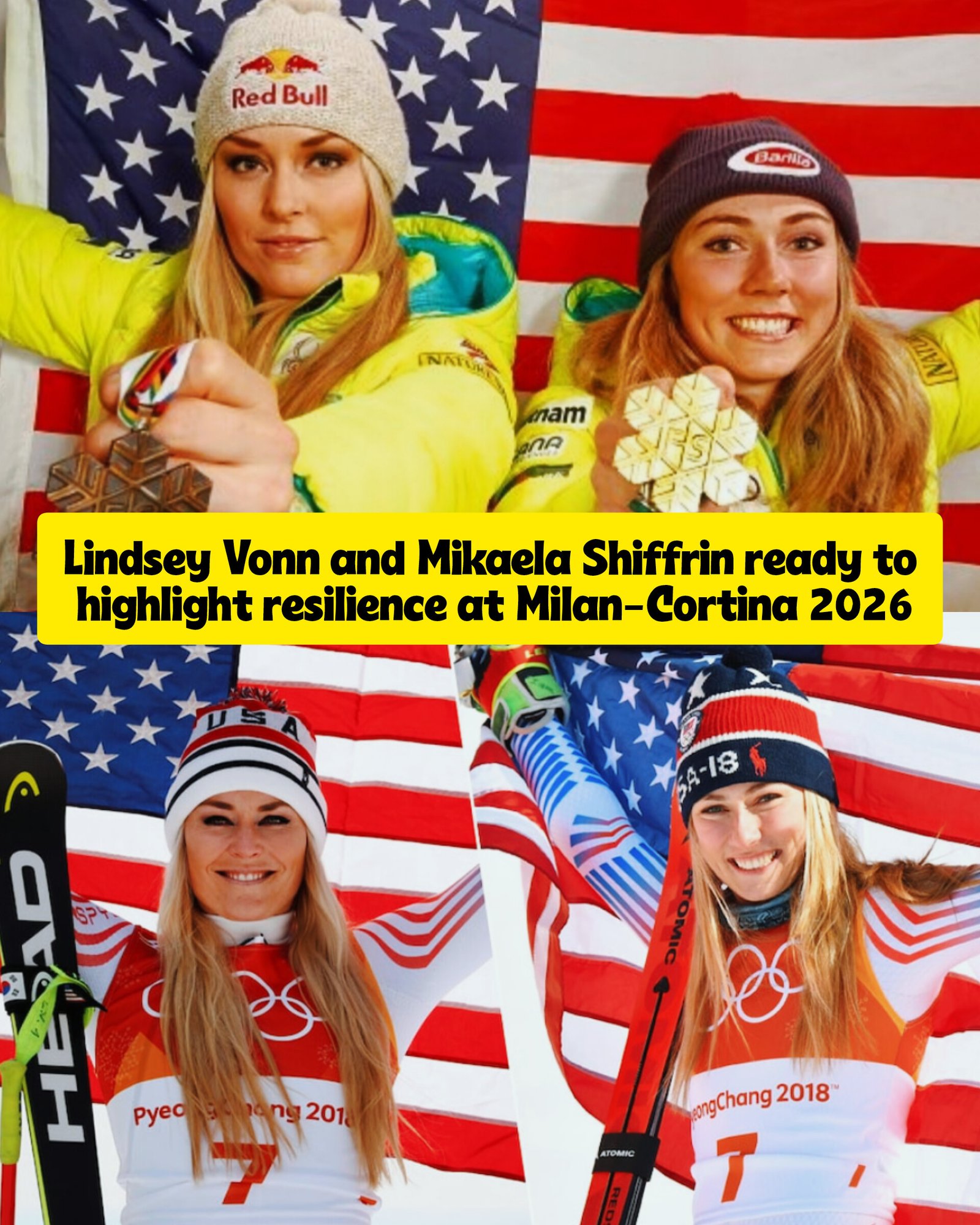
The countdown to the Milan–Cortina 2026 Winter Olympics is already generating anticipation, and few storylines carry as much emotional weight as the expected presence of Lindsey Vonn and Mikaela Shiffrin on alpine skiing’s biggest stage. In the opening episode of the Milan Magic vodcast, Olympic champion Brian Boitano and veteran sports journalist Christine Brennan explored why these two American icons will command global attention, not just for their medals, but for what they represent.
At the heart of the discussion was resilience. Vonn and Shiffrin have each defined eras of women’s alpine skiing, yet their journeys to Milan–Cortina could hardly be described as straightforward. Injuries, pressure, personal loss, and relentless expectations have shaped both careers, making their continued presence at the top of the sport remarkable in itself.
For Lindsey Vonn, the Olympic narrative feels almost cinematic. Once the most dominant downhill skier in the world, her career was repeatedly interrupted by devastating knee injuries. Torn ligaments, fractured bones, and countless surgeries forced her to confront the possibility that her body might not withstand the demands of elite competition. Even after stepping away from the sport, Vonn has remained a visible and influential figure, symbolising perseverance and the refusal to be defined solely by setbacks.
Boitano noted that Vonn’s name still carries immense weight in Olympic circles. Whether she is competing, mentoring, or serving as a prominent voice within the Olympic movement, her presence resonates. Her story is not just about speed on the slopes, but about navigating pain, recovery, and the emotional toll of fighting one’s own physical limits year after year. Milan–Cortina represents another chapter in a career that has already transcended results.
Mikaela Shiffrin’s path, while different, is equally compelling. Widely regarded as the most technically complete skier of her generation, Shiffrin has rewritten record books with her consistency and versatility across disciplines. Yet Brennan emphasised that her recent seasons have revealed a more vulnerable side of an athlete often seen as untouchable.
Shiffrin has faced profound challenges away from the stopwatch. The loss of her father, recurring injuries, and the mental strain of carrying expectations as the face of American skiing have all left visible marks. Her openness about anxiety, confidence, and the psychological impact of crashes has reshaped conversations around mental health in elite sport.
The vodcast highlighted how Shiffrin’s honesty has changed her public image. Rather than diminishing her stature, it has made her more relatable. Fans now see not only the champion who dominates slalom and giant slalom, but also the person who questions herself, struggles through fear, and still chooses to race. That willingness to be transparent, Brennan suggested, may become one of her most lasting legacies.
As Milan–Cortina approaches, both athletes are framed less as medal certainties and more as symbols of endurance. The discussion made clear that success at these Games will not be measured purely by podium finishes. Simply arriving healthy, competitive, and mentally prepared will be victories in their own right.
Boitano reflected on how Olympic audiences are drawn to stories that mirror real life. Athletes who overcome adversity resonate far beyond their sport, and Vonn and Shiffrin embody that truth. Their careers have unfolded in the public eye, allowing fans to witness not just triumphs, but setbacks, doubts, and recoveries.
There is also a generational element to their pairing. Vonn helped redefine what was possible for American women in alpine skiing, pushing boundaries and attracting new attention to the sport. Shiffrin followed, elevating standards even further with a level of technical mastery rarely seen. Milan–Cortina offers a moment where these two legacies intersect, linking past dominance with present excellence.
The vodcast episode also touched on the unique significance of the Italian venues. Cortina d’Ampezzo has a storied Olympic history, and its challenging courses demand precision, courage, and adaptability. For skiers returning from injury or managing physical limitations, the terrain will test not just skill, but trust in their bodies.
Brennan noted that both Vonn and Shiffrin have learned to redefine success as their careers have matured. Early in their journeys, winning was the singular objective. Now, longevity, health, and personal fulfilment carry greater importance. That shift in perspective does not lessen their competitive fire, but it does provide balance in a sport where margins are unforgiving.
Another theme emerging from the conversation was leadership. Even without speaking, Vonn and Shiffrin influence younger athletes through their actions. Training habits, recovery routines, and mental preparation are all scrutinised by the next generation. Their willingness to discuss struggles openly offers a powerful counter-narrative to the idea that champions are immune to doubt or pain.
As the Milan–Cortina Games draw closer, the spotlight will intensify. Media attention, national expectations, and personal ambitions will converge. Yet the vodcast made clear that this pressure is not new territory for either skier. They have learned, sometimes painfully, how to manage scrutiny and remain grounded.
In many ways, their stories reflect the evolution of elite sport itself. Modern athletes are no longer judged solely on medals, but on how they navigate adversity, advocate for themselves, and contribute to broader conversations around health and identity. Vonn and Shiffrin stand at the forefront of that shift.
The Milan Magic discussion concluded with a sense of anticipation rather than prediction. No one can say what the medal table will look like in 2026. But there is little doubt that when Lindsey Vonn and Mikaela Shiffrin step onto the slopes, they will carry narratives that extend far beyond the finish line.
Their presence alone will remind viewers why the Olympics captivate the world. They are stages not just for speed and skill, but for human stories of resilience, reinvention, and perseverance. At Milan–Cortina, Vonn and Shiffrin are poised to showcase exactly that, reaffirming why all eyes will be on them when the Games begin.
At home with Shiffrin

Mother and daughter time
Image: Brent Bingham
Mikaela’s mother reflects on the things she learnt while raising the greatest ski racer of all time.
Just before 4 p.m. on an August afternoon in Edwards, Eileen Shiffrin is seated in her living room, immersed in detailing the painstaking process of raising the world’s best ski racer—when, unexpectedly, the world’s best ski racer bursts through the door. “Mikaela, come say hello! ” She rants at her 26-year-old daughter, who lives with her. Mikaela says a quick hello as she scurries inside, apologising for having to leave again because a friend and neighbour (LEKI rep Charlie Webb) is trying to custom fit her shin guards in preparation for the coming winter. Mikaela is still over three months away from her first World Cup race and six months from the 2022 Olympic Winter Games in Beijing, but she is already feeling the crush—and rush—of expectations. Mom gives a knowing look before returning to her story.
Eileen has told several of these stories several times previously. Others, she is still unsure how to tell. This will be her second season as a single mom after her 34-year-old husband, Jeff, a Vail Health anaesthesiologist, died unexpectedly in February 2020. She enjoys reflecting on how she and Jeff raised Mikaela and her brother, Taylor, who is two and a half years older. Mikaela’s success as an Olympic champion was not unintended, but it was also not their goal.
“We just had so much fun skiing with them,” she explains simply. “However, others are constantly attempting to model their programs after how we achieved it. Stop right there! Parents should relax and enjoy the process when their children are young, regardless of the sport.”

Eileen Shiffrin at home in Edwards
Image: Brent Bingham
Jeff’s moustachioed countenance, which has been missing for more than a year, is reflected in framed images found in nearly every room of the exquisitely furnished, five-bedroom mountain modern home the Shiffrins built to replace their long-time family compound in nearby Eagle-Vail, where Mikaela and Taylor were raised. Eileen is proud that Mikaela created the bronze fireplace, and that several of her crystal globes are on exhibit downstairs, lighted and placed on a stacked-stone-wall trophy case. The three of them moved in during the summer of 2019, eight months before Jeff passed away. Eileen says adjusting to Jeff’s loss “was like getting a torpedo in the head and gut, over and over, for months on end.” They don’t often talk about the anguish they felt—and still experience. “We immediately realised that everyone has their own crosses to carry, and they are not the burdens of others; they are our own. “You learn to suffer in silence,” she admits.
Despite their pain and the way it has impacted their lives, the Olympics call. For Mikaela, the Beijing Games are her third and possibly best chance to maximise her talent on the sport’s most illustrious stage—which would entail winning multiple gold medals after winning one in each of her previous two Games. Shiffrin, who is likely to participate in up to five disciplines, all of which she has previously won on the World Cup, will once again be the face of the US delegation. Eileen, who has been by her daughter’s side on the slopes since Mikaela was in kindergarten, will play the same role as before, but Jeff will not. Win or lose, this usually secluded family will embark on a pivotal journey in front of the world’s eyes.

Three weeks before her father died, Mikaela Shiffrin was on pace to win her fourth straight World Cup overall title at the Audi FIS Alpine Ski World Cup in Flachau, Austria, on January 14, 2020.
Image: Max Hall/U.S. Ski Team
To comprehend the hole left by Jeff’s death—the result of a head injury experienced in a fall—and why his absence had such a significant impact on his daughter’s ski racing career, consider the beginning of Team Shiffrin. In the summer of 1985, Jeff and Eileen worked at St. Elizabeth’s Medical Centre in Brighton, Massachusetts. He, a 31-year-old rising-star physician, was completing his cardiothoracic rotation; she, a 25-year-old ICU nurse, described him as “brilliant, jovial, and curious, with a solution to every problem.”
Eileen had skiing in her blood. Every autumn, her parents brought her and her three siblings up to Mt. Greylock, a pasture with two rope tows. They used sickles to clear the meadow grass and prepare the slope for snowfall. Eileen skied with secondhand gear and wore jeans, leather boots, and a black trash bag when it rained. She planned to race in college, but gave it up when she started nursing school. Jeff, a former FIS racer from Dover, New Jersey, invited her on a date to Killington and persuaded her to give it another shot. They had their first vacation as a couple in Aspen, which is one of the reasons Eileen has always expressed “a fondness and nostalgia” for the place. “If it wasn’t for Jeff, I wouldn’t have kept skiing,” she says. “He brought back my love of the sport.”
They married in 1986 and relocated to Vail five years later, each working at the Vail Valley Medical Centre. Taylor was born in 1992, and Mikaela arrived in 1995. Jeff and Eileen taught their children to ski and schooled them on family outings to Vail for years before enrolling them in what was then Ski Club Vail at the age of 9 and 7.

The Shiffrin family at home in Vail in 1999.
Image: Courtesy Eileen Shiffrin
The Shiffrin children made significant development under the direction of SCV’s Rika Moore, who guided a curriculum devised by the club’s Deb Flanders. Mikaela learnt to clear slalom gates before most coaches would let their pupils try. Jeff’s profession and familial ties eventually led them back to New England, where the children settled at Burke Mountain Academy in Vermont’s Northeast Kingdom. Even after their family moved back to Vail in 2009, Mikaela returned to Burke, and Eileen accompanied her, homeschooling Mikaela in a leased condo and watching her training.
Mikaela was developing faster, and her parents worked hard to keep her grounded. They prevented her from studying the scoreboard following her victories, which included sweeping the famous Topolino races in Italy when she was 14. She was not permitted to celebrate. “It’s rude and inconsiderate,” they’d say, not to mention a waste of time. Jeff’s cardinal rule: “Be nice.” Think first. Mikaela had them put on a sticker and affixed to the back of her helmet after he passed away. Every day, he advised his children to “enjoy the process,” emphasising the process above the outcome. When Eileen and Jeff discussed skiing with Taylor and Mikaela, they formed their own language. “Knees to skis, take it deep,” they’d say. Or simply, “Swallow!” “—an SCV drill based on the bird’s wings tipping side to side during flight.”
Eileen was constantly monitoring their effort and performance. She wasn’t a whip cracker, but she knew what her children were capable of. If she felt they were falling short, she simply told them that it was always up to them to put in the effort necessary to realise their full potential. “That was all that was required,” says Taylor, who won two NCAA team championships with the University of Denver.
In March 2011, Mikaela’s first year in high school, the U.S. Ski Team selected a prize winner for a pair of World Cup tech events at Spindleruv Mlyn, Czech Republic. Eileen would soon become Mikaela’s full-time travel companion, but Jeff joined her on this trip and handled every detail. She finished 32nd in slalom, almost missing a second run.
The trip demonstrated what it takes to compete at the highest level, but they also shared beautiful moments as father and daughter, wandering through Prague and analysing video together. “I can’t imagine what it would have been like if he wasn’t there,” Mikaela tells me.
Mikaela went on to win the US national slalom title that spring, at the age of 16, and qualified for a full season on the World Cup. A few months later, she and her parents sat on their couch in Eagle-Vail, discussing how it might work. Mikaela and Eileen had already been studying video together every day, whether by phone or in person, and they were basically best friends. Given his responsibilities as a physician and associate professor at the University of Colorado, Jeff knew the only logical plan for their family was for Eileen to accompany Mikaela to Europe while he handled logistics from Vail, booking flights, lodging, and rental cars and removing distractions so they could focus on skiing. Mikaela began to call him “the Schedulizer.”
Eileen, who quit nursing after having Taylor, helped Mikaela with her schooling on the circuit. Jeff spent all of his PTO visiting them with Taylor, who raced on the NorAm Tour in addition to his time at DU. The family pondered moving to Europe to live together (Jeff even sought for work), but they loved Vail too much to leave.
People think we’re crazy because we’re so secretive, but our lifestyle is exhausting. So when we had the opportunity, we wanted to be together.
The highlight of their year was a two-month summer reunion. “We have always loved being together,” Eileen recalls from her living room. “We didn’t care if our children weren’t part of the group. We are the family that enjoys playing Rummikub. We do not feel obligated to go out on the town. We never felt the need to go downtown and show Mikaela off, especially since she’s [renowned]. People think we’re crazy because we’re so secretive, but our lifestyle is exhausting. So when we had the opportunity, we wanted to be together.”
As Mikaela’s career progressed and her World Cup victories piled up, the Shiffrins invited a small group of friends to join them for celebratory dinners at the conclusion of each winter. They’d toast a good season, safe return home, and enjoyment of the process. They never celebrated her individual achievements.

Team Shiffrin at the 2017 World Cup Finals in Aspen; after a second-place slalom finish, 22-year-old Mikaela became the youngest ski racer to win the overall World Cup title since 2003.
Image: Ryan Mooney/U.S. Ski & Snowboard
Parents rarely coach full-time for the World Cup, and when they do, fathers are more likely to maintain the position. (The mother of Slovenian racer Ilka Stuhec is the only mother who plays a role similar to Eileen’s.) During interviews, Eileen deflects credit, giving Mikaela’s two U.S. Mike Day and Jeff Lackie, the ski team coaches, work primarily with her. But those who know Eileen and understand the sport characterise her as a ski racing student in the same way that Billy Beane is a baseball student: fascinated with the obscure, always looking for the smallest advantage. She watches every racer in the field and has a keen sense of technique and speed, particularly what makes a ski racer fast. In the 1990s, she won two national titles as a masters racer and spent years competing in the local beer league, picking the brains of fellow enthusiasts on a daily basis. Though she keeps her basic coach’s licence from the United States. Eileen Shiffrin, of the Ski and Snowboard Association, is a natural sage rather than a professional examiner. This also applies to her function as motivator.
“I’ve always said Mikaela knows her body and herself better than anyone else, except maybe her mum,” adds Lackie, a former Canadian national team coach who specialises in speed disciplines. “Eileen does not coddle Mikaela, but she protects her. It sounds contradictory, yet it is not. Creating a sense of urgency and pushing her whenever she notices Mikaela becoming complacent is a distinguishing characteristic.”
Eileen does not coddle Mikaela, yet she protects her. It sounds contradictory, yet it is not. Creating a sense of urgency and pushing Mikaela anytime she detects complacency is a distinguishing feature.
“Mikaela needs Mom more than anyone,” says Taylor, 29, a data scientist and entrepreneur from Denver. “Why is it the case? Dad and I have several theories. We never talked much about it, but we knew Mom had to be there.
Despite Team Shiffrin’s success, Eileen always wanted to go back to nursing. So, in 2015, shortly after Mikaela turned 20, they decided to test a new system. Mikaela would “spread her wings and take off,” as Eileen puts it, while Eileen would retire from coaching to pursue her chosen job. Mikaela’s first World Cup race without her parents was at Åre, Sweden, in early December. Eileen sat down to watch from her mother’s house in Massachusetts at 4 a.m., when the SMS barrage started. Mikaela’s eyes were watering and hazy from an allergic reaction to poor cosmetics when she crashed while warming up in windblown snow, tearing her MCL. “I almost threw up when I found out,” Eileen admits, recoiling from the memories. Mikaela missed a significant portion of the season. She still believes she wouldn’t have crashed if her mother had been around to tell her to be cautious on the uneven terrain.
Eileen rejoined her daughter on tour once Mikaela returned to competition, and they decided to abandon the retirement plan. For the next four years, the technique delivered impressive results, including Mikaela’s breakout 2017 season, when she won her first overall title at the World Cup Finals in Aspen. Then in October 2019, Eileen’s mother, Mikaela’s “Nana” and biggest fan, passed away. Eileen and Jeff decided it might be time to try retirement again. Eileen leaned on Jeff while she mourned her loss at home. Mikaela’s skiing got worse across the Atlantic. She finished 17th in a race at Courchevel, France, in December, which was a shocking performance for the three-time defending overall World Cup winner.
Eileen returned to Europe, and Mikaela finished on the podium in seven of the next ten races, winning four. Her record came to an end on the notorious Bansko Speedway in Bulgaria in the last week of January 2020, with her father in attendance. “Bansko was the one place Jeff had always wanted to see Mikaela compete,” she adds.
Jeff saw his daughter win her first two speed races of the year, a downhill and a super-G, before finishing fourth in a second downhill. She was in good position to win her fourth consecutive overall title.
Following the Bansko races, Jeff spent a few days relaxing in Lake Garda, Italy, with Eileen and Mikaela. They had came to Lake Garda as a young family to windsurf 18 years ago, and Jeff and Eileen reminisced about their vacation while wandering around the lake. “We loved having him there,” Eileen recalls. When they said their goodbyes, they intended to see each other in five weeks.
Two days later, while training in Folgaria, Italy, Mikaela received a call from Taylor asking to speak with their mother, whom he had been unable to contact. Taylor informed Eileen that his father had collapsed and that she and Mikaela needed to return home immediately. They all got to be together again before Jeff died on February 2.

Mikaela Shiffrin training for the 2022 Winter Games with the U.S. Ski Team at Saas-Fee, Switzerland, in September
Image: Ryan Mooney/U.S. Ski & Snowboard
Mikaela returns home from her shinguard fitting just after 5 p.m. The Olympic winner sits on the couch, sipping orange seltzer and sporting red nail polish. She and her mother instantly begin recalling the chronological order of her early career. After a few minutes, Eileen rises from her chair and walks over to sit with her daughter on the couch. They’re both wearing white tank tops and share a striking resemblance—wavy blond hair, dazzling eyes, and movie-star smiles.
In a few weeks, the circus will relaunch in Saas-Fee, Switzerland, for training with the US. Ski Team, then home for Taylor’s September wedding at Piney Lake and a few preseason fundraisers, then to Austria for the season opener in early October, all leading up to China in February. The Olympics are a massive logistical question mark; according to information obtained by the Shiffrins from local coaches, there were only three days in February last year when alpine races could have been held due to high winds at the Olympic venue. This year, they plan to hold 11 races in two weeks.
Eileen frequently prepares her kid for a roller coaster ride, both literally and mentally. At the age when many of her friends are retiring, Eileen, 62, is as active as she has ever been. She’s still heartbroken. “We’re not over the grief,” she adds from the couch. “You don’t get over the grief,” she says, “but you get over a hump.”
“And you find a way to survive it,” Eileen explains. “Especially with a community like this. It helped a lot. People came out of the woodwork to offer, “Oh, your microwave is broken; don’t worry; we can help with that and this.”
Mikaela won two World Cup events and four medals at the World Championships last winter, including gold in combined, but her overall placing of third was disappointing for such a decorated champion. “She was finding her way back,” explains Day, who manages her technical program. “I think last year was survival to a certain extent.”
The last few years have reinforced my belief that I couldn’t finish my career without my mother’s presence.
Mikaela is now in better shape than she has ever been heading into a season. Taylor, who frequently visits Edwards, claims she buried him in the same test he used to bury her. This summer, she worked out alongside her boyfriend, Norway’s gigantic 2019 overall World Cup champion, Aleksander Aamodt Kilde. “It’s a significant change. “It doesn’t even feel like she’s the same athlete,” says Lackie, Shiffrin’s strength and conditioning coach. “But for sure, it took a full year before I could see the light return to her eyes.”
Someday, the Shiffrin women will retire from ski racing and focus on schussing for leisure, as they do every spring with a small group of friends in Aspen. Mikaela had considered going to medical school, like her father. Spending 220 days per year on the road takes its toll. But for the time being, there are still records to break and a goal that takes complete dedication—from both persons. “The last couple years have solidified even more that I can’t imagine finishing my career without my mum being there,” Mikaela reports. “I have physios, coaches, and plenty of people who literally bend over backwards to help, but they can’t replace what she does when she’s there. It’s impossible to explain everything she does.”
Eileen, sitting a foot away, interjects: “Let’s just suppose, theoretically—I’m not pushing this at all—in a couple years, my eyesight, memory, and joints deteriorate, but you’re still kicking butt. You could talk with the other girls about it.”
“I know,” Mikaela responds. “There is a possibility that it could work, but I don’t see any reason for us to investigate it. Because what is the point? We know what works, so there’s no reason not to keep continuing.
-

 Blog2 months ago
Celtic issues a fiery VAR statement after Trusty’s red card appeal is dismissed, as furious chiefs release referee audio publicly.
-

 Blog2 months ago
Celtic informed their January signing under Martin O’Neill that he wouldn’t play a single minute this season.
-

 Blog2 months ago
Celtic issued an £83 million warning amid looming UEFA threats.
-

 Blog1 month ago
SFA Expected to Review Missed Penalty in Rangers v Celtic Clash
-

 Blog1 week ago
Police respond after reported disorder following Middlesbrough vs Millwall clash
-

 Blog10 months ago
“Courtside to Aisle-Side: Tyrese Haliburton and Jade Jones Set New Wedding Date”
-

 Blog2 months ago
£6m star is looking to leave Rangers this summer and has already announced his next club publicly.
-

 Blog3 weeks ago
Rangers victory overshadowed by refereeing controversy