
Blog
Green Brigade ban – Accusations of gaslighting as Celtic surrenders decision-making.

The ongoing dispute involving the Celtic F.C. supporters’ group known as the Green Brigade shows no immediate signs of resolution, with the latest developments indicating that the ban imposed on the ultras remains firmly in place. Interim chairman Brian Wilson has reiterated that any return to Celtic Park will depend on the group agreeing to a series of conditions set out by Police Scotland.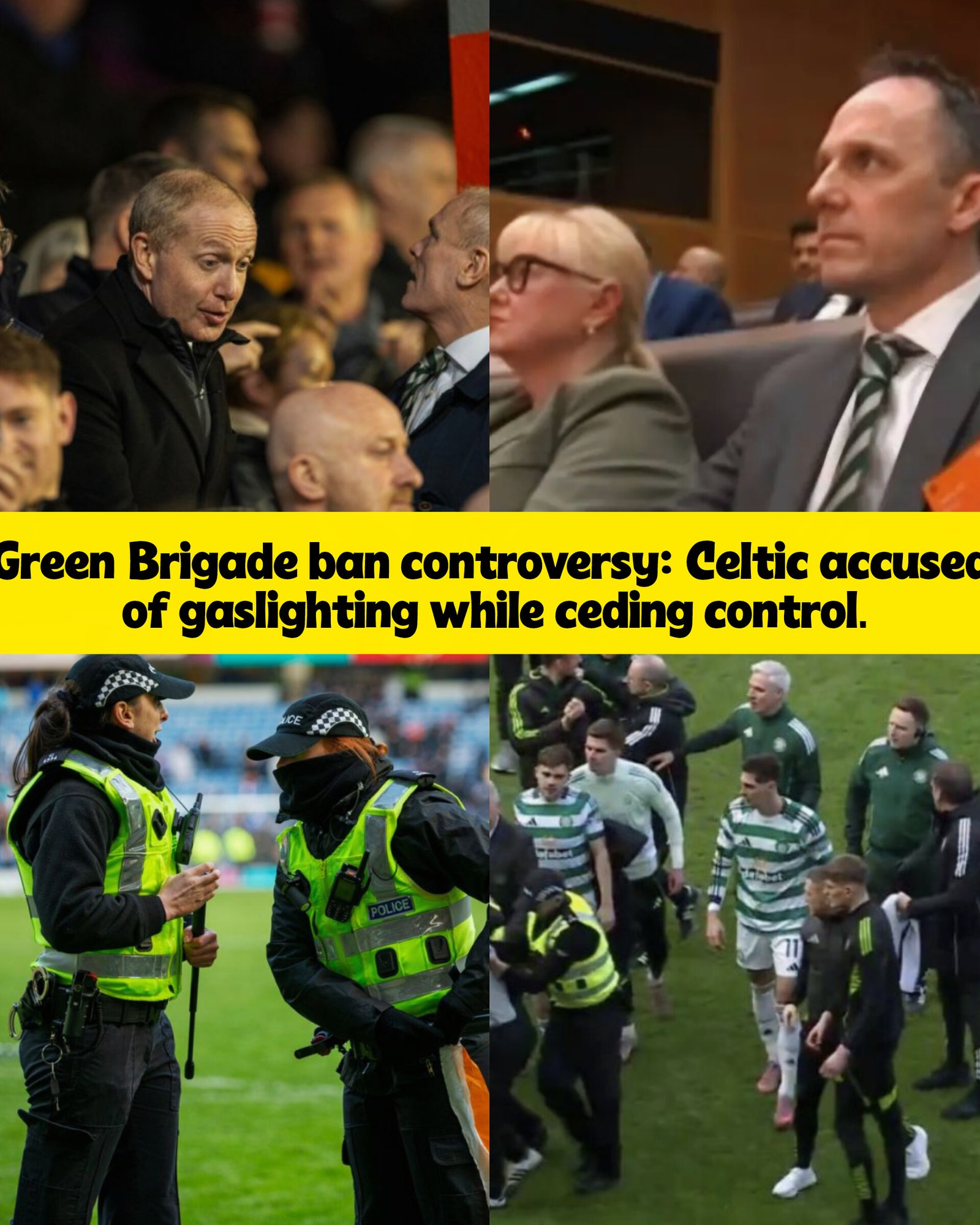
No progress in negotiations
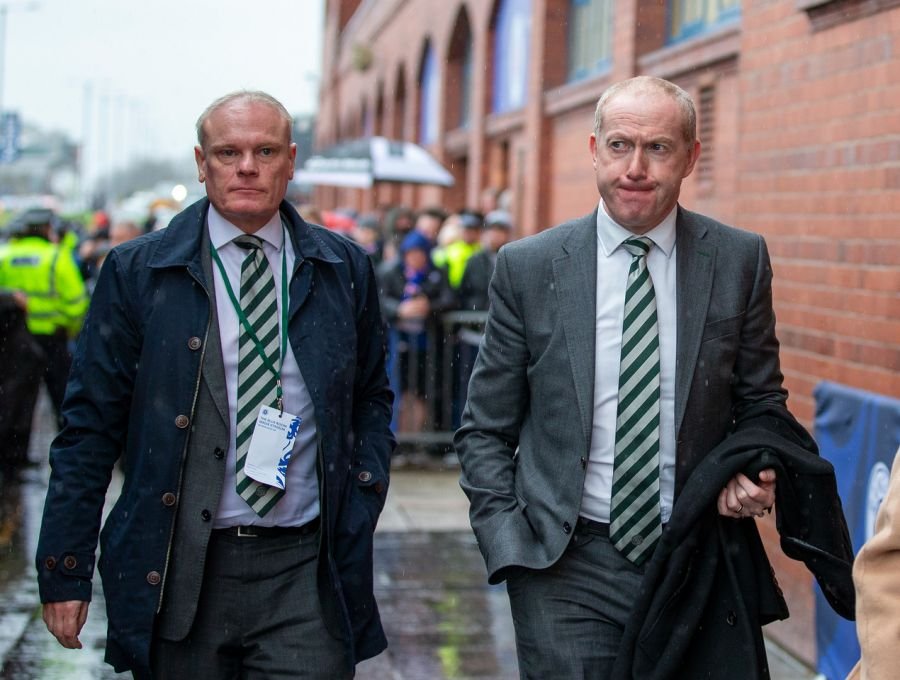
Chris McKay and Michael Nicholson arrive at Ibrox.theRangers 2 Celtic 2. Sunday 1st March 2026. Photograph by Vagelis Georgariou
At present, there has been no indication that the Green Brigade are willing to accept the terms being demanded of them. Equally, there has been a noticeable absence of updates from the Celtic Fans Collective, which suggests that discussions have stalled and no meaningful progress has been made in recent weeks.
This lack of movement has prolonged the situation, leaving many supporters frustrated as the ban continues with no clear timeline for resolution.
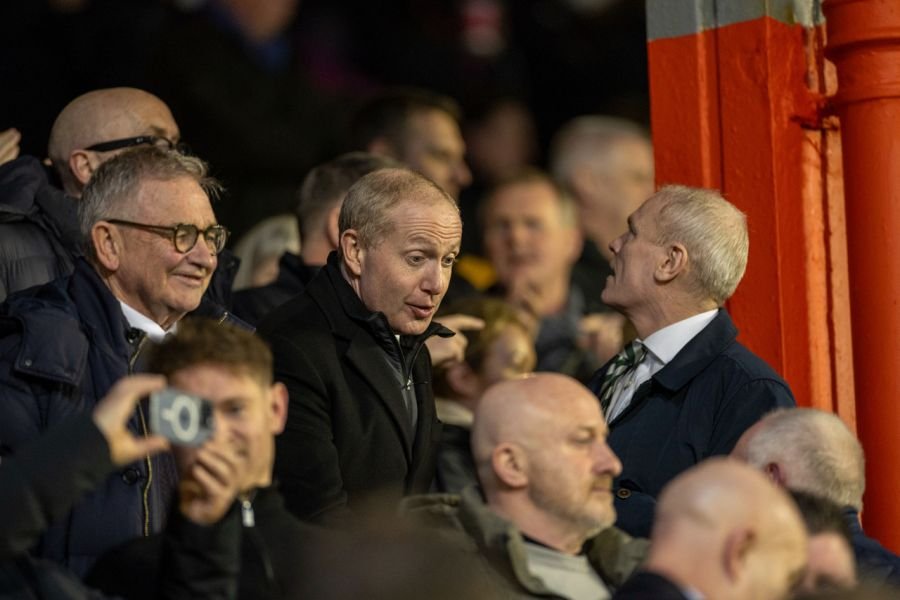
Brian Wilson, Michael Nicholson and Chris McKay at Pittodrie. Aberdeen v Celtic, Scottish Premiership. Wednesday 4th March 2026. Photograph by Vagelis Georgariou
Importance of fan presence during title run-in
Meanwhile, on the pitch, manager Martin O’Neill has guided Celtic to within two points of league leaders Heart of Midlothian F.C., with eight crucial fixtures remaining in the season. Notably, four of those matches will take place at Celtic Park, making home support an especially important factor.
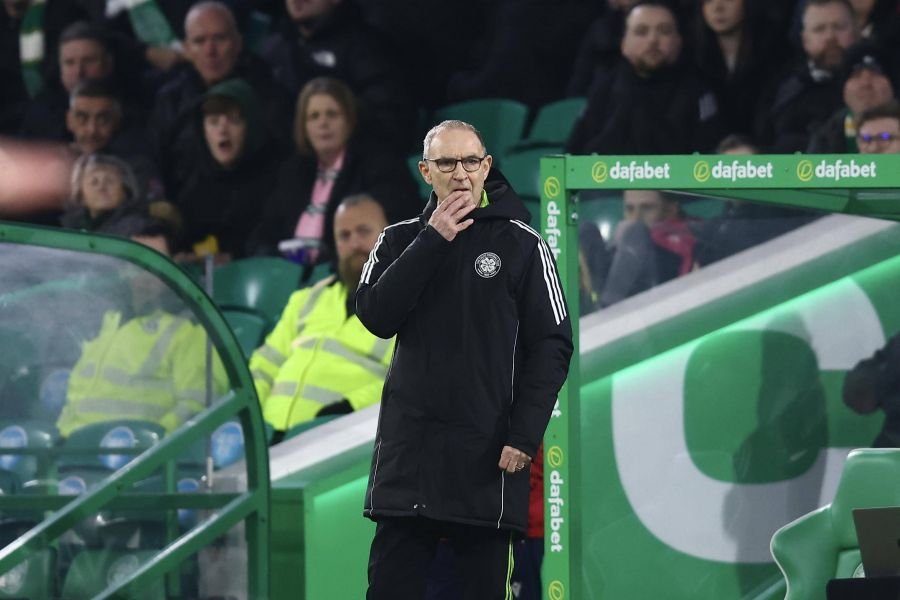
7th February 2026 Celtic Park, Scottish Cup Football, Celtic versus Dundee Celtic manager Martin O’Neill looks thoughtful. Photo David Young
There is a widely shared belief among supporters—and reportedly within the club’s management—that having a full stadium, complete with atmosphere and vocal backing, could play a decisive role in the title race. High-stakes encounters against Hearts and Rangers F.C. are still to come, increasing the importance of maximizing home advantage.
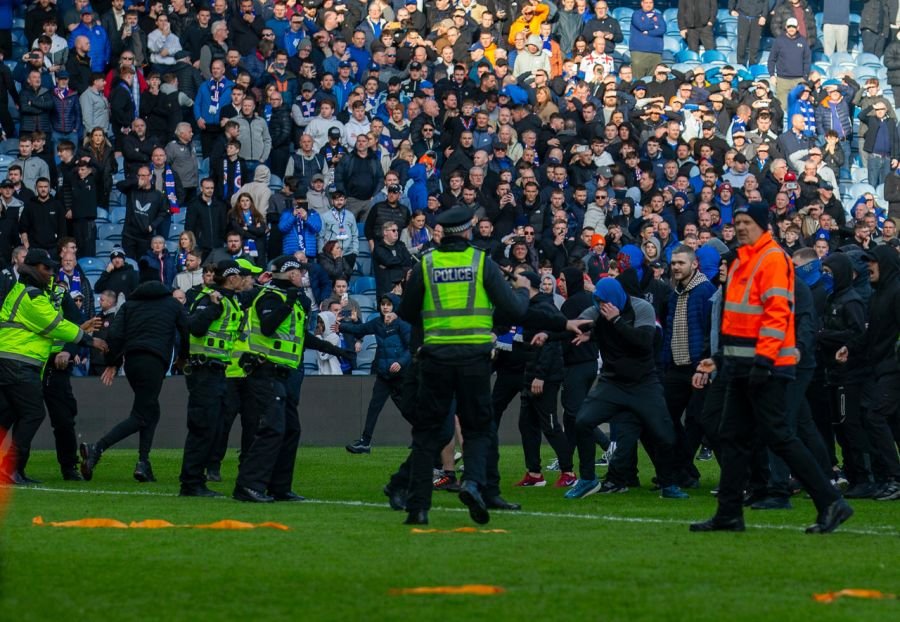
Scotland’s Shame – theRangers fans attacking the Celtic support at Ibrox after Celtic won the Scottish Cup quarter final on Sunday 8 March 2026. Photograph by Vagelis Georgariou
Ibrox incident raises questions of consistency
Recent events at Ibrox have intensified scrutiny around the handling of supporter groups. During a Scottish Cup quarter-final, members of the Union Bears—a Rangers ultras group—entered the pitch and moved toward Celtic supporters gathered in the Broomloan Stand.
Celtic fans, who had been celebrating their team’s victory, were largely non-aggressive, although some had spilled onto the pitch. In contrast, reports suggest that certain individuals among the Rangers ultras behaved violently, including throwing a flare into the section housing Celtic supporters and engaging in confrontations with stewards, police, and opposing fans.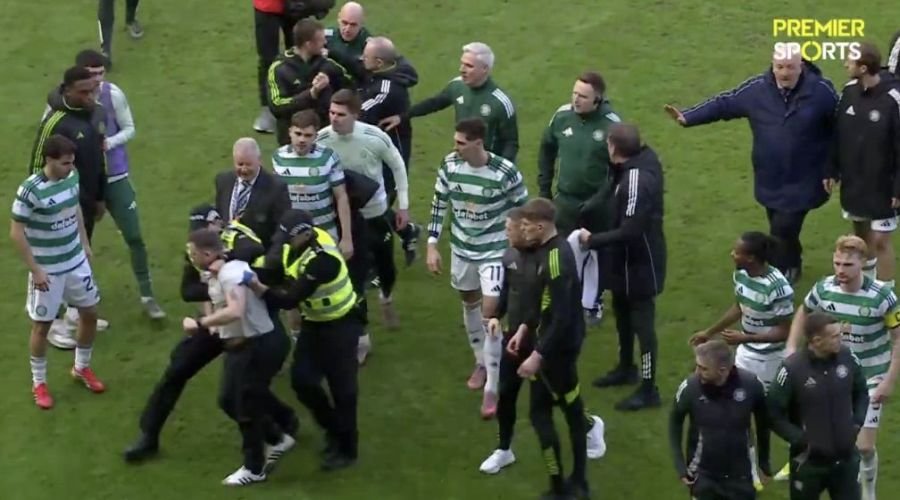
The incident escalated further when a member of Celtic’s coaching staff was reportedly assaulted on the pitch by a Rangers supporter, though it is believed that individual was not part of the ultras group.
Calls for equal treatment
These events have led many Celtic supporters to question the apparent disparity in how the two clubs are handling their respective ultras groups. A key point of contention is why the Green Brigade remain banned from Celtic Park while no comparable sanction has been imposed on the Union Bears at Ibrox.
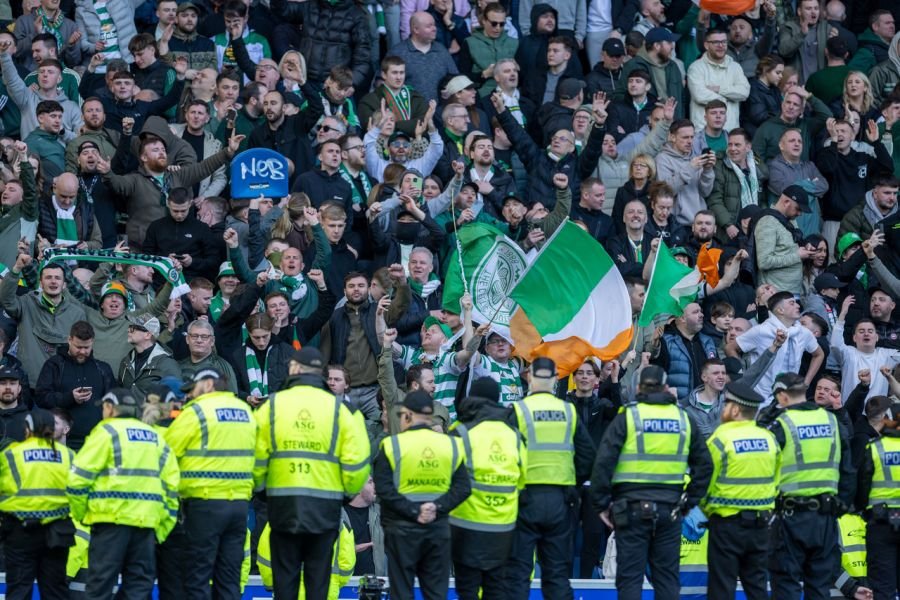
Celtic supporters at the Scottish Cup quarter final on Sunday 8 March 2026. Photograph by Vagelis Georgariou
The issue has become a focal point of debate, with fans demanding consistency and fairness in how such matters are addressed.
Role of the Safety Advisory Group
It has emerged that Rangers F.C. officials recently held discussions with the Safety Advisory Group (SAG), a body that works alongside Police Scotland and has been central to the Green Brigade ban.
During that meeting, Rangers were reportedly advised that a ban on the Union Bears would be appropriate following the Ibrox incidents. However, SAG’s role is advisory rather than authoritative, meaning clubs are not legally obligated to follow its recommendations.
Rangers’ response contrasts with Celtic’s approach
In this case, Rangers chose not to implement a ban on their ultras group, effectively declining the advice given to them. This decision has highlighted a key contrast in how the two clubs approach guidance from SAG and Police Scotland.
While Rangers appear willing to maintain a degree of independence in their decision-making, Celtic have taken a more compliant stance, adhering closely to the recommendations provided by external bodies.
Influence of club officials
At Celtic, Mark Hargreaves, the Head of Safety, Security and Operations, has played a significant role in shaping the club’s approach. A former Police Scotland officer, Hargreaves is seen as having strong ties to the organisation, which some critics argue may influence the club’s decision-making.
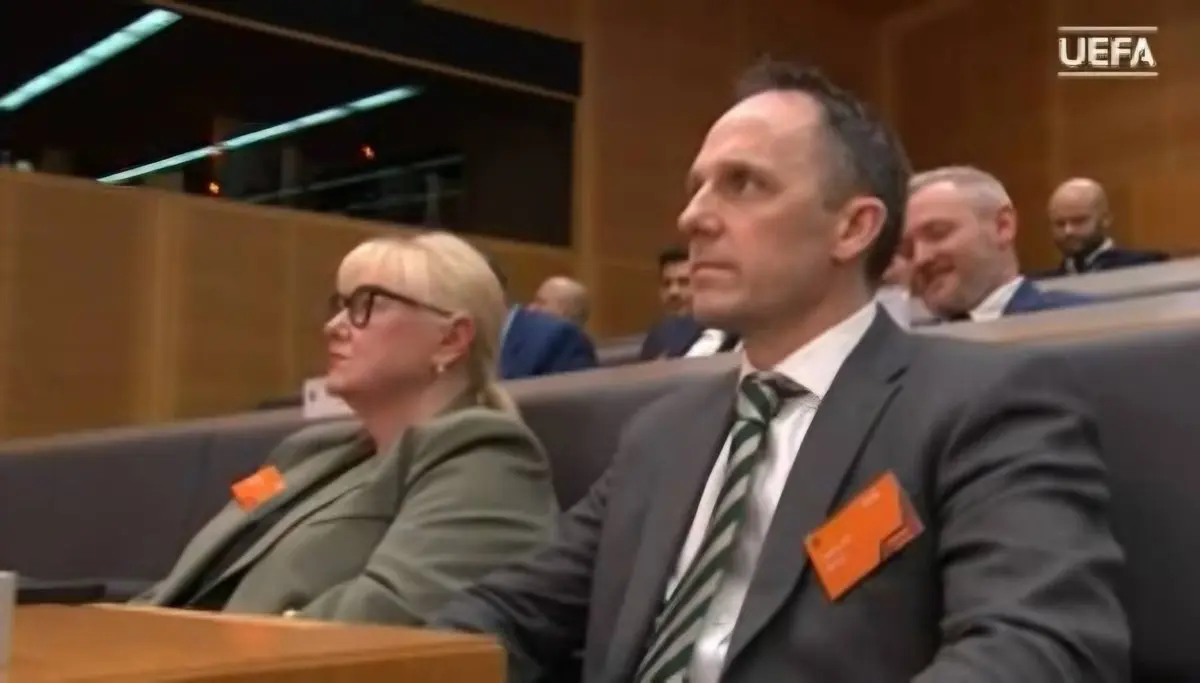
Mark Hargreaves, Celtic FC. Screenshot via social media
Under his guidance, Celtic have fully accepted the advice issued by SAG and Police Scotland. However, this has led to accusations that the club is effectively relinquishing control over key decisions, allowing external entities to dictate policy.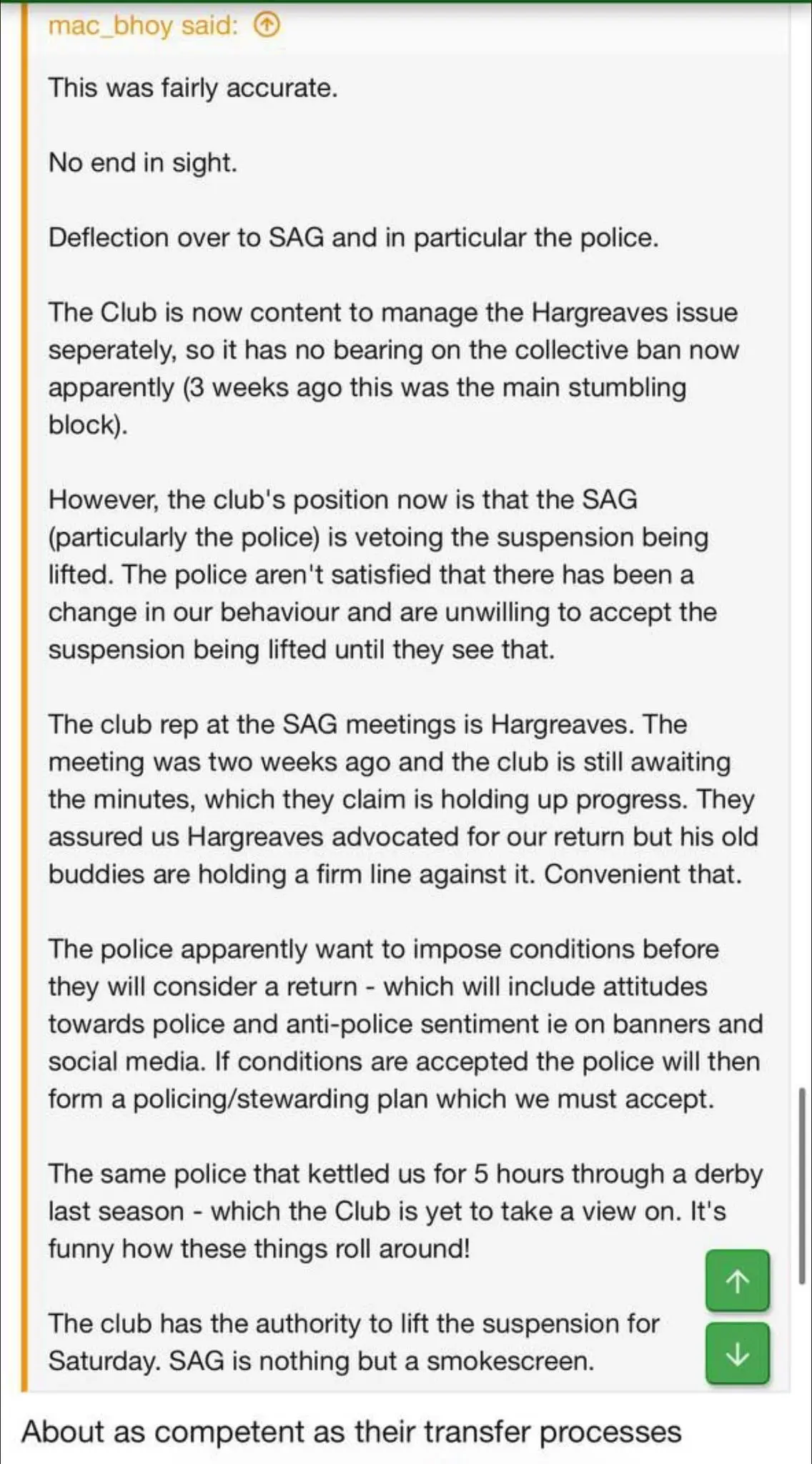
Conditions imposed on the Green Brigade
According to Brian Wilson, the current position is that the Green Brigade must agree to all conditions set by SAG and Police Scotland before they will be permitted to return. Among these requirements is a stipulation that the group refrain from referencing Police Scotland in their social media activity.
This condition, along with others, has contributed to the ongoing impasse, as there is no indication that the ultras group is prepared to comply.
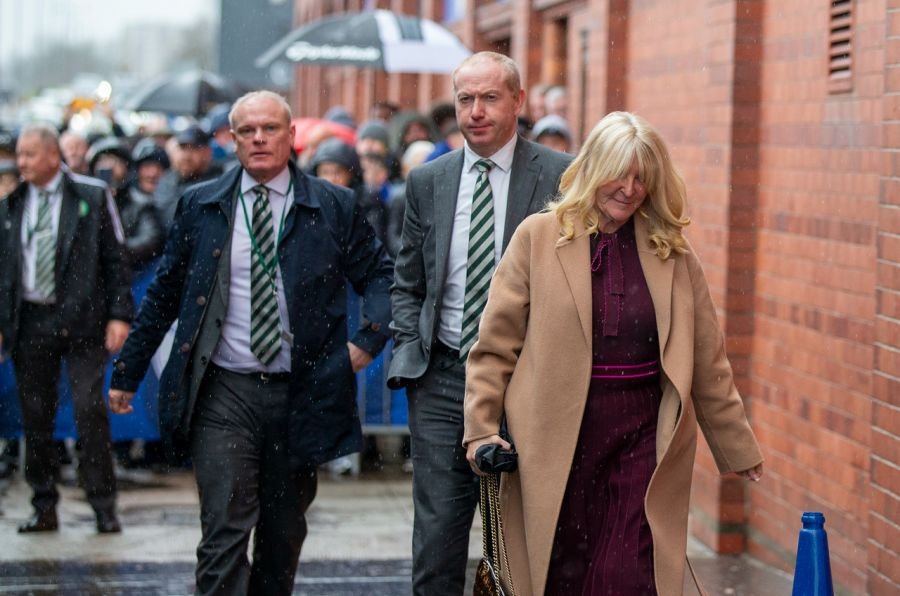
Chris McKay and Michael Nicholson arrive at Ibrox.theRangers 2 Celtic 2. Sunday 1st March 2026. Photograph by Vagelis Georgariou
Questions over decision-making authority
Critics argue that Celtic’s stance reflects a broader issue: the club appears to have ceded its decision-making authority to outside organisations. By deferring entirely to SAG and Police Scotland, Celtic may be undermining its own autonomy.
The situation at Rangers suggests that clubs have the option to interpret and respond to advice differently, raising questions about why Celtic have chosen not to exercise similar discretion.
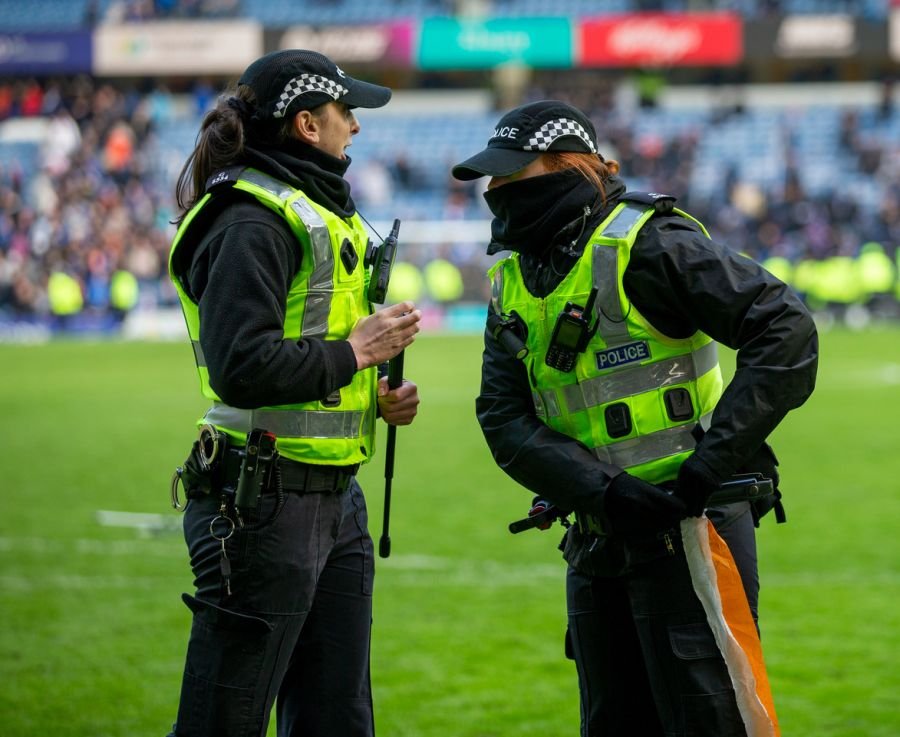
Police officers at Ibrox for the Scottish Cup quarter final on Sunday 8 March 2026. Photograph by Vagelis Georgariou
Legal perspective sheds light on situation
Insights from a senior legal professional with expertise in Scottish football policy further clarify the matter. According to this source, Celtic are not legally required to follow SAG’s recommendations; rather, their compliance is a matter of choice.
The decision to maintain the ban on the Green Brigade is therefore entirely within Celtic’s control, making it a club policy rather than an externally imposed mandate.
Rangers’ alternative approach
The same legal perspective highlights that Rangers adopt a more independent approach to their relationship with SAG. While they engage with the group and consider its advice, they do not feel compelled to implement every recommendation.
In the case of the Union Bears, Rangers are reportedly exploring alternative ways of addressing the situation, such as internal discussions or awaiting the outcome of a Scottish Football Association compliance review.
Impact on supporters
The ongoing ban has had a significant impact on Celtic supporters, particularly the more than 200 season ticket holders who have been denied access to matches for an extended period. Many of these fans have paid in full yet have been unable to attend over 30 games.
This situation has fueled frustration and resentment, as supporters feel they are being unfairly penalised.
Financial considerations at play
Another dimension to the issue involves financial interests. Police Scotland have expressed a preference for having officers present within stadiums, particularly in sections occupied by ultras groups, arguing that stewards alone are insufficient.
This has led to discussions about clubs potentially being required to cover the cost of increased police presence inside grounds such as Celtic Park and Ibrox.
Cost differences between policing and stewarding
Currently, clubs are charged for police deployed داخل stadiums but not for those stationed outside. In recent years, both Celtic and Rangers have reduced their reliance on police within their grounds, opting instead to use stewards due to the significantly lower cost.
Celtic employ a subcontractor for stewarding, while Rangers operate their own in-house system. The financial implications of shifting back toward heavier police presence could be substantial.
Concerns over conflicting interests
Some observers have suggested that Police Scotland may have a vested interest in pushing for increased deployment within stadiums, given the associated costs. This has added another layer of complexity to the situation, raising concerns about potential conflicts of interest.
At the same time, criticism has been directed toward Celtic’s leadership, with suggestions that figures such as chief executive Michael Nicholson have failed to assert the club’s independence.
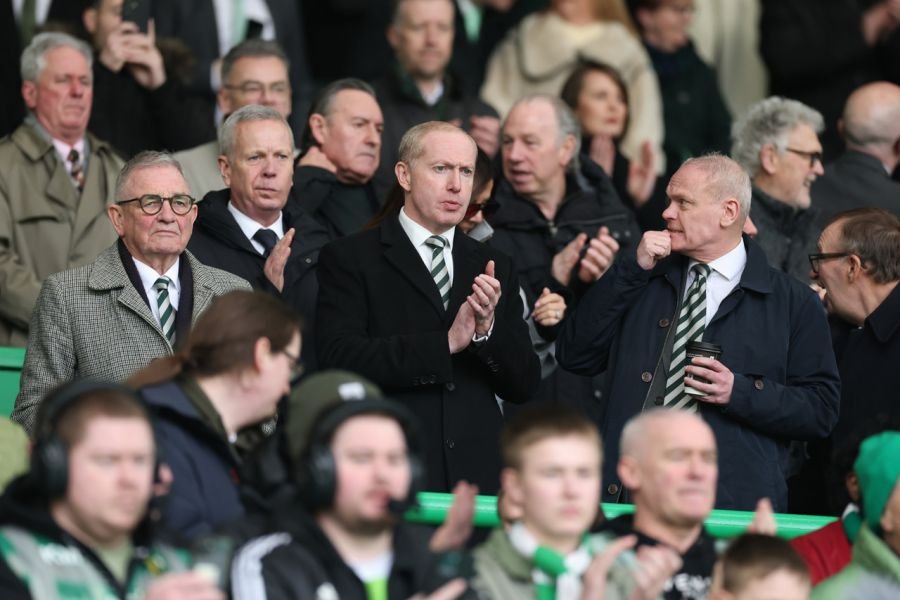
Celtic CEO Micheal Nicholson looks on during the Scottish Premiership match between Celtic and Motherwell at Celtic Park on March 14, 2026 (Photo by Ian MacNicol/Getty Images)
Calls for immediate action
There is a growing argument that Celtic could resolve the issue more decisively by lifting the ban on the Green Brigade, at least on a temporary basis until the end of the season. Doing so would restore full stadium capacity and atmosphere for crucial fixtures.
The club could then work toward a longer-term solution in consultation with SAG and Police Scotland, rather than allowing the current impasse to continue.
Final responsibility lies with Celtic
Ultimately, the situation comes down to control and responsibility. While Celtic have sought guidance from external bodies, the authority to make decisions about their own stadium and supporters remains with them.
They have the option to consider advice, negotiate with the Green Brigade, and reach a compromise that balances safety concerns with the interests of their fan base.
Conclusion
The Green Brigade ban has become a complex and contentious issue, involving questions of authority, consistency, and fairness. While external organisations such as SAG and Police Scotland play an important advisory role, the final decision rests with Celtic.
As the season reaches a critical stage, the pressure is mounting on the club to act. Whether they choose to maintain their current approach or take a more independent stance will likely shape not only the atmosphere at Celtic Park but also the broader relationship between the club and its supporters.
-
 Blog1 month ago
Celtic issues a fiery VAR statement after Trusty’s red card appeal is dismissed, as furious chiefs release referee audio publicly.
-

 Blog2 months ago
Celtic informed their January signing under Martin O’Neill that he wouldn’t play a single minute this season.
-

 Blog1 month ago
Celtic issued an £83 million warning amid looming UEFA threats.
-
 Blog1 month ago
SFA Expected to Review Missed Penalty in Rangers v Celtic Clash
-
 Blog6 days ago
Police respond after reported disorder following Middlesbrough vs Millwall clash
-

 Blog10 months ago
“Courtside to Aisle-Side: Tyrese Haliburton and Jade Jones Set New Wedding Date”
-
 Blog2 months ago
£6m star is looking to leave Rangers this summer and has already announced his next club publicly.
-
 Blog3 weeks ago
Rangers victory overshadowed by refereeing controversy