
Blog
I provided advice on the Derby County takeover following the chaotic Coventry City situation.

A Lifelong Bond with Derby County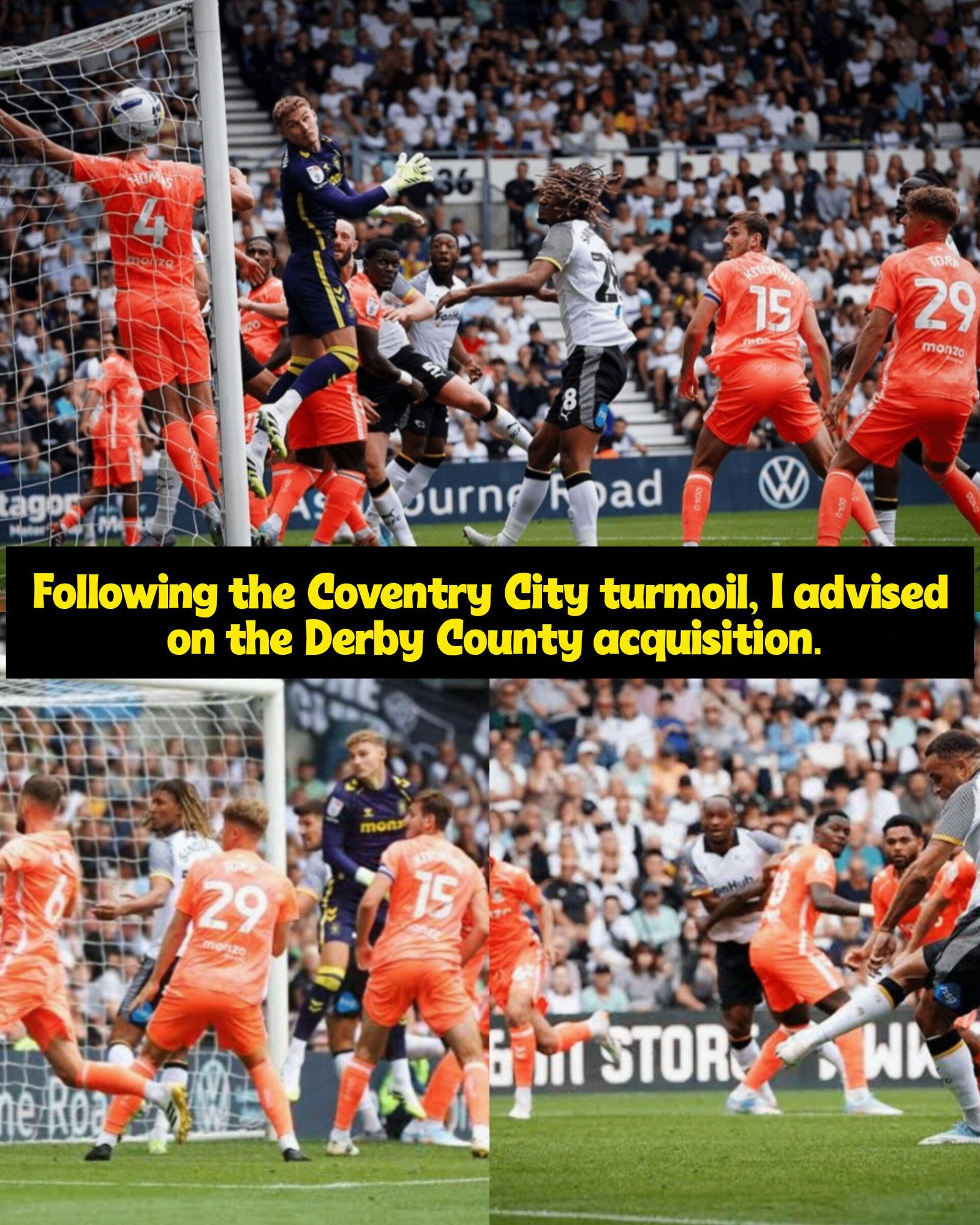
Roger Faulkner may describe himself as an ordinary individual, but his journey through life tells a very different story—one filled with remarkable experiences, global adventures, and deep connections within the world of sport. Despite all the twists and turns his life has taken, one thing has remained constant: his enduring passion for Derby County.
Speaking from his home in the United States, Faulkner reflects on where it all began. His connection to the club dates back to April 27, 1946, a date that holds immense personal and historical significance. Not only does it mark the early days of his lifelong support, but it also coincides with Derby County’s famous FA Cup triumph that same year.
He vividly recalls being on holiday in Bournemouth as a child, gathered around a wooden radio with his father, listening as Derby defeated Charlton Athletic 4-1 in the FA Cup final. That moment, he explains, forged two lifelong bonds simultaneously—one with his father and another with the football club that would remain central to his identity.
Early Life, Sport, and Career Beginnings
Faulkner’s early years were shaped by a mix of sporting involvement and academic pursuits. Although he admits he was far from a natural footballer, he still played the game during his school days at Herbert Strutt School. Positioned as a centre-forward, he humorously recalls his struggles in front of goal, often missing chances set up by a more talented teammate, Mick Walker, who had represented England at youth level.
Despite his limitations in football, Faulkner explored other sporting avenues. He spent time playing tennis competitively, even appearing briefly on the tour, and also represented Derbyshire in the sport. These experiences helped shape his competitive spirit and broadened his exposure to athletics beyond football.
Eventually, his career path led him across the Atlantic to the United States, where he worked with the Burroughs Corporation. It was there, somewhat unexpectedly, that football re-entered his life in a much more significant way.
Building Football in America with Jimmy Hill
Faulkner’s involvement in football took a dramatic turn when he became a co-founder of the Detroit Express, alongside the influential football figure Jimmy Hill. The project represented an ambitious attempt to grow the sport in the United States, but it proved to be a turbulent experience.
After his time with the Detroit Express came to an end, Faulkner transitioned into the financial world, working as a broker for Merrill Lynch. However, his connection to football never faded. He went on to serve as president of the Michigan Soccer Association, further embedding himself in the development of the sport in the region.
His influence grew even further when the United States was unexpectedly awarded hosting rights for the 1994 FIFA World Cup in 1989. Recognising an opportunity, Faulkner took it upon himself to push for Detroit to become one of the host cities.
Driving the 1994 World Cup Vision in the USA
Determined to bring World Cup matches to Detroit, Faulkner spearheaded efforts to secure the city’s inclusion. As part of the preparations, he helped organise a high-profile warm-up match between England and Germany in 1993, demonstrating Detroit’s capability to host major international fixtures.
His work extended beyond this single event. Over the next two decades, Faulkner played an active role in organisations such as the United States Soccer Foundation and the national federation, contributing to the long-term development of football in the country.
One of his most notable achievements came through the innovative use of the Pontiac Silverdome. His bold idea to install natural grass inside the stadium captured global attention and ultimately proved successful, helping Detroit deliver one of the standout venues of the 1994 World Cup.
Derby County: The Constant Thread
While his professional life took him across continents and industries, Faulkner insists that Derby County remained the constant thread tying everything together. No matter where he was in the world, his allegiance to the club never wavered.
He speaks candidly about the depth of that connection, describing football loyalty as something unchangeable. In his words, while many aspects of life can shift—including relationships and even nationality—supporting a football club is permanent.
Over the years, Faulkner maintained close ties with Derby, frequently returning to the city and building relationships with key figures such as Lionel Pickering and Brian Fearn. His involvement even extended to acting as a host when the club toured the United States in 1999, further strengthening his bond with the team.
He poetically describes measuring his life not in time, but in Derby County results—a testament to how deeply the club is woven into his personal story.
Advising Andy Appleby on Derby Takeover
One of the most intriguing chapters in Faulkner’s story is his involvement in the 2008 takeover of Derby County. At the time, he was serving as chairman of the Michigan Sports Hall of Fame, a role that brought him into contact with influential figures across various sports.
It was during this period that he met Andy Appleby, a businessman with ties to American sports, including the Detroit Pistons. Faulkner invited Appleby to join the board, and their professional relationship soon led to discussions about football investment opportunities in England.
When Appleby expressed interest in purchasing a club, Faulkner offered his guidance. Together, they explored several options, including Coventry City. However, concerns about infrastructure—particularly the lack of stadium ownership—made Coventry an unattractive proposition.
Faulkner then turned his attention to Derby County. After reviewing detailed documentation provided by legal advisors, he travelled to Derby to assess the situation firsthand. There, he met with then-chairman Peter Gadsby and toured the club’s facilities, including Moor Farm.
Appleby later joined him, and the groundwork was laid for what would become a significant takeover.
Building an Unconventional Ownership Group
Despite not possessing vast personal wealth, Appleby managed to assemble an impressive group of investors. Among them was Jeff Mallet, a founding figure of Oracle, as well as Tom Vertin, who had connections to the Minnesota Timberwolves.
Faulkner describes the group as extraordinary, but notes that their lack of deep football knowledge presented challenges. While their intentions were positive, translating business expertise into football success proved difficult.
The club endured a notoriously difficult season in the Premier League during their tenure. However, Faulkner fondly recalls being present for a rare highlight—a 1-0 victory over Newcastle United, secured by a remarkable long-range goal from Kenny Miller. That victory would ultimately represent Derby’s only win of the campaign, underlining the scale of the struggles they faced.
A Life Worth Documenting
Faulkner’s extraordinary experiences eventually inspired him to write a memoir titled You Can’t Get There from Here. Initially, the project was not intended for publication. Instead, it began as a personal reflection, driven by a desire to preserve his life story for his children.
He explains that the idea stemmed from reflecting on his own parents’ lives, particularly his father’s experiences during World War II and the Great Depression—stories he realised he knew very little about. Determined not to leave similar gaps for future generations, he set out to document his own journey.
Encouraged by his wife after she read the completed manuscript, Faulkner decided to publish the book. The response has been overwhelmingly positive, with readers captivated by the breadth and uniqueness of his experiences.
Encounters, Legacy, and Reflection
Throughout his life, Faulkner has crossed paths with a wide range of notable figures, from global sports icons like Pelé to influential personalities such as Henry Kissinger and Robin Williams.
These encounters, combined with his contributions to football in both England and the United States, form the backbone of a story defined by resilience, adaptability, and ambition.
From helping shape the growth of soccer in America to playing a behind-the-scenes role in a Derby County takeover, Faulkner’s life has been anything but ordinary.
Full Circle: A Life Anchored by Football
Despite the many chapters of his journey—spanning sport, business, and international travel—Faulkner always returns to the same starting point: Derby County.
His story is ultimately one of passion and loyalty, illustrating how a single football club can serve as a lifelong anchor through decades of change. Whether listening to a crackling radio in 1946 or advising on a modern-day takeover, his connection to Derby has remained unwavering.
Now, with his memoir available to the public, Faulkner offers others a glimpse into a life shaped by football, family, and fearless ambition—proving that even the most ordinary beginnings can lead to truly extraordinary stories.
-

 Blog1 month ago
Celtic issues a fiery VAR statement after Trusty’s red card appeal is dismissed, as furious chiefs release referee audio publicly.
-

 Blog1 month ago
Celtic informed their January signing under Martin O’Neill that he wouldn’t play a single minute this season.
-
 Blog1 month ago
Celtic issued an £83 million warning amid looming UEFA threats.
-

 Blog4 weeks ago
SFA Expected to Review Missed Penalty in Rangers v Celtic Clash
-

 Blog10 months ago
“Courtside to Aisle-Side: Tyrese Haliburton and Jade Jones Set New Wedding Date”
-
 Blog1 month ago
£6m star is looking to leave Rangers this summer and has already announced his next club publicly.
-

 Blog1 week ago
Rangers victory overshadowed by refereeing controversy
-

 Blog1 month ago
Auston Trusty under intense Celtic red card investigation amid new Hibs ‘punch’ claims and Rangers’ appeal review.