
Blog
Kris Boyd mockingly tells Celtic they’re fortunate that a failed medical kept their flop from joining, as Rangers legend searches for the £5m misfit.

Former Rangers striker Kris Boyd has delivered a scathing assessment of Celtic’s recruitment, suggesting the club were “fortunate” that winger Joel Mvuka did not complete a permanent transfer.
Boyd’s comments came in the aftermath of Celtic’s damaging defeat to Dundee United, a result that further dented their hopes in the title race.
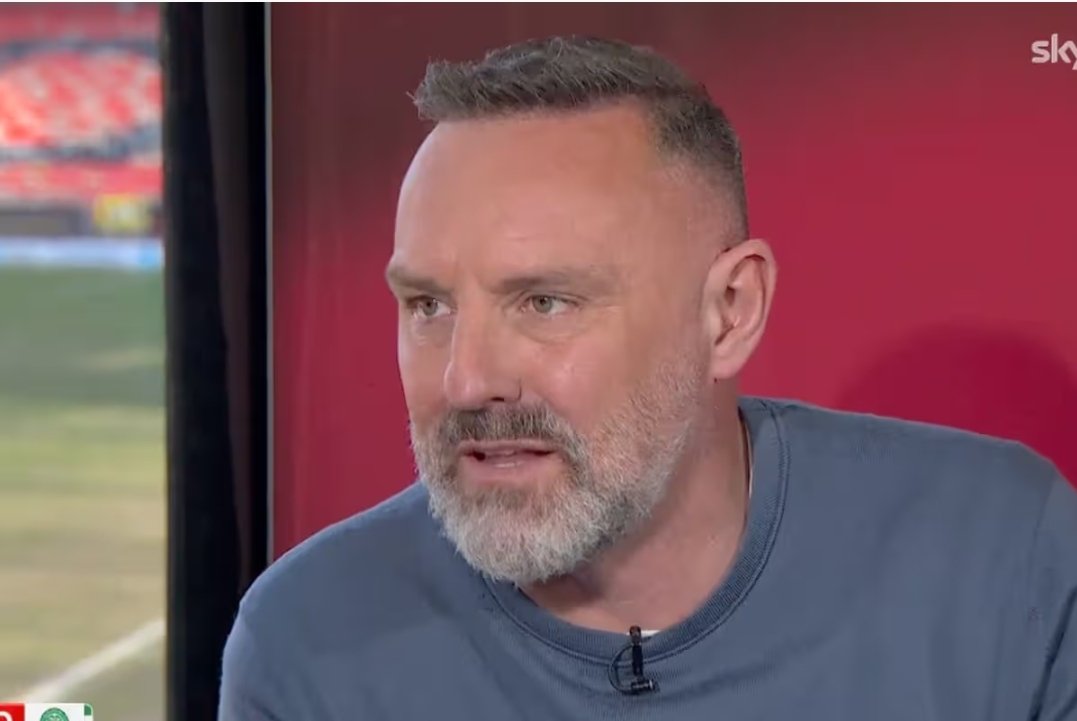
Sky Sports pundit Kris Boyd
Celtic stumble at Tannadice
Martin O’Neill’s side suffered a setback at Tannadice Park, where Dundee United secured all three points thanks to goals from Will Ferry and Emmanuel Agyei.
The defeat leaves Celtic in third place in the Scottish Premiership standings. They now sit five points behind leaders Heart of Midlothian, while Rangers occupy second place, two points ahead of their Glasgow rivals.
Frustration grows among supporters
Following the final whistle, frustration among Celtic supporters was clear, with many directing their anger towards the club’s board. Recruitment issues have been a recurring concern, and the latest performance only intensified criticism of the club’s transfer strategy.
One of the key talking points was the absence of Joel Mvuka, who did not feature in the matchday squad. The winger has struggled to make an impact since arriving from FC Lorient on loan, having made just two appearances so far.
Originally, the move was intended to be a permanent transfer, but complications during his medical on deadline day resulted in the deal being altered to a temporary arrangement instead.
Questions over recent signings
Mvuka is not the only player facing scrutiny. Michel-Ange Balikwisha, who joined the club in a deal reportedly worth around £5 million last summer, has also struggled for game time. He has made just a single appearance this year, coming in a Scottish Cup victory over Auchinleck Talbot.
These situations have raised serious questions about the effectiveness of Celtic’s recruitment, particularly given the financial investment made in strengthening the squad.
Boyd delivers blunt verdict
Speaking on Sky Sports, Boyd did not hold back in his criticism. He argued that despite spending money on new players, the overall quality of those signings has not been sufficient.
He highlighted the number of wingers brought in by the club and questioned their impact, pointing specifically to Balikwisha as an example of a player who has failed to establish himself.
Debate over January transfer activity
Fellow pundit James McFadden pointed out that Celtic had not committed significant funds during the January transfer window, instead opting to bring in players on loan deals.
However, Boyd dismissed this as a positive, suggesting that the club may have avoided further costly mistakes by not investing heavily at that time.
He referenced Mvuka’s brief appearance at Ibrox and expressed disbelief at the level of performance, particularly given that Celtic had been prepared to spend a substantial fee to secure his services permanently.
‘Lucky’ escape claim

Joel Mvuka on the ball for Celtic(Image: SNS Group)
Boyd went on to suggest that Celtic were fortunate the original deal for Mvuka did not go through as planned. In his view, committing an additional £4–5 million on the player would have compounded the club’s recruitment problems.
He argued that the fact Mvuka is only on loan has effectively spared the club from making another expensive error.
Wider criticism of recruitment strategy
The former striker’s overall assessment was damning, as he claimed that while Celtic have invested money in their squad, the returns have been poor. According to Boyd, the issue is not a lack of spending but rather the quality of the players being brought in.
He concluded that the club’s recruitment team must take responsibility, stating that the signings made in recent windows have simply not been good enough.
Pressure mounting on Celtic hierarchy
Boyd’s comments reflect a growing sense of dissatisfaction surrounding Celtic’s transfer dealings. With the team struggling to keep pace in the title race and key signings failing to deliver, scrutiny on the club’s decision-makers is intensifying.
As the season progresses, the pressure will continue to build on both the management and recruitment staff to address these shortcomings and ensure that future signings can make a meaningful impact.
Rangers victory overshadowed by refereeing controversy
Rangers secured an emphatic 4-1 win over Aberdeen, but the match was not without controversy, as a second-half incident involving Thelo Aasgaard drew sharp criticism from pundits and former officials alike.
Both Michael Stewart and Keith Hackett voiced strong disapproval of a decision made by referee Matthew MacDermid, describing it as incorrect and difficult to justify.
Disputed free-kick decision in second half
The controversial moment occurred in the 57th minute, with Rangers holding a narrow 2-1 advantage early in the second half. During the passage of play, MacDermid awarded a free kick to Aberdeen after judging that Emmanuel Gyamfi had been fouled just outside the penalty area.
The decision followed an attempt by Gyamfi to win a penalty, which was widely viewed as a clear dive. Despite minimal, if any, contact from Aasgaard, the referee ruled in favour of Aberdeen, granting them a set-piece opportunity in a potentially dangerous position.
Although the resulting free kick ultimately came to nothing and had no direct impact on the final scoreline, the call itself sparked frustration and debate among observers. Rangers would go on to extend their lead and secure a comfortable victory, but the incident remained a talking point.
Michael Stewart’s reaction to the call
Pundit Michael Stewart was particularly critical of the decision, expressing disbelief at how the referee could have interpreted the situation as a foul. From his perspective, the level of contact involved did not justify awarding a free kick.
Speaking during coverage on Premier Sports, Stewart dismissed the decision outright, stating that it should never have been given. He went further in his criticism, describing the call as “embarrassing” and reiterating that there was insufficient contact to warrant any infringement.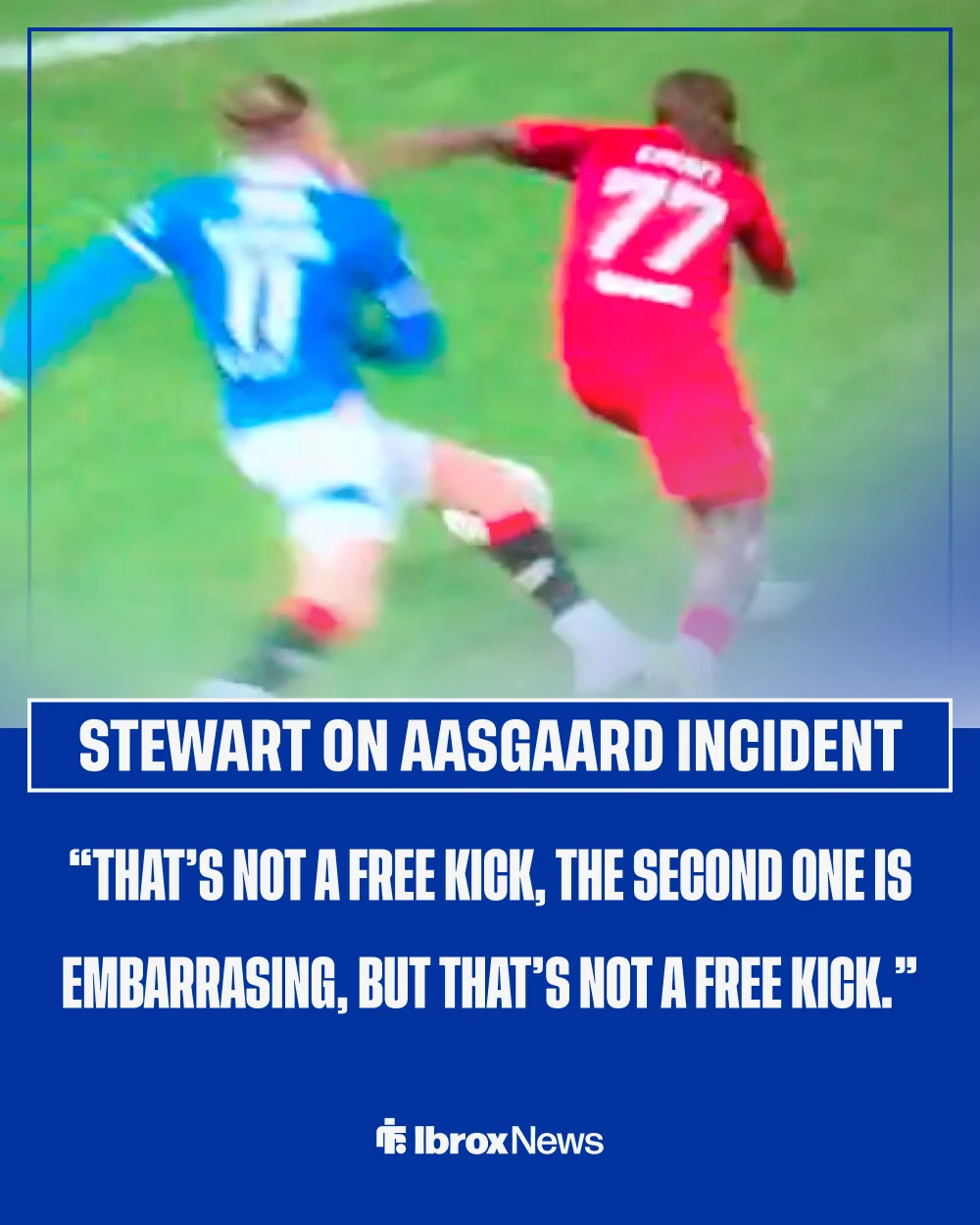
Stewart’s reaction highlighted a broader concern about officiating standards, as he questioned how such a judgment could be made in a professional match. His astonishment was evident, as he emphasised just how surprising he found the referee’s decision.
Keith Hackett backs criticism
Former referee Keith Hackett echoed Stewart’s views, fully agreeing with the assessment that the decision was incorrect. In his analysis, Hackett suggested that the error may have been the result of a lapse in concentration on the part of the referee.
He argued that the incident did not meet the criteria for a foul and therefore should not have resulted in a free kick. According to Hackett, maintaining focus is essential for referees at this level, and any momentary loss of concentration can lead to mistakes such as this.
Hackett’s comments reinforced the idea that the decision was not only questionable but avoidable. In his view, a more attentive approach from the official would likely have prevented the error altogether.
Wider implications for officiating standards
The incident has added fuel to ongoing concerns within Rangers about the standard of refereeing in the Scottish Premiership. Club officials have already been vocal about the need for improvements, and this latest controversy is likely to strengthen their case.
Rangers have reportedly proposed holding discussions with other clubs in the division to address these issues collectively. Their aim is to push for higher standards and greater consistency among officiating teams, reducing the frequency of contentious decisions.
The club is understood to have engaged in dialogue with Willie Collum, who oversees refereeing standards for the Scottish Football Association. The matter has also been raised at board level, underlining the seriousness with which Rangers view the situation.
Potential impact on the title race
While this particular decision did not alter the outcome of the match, it serves as a reminder of how influential refereeing calls can be. In a tightly contested title race, even a single incorrect decision has the potential to change the course of a game—and, by extension, the destination of the championship.
Rangers’ victory moved them to within three points of Heart of Midlothian in second place, keeping the pressure on their rivals. However, had Aberdeen capitalised on the free-kick opportunity, the momentum of the match could have shifted.
Calls for improvement going forward
This episode is likely to be cited by Rangers as further evidence that improvements are necessary within Scottish officiating. The club’s efforts to initiate discussions and drive change may gain additional support in light of such incidents.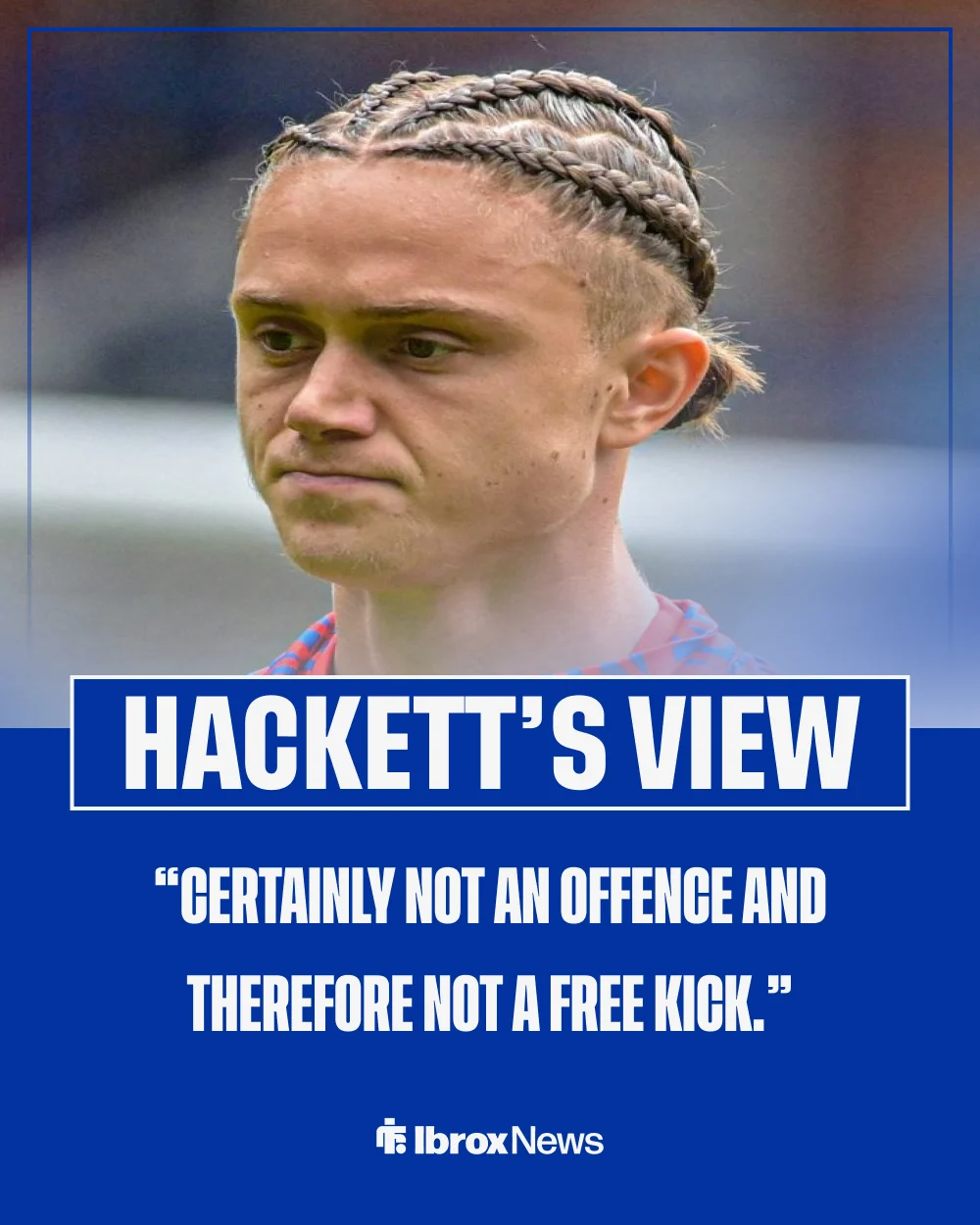
Ultimately, there is a growing sense that higher standards must be achieved to ensure fairness and integrity in the competition. With so much at stake, particularly in the closing stages of the season, accurate and consistent decision-making is more important than ever.
Ensuring that referees are equipped to make the right calls in crucial moments will be key to maintaining confidence in the game. As debates continue, this incident stands as another example of why those conversations are taking place.
SFA referee chief states Celtic should have been awarded a penalty in their costly loss to Hibs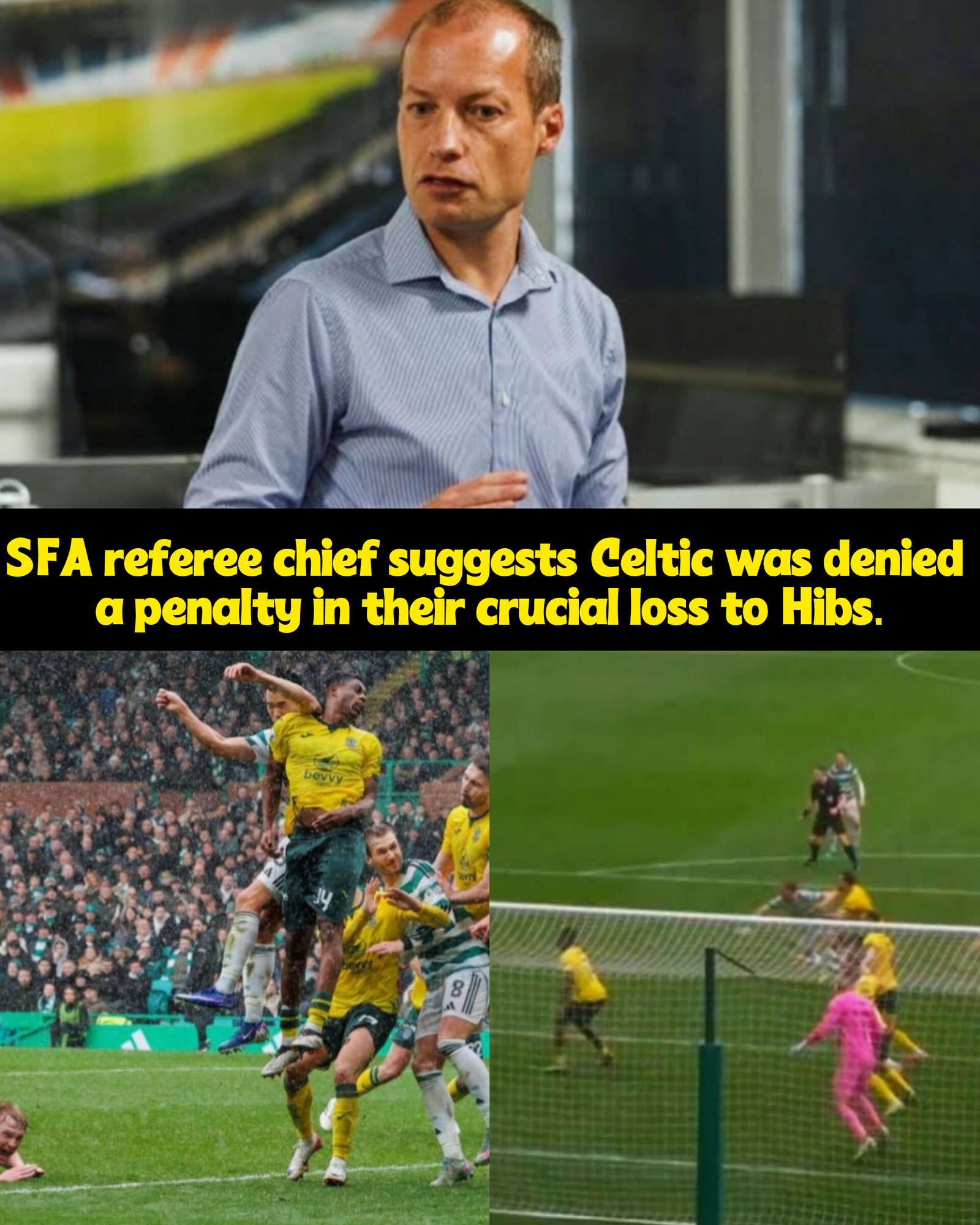
The head of refereeing at the Scottish Football Association, Willie Collum, has acknowledged that Celtic were wrongly denied a penalty during their recent defeat to Hibernian.
Collum admitted that the decision not to award a spot-kick in the match was incorrect and stated that the incident should at the very least have resulted in an on-field review by the referee. His comments come after the controversial moment during the clash at Parkhead, which ultimately saw Celtic fall to a 2-1 loss.
Match context and implications
The defeat proved significant in the context of the title race, as it allowed Heart of Midlothian to extend their advantage over Celtic. The result was a major blow for the Glasgow side, who were hoping to maintain momentum in their pursuit of the championship.
David Gray’s Hibernian side capitalised on key moments during the match, but the controversy surrounding the penalty decision has since dominated discussion. Celtic supporters, in particular, have expressed frustration, feeling their team was unfairly treated at a crucial stage of the game.
The disputed incident explained
The flashpoint came shortly after Auston Trusty had been sent off, leaving Celtic down to ten men. At that moment, the scoreline was balanced at 1-1, and the match remained finely poised.
The contentious incident involved Jack Iredale and Liam Scales inside the penalty area. Following a corner delivery, Iredale was seen pulling Scales, an action that many believed warranted a penalty at the time.
Despite protests from Celtic players, no spot-kick was awarded, and play continued. However, subsequent analysis—and now Collum’s own admission—has confirmed that the challenge should have been punished.
Key moments in the match
Earlier in the game, Felix Passlack had given Hibernian the lead, putting the visitors ahead and setting the tone for a competitive encounter. Celtic responded just before the interval, with Benjamin Nygren finding the equaliser to bring the sides level heading into half-time.
The game then took another dramatic turn when Trusty was dismissed for an off-the-ball incident involving Jamie McGrath. The sending-off left Celtic at a disadvantage for the remainder of the match and heightened the importance of key refereeing decisions.
As the match progressed, Celtic pushed for a late winner despite being a man down. However, their hopes were ultimately dashed when Kai Andrews scored what proved to be the decisive goal for Hibernian.
Collum clarifies VAR failure
Reflecting on the controversial moment, Collum explained that the Video Assistant Referee team had discussed several relevant factors, including the nature of the holding, the proximity of the players, and the area into which the ball was being delivered.
Based on these considerations, he made it clear that the correct outcome should have been a penalty. Furthermore, he stressed that the situation met the threshold for an on-field review, which would have given the referee an opportunity to reassess the decision using pitchside footage.
Collum emphasised that the level of contact and its impact were significant enough to justify awarding a spot-kick. In his view, the holding was both clear and sustained, leaving little doubt that the infringement met the criteria for a foul.
Strong criticism of decision-making process
In his analysis, Collum was particularly critical of how the VAR team handled the situation. He noted that their communication initially appeared to build a convincing argument for awarding a penalty, only for them to ultimately decide against recommending a review.
This inconsistency drew scrutiny from observers, including programme host Gordon Duncan, who pointed out that the VAR officials seemed to move away from a well-supported case for a spot-kick.
Collum agreed that this lack of decisiveness was problematic, suggesting that the process would have been a strong example of effective VAR usage had the officials followed through on their initial reasoning.
Need for clearer communication and criteria
A key takeaway from Collum’s comments was the importance of clarity in VAR decision-making. He stressed that officials must provide clear explanations when deciding whether or not to award penalties, rather than relying on vague descriptions.
According to Collum, simply stating that an incident is “not enough” to warrant a penalty is insufficient. Instead, referees and VAR teams must articulate precisely why a decision has been reached, using established criteria to justify their conclusions.
He revealed that guidance has now been issued to improve communication standards, ensuring that both VAR officials and on-field referees offer more detailed and transparent reasoning in future incidents.
Impact on Celtic’s title ambitions
The failure to award a penalty ultimately had a significant impact on the outcome of the match. With the game level at the time of the incident, a converted spot-kick could have put Celtic in a strong position to secure victory.
Instead, the missed decision allowed Hibernian to remain in the contest and eventually claim all three points. The result has left Celtic trailing in the title race, increasing the pressure on them in the remaining fixtures.
While refereeing errors are an inherent part of football, Collum’s admission underscores the importance of getting key decisions right, particularly in high-stakes matches. For Celtic, the sense of injustice may linger, but the focus will now shift to recovering ground and keeping their championship hopes alive.
Dundee United confronts Celtic’s intimidating pattern as referee and VAR details emerge for the Tannadice clash
Dundee United F.C. are preparing for a daunting challenge as they welcome Celtic F.C. to Tannadice, with a worrying trend surrounding the visitors adding extra concern ahead of the clash.
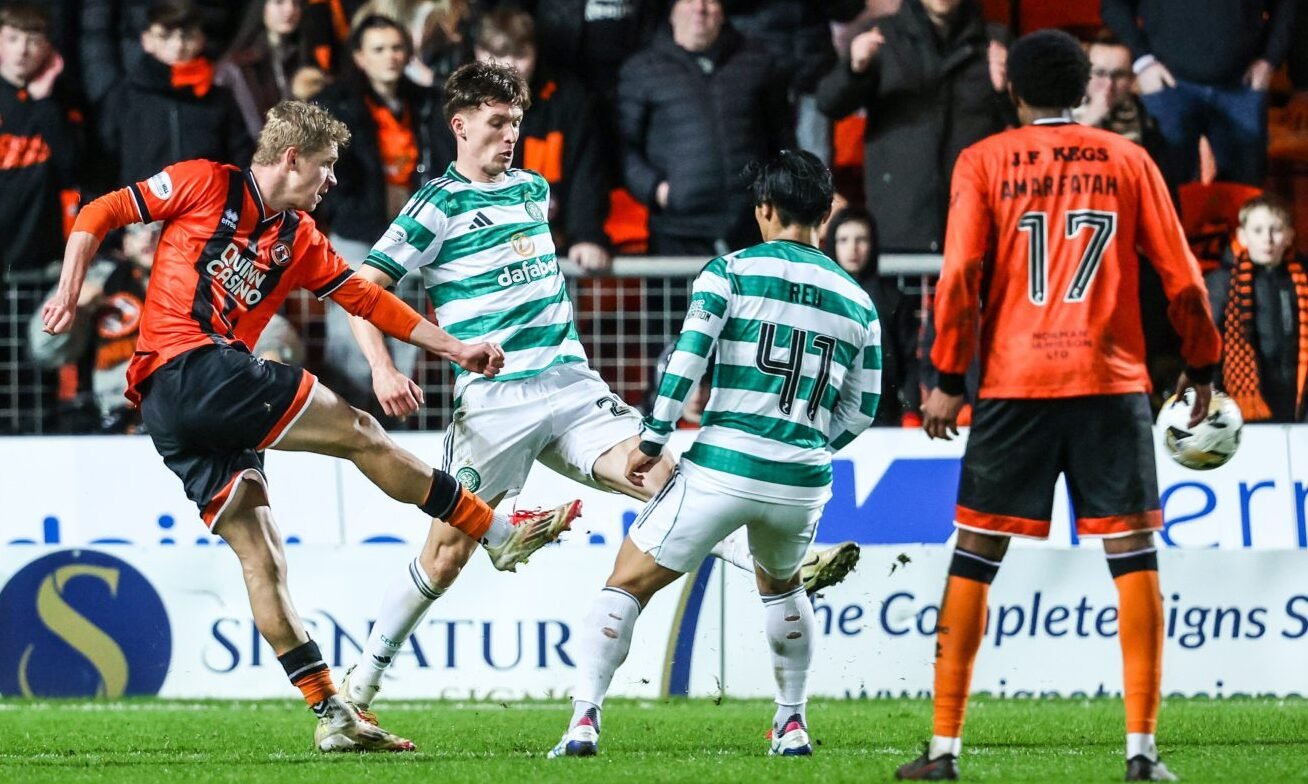
Sapsford lashes home the winning goal the last time Celtic visited Tannadice. Image: SNS
United wary of Celtic’s comeback strength
One of the most troubling aspects for Dundee United going into this encounter is Celtic’s proven ability to recover from losing positions. The Hoops have repeatedly shown resilience this season, turning games around when behind, which poses a serious threat to a United side that has struggled to hold onto leads.
That contrast in form could prove decisive. While Celtic have built a reputation for fighting back, United have found themselves on the opposite end of that spectrum, often surrendering advantages at crucial moments.
Tannadice clash comes after derby disappointment
The Tangerines head into this fixture looking to respond after a frustrating late collapse in their recent derby against Dundee F.C.. That result will still be fresh in the minds of players and supporters alike, making this upcoming contest an opportunity for redemption.
Facing Celtic, however, presents a much tougher test. The visitors arrive with strong momentum and a track record that suggests they rarely allow opponents any margin for error.
Historic milestone within reach for United
Despite the challenge, Dundee United have a significant incentive. They are aiming to secure back-to-back home victories over Celtic for the first time in more than three decades, with the last such achievement dating back to 1991.
Achieving that feat would mark a notable moment for the club and provide a major boost to their campaign. However, their recent form suggests it will not be easy, with just one win recorded in their last six matches across all competitions.
Key statistics highlight contrasting trends
A deeper look at the numbers paints a clear picture of the contrasting fortunes between the two sides.
Dundee United have dropped more points from winning positions than any other team in the Scottish Premiership this season, losing a total of 22 points after taking the lead. This statistic underlines their ongoing difficulties in managing games effectively.
In contrast, Celtic have recovered 13 points from losing positions, further emphasising their resilience and ability to turn matches in their favour.
Celtic’s strong away form underlines threat
Since Martin O’Neill began his tenure with Celtic, the team’s away form has been particularly impressive. Starting with a 1-0 victory over St Mirren F.C. in November, the Hoops have accumulated more away points than any other side in the league, collecting 20 points on their travels.
This consistency away from home adds another layer of difficulty for Dundee United, who will need to produce a disciplined and focused performance to compete.
Home record offers limited comfort for United
Although playing at Tannadice could be seen as an advantage, Dundee United’s home record does not provide overwhelming reassurance. They have earned just over half of their total points at home this season, with 18 out of 34 points coming on their own ground.
This represents the lowest home-to-total points ratio of any team in the division, suggesting that their home advantage has not been as significant as it might be for other clubs.
Celtic’s dominance in head-to-head encounters
Recent history between the two sides further highlights the scale of the challenge facing Dundee United. Celtic have lost just one of their last 25 meetings with United across all competitions.
During that period, the Hoops have recorded 19 victories and five draws, while also keeping 18 clean sheets. Such dominance illustrates how difficult it has been for United to break down Celtic and secure positive results.
Chance to build on previous home success
There is, however, a glimmer of hope for Dundee United. Their 2-1 victory over Celtic in December demonstrated that they are capable of causing an upset.
If they can repeat that result, it would mark consecutive home league wins against Celtic for the first time since April 1991, when they achieved three in a row.
Replicating that success will require a complete performance, particularly in maintaining concentration and defensive solidity throughout the match.
Match officials confirmed for Tannadice showdown
Attention will also be on the officiating team for this important fixture. Nick Walsh has been appointed as the referee, having previously overseen the reverse fixture between the sides in January.
That match was not without controversy, as Walsh opted against sending off Julián Araujo following a challenge on Will Ferry, a decision that drew criticism at the time.
Running the lines will be Daniel McFarlane and David McGeachie, while David Dickinson will take on VAR duties.
Dickinson will be assisted in the VAR hub in Baillieston by Andrew Dallas, completing the officiating lineup for the encounter.
High stakes as contrasting narratives collide
This fixture brings together two teams with very different narratives. Celtic’s ability to grind out results and recover from adversity stands in stark contrast to Dundee United’s struggles to maintain leads.
For United, the key will be maintaining focus and discipline for the full duration of the match. Any lapse could be punished by a Celtic side that has consistently demonstrated its capacity to capitalise on opposition mistakes.
Conclusion
As Dundee United prepare to host Celtic at Tannadice, the statistics and recent history suggest a formidable challenge lies ahead. While the home side have shown they can compete, their vulnerability when leading remains a major concern.
Celtic, on the other hand, arrive with confidence, strong away form, and a proven ability to turn games around. With both teams chasing important objectives, the stage is set for a compelling encounter, where fine margins and key moments are likely to determine the outcome.
-
 Blog4 weeks ago
Celtic issues a fiery VAR statement after Trusty’s red card appeal is dismissed, as furious chiefs release referee audio publicly.
-

 Blog1 month ago
Celtic informed their January signing under Martin O’Neill that he wouldn’t play a single minute this season.
-

 Blog4 weeks ago
Celtic issued an £83 million warning amid looming UEFA threats.
-
 Blog3 weeks ago
SFA Expected to Review Missed Penalty in Rangers v Celtic Clash
-

 Blog10 months ago
“Courtside to Aisle-Side: Tyrese Haliburton and Jade Jones Set New Wedding Date”
-

 Blog4 weeks ago
£6m star is looking to leave Rangers this summer and has already announced his next club publicly.
-

 Blog4 weeks ago
Auston Trusty under intense Celtic red card investigation amid new Hibs ‘punch’ claims and Rangers’ appeal review.
-

 Blog1 month ago
Kyogo perceives Celtic’s transfer veto as a fresh insult as the striker is overlooked by Birmingham’s new boss.