Blog
Millwall Punished by Independent Regulatory Commission After Breach of FA Rule E21

Millwall have been handed sanctions by an independent Regulatory Commission after the club was found guilty of breaching FA Rule E21 during a League Cup fixture against Crystal Palace on September 16.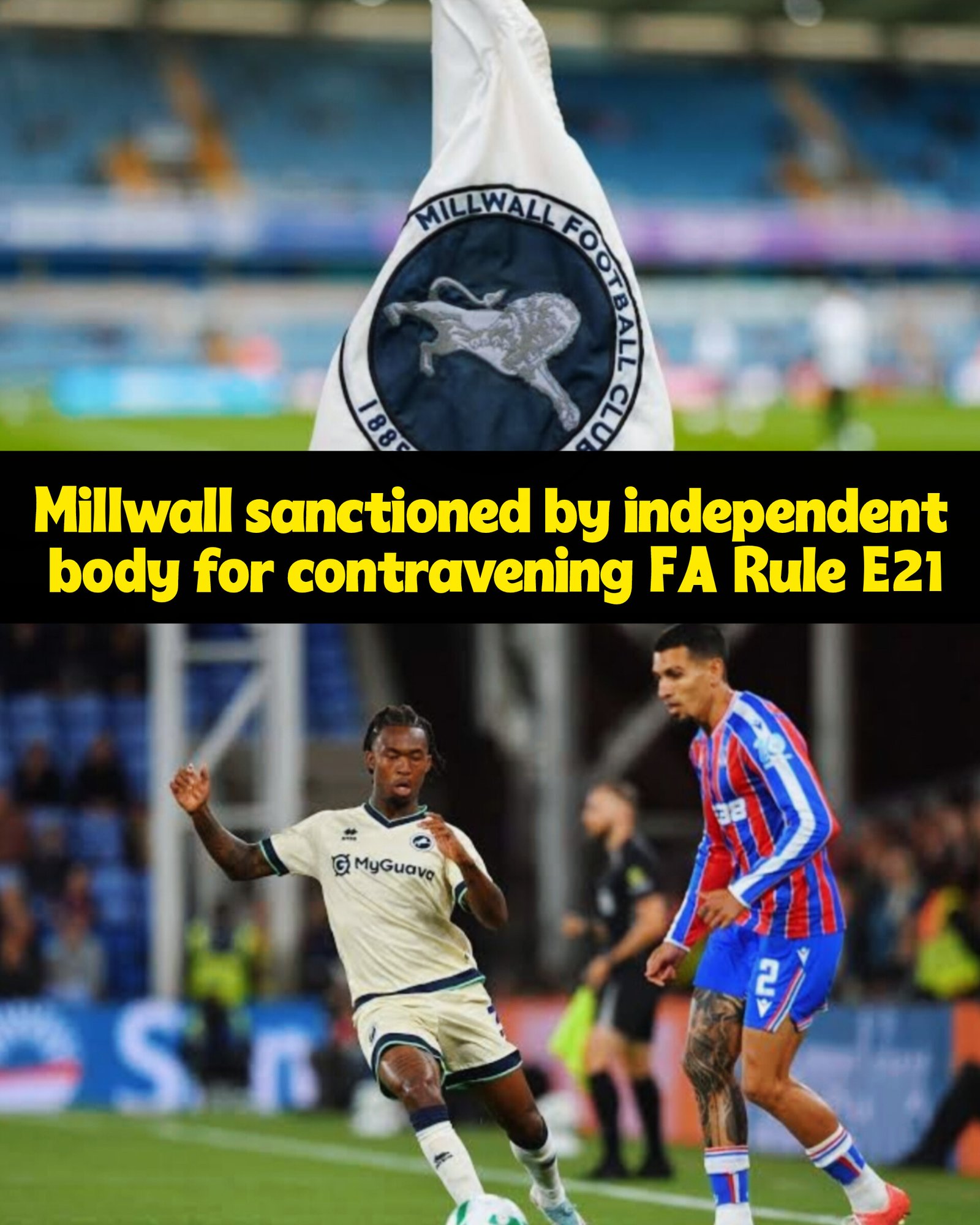
Following the investigation, the South London club received a £45,000 financial penalty, were instructed to follow an extended action plan, and were also issued with a formal warning regarding future conduct.
The ruling relates to behaviour from individuals among the Millwall supporters during the cup clash between the two sides.
Details of the FA Charge Against the Club
According to information published by The Football Association, Millwall were charged after allegations that supporters behaved in an improper and discriminatory manner during two separate moments of the match.
The governing body stated that the incidents took place around the 11th minute and again close to the 80th minute of the fixture.
The FA alleged that the club had failed to ensure that its spectators — including anyone claiming to be fans or followers of the team — did not engage in behaviour considered offensive, abusive, or otherwise inappropriate.
Additionally, it was claimed that the conduct included discriminatory language referencing disability, something that falls under serious misconduct according to the regulations outlined in FA Rule E21.
This rule places responsibility on clubs to ensure that their supporters do not behave in ways that are abusive, insulting, discriminatory, or otherwise unacceptable during football matches.
Millwall’s Response to the Allegations
Millwall responded to the allegations by accepting responsibility for the breach linked to the 11th-minute incident.
However, the club disputed the accusation connected to the alleged incident that reportedly occurred in the 80th minute.
After reviewing the available evidence and submissions from both sides, the Regulatory Commission determined that the club should only be sanctioned for the earlier incident in the 11th minute.
As a result, the disciplinary action applied specifically to that confirmed breach rather than both of the alleged events.
FA Pushes for Stronger Punishment
During the disciplinary proceedings, the FA argued that the seriousness of the case justified a much harsher punishment.
The governing body urged the commission to consider either a partial stadium closure or even a complete shutdown of the stadium for a future match.
According to the FA’s position, penalties less severe than this might not sufficiently reflect the gravity of the repeated breaches connected to discriminatory behaviour.
Officials argued that stronger action would serve as a clear deterrent to discourage similar conduct from supporters in the future.
The FA’s submission emphasised that the club had previously been found in breach of the same rule, which made the matter particularly concerning.
Commission Rejects Stadium Closure Proposal
Despite the FA’s request for a more severe sanction, the independent commission ultimately decided that closing the stadium — either partially or completely — would not be appropriate in this case.
The panel acknowledged that the club had already been found guilty of breaching FA Rule E21 on two previous occasions, making this the third recorded incident.
However, the commission also took into account the mitigation presented by the club during the disciplinary process.
Specifically, Millwall highlighted the steps it had already taken under an existing action plan aimed at addressing discriminatory behaviour and improving supporter conduct.
The commission noted that the club had shown evidence of ongoing efforts to implement that plan and had committed to further strengthening it through an enhanced programme of measures.
Because of this work, the panel concluded that a stadium closure would be disproportionate to the circumstances of the case.
Instead, the commission settled on a financial penalty, the continuation of the action plan, and a formal warning regarding future incidents.
Full Written Explanation Published
The Regulatory Commission also released a detailed document explaining the reasoning behind its decision.
This report outlines the evidence considered during the hearing, the arguments made by both the FA and the club, and the factors that ultimately influenced the final ruling.
The document includes references to the club’s disciplinary history, the nature of the chant involved, and the steps taken by Millwall to combat discrimination.
Club Statement Responds to the Sanctions
Following the announcement of the decision, Millwall released an official statement acknowledging the outcome of the disciplinary process.
The club confirmed that it had been fined £45,000 and would continue working under the FA’s Action Plan, which has now been extended.
According to the statement, the sanctions relate specifically to the use of a chant during the Carabao Cup match against Crystal Palace on Tuesday, September 16, 2025.
The chant reportedly included the phrase “South London Spastics,” which the club acknowledged is widely regarded as offensive and discriminatory toward people with disabilities.
Millwall emphasised that the term used in the chant is derogatory and can make individuals with disabilities feel singled out or unwelcome.
Millwall Condemns Discriminatory Behaviour
In its statement, the club strongly condemned the behaviour linked to the chant.
Officials made it clear that such language contradicts the values that Millwall Football Club aims to uphold.
The club reiterated its commitment to maintaining a zero-tolerance approach toward any form of discrimination or abuse.
Millwall also warned that any individual identified as participating in such behaviour could face serious consequences, including being banned from attending matches.
According to the club, discrimination of any kind has no place within football or wider society.
Majority of Supporters Defended by the Club
While condemning the behaviour, Millwall also emphasised that the actions of a small number of individuals do not represent the vast majority of the club’s supporters.
The statement expressed disappointment that a minority of fans had undermined the club’s efforts to promote inclusion and respect.
Club officials said they believe most supporters share the organisation’s values and are committed to creating a welcoming environment at matches.
However, they also warned that if similar incidents occur in the future, the consequences could be far more severe.
Further financial penalties could be imposed, and additional disciplinary measures might affect both the club and its supporters.
The Role of the All ‘Wall Campaign
Millwall highlighted the importance of its internal anti-discrimination initiative known as the “All ‘Wall” campaign.
This programme is designed to promote equality, inclusion, and respect throughout the club and its wider community.
The club said the campaign plays a crucial role in ensuring that everyone connected with Millwall feels welcome and respected.
Officials pledged to continue strengthening the programme by working closely with supporter organisations, the Millwall Community Trust, and relevant authorities.
These partnerships are intended to reinforce the message that discriminatory behaviour will not be tolerated.
Encouraging Supporters to Report Abuse
As part of its ongoing efforts to tackle discrimination, the club also reminded fans of the reporting systems available on matchdays.
Supporters who witness or hear abusive or discriminatory behaviour are encouraged to report it using the club’s dedicated helpline known as “Hear Hate, Don’t Hesitate.”
Fans can anonymously report incidents by sending a text message with the word “HATE” to 66 777.
The club hopes this reporting system will help identify individuals responsible for inappropriate behaviour and allow appropriate action to be taken.
Match Recap: Crystal Palace Edge Cup Tie on Penalties
The disciplinary issue arose during a closely contested cup tie between Millwall and Crystal Palace.
During the match, Palace took the lead in the 72nd minute when defender Chris Richards found the net.
Millwall appeared to be heading for defeat before Ryan Leonard scored a dramatic equaliser in the 91st minute.
The late goal forced the match into a penalty shootout to determine which side would progress in the competition.
Crystal Palace ultimately prevailed, winning the shootout 4–2 to advance to the next round.
Despite the drama on the pitch, the focus after the match shifted toward the disciplinary investigation and the behaviour that led to Millwall’s punishment.
SFA issues statement regarding Ibrox pitch invasion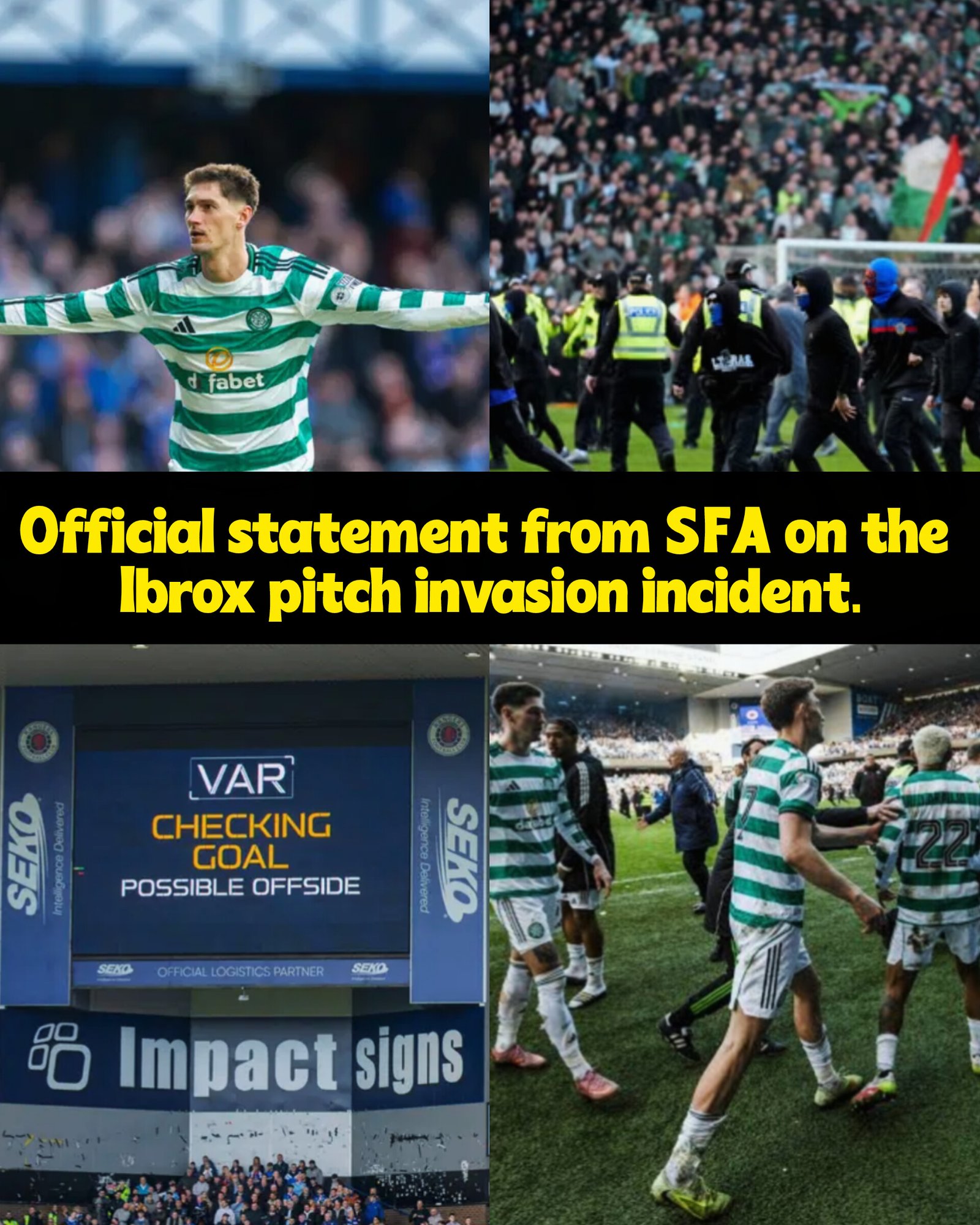
Scottish Football Association has issued a response after a pitch invasion occurred at Ibrox Stadium following Celtic F.C.’s dramatic victory over Rangers F.C. in the Scottish Cup quarter-final.
The fiercely contested encounter between the Glasgow rivals ended goalless after both normal time and extra time, leaving the outcome to be decided from the penalty spot. With tension building inside the stadium, the shootout ultimately went Celtic’s way as forward Tomas Cvancara calmly converted the decisive kick. His composed finish into the corner sparked jubilant scenes among the visiting supporters and secured Celtic’s progression to the semi-finals, which will take place at Hampden Park.
Thousands of Celtic fans had made the journey to the match, creating a strong away presence inside Ibrox. For the first time in several years, the visiting allocation filled the Broomloan Stand completely, ensuring a lively atmosphere throughout the contest. When Cvancara’s penalty crossed the line, the reaction from that section of the stadium was immediate and intense. Supporters surged forward toward the front of the stand, desperate to celebrate the dramatic triumph with their team.
In the moments that followed the winning kick, a number of supporters spilled onto the pitch. The sudden rush created chaotic scenes on the field as security personnel attempted to prevent further escalation. Broadcast images showed fans gathering on the playing surface while stewards and police officers moved swiftly to restore order and guide individuals back toward the stands.
As the situation unfolded, there were also tense moments near the touchline. Some supporters came close to players and staff who were attempting to leave the field after the shootout had concluded. Those inside the technical areas worked quickly to usher team members away from the pitch, while officials and security staff tried to separate groups and ensure everyone exited the area safely.
Before the disorder that followed the final whistle, the match itself had been an exhausting defensive effort for Celtic. Throughout much of the second half and the additional period, Rangers applied sustained pressure in search of a breakthrough. The home side repeatedly pushed bodies forward and delivered crosses into the penalty area, hoping to find the decisive goal that would send them through to the last four.

8th March 2026; Ibrox Stadium, Glasgow, Scotland; Scottish Cup Football, Rangers versus Celtic; Tomas Cvancara of Celtic celebrate after he scores the penalty during the penalty shoot to win the match for Celtic
Celtic’s defensive unit was forced to remain alert for long stretches as Rangers continued to launch attacks. Several balls were sent dangerously into the box, prompting hurried clearances and last-ditch blocks from the visiting defenders. The back line stood firm under constant pressure, refusing to allow their opponents a clear opportunity to finish the tie.
Goalkeeper Viljami Sinisalo played a key role during those tense moments. The Finnish shot-stopper handled a number of threatening deliveries and showed composure when dealing with high balls sent into crowded areas. On multiple occasions he came off his line to claim crosses or punch the ball clear, helping his side maintain the deadlock.
Celtic’s defenders also contributed significantly by stepping in to intercept passes and clear loose balls that bounced dangerously inside the area. Their resilience ensured that the score remained level even as Rangers increased the intensity of their attacks during extra time.
Earlier in the match, Celtic thought they had taken the lead through Daizen Maeda. The forward rose well to meet a cross and directed a header into the net during the first half, briefly sending the visiting supporters into celebration. However, the joy was short-lived.
Following a review by the Video Assistant Referee, the goal was ruled out. Officials determined that defender Liam Scales had been in an offside position during the build-up to the move. As a result, the strike was disallowed and the match continued without a breakthrough for either side.
With neither team able to find the decisive goal over 120 minutes of football, penalties became the final test. The atmosphere inside Ibrox grew increasingly tense as players from both sides prepared to step forward and take their attempts from the spot.
During the shootout, Celtic maintained their composure under pressure. Each successful penalty increased the tension for the home crowd, and the situation became even more dramatic when Rangers failed to convert one of their efforts. That miss ultimately proved decisive in shifting the momentum of the shootout.
Cvancara then stepped up to take the final kick. Showing confidence and calmness, he placed the ball carefully before striking it firmly into the corner of the net. The successful effort sealed Celtic’s victory and confirmed their place in the next stage of the competition.
The dramatic conclusion immediately sparked wild celebrations among the visiting supporters, but the resulting pitch invasion quickly became the main talking point after the match.
Attention has now shifted to the response from the Scottish Football Association, which has launched an investigation into the incident and the events that unfolded once the final whistle sounded. Authorities will examine the circumstances surrounding the pitch invasion and assess what action may be required.
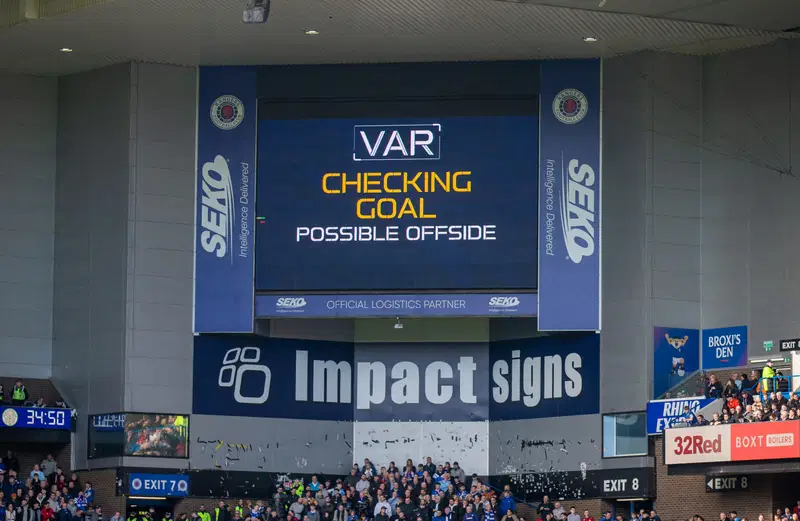
8th March 2026; Ibrox Stadium, Glasgow, Scotland; Scottish Cup Football, Rangers versus Celtic; VAR screen checking goal for possible offside after Daizen Maeda of Celtic puts the ball in the net and it is ruled out
While that process continues, Celtic can turn their focus back to the competition itself. Their penalty shootout success means they advance to the semi-finals at Hampden Park, keeping alive their hopes of lifting the Scottish Cup later this season.
Green Brigade provide an update on Celtic ban, confirming progress achieved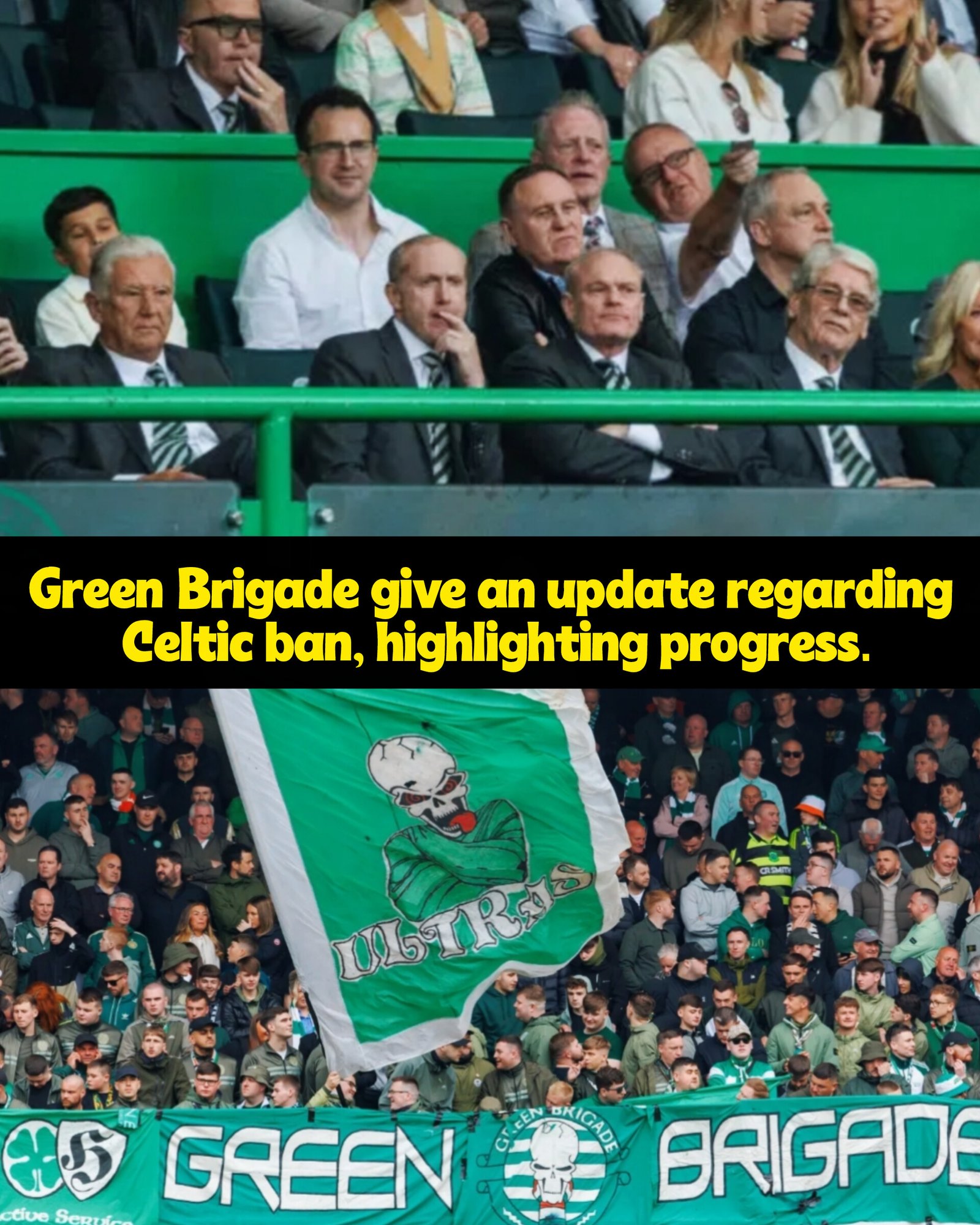
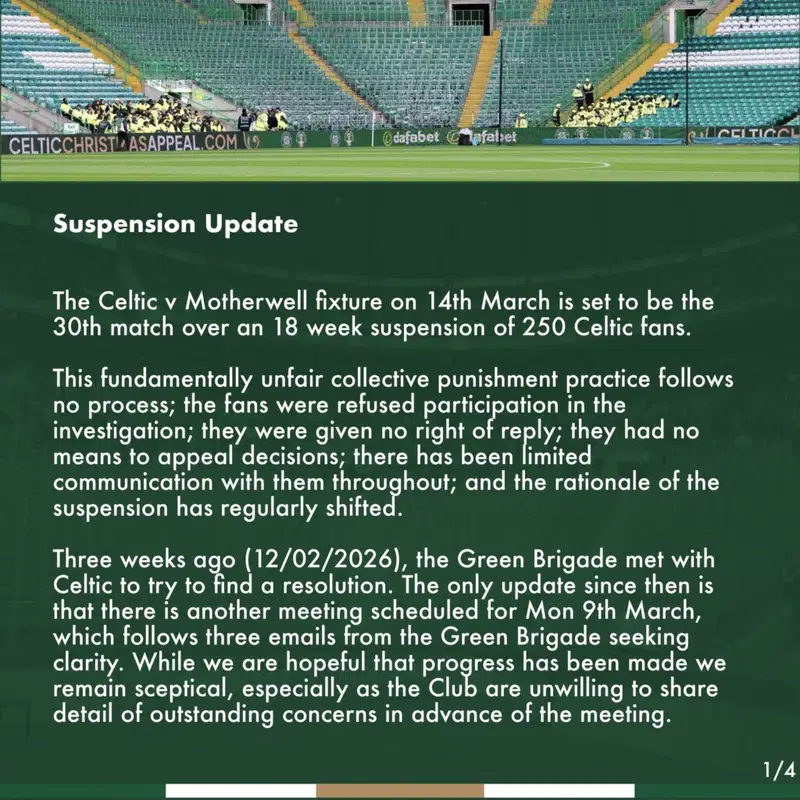
The supporters’ group known as the Green Brigade has released a new statement addressing their continuing ban from fixtures involving Celtic FC.
The situation has been ongoing since November, when hundreds of supporters associated with the group were barred from attending both home and away matches. As part of the restrictions, a section of the Safe Standing area at Celtic Park has also remained closed.
Over the months that followed, discussions between the club and the fan group have yet to produce a final resolution. The absence of the Green Brigade has been widely noticed during matchdays, with many supporters feeling that the atmosphere inside the stadium has suffered during a crucial stage of the season as Celtic compete in the title race.
Now, roughly three weeks after the most recent meeting between representatives of the group and the club, the Green Brigade have shared another update outlining the current situation.
Green Brigade Criticise the Suspension Process
In a statement released through the North Curve Celtic account on X, the group described the scale and duration of the suspension affecting their members.
According to the Green Brigade, the upcoming match between Celtic and Motherwell FC scheduled for March 14 is expected to mark the 30th fixture impacted by the sanctions. The group noted that the suspension has already lasted for approximately 18 weeks and involves around 250 Celtic supporters.
The statement strongly criticised the disciplinary action taken against them, describing it as a form of collective punishment that they believe is fundamentally unfair.
They argued that the process leading to the ban lacked transparency and proper procedure. Among their complaints were claims that supporters affected by the suspension were not allowed to take part in the investigation into the incident that triggered the disciplinary action.
The group also stated that those involved were not provided with an opportunity to respond to the allegations made against them. In addition, they claimed that no formal mechanism was available for them to appeal the decisions taken by the club.
Another issue highlighted by the Green Brigade was the limited level of communication they say they have received throughout the dispute. They also suggested that the reasoning behind the suspension has changed several times since it was first imposed, which has added to their frustration.
Talks Continue Between the Group and the Club
Despite their criticism of the process, the Green Brigade confirmed that discussions with the club are still ongoing.
The statement revealed that representatives of the group met with Celtic officials on February 12 in an attempt to find a way forward and potentially resolve the dispute.
Since that meeting, however, the group said there has been very little new information shared with them. According to the statement, the only update provided by the club has been the scheduling of another meeting.
That meeting is expected to take place on Monday, March 9. The Green Brigade explained that the date was arranged after they sent three separate emails to the club requesting further clarification about the situation and the issues still preventing a resolution.
While the group expressed some cautious optimism that progress might have been made during the recent discussions, they also acknowledged that they remain doubtful.
Their scepticism largely stems from the claim that the club has been unwilling to provide details about the concerns that remain unresolved prior to the next meeting. The Green Brigade suggested that this lack of transparency makes it difficult for them to fully understand what still needs to be addressed.
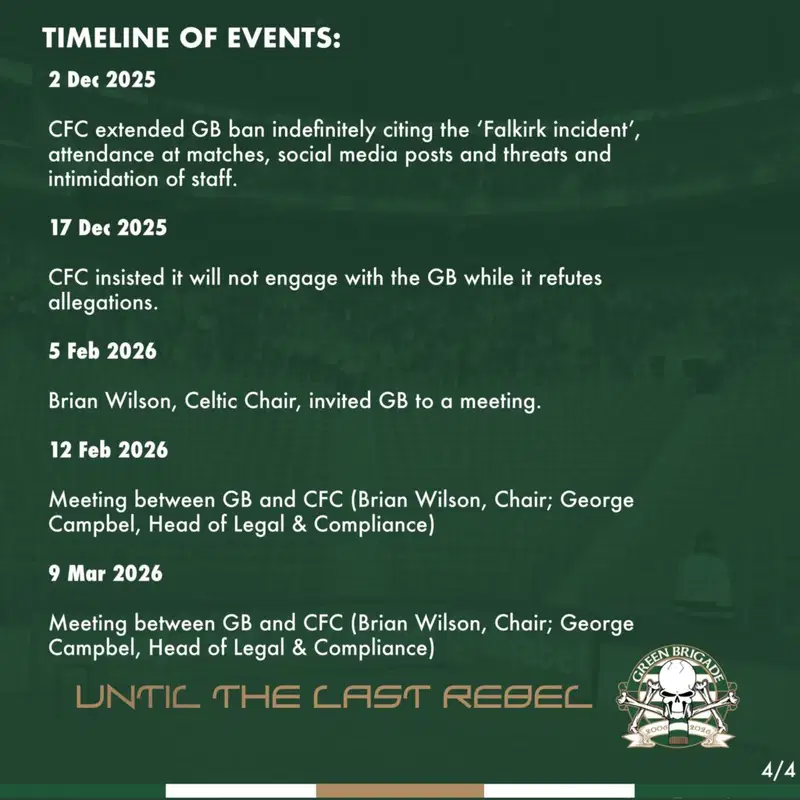
Timeline of Events and Initial Concerns
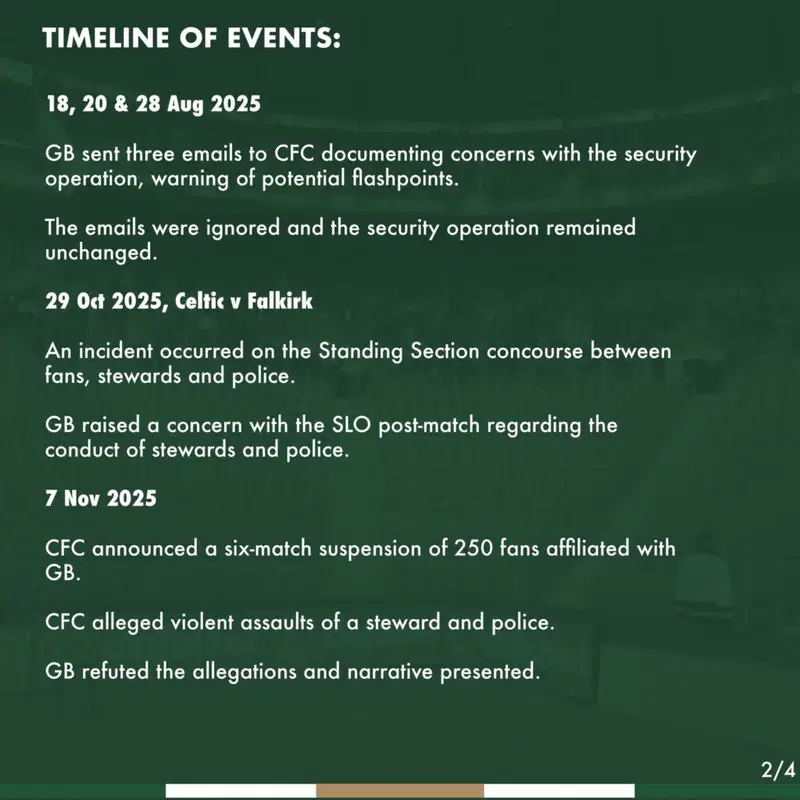
In addition to the update on negotiations, the statement included a timeline outlining the events surrounding the suspension.
The Green Brigade emphasised that they raised concerns with the club immediately after the incident that led to the ban. According to the group, they contacted Celtic’s Supporter Liaison Officer shortly after the events in question to express their worries about what had happened.
By presenting this timeline, the group appears to be reinforcing its argument that it attempted to communicate with the club early in the process.
The ongoing dispute has drawn attention from across Scottish football, with a number of commentators and media outlets suggesting that the issue should be resolved soon.
Many observers believe the Green Brigade’s return could play a role in boosting the atmosphere at Celtic Park during the closing weeks of the season, particularly as the club pushes for the Premiership title.
Celtic Fans Collective Highlight Importance of the Group
The topic of the Green Brigade’s absence was also addressed during a recent meeting between the club and the Celtic Fans Collective.
Minutes from that meeting were later released publicly, revealing that the group discussed the situation directly with Celtic director Brian Wilson.
Representatives of the Fans Collective reportedly stressed the significance of the Green Brigade’s presence on matchdays. They argued that the group plays an important role in creating the atmosphere inside Celtic Park.
According to the minutes, members of the collective suggested that the absence of the Green Brigade has had a noticeable negative effect on the environment during games. Some even indicated that the change in atmosphere could be impacting the team’s performance on the pitch.
Club Acknowledges Dialogue and Ongoing Discussions
During the discussion, Brian Wilson reportedly acknowledged that communication between Celtic and the Green Brigade is continuing.
He explained that conversations between the two sides remain active and suggested that there has been some progress in certain areas of the dispute.
However, Wilson also indicated that other aspects of the issue are more complicated and may take longer to resolve.
Despite the challenges, he recognised that the Green Brigade’s presence in the stadium would likely have a positive influence on the matchday atmosphere and potentially benefit the team as well.
Wilson also addressed speculation about the decision-making process surrounding the ban. He stated that the club’s Head of Security, Mark Hargreaves, does not have sole authority or a veto over the final outcome of the situation.
As discussions continue and another meeting approaches, many supporters will be watching closely to see whether a breakthrough can finally be achieved and whether the long-running dispute between the club and the Green Brigade can be brought to an end.
Green Brigade releases troubling statement regarding Friday night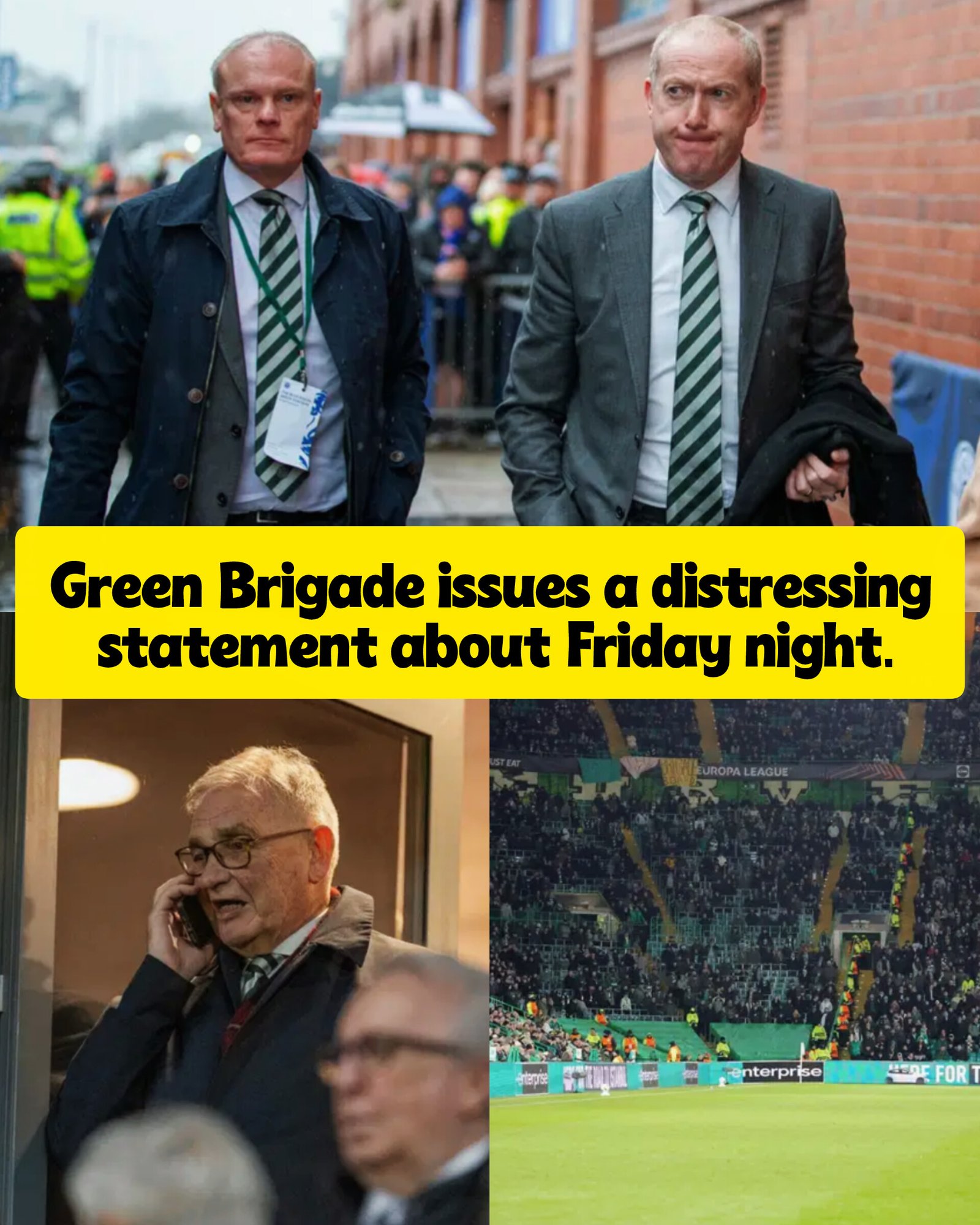
The Green Brigade have once again spoken publicly, and their statement released on Friday night highlights just how serious and troubling their dispute with Celtic FC has become.
With the supporters’ group still banned from attending matches and the upcoming game against Motherwell FC on March 14 expected to be the 30th fixture affected by the suspension, the ultras used their latest statement to present their own version of events. They outlined a timeline explaining how the situation developed, while also expressing frustration about what they believe has been an unfair and inconsistent process.
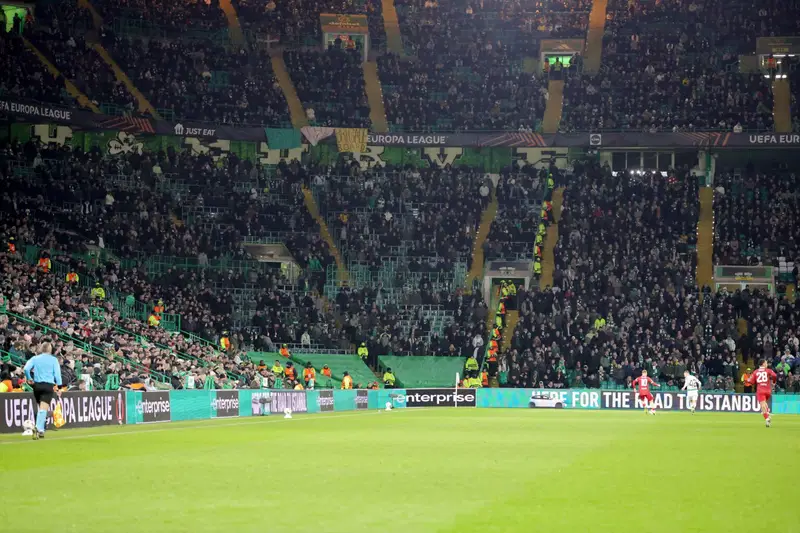
Celtic fans during the UEFA Europa League, knockout phase play offs, first leg match at Celtic Park, Glasgow. Picture date: Thursday February 19, 2026.
For several months now, the club’s official stance has been that the conflict stems from an incident during the match against Falkirk FC on October 29. Following that game, Celtic stated that a steward and police officers were assaulted. According to the club, that incident triggered a disciplinary measure which had previously been suspended and was then activated against the Green Brigade. The sanction was formally confirmed on November 7.
However, the issue did not remain limited to that original explanation. In subsequent updates, the club expanded its reasoning for the punishment. Celtic cited additional concerns including alleged intimidation of staff members, certain activity on social media, and broader issues relating to matchday safety and security at Celtic Park.
The Green Brigade have strongly disputed the club’s account and insist they will not accept it without challenge. In their most recent statement, the group argued that approximately 250 supporters have been subjected to what they describe as collective punishment. They claim those individuals were sanctioned without being given a proper opportunity to defend themselves. According to the group, there has been no clear disciplinary process, no right to formally respond to accusations, and no realistic route for appeal. They also criticised the level of communication from the club, suggesting that information has been limited and inconsistent throughout the dispute.
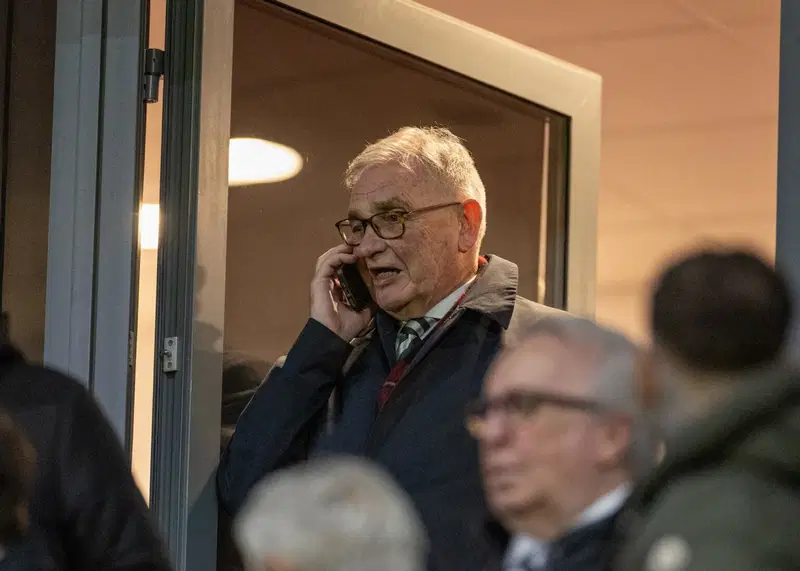
22nd November 2025; St Mirren Park, Paisley, Renfrewshire, Scotland, Scottish Premiership Football, St Mirren versus Celtic; Celtic director Brian Wilson
Another key grievance raised in the statement concerns what the group believes is a shifting justification for the ban. The Green Brigade claim that the reasoning behind the suspension has changed multiple times since the issue first emerged.
To support their position, the supporters outlined a detailed timeline of events. They state that concerns about the security arrangements on matchdays were first raised as early as August with the Celtic Fans Collective. According to the group, these concerns existed well before the incident at the Falkirk match in late October.
The statement goes on to say that after the October 29 events, the group once again raised concerns about the matchday security operation. This time the matter was reportedly brought to the attention of the club’s Supporter Liaison Officer. Despite that communication, the Green Brigade say that 250 fans were issued with a six-match suspension on November 7.
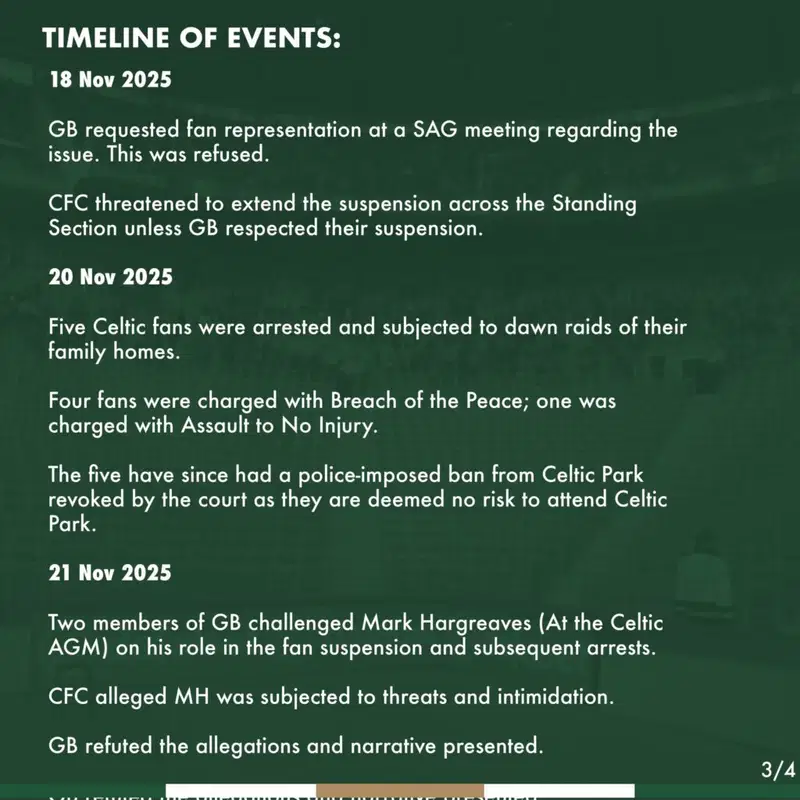
Several later developments have further intensified tensions between supporters and the club. One of the points highlighted by the group relates to a Safety Advisory Group meeting that took place on November 18. The Green Brigade claim that representatives of the fanbase were not allowed to participate in that meeting, which they argue prevented supporters from properly presenting their perspective.
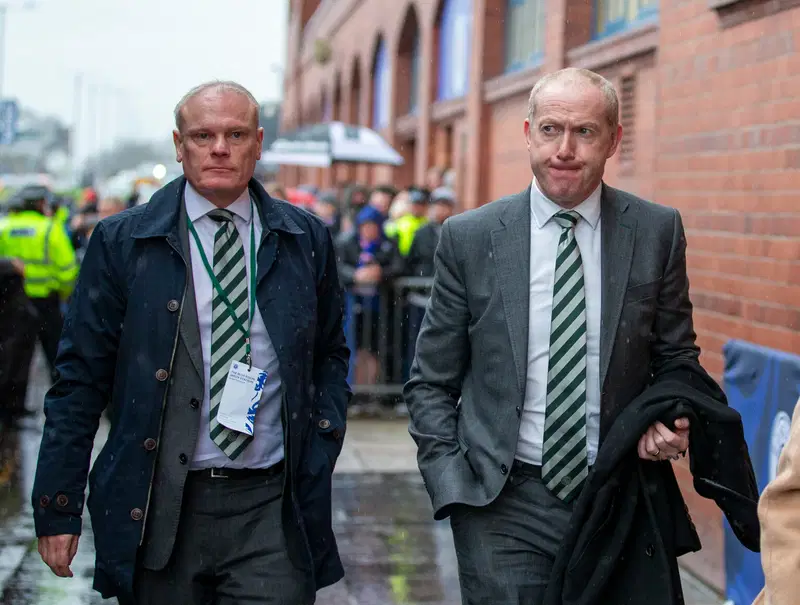
1st March 2026; Ibrox Stadium, Glasgow, Scotland; Scottish Premiership Football, Rangers versus Celtic; Chris McKay and Michael Nicholson of Celtic
Two days later, on November 20, five Celtic supporters were arrested. The Green Brigade say this incident became another element of the dispute. However, they point out that a police-imposed ban preventing those individuals from attending matches at Celtic Park was subsequently overturned in court. According to the group, that outcome undermines claims that those supporters posed an ongoing safety risk.
Overall, the situation has evolved into a dispute over competing narratives as much as anything else. On one side, the club maintains that the disciplinary measures were necessary because of serious concerns surrounding safety and behaviour. On the other side, the Green Brigade argue they have been excluded without due process and without fair consideration of their position.
From the outside, it is increasingly difficult to ignore the length of time the conflict has been allowed to continue. What began as a six-match suspension has now extended far beyond that timeframe. If the Green Brigade remain excluded for the upcoming match against Motherwell, it will mark the 30th fixture affected by the sanctions.
The ongoing dispute also arrives at a crucial stage of the football season. Celtic FC currently sit second in the Scottish Premiership table, trailing Heart of Midlothian FC by five points with nine matches remaining. With the title race still open, the atmosphere inside Celtic Park could play an important role during the final weeks of the campaign.
Regardless of where supporters stand on the argument itself, there is a growing sense that the situation has reached a point where a resolution is needed. The dispute has lasted months and has created significant tension between the club’s hierarchy and a section of its support.
Many observers believe it would be in the best interests of everyone involved—including the club’s leadership, its broader fanbase, and the Green Brigade themselves—to find a workable solution before the end of the season. With nine games remaining and the championship still within reach, having the full backing of the supporters could be vital.
If Celtic are to close the five-point gap on Hearts, the atmosphere at Celtic Park during the run-in may prove crucial. For that reason, there are increasing calls for the club to reconsider its approach and bring an end to what critics describe as collective punishment.
Ultimately, the situation has reached a stage where sensible decisions and meaningful dialogue appear necessary if the long-running dispute is to be resolved.
Full Green Brigade statement below
SFA panel delivers verdict on major Rangers and Celtic decisions, along with Hearts vs. Aberdeen grievances
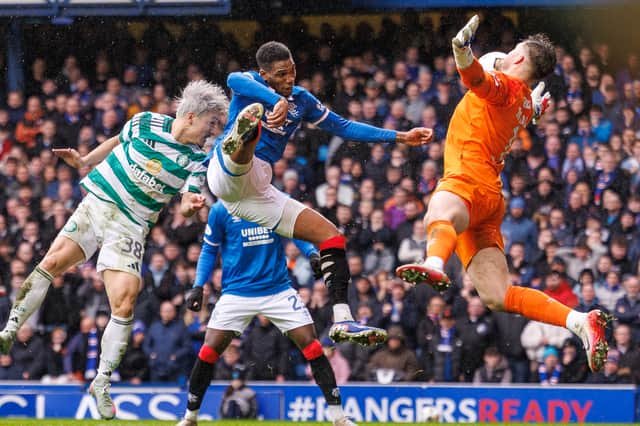
Celtic were awarded a penalty when Daizen Maeda’s header was deflected by the arm of Rangers defender Dujon Sterling onto Jack Butland. | Getty Images
The Scottish Football Association’s Key Match Incident (KMI) panel has released its latest review of refereeing decisions from the past week in the Scottish Premiership, assessing a number of controversial moments involving clubs including Rangers, Celtic, Heart of Midlothian and Aberdeen.
The three-person panel, which meets every week and is made up of experienced figures from within the Scottish game, examined ten incidents from matches played between February 28 and March 4. After reviewing each situation, the panel concluded that the match officials handled every one of them correctly.
One of the most discussed incidents came during last Sunday’s Old Firm clash between Rangers and Celtic at Ibrox. Late drama unfolded in the 89th minute when Celtic appealed for a penalty after a header from Daizen Maeda struck the arm of Rangers defender Dujon Sterling before diverting toward goalkeeper Jack Butland. At that stage of the match, Rangers were leading 2–1.
Referee John Beaton was advised by VAR official Steven McLean to review the incident on the pitchside monitor. After watching the replay, Beaton determined that the ball had struck Sterling’s arm and awarded Celtic a penalty.
Celtic midfielder Reo Hatate stepped up to take the spot kick, but Butland initially denied him with a save. The goalkeeper also managed to block the rebound attempt, yet Hatate eventually forced the ball across the line at the third attempt, ensuring Celtic secured a dramatic late equaliser. Following its review, the KMI panel unanimously agreed that the decision to award the penalty was correct.
Another talking point involving Celtic occurred in their 2–1 victory over Aberdeen on Wednesday. The Glasgow side believed they should have been awarded a penalty when a cross from Sebastian Tounekti appeared to strike the arm of Aberdeen defender Jack Milne inside the penalty area.

Celtic’s Liam Scales fouls Aberdeen’s Toyosi Olusanya inside the box conceding a penalty during the Premiership match at Pittodrie on Wednesday. (Photo by Paul Devlin / SNS Group) | SNS Group
Despite strong appeals from Celtic players, referee Nick Walsh decided against awarding a spot kick. VAR official Chris Graham checked the footage but concluded that the situation did not warrant an on-field review.
Celtic manager Martin O’Neill expressed frustration after the match, stating that the incident appeared to be a clear handball and that his team should have been given a penalty. However, the KMI panel disagreed with that assessment. After examining the footage, the panel confirmed that the referee’s original call was correct and unanimously supported the on-field decision not to award a penalty.
The same match also featured a penalty awarded to Aberdeen when Celtic defender Liam Scales was judged to have fouled Toyosi Olusanya inside the box. Walsh awarded the penalty during the game, and the decision was subsequently checked and upheld by Graham on VAR. The KMI panel reviewed the challenge and agreed that the officials had made the correct call in awarding the spot kick.
Another point of contention from the match concerned Celtic’s winning goal, scored by substitute Benjamin Nygren after a cutback from James Forrest. Aberdeen interim manager Peter Leven argued afterwards that Nygren appeared to be in an offside position when the pass was delivered. However, that particular incident was not included in the KMI panel’s list of cases reviewed for the week.
Meanwhile, Aberdeen also had complaints during their 1–0 defeat against Hearts at Tynecastle the previous Saturday. In that match, midfielder Stuart Armstrong went down in the penalty area following a challenge from Hearts defender Michael Steinwender. Leven insisted after the game that the incident should have resulted in a penalty for Aberdeen, claiming it was an obvious foul.
The KMI panel, however, reached a different conclusion. After studying the challenge, all three members agreed that the referee had made the correct decision in allowing play to continue. Aberdeen also appealed for a separate penalty in the same match for an alleged handball by a Hearts player, but that claim was also rejected by the panel.
In total, the KMI panel reviewed ten key incidents from the Scottish Premiership fixtures played across the specified dates. Their final verdict was that match officials made the correct decisions in every case examined, meaning no errors were recorded for the period under review.
-
 Blog1 month ago
Celtic issues a fiery VAR statement after Trusty’s red card appeal is dismissed, as furious chiefs release referee audio publicly.
-

 Blog2 months ago
Celtic informed their January signing under Martin O’Neill that he wouldn’t play a single minute this season.
-

 Blog1 month ago
Celtic issued an £83 million warning amid looming UEFA threats.
-
 Blog1 month ago
SFA Expected to Review Missed Penalty in Rangers v Celtic Clash
-
 Blog3 days ago
Police respond after reported disorder following Middlesbrough vs Millwall clash
-

 Blog10 months ago
“Courtside to Aisle-Side: Tyrese Haliburton and Jade Jones Set New Wedding Date”
-
 Blog1 month ago
£6m star is looking to leave Rangers this summer and has already announced his next club publicly.
-
 Blog2 weeks ago
Rangers victory overshadowed by refereeing controversy