
Blog
Olympic champion brushes off athletes’ complaints about representing the US: ‘I think we’re the greatest nation.’

On April 9, 2026, a range of perspectives emerged regarding what it means to represent the United States on the Olympic stage, with some athletes expressing hesitation while others voiced unwavering pride.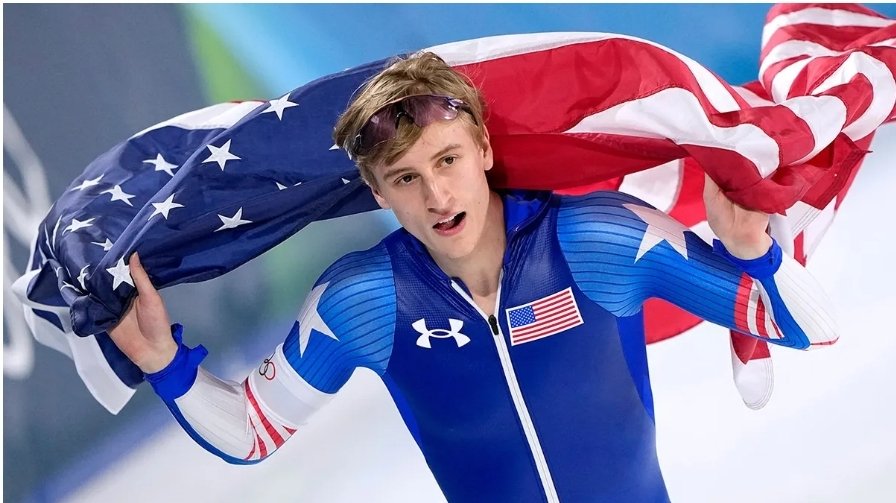
 Not every competitor wearing the red, white, and blue has spoken with complete enthusiasm about the experience of representing the country at the Olympics. While the global stage is often viewed as the pinnacle of athletic achievement, for some, it also brings complex emotions tied to events beyond sport.
For example, freeskier Hunter Hess admitted that he felt “mixed emotions” about representing the United States during the Milan Games. Similarly, alpine skiing superstar Mikaela Shiffrin shared that she was focused on representing her own personal values while competing. She acknowledged that it could be difficult to reconcile competing for Olympic medals while being aware of violence and hardship occurring in the United States.
In contrast, two-time Olympic gold medalist Jordan Stolz made it clear that he had no such reservations. The speedskater, who secured two gold medals in Italy, expressed a straightforward and confident stance when asked about the differing opinions among athletes.
Speaking in a recent interview, Stolz explained that he did not pay much attention to the remarks made by others regarding their feelings about representing the country. Instead, he emphasized his own perspective, stating that he is always proud to compete for the United States.
He went further by expressing a strong sense of national pride, saying that, in his view, the United States stands as the best country. His comments reflected a clear and uncomplicated outlook, in contrast to the more nuanced feelings expressed by some of his fellow athletes.
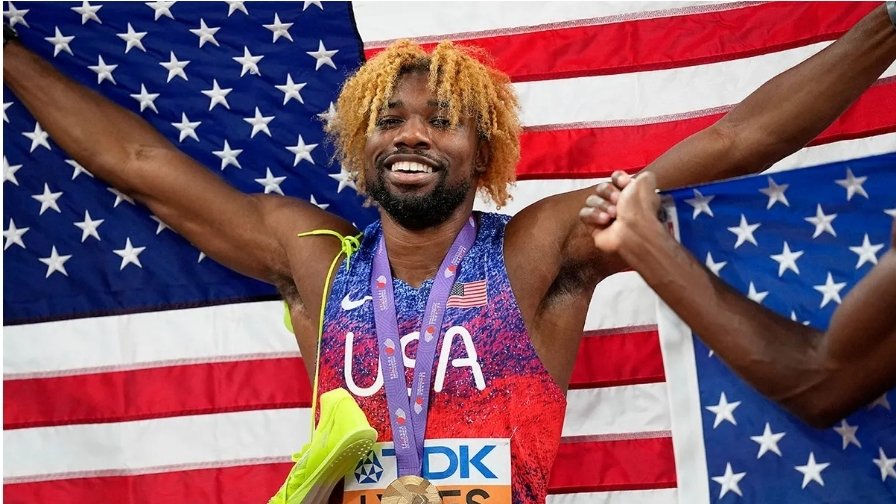
The conversation around representing the United States has not been limited to winter sports competitors. Similar sentiments have been voiced by athletes preparing for other major international events. Ahead of the 2024 Summer Olympics, track and field star Noah Lyles described his feelings about representing the country as “bittersweet.”
Lyles explained that his experience came with a “heavy heart,” pointing to the challenges faced by Black Americans. He noted that there are ongoing issues that weigh on him, even as he competes at the highest level of his sport. His remarks highlighted the broader social context that some athletes carry with them into international competition.
Hunter Hess also elaborated on his earlier comments, explaining why he found it difficult at times to represent the United States. He stated that there are many issues happening in the country that he does not fully support, adding that this sentiment is shared by many people.
His remarks drew significant attention, including criticism from Donald Trump, who publicly described Hess in harsh terms. Despite the backlash, Hess clarified his position by emphasizing that wearing the national flag does not necessarily mean endorsing everything happening within the country.
He explained that his motivation for competing under the U.S. banner is rooted more in personal connections than in political or national alignment. For him, representing the United States is about honoring his friends, family, and the people who have supported his journey to the Olympic stage.
Mikaela Shiffrin also expanded on her perspective, offering a broader view of the challenges athletes face when competing in a complex world. She pointed out that hardship and violence are not limited to one country but exist globally. Nevertheless, she acknowledged that it can still be difficult to process these realities while focusing on the pursuit of medals.
Her comments reflected an internal balancing act—trying to remain dedicated to her sport while also being mindful of larger issues affecting people around the world. This tension, she suggested, is something that athletes must navigate as they compete on the international stage.
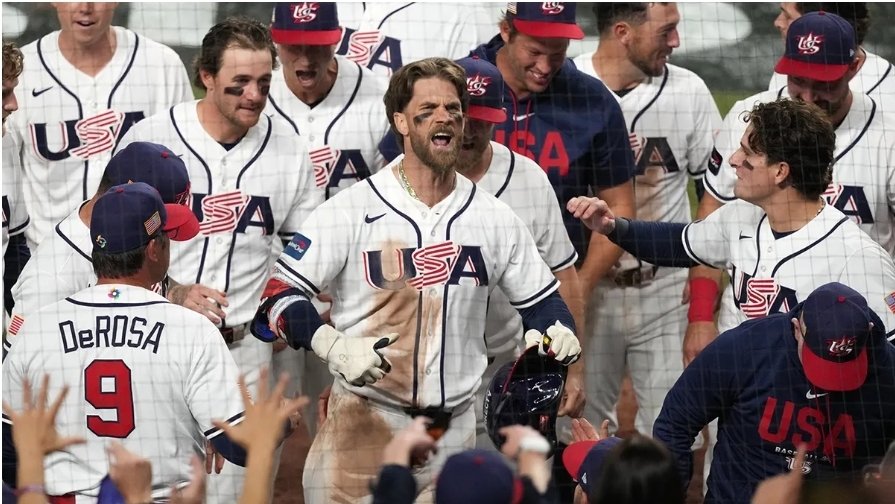
On the other hand, some athletes and sports figures have taken a more traditional and celebratory stance on representing the United States. Ahead of the World Baseball Classic, baseball star Bryce Harper spoke passionately about the honor of wearing the national colors.
Harper expressed surprise that anyone would hesitate to fully embrace the opportunity. In his view, representing the United States is one of the greatest honors an athlete can achieve, regardless of personal or political beliefs.
He acknowledged that there are issues within the country that people may disagree with, but he emphasized that such concerns should be set aside when it comes to international competition. For Harper, the focus should be on the unifying and uplifting aspects of sport.
He described sports as a way to bring positivity and enjoyment to audiences, suggesting that athletes have a role in providing something that people can feel good about watching. From his perspective, representing one’s country transcends political divisions and serves as a source of pride and unity.
Harper’s comments underscored a belief that the act of representing the United States is inherently meaningful, regardless of the broader circumstances. He maintained that there is nothing greater for an athlete than competing on behalf of their country.
The differing viewpoints among athletes highlight the complexity of national representation in modern sports. For some, it is a straightforward source of pride and motivation. For others, it is intertwined with personal values and reflections on societal issues.
Jordan Stolz’s perspective stands firmly on one end of that spectrum, characterized by confidence and unwavering pride. Meanwhile, athletes like Hunter Hess, Mikaela Shiffrin, and Noah Lyles illustrate a more nuanced approach, acknowledging both the honor of competition and the challenges that come with it.
Ultimately, these conversations reveal that representing a country at the highest level of sport is not a uniform experience. Each athlete brings their own background, beliefs, and emotions to the stage, shaping how they view the opportunity.
While opinions may differ, the shared commitment to excellence and competition remains constant. Whether driven by pride, reflection, or a mix of both, these athletes continue to perform on the world stage, contributing to an ongoing dialogue about what it truly means to represent a nation.
-

 Blog2 months ago
Celtic issues a fiery VAR statement after Trusty’s red card appeal is dismissed, as furious chiefs release referee audio publicly.
-

 Blog2 months ago
Celtic informed their January signing under Martin O’Neill that he wouldn’t play a single minute this season.
-

 Blog2 months ago
Celtic issued an £83 million warning amid looming UEFA threats.
-

 Blog1 month ago
SFA Expected to Review Missed Penalty in Rangers v Celtic Clash
-

 Blog1 week ago
Police respond after reported disorder following Middlesbrough vs Millwall clash
-

 Blog10 months ago
“Courtside to Aisle-Side: Tyrese Haliburton and Jade Jones Set New Wedding Date”
-

 Blog2 months ago
£6m star is looking to leave Rangers this summer and has already announced his next club publicly.
-

 Blog3 weeks ago
Rangers victory overshadowed by refereeing controversy