
Blog
Rangers are awarded a new penalty decision by the referee amid Celtic’s role in the VAR ‘farce’ being exposed.

Rangers F.C. have been given a fresh refereeing verdict after a controversial incident in their match against St Mirren F.C., with former Scottish Football Association official Steve Conroy insisting that the Ibrox side were denied what he believes was a “clear” penalty.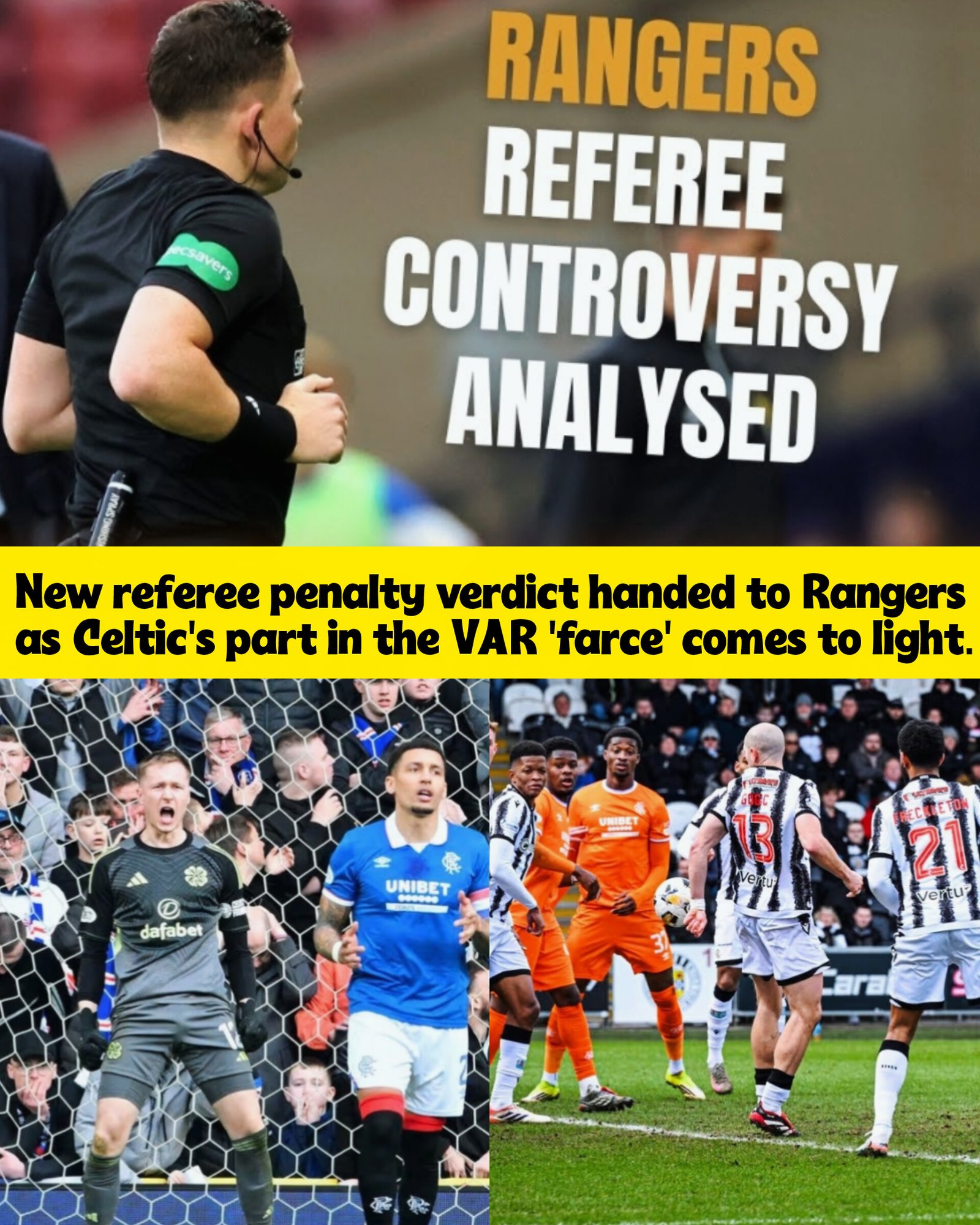
The debate centres around a key moment involving a potential handball inside the St Mirren penalty area, where Conroy has also criticised the role of VAR, suggesting inconsistencies in how decisions are being applied.
Penalty claim sparks controversy
The incident occurred when Nicolas Raskin directed a header toward goal, only for the ball to strike the arm of St Mirren defender Alex Gogic inside the box.
Despite strong appeals from Rangers players, referee Steven MacLean chose not to award a penalty. The decision stood even after a review from VAR officials, with Chris Graham and his team opting against recommending an on-field review.
That outcome has drawn criticism from Conroy, who believes the officials made the wrong call in failing to award a spot-kick.
Conroy insists decision was “clear”
Speaking on The Ref’s View podcast, Conroy explained that, under the current interpretation of the rules, the incident should have resulted in a penalty for Rangers.
While he acknowledged that in a more traditional or “sane” interpretation of the game it might not always be given as deliberate handball, he stressed that modern officiating standards make it a clear infringement.
In his view, Gogic’s arm position was the key factor. Conroy argued that there was no natural movement that would justify the defender’s arm being so far away from his body.
He suggested that Gogic had effectively made himself bigger, increasing the likelihood of blocking the ball, which is often considered a punishable offence under current handball guidelines.
Because of that, Conroy believes the officials should have had little hesitation in awarding a penalty.
VAR involvement questioned
A major point of frustration for Conroy was the lack of intervention from VAR.
Given the importance of the moment and the potential impact on the game, he felt the video assistant referee should at least have advised the on-field official to review the incident on the pitchside monitor.
Instead, the decision was allowed to stand without further scrutiny, something Conroy considers inconsistent with how similar incidents have been handled in recent matches.
Celtic incident used as comparison
To support his argument, Conroy pointed to a previous controversial decision involving Celtic F.C. defender Auston Trusty.
In that case, Trusty was sent off during a dramatic 2-2 draw against Heart of Midlothian F.C. at Tynecastle Park.
During that match, referee Steven McLean initially issued a yellow card after Trusty fouled Pierre Landry Kabore.
However, after being advised by VAR official John Beaton, McLean reviewed the incident on the monitor and upgraded the punishment to a red card for denying an obvious goal-scoring opportunity (DOGSO).
Claims of inconsistency in DOGSO rulings
Conroy believes that decision has effectively influenced how DOGSO incidents are now being judged, suggesting it has set a new precedent.
He argued that the Trusty incident did not meet the criteria for denying a clear goal-scoring opportunity, yet VAR still intervened and led to a harsher punishment.
Because of that, he finds it difficult to understand why VAR chose not to intervene in the Rangers handball situation.
In Conroy’s opinion, if VAR officials were willing to get involved in the Trusty case, then consistency would demand similar involvement in the Raskin-Gogic incident.
“Farce” claim over VAR application
Conroy went further by describing the situation as a “farce,” highlighting what he sees as a lack of uniformity in decision-making.
He admitted that he does not necessarily believe Raskin’s header would have resulted in a goal. However, he emphasised that this is not the only factor when assessing such incidents.
According to him, the key consideration is whether a player has been denied a meaningful opportunity, rather than a guaranteed goal.
By that logic, he believes Rangers were indeed denied a significant attacking chance due to the handball, which should have been punished.
Growing frustration over officiating standards
The incident has added to ongoing debates about refereeing standards and the use of VAR in Scottish football.
Critics argue that inconsistent application of the rules undermines confidence in the system, particularly when similar incidents produce different outcomes.
For Rangers, the decision represents a missed opportunity in a tightly contested match, while for observers like Conroy, it raises broader concerns about how key decisions are being handled.
As discussions continue, the pressure remains on officials to deliver clearer and more consistent interpretations of the rules—especially in high-stakes situations that can influence results.
Former SFA referee criticizes Celtic’s VAR decisions and questions John Beaton’s calls, calling them ‘just stupid’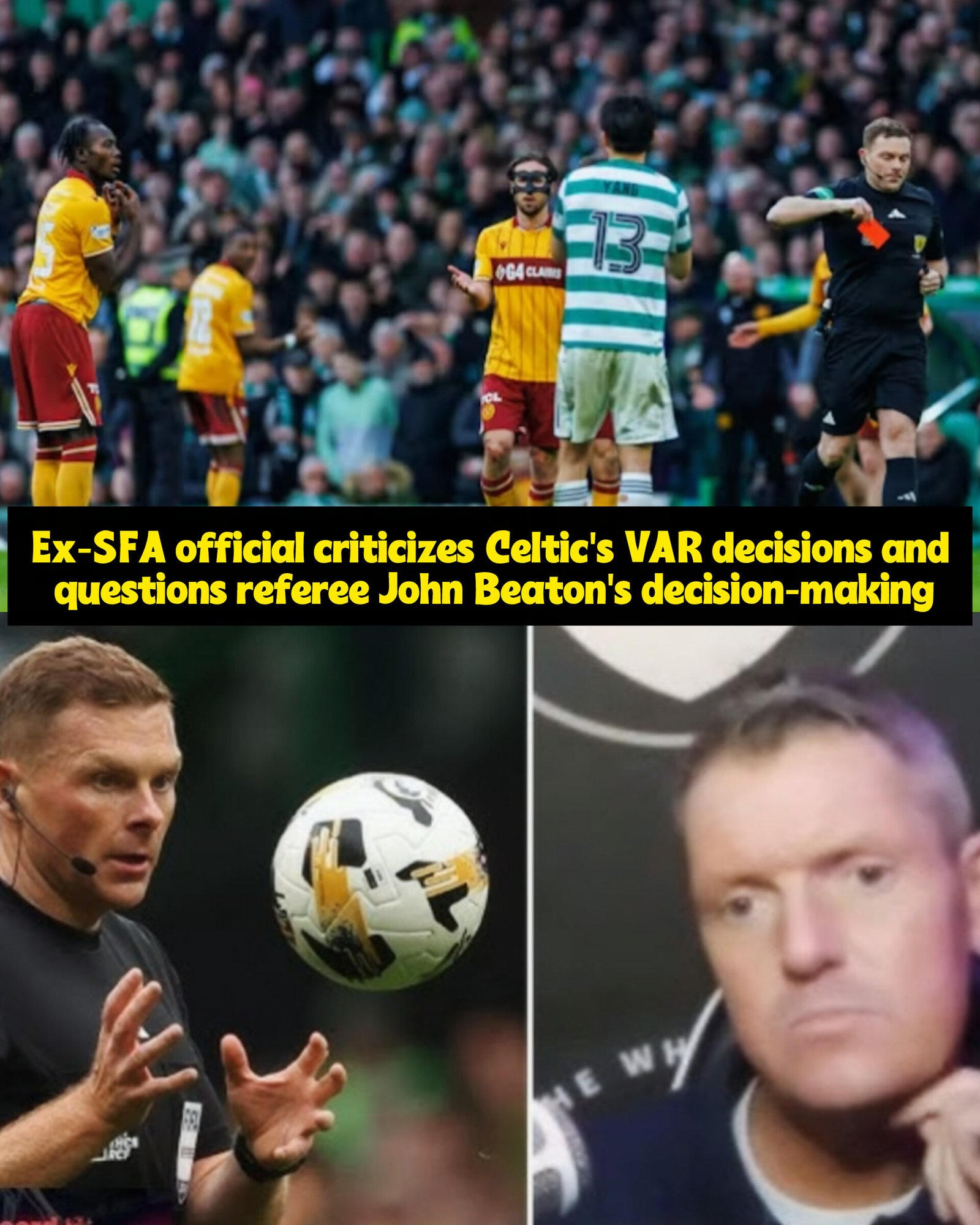
Des Roache has delivered his verdict on three major VAR incidents involving Celtic F.C. during their victory over Motherwell F.C. at Celtic Park over the weekend.
The former Scottish Football Association referee was asked to assess the controversial moments from the match, including the VAR intervention that resulted in Celtic being awarded a penalty and a red card being shown to Emmanuel Longelo.
Roache was also invited to give his opinion on two further incidents involving Celtic players, including a possible red-card situation concerning Daizen Maeda and another involving Alex Oxlade-Chamberlain. During the discussion, Roache did not hold back in his criticism, even describing one of Maeda’s actions as “just stupid.”
Roache criticises Beaton over penalty decision
The first major talking point involved referee John Beaton, who required assistance from the Video Assistant Referee before ultimately awarding Celtic a penalty. The incident occurred after Longelo brought down Maeda during a clear goalscoring opportunity.
The challenge was considered a classic case of denying an obvious goal-scoring opportunity, commonly known in football as DOGSO. As a result, the correct disciplinary action was a penalty kick for Celtic along with a red card for the Motherwell defender.
However, Roache expressed concern that Beaton did not make the call immediately despite being close to the incident. Speaking about the situation, the former referee acknowledged that VAR ultimately helped ensure the correct outcome was reached.
According to Roache, that is precisely why the VAR system exists—to help officials make accurate decisions in crucial moments.
Nevertheless, he questioned why the on-field referee had not recognised the foul himself. Roache pointed out that Beaton appeared to have a clear view of the incident and was positioned only a short distance away.
He estimated that the referee was approximately ten to twelve yards from the moment of contact, with no obstruction blocking his line of sight. Given that positioning, Roache believed there was little justification for the referee needing help from the video review system.
He further explained that the situation was fairly straightforward from a refereeing perspective. In his view, there was no confusion about what had happened because Longelo clearly impeded Maeda during a promising attacking move.
Roache also suggested that Beaton may have been momentarily distracted by tracking the ball in the air, something he felt was unnecessary in that situation. Since the ball was simply descending toward the players, Roache believed the referee should have focused entirely on the physical challenge taking place.
For Roache, the outcome was obvious. He stated there should have been no hesitation in identifying the foul and issuing the appropriate punishment.
In his opinion, the correct decision—a penalty kick combined with a red card—was clear from the moment the challenge occurred.
Debate over Oxlade-Chamberlain challenge
The second controversial moment involved Celtic midfielder Alex Oxlade-Chamberlain and his challenge on Motherwell player Elijah Just.
Roache took a more balanced approach when discussing this particular incident. While he acknowledged that the tackle looked questionable, he stopped short of claiming it was definitively worthy of a red card.
He described the challenge as “naughty,” suggesting it was careless and perhaps unnecessary. At the same time, Roache said he did not believe Oxlade-Chamberlain had any real intention of causing harm to his opponent.
From Roache’s perspective, the midfielder’s actions did not appear malicious, and he doubted that the player had deliberately tried to injure anyone.
Even so, the former referee acknowledged that the incident could easily have resulted in a harsher punishment. He admitted that if the referee had decided to show a red card for the tackle, there likely would not have been many complaints.
In other words, Roache felt the situation fell into a grey area where a dismissal would not have been unreasonable under the laws of the game.
Maeda incident also scrutinised
The third key moment discussed by Roache involved Daizen Maeda and an alleged elbow on a Motherwell player during the match.
Some observers suggested that the Japanese forward could have been sent off for the incident. However, Roache disagreed with those calls for a red card.
He explained that while the action looked questionable, it did not meet the threshold required for violent conduct or serious foul play.
Instead, Roache felt the situation was more accurately described as reckless behaviour rather than something truly dangerous.
According to him, Maeda may have extended his arm while challenging for the ball, which could easily be interpreted as careless. He suggested that the Celtic player was fortunate to avoid at least a yellow card for the action.
Roache added that the incident became more puzzling when Maeda later became involved with Motherwell’s Ibrahim Said while the opposing player was on the ground.
The Celtic forward was seen pushing Said, something Roache believed was unnecessary and out of character.
He admitted that he had rarely witnessed that kind of behaviour from Maeda in previous matches. Because of that, the former referee appeared somewhat surprised by the player’s actions.
Despite his criticism, Roache remained firm in his view that the incident did not warrant a red card.
Instead, he suggested that the most appropriate punishment would have been a yellow card for unsporting conduct. In his opinion, Maeda’s behaviour was simply foolish rather than violent.
Roache emphasised that the action lacked the level of aggression normally associated with serious foul play.
Title race heating up
The victory over Motherwell allowed Celtic to close the gap at the top of the Scottish Premiership table.
The Hoops are now just two points behind league leaders Heart of Midlothian F.C. as the competition approaches the decisive split in the standings.
With only three fixtures remaining before the league divides into the top and bottom halves, the pressure is mounting for the clubs chasing the title.
Both Celtic and Rangers F.C. remain firmly in the race, and neither side can afford to drop points during the final stages of the campaign.
In total, there are eight games left for the top contenders to determine who will ultimately secure the championship.
As the tension continues to build, every decision—whether from players, managers, or referees—could prove crucial in deciding the outcome of the title battle.
For now, however, Celtic appear determined to maintain their momentum and continue applying pressure on the teams above them.
If their recent form continues, it may be difficult for their rivals to keep pace as the season moves toward its dramatic conclusion.
-
 Blog1 month ago
Celtic issues a fiery VAR statement after Trusty’s red card appeal is dismissed, as furious chiefs release referee audio publicly.
-

 Blog2 months ago
Celtic informed their January signing under Martin O’Neill that he wouldn’t play a single minute this season.
-

 Blog1 month ago
Celtic issued an £83 million warning amid looming UEFA threats.
-
 Blog1 month ago
SFA Expected to Review Missed Penalty in Rangers v Celtic Clash
-

 Blog6 days ago
Police respond after reported disorder following Middlesbrough vs Millwall clash
-

 Blog10 months ago
“Courtside to Aisle-Side: Tyrese Haliburton and Jade Jones Set New Wedding Date”
-

 Blog2 months ago
£6m star is looking to leave Rangers this summer and has already announced his next club publicly.
-

 Blog3 weeks ago
Rangers victory overshadowed by refereeing controversy