
Blog
Rangers star suffers long-term injury and is already ruled out of the Old Firm clash against Celtic

Rangers FC have been dealt a significant injury setback ahead of a crucial run of fixtures, with manager Danny Rohl confirming that one of his key players is facing a lengthy spell on the sidelines. The blow comes just days before their trip to Livingston FC, and with a high-stakes Old Firm clash against Celtic FC looming next weekend.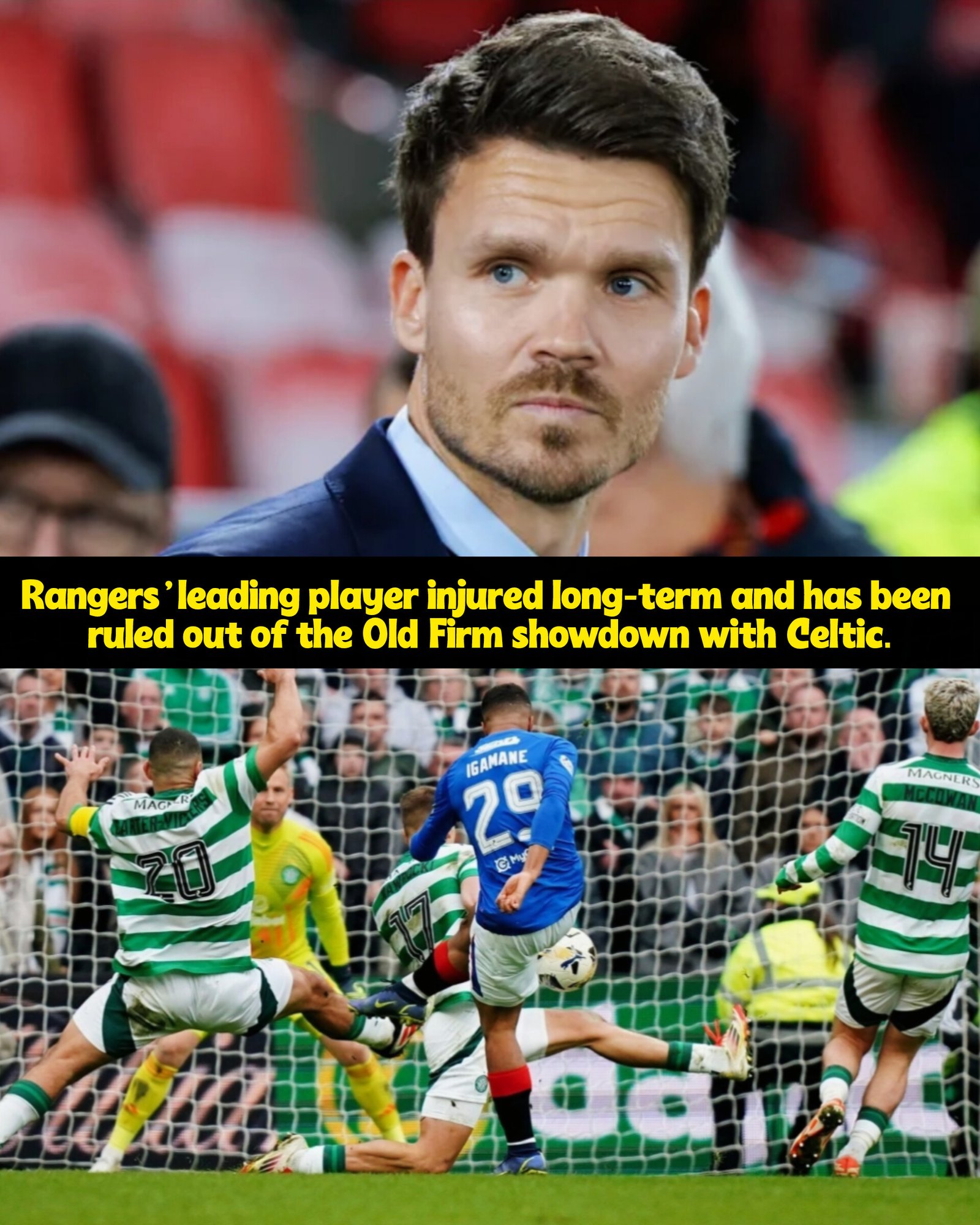
Rohl revealed that while some squad members are nearing returns, another injury situation is far more serious. Rangers are expecting Derek Cornelius and Connor Barron to be back in contention in the coming weeks, offering a degree of optimism. However, the manager confirmed that at least one unnamed player is set for a longer absence, raising concerns ahead of the derby double-header in March.
Speaking before the Livingston fixture, Rohl indicated that changes would be forced upon him due to fitness issues. “We have to change some players. Not that I want to, I have to,” he said. “We have small injuries but I cannot go into too much detail today, but you will see, I think, on Sunday.”
He went on to clarify the timeline for the affected players. “One is short term, one is long. I think one player will be two to three weeks and the other one is doubtful for Sunday. There could be two or three changes for the weekend.”
While Rohl stopped short of naming the individuals involved, it is clear that one player will miss not only the Livingston clash but also the first Old Firm encounter in March. The injury also casts doubt over participation in the upcoming Scottish Cup quarter-final between the Glasgow rivals.
The timing could hardly be worse for Rangers. Before attention turns to the Scottish Cup, the sides are set to meet at Ibrox in the Premiership on March 1. With the title race finely balanced, any absence from a key figure could hand momentum to Celtic at a decisive stage of the campaign.
Off the pitch, there has also been movement regarding ticket allocations for the upcoming cup tie. Celtic supporters are expected to receive the full Broomloan Stand at Ibrox for the Scottish Gas Scottish Cup quarter-final scheduled for March 8. Rangers are understood to have offered the traditional derby allocation, ensuring around 7,500 Hoops fans will be present for the match.
Under Scottish Cup regulations, away clubs are entitled to request up to 20 percent of tickets, which at Ibrox would amount to roughly 10,000 supporters. However, final numbers depend on agreement between both clubs, police authorities, and compliance with stadium safety regulations.
There had been speculation that the matter could escalate into a formal dispute. The long-standing arrangement between the two clubs was scrapped by Rangers in May 2018, reducing Celtic’s allocation dramatically to around 800 tickets. For decades prior, the Broomloan Stand had been filled by visiting Celtic supporters.
It is understood that both clubs were encouraged to avoid a prolonged disagreement and instead revert to a more traditional allocation model. Had talks stalled, the Scottish Football Association could have referred the issue to its compliance officer, potentially compelling Rangers to provide a larger share.
Looking ahead, there are indications that Rangers would receive a comparable allocation should they face Celtic in future Scottish Cup ties at Celtic Park, restoring a degree of balance to the arrangement.
Meanwhile, Celtic manager Martin O’Neill, who recently expressed frustration over fan protests during a Europa League fixture, had hinted that his club would pursue their full ticket entitlement following the cup draw on February 9.
For Rangers supporters, however, the immediate focus remains on team news. The prospect of losing a key player for an extended period is a major concern, particularly with two Old Firm fixtures scheduled in quick succession. Fans will be hoping that Rohl’s description of the injury as “long” does not stretch beyond a few weeks, especially with the league split approaching in April.
As the season enters its decisive phase, squad depth and fitness will play a critical role. Any prolonged absence could tilt the balance in tightly contested matches that may ultimately define Rangers’ campaign.
Stuttgart supporters issue a statement from the Green Brigade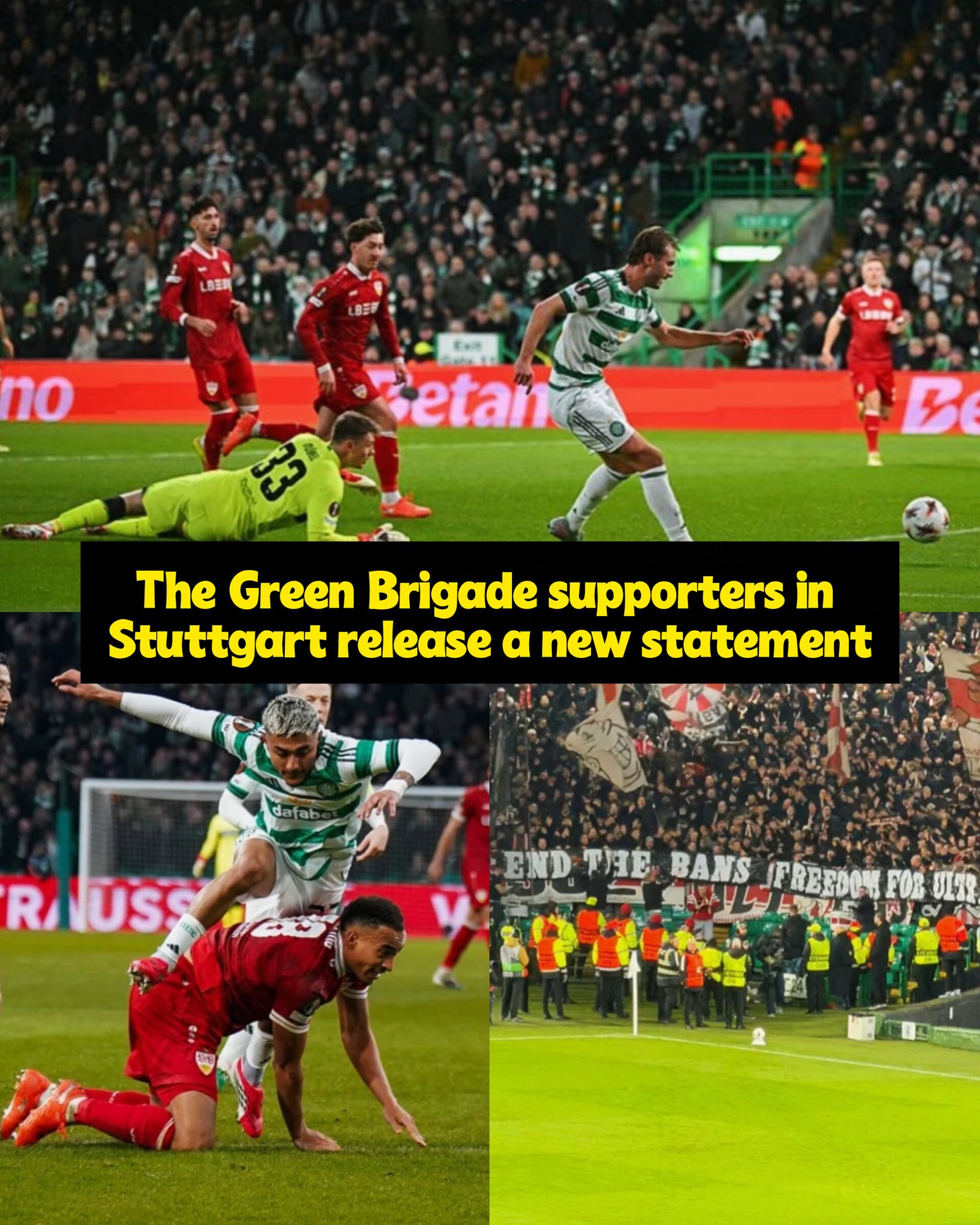
During Thursday night’s Europa League encounter at Celtic Park, visiting supporters from Stuttgart made a striking gesture that did not go unnoticed. In the away section, a large banner was unfurled carrying a clear and direct message: “End the bans freedom for ultras!” Positioned prominently, it was visible to significant portions of the stadium and quickly became a talking point among those in attendance.
The banner was widely interpreted as a public show of solidarity with the Green Brigade, the well-known ultra group associated with Celtic FC. The Green Brigade remain banned from attending matches, and their absence has been felt at Celtic Park for months. Stuttgart’s fans, by displaying the message on a European stage, ensured that the issue extended beyond domestic discussion and into a broader continental spotlight.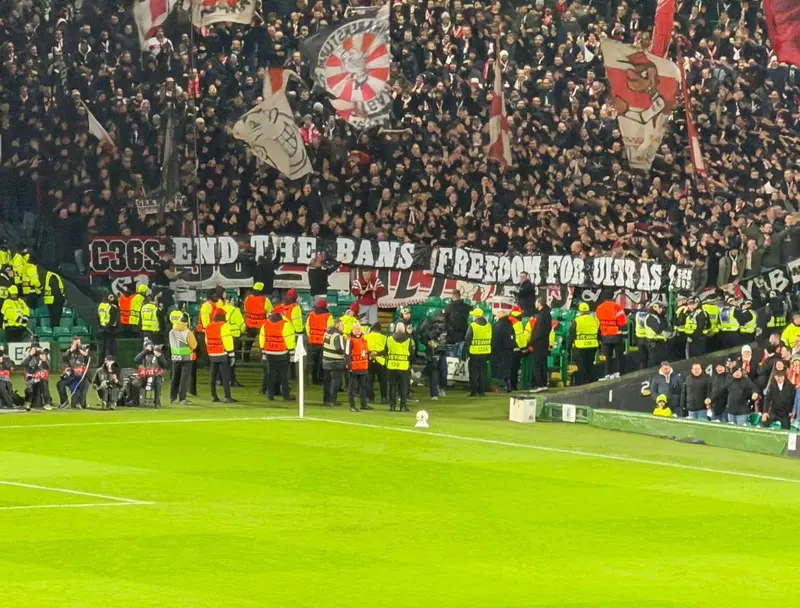
The impact of the Green Brigade’s absence has been noticeable. Traditionally stationed in the North Curve, the group has long been regarded as the driving force behind the stadium’s atmosphere. Their coordinated chants, flags, and tifos have helped shape Celtic Park’s reputation as one of the most intense venues in European football. Without them, the dynamic inside the ground has shifted. While the support remains passionate, the collective rhythm and sustained intensity that once defined big nights have been harder to maintain.
European fixtures in particular tend to magnify that difference. Celtic Park has built a reputation for its electric European atmospheres, where noise rolls from the stands and feeds directly into the team’s performance on the pitch. On this occasion against VfB Stuttgart, there were periods when the energy seemed to waver, especially after setbacks during the match. The absence of a central, organised ultra presence was felt in those moments when a unified push from the stands might once have lifted the team.
Supporter culture often transcends national boundaries, especially among ultra groups who share common values about active support, visual displays, and fan identity. Stuttgart’s travelling support embodied that spirit. They arrived in Glasgow with colour, coordinated chants, and constant backing for their side. Their section remained vibrant throughout the contest, providing a strong and unified presence from first whistle to last.
As events unfolded on the pitch, Celtic faced an uphill battle. Falling behind required a surge of energy both from the players and the stands. When Nygren found an equaliser, the stadium briefly rediscovered its voice. The goal sparked a wave of optimism, lifting supporters from their seats and injecting renewed belief into the match. For a short spell, it felt as though the old intensity might return in full force.
However, defensive lapses soon shifted momentum back toward the visitors. Stuttgart capitalised on Celtic’s mistakes, regaining control of the contest and quieting much of the home crowd. As the German side asserted themselves, the contrast inside the stadium became increasingly apparent. The away section remained organised and loud, while the mood in other areas of Celtic Park appeared more fragmented and subdued.
The visual of the banner lingered beyond its physical presence. While it may not prompt an immediate change in club policy, its symbolism carried weight. By raising the issue during a high-profile European tie, Stuttgart’s supporters ensured that the debate surrounding the Green Brigade reached a wider audience. It demonstrated that developments within one club’s supporter base can resonate across borders, especially within interconnected ultra communities.
The Green Brigade’s ban has been one of the most significant off-field stories surrounding Celtic FC in recent months. Discussions around supporter conduct, club authority, and fan expression have created tension and division. Some argue that strict measures are necessary to maintain order and protect the club’s interests. Others believe that silencing organised support risks eroding a crucial part of the club’s identity and matchday experience.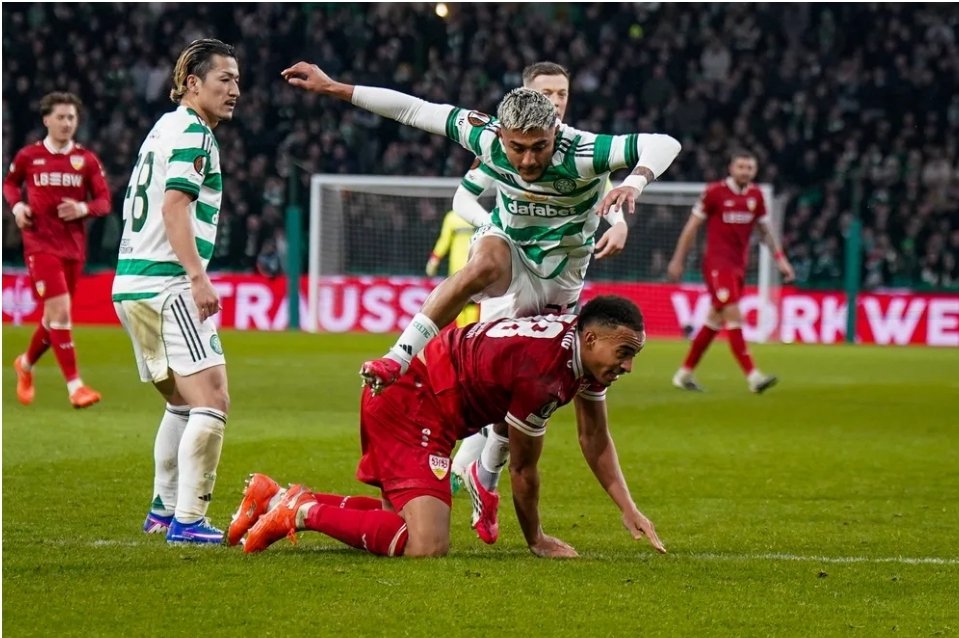
European nights often act as a stage not only for footballing drama but also for broader narratives. With international media and supporters watching, gestures like Stuttgart’s banner take on added significance. They transform a local issue into a continental conversation. In this case, it was not only Celtic supporters who were reminded of the ongoing dispute, but fans and observers from across Europe.
On the field, the result ultimately stood apart from the banner’s message. The football took its course, shaped by tactical decisions, individual performances, and moments of error. Yet the atmosphere surrounding the match told a parallel story. The organised vibrancy of Stuttgart’s support highlighted what Celtic Park has historically been known for and what many feel has been diminished in recent months.
The banner alone will not resolve the situation. Club policies are rarely altered by a single act of solidarity, however visible. But it underscored that the matter is not confined to Scotland. It is being observed, discussed, and interpreted by supporters elsewhere who see common ground in issues affecting ultra culture.
In the end, Thursday night became about more than just a Europa League fixture. It showcased the enduring power of supporter identity and cross-border solidarity. While the scoreboard reflected Stuttgart’s control in key moments, the stands told another story — one about community, expression, and the ongoing debate over the place of ultras in modern football.
Andy Halliday claims it’s ‘madness’ what’s happening with Callum McGregor at Celtic
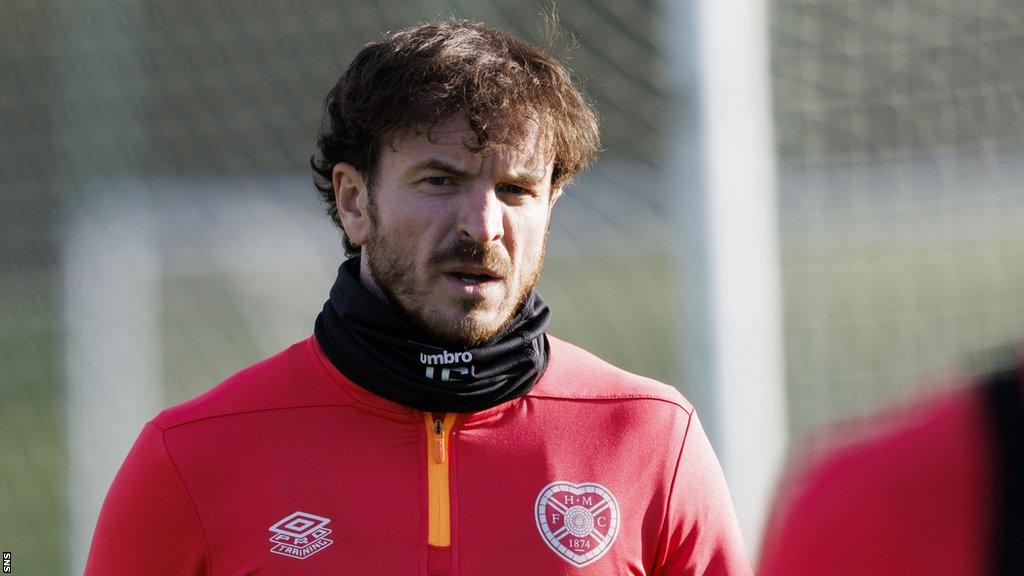
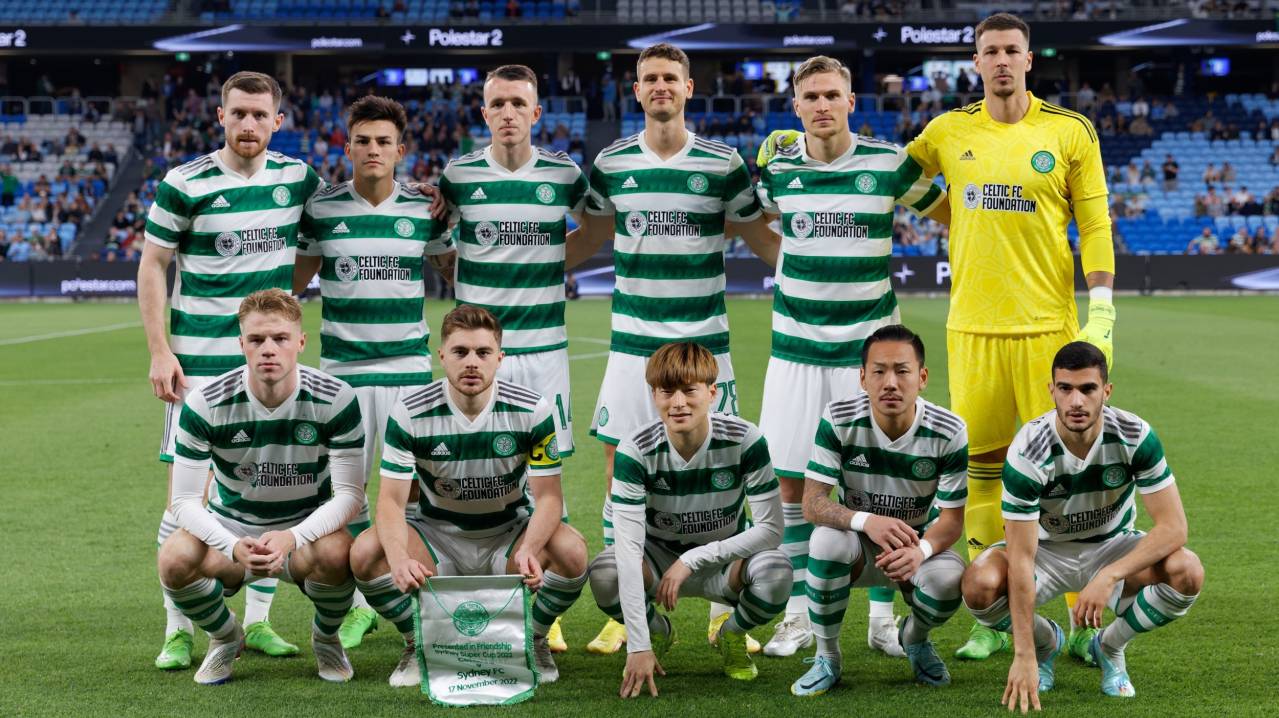
Callum McGregor is set to play a crucial role for Celtic FC as they navigate a demanding run of fixtures in the weeks ahead.
However, Andy Halliday has voiced concerns about the sheer volume of matches the Celtic captain is being asked to play, particularly with another series of high-stakes games looming.
The Motherwell FC midfielder pointed to Celtic’s decision to start McGregor against Auchinleck in the Scottish Cup back in January as “madness,” suggesting the midfielder is in need of both a mental and physical reset.
Celtic are preparing to host VfB Stuttgart in the Europa League on Thursday evening for the first leg of their play-off tie. Given McGregor’s importance to the team, it would be no surprise to see him once again named in the starting XI for such a significant European encounter.
Halliday questions McGregor’s workload
Speaking on Open Goal, the panel analysed Celtic’s recent performances, particularly their apparent struggle to control matches. Their latest dramatic late victory, this time away to Kilmarnock at Rugby Park, sparked debate about the team’s overall structure and rhythm.
Ordinarily, McGregor is the player dictating proceedings from midfield, setting the tempo and ensuring Celtic maintain control. Yet Paul Slane suggested that any dip in McGregor’s influence might reflect broader issues within the team rather than the captain alone.
The discussion then shifted toward McGregor’s minutes on the pitch, with Halliday emphasising that the midfielder’s heavy workload could be contributing to his recent performances. In his view, McGregor is playing far too often and could benefit from time out of the starting lineup.
Si Ferry remarked that he had never seen McGregor appear so ineffective in matches, recalling a first half in which he struggled to remember the captain making a forward pass. Slane countered by questioning whether that was more a symptom of Celtic’s overall lack of control as a team.
Ferry responded by highlighting the importance of structure, rotation, and movement within a side, suggesting that Celtic currently lack the fluidity that once defined them.
Halliday then reinforced his point, noting that McGregor has arguably been the best player in Scotland for the past seven or eight years. Despite that status, he believes the constant reliance on him is excessive.
He referenced the decision to play McGregor in the Scottish Cup tie against Auchinleck — a non-league opponent — as particularly baffling. In Halliday’s eyes, that choice epitomised the overuse of a key player who rarely gets a break.
According to Halliday, there are times when even the most important individuals need to be taken out of the firing line. He stressed the value of both mental and physical recovery, especially ahead of what promises to be an intense and decisive period in the season. While he acknowledged that McGregor would still feature in Celtic’s strongest starting lineup, he argued that selective rotation would be beneficial.
A look at McGregor’s season workload
The core of the issue is not just that McGregor starts almost every match — it’s that he is rarely substituted. Opportunities for rest during games have been minimal, leaving little room for recovery.
The fact that the former Scotland international featured against lower-tier opposition in the Scottish Cup only amplified concerns about squad management and rotation.
So far this season, McGregor’s numbers underline Halliday’s argument:
- Games played: 42
- Starts: 41
- Appearances off the bench: 1
- Matches with 90+ minutes: 38
- Times substituted: 3
Those figures illustrate just how heavily Celtic rely on their captain. With such limited rotation and minimal early substitutions, McGregor has shouldered a significant burden across domestic and European competitions.
As Celtic head into a crucial phase that includes European ties and key league encounters, the debate over McGregor’s workload is unlikely to fade. While his importance to the side is unquestioned, the question remains whether reducing his minutes now could ultimately benefit both the player and the team in the long run.
-
 Blog1 month ago
Celtic issues a fiery VAR statement after Trusty’s red card appeal is dismissed, as furious chiefs release referee audio publicly.
-

 Blog2 months ago
Celtic informed their January signing under Martin O’Neill that he wouldn’t play a single minute this season.
-

 Blog1 month ago
Celtic issued an £83 million warning amid looming UEFA threats.
-

 Blog1 month ago
SFA Expected to Review Missed Penalty in Rangers v Celtic Clash
-

 Blog10 months ago
“Courtside to Aisle-Side: Tyrese Haliburton and Jade Jones Set New Wedding Date”
-
 Blog1 month ago
£6m star is looking to leave Rangers this summer and has already announced his next club publicly.
-

 Blog2 weeks ago
Rangers victory overshadowed by refereeing controversy
-

 Blog19 hours ago
Police respond after reported disorder following Middlesbrough vs Millwall clash