
Blog
Sam Allardyce reflects on Nancy departure after ‘schoolteacher’ comment and O’Neill comeback

Sam Allardyce has reflected on Wilfried Nancy’s brief and troubled spell at Celtic, as well as Martin O’Neill’s return to the dugout, after being one of the earliest critics of the Frenchman’s appointment.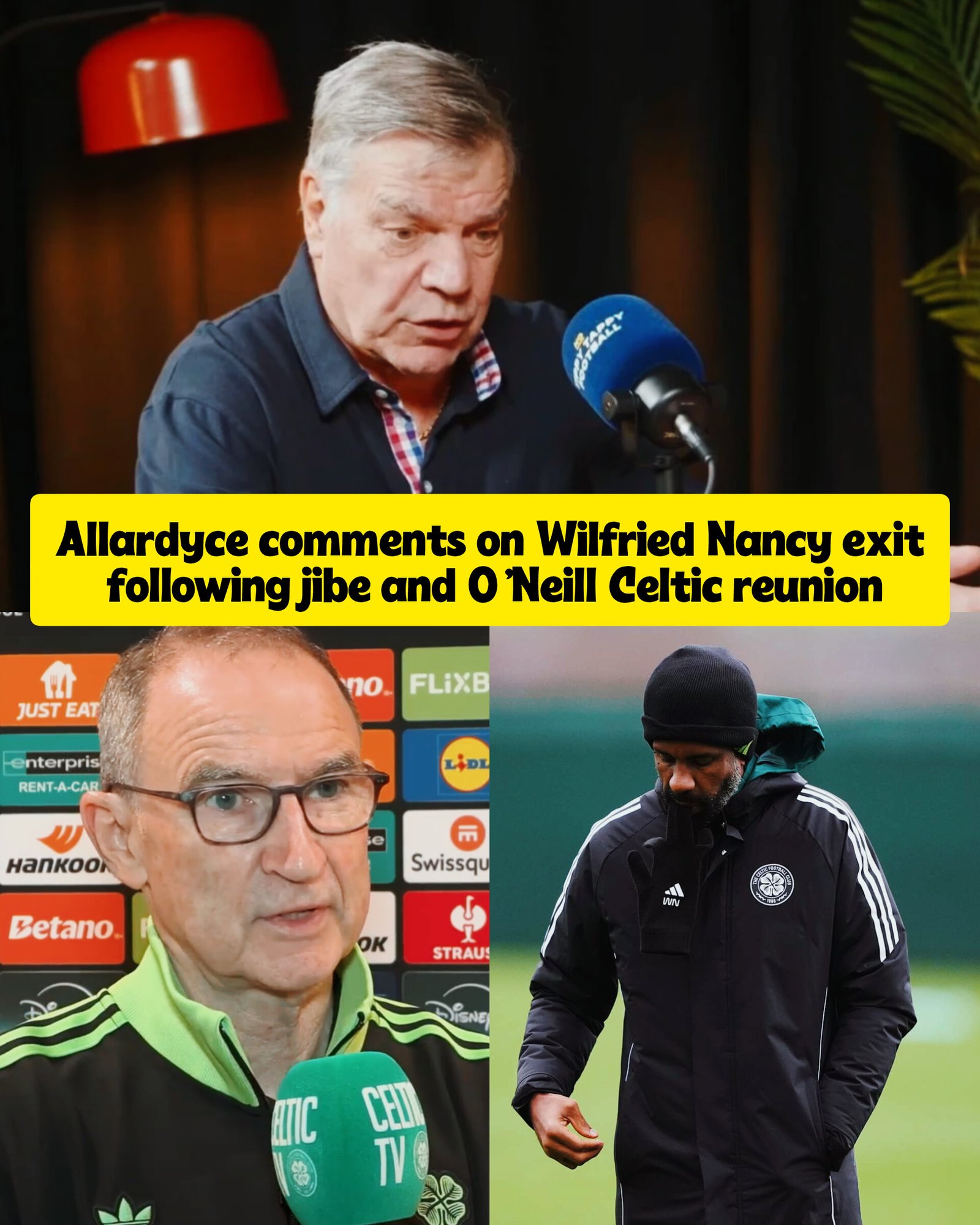
Allardyce did not hold back when Nancy was installed as Celtic manager in December, voicing his doubts almost immediately. Those concerns only grew after Celtic were beaten by Hearts in Nancy’s first match in charge. Decisions taken around that time, including the club’s choice not to retain Martin O’Neill and Nancy’s use of a tactics board on the touchline, appeared to particularly irritate the former England boss.
As Nancy’s reign unravelled over just 33 days, Allardyce memorably labelled him a “schoolteacher”, a remark that gained traction as results and performances deteriorated. On Monday, that turbulent chapter came to an end, with Nancy dismissed and O’Neill returning to lead the team once again. With the dust settling, Allardyce has now revisited the situation during his latest podcast appearance.
Speaking on The No Tippy Tappy Podcast, Allardyce offered his perspective on O’Neill’s return and the circumstances surrounding his original departure. He suggested that O’Neill appeared less than satisfied when discussing Celtic during a recent appearance on talkSPORT, implying there may still be lingering disappointment over how matters were handled by the club.
According to Allardyce, reading between the lines of O’Neill’s comments suggested frustration that he was not asked to remain in charge until the end of the season. Allardyce highlighted that O’Neill had overseen a strong run of results, winning seven of eight matches, which made the decision to move on from him all the more questionable.
Allardyce also touched on the complexity of the decision-making process at boardroom level. He described the task facing Celtic’s directors as difficult, particularly when attempting to identify the “right” profile for a modern manager. In his view, clubs often get caught up in buzzwords and trends, prioritising labels such as innovative or forward-thinking, rather than focusing on what the team actually needs.
Podcast host Natalie Pike noted that O’Neill’s return was something they had predicted, pointing out the irony of the situation. She also suggested that, with O’Neill back at the helm, Celtic may now be inclined to give him significant influence over decisions moving forward.
Allardyce responded warmly, wishing O’Neill well and describing him simply as “class”. His tone reflected both respect for O’Neill’s achievements and approval of Celtic’s decision to bring him back during a period of instability.
The discussion then turned to the aftermath of Nancy’s departure and the sense of relief among Celtic supporters. Many fans believe O’Neill’s presence will help steady the ship and restore a sense of direction after weeks of uncertainty. There is hope that his return can quickly translate into improved results and a more settled atmosphere around the club.
Former striker Dean Saunders joined Allardyce in praising O’Neill, contrasting him with the archetype of the modern coach. Saunders described O’Neill as intelligent, experienced, and proven, arguing that Celtic could not have anticipated just how badly Nancy’s appointment would unravel.
Allardyce echoed those sentiments, expanding on the value of experience in football management. He acknowledged that there are moments when clubs must be willing to give new managers opportunities to prove themselves. However, he stressed that there are also situations where experience is invaluable and cannot be replaced.
Reflecting on his own younger days, Allardyce admitted that he might once have been less appreciative of experience, recalling how ambition and confidence often dominate when managers are first trying to establish themselves. With time, he suggested, comes a deeper understanding of what is truly required to succeed.
Natalie Pike added that, in her view, Nancy’s biggest mistake may have been failing to keep O’Neill involved during the transition period. She suggested that retaining him even briefly could have provided continuity and support during the early days of Nancy’s tenure.

Martin O’Neill – Credit: Sky Sports
Allardyce strongly agreed, describing O’Neill as the antithesis of what many perceive a modern coach to be. He emphasised that O’Neill is not defined by fashionable coaching trends, but by his ability to manage people, organise teams, and make quick, intelligent decisions.
In Allardyce’s assessment, O’Neill’s strength lies in his sharp football brain and his understanding of dressing-room dynamics. Rather than focusing on elaborate tactical theories, he prioritises clarity, structure, and relationships—qualities Allardyce believes are often underestimated in the modern game.
Taken together, the comments from Allardyce and Saunders paint a clear picture of why O’Neill’s return has been so warmly received. After a short-lived experiment that failed to deliver, Celtic have turned back to a familiar figure whose experience and leadership are seen as the safest route back to stability.
For Allardyce, the situation serves as a reminder that while innovation has its place, football remains a results-driven business. At certain moments, particularly in times of crisis, experience and proven ability can outweigh any tactical trend or managerial buzzword.
-

 Blog1 month ago
Celtic issues a fiery VAR statement after Trusty’s red card appeal is dismissed, as furious chiefs release referee audio publicly.
-

 Blog2 months ago
Celtic informed their January signing under Martin O’Neill that he wouldn’t play a single minute this season.
-

 Blog1 month ago
Celtic issued an £83 million warning amid looming UEFA threats.
-

 Blog1 month ago
SFA Expected to Review Missed Penalty in Rangers v Celtic Clash
-

 Blog4 days ago
Police respond after reported disorder following Middlesbrough vs Millwall clash
-

 Blog10 months ago
“Courtside to Aisle-Side: Tyrese Haliburton and Jade Jones Set New Wedding Date”
-

 Blog1 month ago
£6m star is looking to leave Rangers this summer and has already announced his next club publicly.
-

 Blog2 weeks ago
Rangers victory overshadowed by refereeing controversy