
Blog
“The Silence Around Greatness: Why The Sports World Keeps Looking Away From Mikaela Shiffrin’s Truth”

The sports world loves victories. It loves medals, records, podium photos, and the neat, triumphant stories that fit into highlight reels and headlines. What it struggles with—what it often chooses to ignore—is the cost of greatness. And in that uncomfortable space sits Mikaela Shiffrin, carrying a truth so heavy that many would rather look the other way than confront it.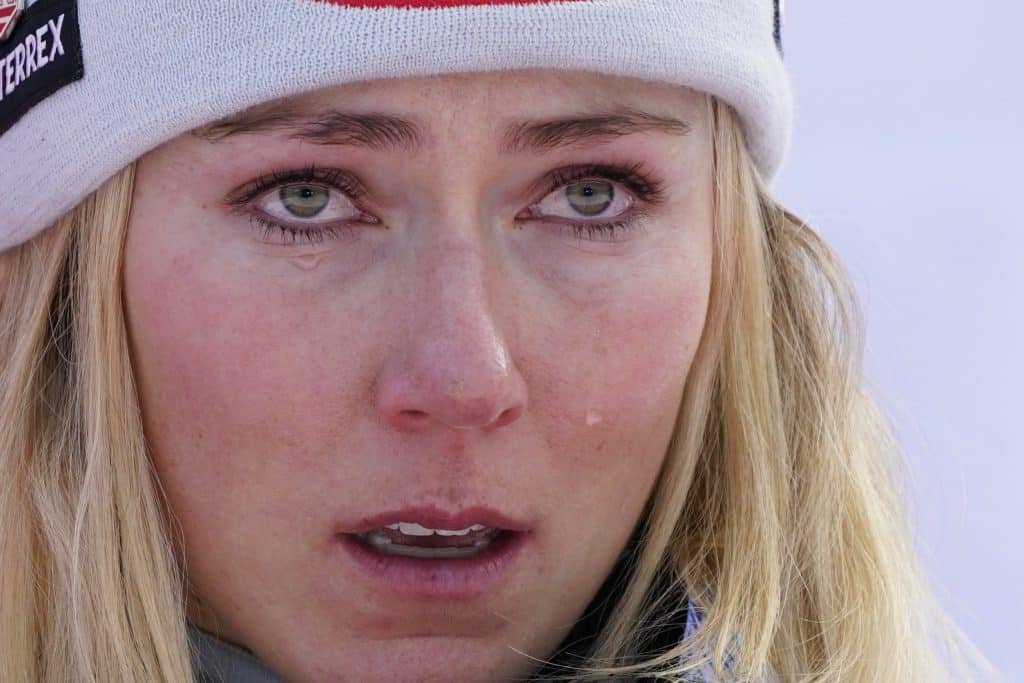
From the outside, Shiffrin’s career looks almost unreal. The most successful alpine skier in history. A generational talent. A woman who redefined what dominance looks like on snow. But behind the numbers and accolades is a human story filled with grief, fear, pressure, loneliness, and emotional scars that never make the highlight packages.
And that is exactly the reality the sports world keeps trying to ignore.
Mikaela Shiffrin didn’t just lose races—she lost her anchor. When her father, Jeff Shiffrin, died suddenly in 2020, the foundation of her life collapsed. He wasn’t just a parent; he was her engineer, her quiet strength, the person who fixed things—on skis and in life. His death didn’t simply pause her career. It shattered her sense of safety.
She returned to competition because champions are expected to return. Because the calendar doesn’t stop for grief. Because fans, sponsors, and federations don’t know how to sit with pain—they only know how to ask, “When will she be back?”
What followed was not weakness, but honesty. Shiffrin spoke openly about panic attacks, fear on steep courses, and the mental toll of standing at the start gate knowing one mistake could end everything. Instead of being embraced, that honesty made people uncomfortable. Great athletes are supposed to be fearless. Vulnerability doesn’t sell as easily as dominance.
Then came the crashes. The doubts. The seasons where wins felt hollow and losses felt devastating. Shiffrin admitted she sometimes didn’t recognize herself anymore. She questioned her love for the sport. And still, she kept going—not because it was easy, but because walking away would have meant letting the pain win.
Yet every time she struggled, the narrative quietly shifted. Analysts asked if she was “past her peak.” Commentators wondered if she had “lost her edge.” Rarely did they ask the more human question: What does it take to keep showing up when your heart is still broken?
Mikaela Shiffrin is not alone in this silence.
Naomi Osaka stepped away from tennis after admitting she was drowning mentally—and was labeled “difficult.” Simone Biles prioritized her safety and sanity at the Olympics and was accused of quitting. Michael Phelps spoke about depression only after retirement, when it was safe to listen. Lewis Hamilton has talked about loneliness and pressure at the top, yet still races under the weight of expectation every weekend.
The pattern is cruelly consistent: celebrate athletes when they win, doubt them when they suffer, and ignore them when they tell the truth.
The sports world claims to care about mental health now. It posts slogans, runs campaigns, and wears badges. But when someone like Mikaela Shiffrin actually embodies that reality—when she dares to say that fear exists, that grief lingers, that confidence can disappear—the support becomes conditional. Quiet. Awkward.
Because her story forces an uncomfortable realization: greatness does not protect you from pain. Records do not heal loss. Gold medals do not silence anxiety.
Shiffrin’s ongoing Olympic push, her return after injuries and crashes, and her refusal to pretend everything is fine is not just a comeback story—it is a confrontation. She is challenging the lie that elite athletes are machines. She is exposing a system that demands perfection while offering very little compassion.
And that is why her reality is so often minimized.
It is easier to celebrate her wins than to sit with her tears. Easier to praise her resilience than to ask why she had to be so resilient in the first place. Easier to cheer than to listen.
But one day, when the medals are stored away and the crowds move on, what will remain is the truth she dared to live out loud: that survival, not dominance, is sometimes the greatest victory.
Mikaela Shiffrin keeps showing up—not because she is unbreakable, but because she has learned to ski with the cracks. And in doing so, she stands not just as a champion of her sport, but as a voice for countless athletes who were never allowed to be human.
The sports world may keep trying to ignore that reality.
But it is already here.
Mikaela Shiffrin details terrifying 2024 crash injuries that nearly ended her Olympic dream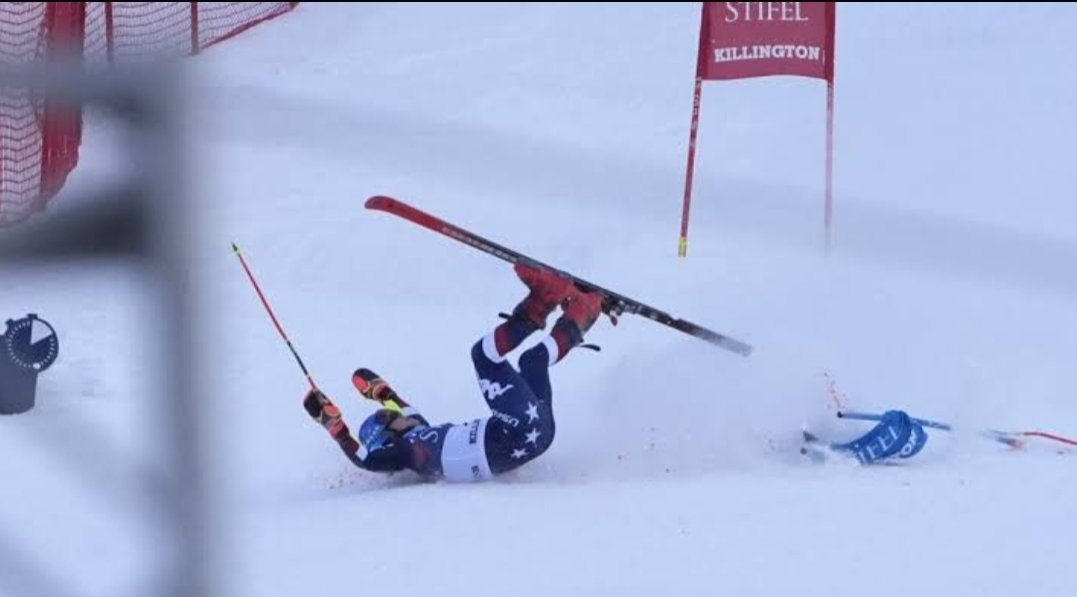
As the countdown to the Milan–Cortina Winter Olympics continues, Mikaela Shiffrin is once again preparing to represent Team USA on the sport’s biggest stage. Yet behind her return to form lies a deeply painful chapter that almost brought her legendary skiing career to an abrupt halt. The American star has now spoken candidly about the traumatic injuries she suffered in late 2024 and how close she came to walking away from competitive skiing altogether.
At 30 years old, Shiffrin is one of the most decorated alpine skiers in history. But even with multiple Olympic medals, World Cup titles, and record-breaking victories to her name, she admits there was a moment when she genuinely believed she might never race again. The physical damage from her crash was severe, but the emotional and mental impact proved just as challenging to overcome.
A horrifying fall in Vermont
The incident that nearly changed everything occurred in November 2024 at Killington, Vermont, during a World Cup giant slalom event. Shiffrin entered the race chasing a milestone victory that would have marked her 100th World Cup win — a historic achievement few athletes ever reach.
Instead, the day took a devastating turn.
Midway through the course, Shiffrin lost control at high speed. She was thrown off balance, flipped violently, and crashed hard into the safety barriers lining the slope. The force of the impact left spectators stunned and immediately drew medical personnel to the scene. Shiffrin remained down for several tense moments before being placed on a stretcher and taken away, waving bravely to the crowd as she exited the course.
What initially looked like another serious skiing accident soon revealed itself to be far worse.
A narrow escape from life-threatening injury
In the days following the crash, Shiffrin disclosed the full extent of her injuries — and how narrowly she avoided a potentially life-threatening outcome. Doctors discovered a five-centimeter puncture wound near her hip that had come within a single millimeter of piercing her colon.
The severity of the injury shocked even seasoned medical professionals. A fraction of an inch in the wrong direction could have led to internal organ damage, infection, or emergency surgery. For Shiffrin, the realization of how close she came to catastrophe was deeply unsettling.
Physically, the road to recovery would require surgery, stitches, and months of rehabilitation. Mentally, the damage ran even deeper.
Doubts that went beyond pain
Speaking openly in an interview with People, Shiffrin admitted that the crash forced her to confront questions she had never seriously entertained before.
“I don’t know that I have it in me to work all the way back from that place again,” she said, reflecting on the emotional toll of the injury.
Her doubts weren’t only about whether her body could heal. They were about whether she had the strength to start over once more — especially given what was at stake in her career.
Shiffrin explained that as she prepared to return, she found herself teetering on the edge of losing her giant slalom standings. That possibility weighed heavily on her.
“If I can’t get myself back to a high enough level to earn World Cup points,” she said, “that might be the end of my GS career.”
For an athlete who has dominated the discipline for years, the thought of quietly slipping out of contention was terrifying.
The hidden pressure of World Cup rankings
One of the lesser-known challenges Shiffrin highlighted was the role World Cup points play in an athlete’s career. These points don’t just determine rankings — they dictate starting positions, competitive advantages, and long-term viability on the circuit.
“When you’re injured and not racing, your points can be frozen,” Shiffrin explained. “But once you come back, they unfreeze. You’re racing again, but you have to rebuild everything.”
That meant she couldn’t afford a slow or tentative return. She had to perform at a high level immediately, despite lingering pain, fear, and limited preparation.
A year already filled with setbacks
What made the situation even more difficult was the fact that the Killington crash was not Shiffrin’s first major injury of 2024.
Earlier in January, she suffered another heavy fall during a downhill race that resulted in a sprained MCL and damage to the tibiofibular ligament in her left knee. That injury sidelined her for weeks and disrupted her training schedule.
Although she managed to return to competition two months later, her recovery timetable meant she could only focus on slalom events. Her giant slalom season was effectively over before it began.
By the time she returned to full competition, the physical and mental fatigue had already accumulated. The November crash was the breaking point.
“I wasn’t expecting another injury,” Shiffrin admitted. “And certainly not one that would put my GS ranking in real danger.”
She found herself hovering near the cutoff for the top 30 — a position that comes with significant disadvantages and limited opportunity.
Fear, frustration, and finding belief again
Beyond the rankings and recovery schedules, Shiffrin faced something far harder to quantify: fear. The memory of being “impaled,” as she described it in a candid social media post showing her bruised hip and puncture wound, lingered long after the physical pain subsided.
Confidence — something she had built over a lifetime — had to be rebuilt from scratch.
Now, with the Milan–Cortina Winter Olympics just weeks away, Shiffrin says she finally feels like herself again. The fear that once dominated her thoughts has slowly given way to belief.
Her comeback is no longer just about medals or records. It is about resilience, perspective, and proving to herself that she can overcome even the darkest moments.
As she prepares to take on the world once more, Shiffrin’s journey stands as a powerful reminder that even the greatest champions are human — and that sometimes, the hardest victories happen far from the podium.
-

 Blog1 month ago
Celtic issues a fiery VAR statement after Trusty’s red card appeal is dismissed, as furious chiefs release referee audio publicly.
-

 Blog2 months ago
Celtic informed their January signing under Martin O’Neill that he wouldn’t play a single minute this season.
-

 Blog1 month ago
Celtic issued an £83 million warning amid looming UEFA threats.
-

 Blog1 month ago
SFA Expected to Review Missed Penalty in Rangers v Celtic Clash
-

 Blog4 days ago
Police respond after reported disorder following Middlesbrough vs Millwall clash
-

 Blog10 months ago
“Courtside to Aisle-Side: Tyrese Haliburton and Jade Jones Set New Wedding Date”
-

 Blog1 month ago
£6m star is looking to leave Rangers this summer and has already announced his next club publicly.
-

 Blog2 weeks ago
Rangers victory overshadowed by refereeing controversy