
Blog
The Unlikely Key to Alpine Skiing’s Greatest Winner: Gummy Bears

Elite athletes are often known for their meticulous routines before competition. From carefully structured warm-ups to specific meals, playlists, or mental cues, these rituals are designed to create focus, comfort, and consistency under pressure. For Mikaela Shiffrin — the most successful alpine ski racer of all time — that routine includes something surprisingly simple: a handful of gummy bears.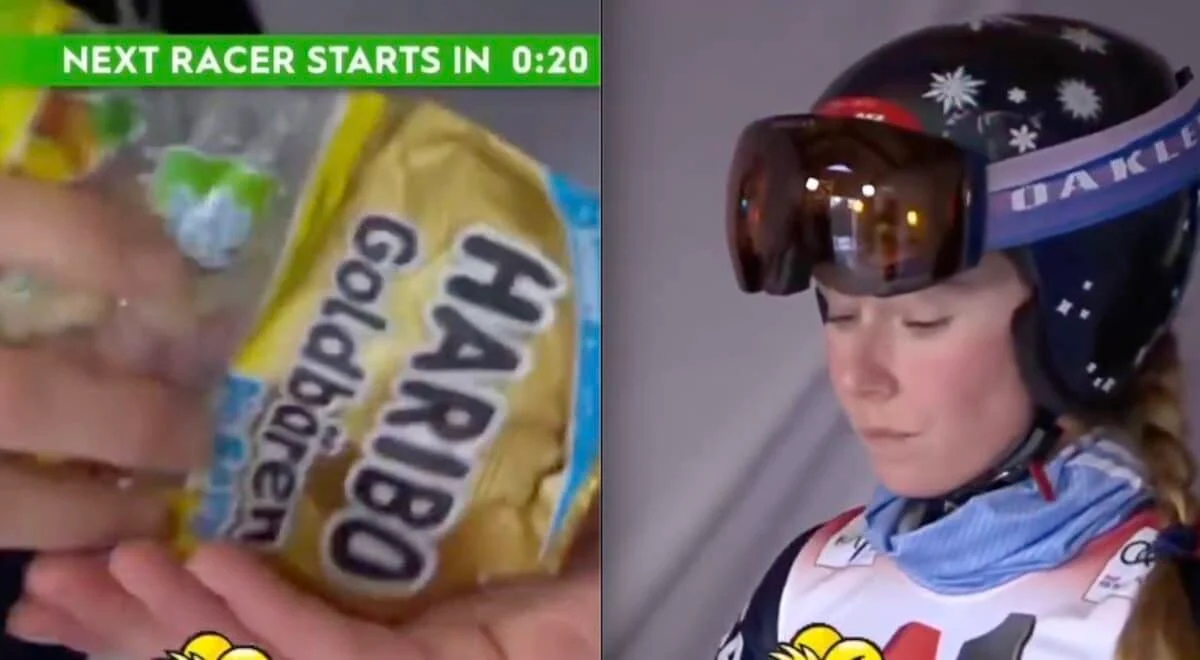
Shiffrin, who holds the record for the most World Cup victories in alpine skiing history, recently gave fans a glimpse into her pre-race ritual by sharing a short video on social media. In the clip, she calmly places a few Haribo gummy bears into her mouth, pauses for a deep breath, and chews thoughtfully just moments before pushing off down the course. The lighthearted moment quickly caught the attention of fans, adding a relatable and human touch to one of the sport’s most dominant figures.
While the ritual may look amusing on the surface, it actually makes practical sense. Gummy bears and similar sugary snacks are extremely popular among skiers and snowboarders, both recreational and professional. Their appeal lies in the quick burst of easily digestible carbohydrates, which can provide an immediate energy boost during physically demanding and mentally intense activities. In cold environments, where energy levels can drop quickly, fast-acting sugar can help maintain alertness and responsiveness.
Another reason gummy candies are so popular on the mountain is convenience. A small packet fits easily into a jacket pocket, doesn’t freeze as solid as some energy bars, and can be eaten quickly without interrupting training or competition. For athletes racing at the highest level, even small details that reduce friction or distraction can make a difference.
Shiffrin’s gummy bear moment surfaced following the Giant Slalom event at Semmering, Austria, on Saturday, December 27. On that day, she finished sixth overall — a respectable result by any standard, though slightly below her own incredibly high expectations. Conditions on the slope were challenging, adding another layer of difficulty to an already demanding course.
The real statement came the following day. Despite rough snow, visibility issues, and a significant time gap after her first run, Shiffrin delivered yet another masterclass performance in the slalom. She surged back to take the win, claiming her fifth slalom victory of the season and extending her streak to six consecutive slalom wins at Semmering. The comeback once again highlighted her trademark resilience, technical precision, and mental toughness.
Moments like these reinforce why Shiffrin stands apart in alpine skiing history. Her success is not solely built on physical talent, but also on preparation, adaptability, and an ability to stay calm under extreme pressure. Even something as small as a pre-race snack can play a role in anchoring that mindset.
The video also resonated with fans because it demystified the idea of greatness. Seeing a record-breaking athlete rely on the same candy many skiers toss into their pockets makes her achievements feel more approachable. It serves as a reminder that while elite performance requires years of training and sacrifice, athletes are still human — finding comfort and confidence in familiar routines.
In the end, Shiffrin’s gummy bear ritual is less about superstition and more about consistency. Whether it provides a psychological cue, a quick energy hit, or simply a moment of calm before chaos, it has become part of her process. And given her unparalleled success, it’s hard to argue with the results.
😅😅😅 pic.twitter.com/QNT6c4PUFc
— Mikaela Shiffrin ⛷️ (@MikaelaShiffrin) December 27, 2025
Sometimes, the secret to greatness isn’t a revolutionary training method or cutting-edge technology. Sometimes, it’s just a deep breath, a familiar habit, and a few gummy bears before charging down a mountain at full speed.
Mikaela Shiffrin grinds out another slalom win to extend streak
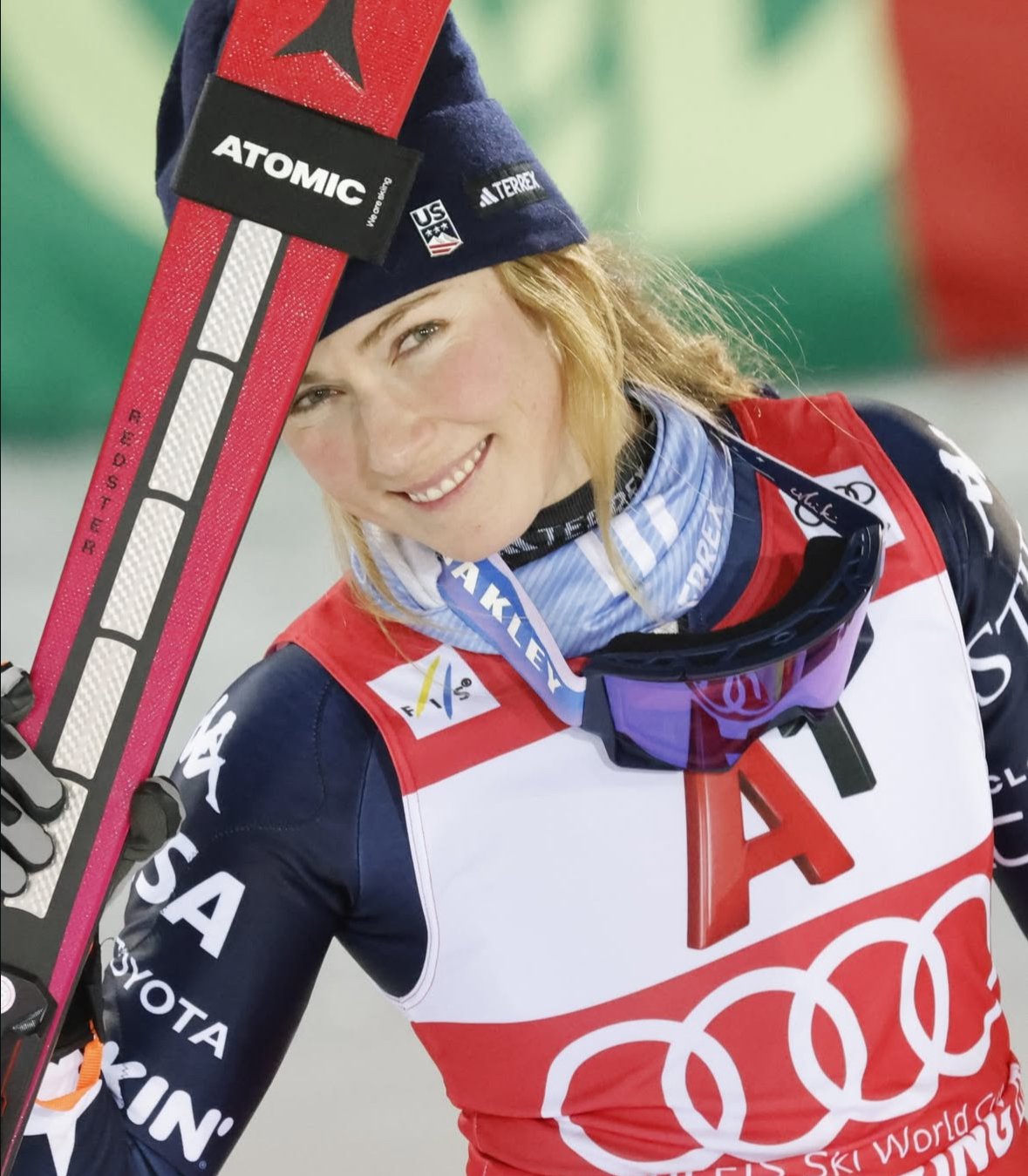
Mikaela Shiffrin claimed her 106th World Cup victory at Semmering but drew criticism for receiving an unfair advantage. | Image: FIS Alpine IG
Mikaela Shiffrin ensured her remarkable World Cup slalom winning run remained intact in Semmering, Austria, but the American superstar made it clear that satisfaction was not her overriding emotion after a race she felt was conducted in unsafe conditions.
Competing in the final women’s slalom of the calendar year on December 28, Shiffrin extended her dominance of the discipline this season by claiming another narrow victory, continuing a streak that now stretches back to the closing race of last winter. However, while the result kept her momentum alive as the sport edges closer to the 2026 Winter Olympics, the circumstances surrounding the race left her deeply frustrated.
After winning the first four World Cup slaloms of the season in commanding fashion, Shiffrin found herself on the back foot in the opening run under the floodlights at the Panorama course. Starting with bib number four, she ended the first run in fourth place, more than half a second behind world champion Camille Rast of Switzerland, as deteriorating snow conditions dramatically influenced the competition.
Despite clawing her way back in the second run with the fastest time of the night, Shiffrin was quick to draw attention to what she viewed as unacceptable and unsafe conditions earlier in the day. Speaking to Austrian television, the 29-year-old did not mince her words.
“I have to say it clearly: it wasn’t safe for the women,” Shiffrin said. “For me, starting with bib four, it’s not such a big issue. But for athletes starting with numbers like 13, 15, 18, or even in the 60s, this just isn’t okay.”
Unseasonably mild weather had caused significant challenges for race organizers. In an attempt to stabilize the slope, water and salt were injected into the snow surface ahead of the race. Despite those efforts, the course broke down badly during the afternoon session, which began shortly after 2 p.m. local time.
As the first run progressed, ruts and holes formed rapidly, making the slope increasingly difficult and dangerous. The situation improved slightly for the evening run, which took place more than three hours later when temperatures dropped, but the damage had already been done.
“It was a very challenging and distracting day,” Shiffrin explained. “As far as I understand, there were no serious injuries, and that’s a relief. But watching the surface break apart like that was frustrating. The second run was better, yes, but what happened earlier really wasn’t fair to a lot of these women.”
The severity of the conditions was reflected in the numbers. Out of 77 starters, only 40 managed to complete the first run. Remarkably, a time nearly six seconds behind the leader was still enough to qualify for the final run, underlining just how punishing the course had become.
Shiffrin believes the spectacle of night slalom racing should never come at the expense of athlete safety. “It should be exciting, it should be a good show,” she said. “But it also has to be something the athletes want to do. They shouldn’t be standing at the start terrified after seeing massive holes in the first two turns. There is a better way to organize races like this.”
While critical of the conditions, Shiffrin ultimately delivered where it mattered most. After struggling in the bottom section of the course during the first run—where she lost significant time to Rast—she produced a composed and aggressive second run that reminded everyone why she remains the benchmark in women’s slalom.
Her final-run performance was the fastest of the night, allowing her to overturn a deficit of more than half a second and edge past Rast by just nine hundredths of a second. Teenager Lara Colturi, the 19-year-old Italian-born skier racing for Albania, continued her impressive season by finishing third, 0.57 seconds behind Shiffrin.
Reflecting on her winning run at the finish, Shiffrin admitted she was surprised by the result. “It was a really hard day, really tough conditions, and a big mental battle,” she said. “There was a lot of pressure. I just tried to do my best possible run.”
She added: “Honestly, it didn’t feel that good. I didn’t expect to see the green light at the bottom. It was one of those days where you just have to reset, stay positive, and try to ski.”
The victory marked the 106th World Cup win of Shiffrin’s extraordinary career, further extending her all-time record. It also meant she matched her own best-ever start to a season, equaling the five consecutive wins she achieved during the 2018–19 campaign.
Shiffrin’s current run began with her victory in the final slalom of last season and continued through four dominant wins at the start of the current Olympic season, where she won by an average margin of 1.5 seconds. The Semmering triumph, though far tighter, ensured her momentum did not stall before the new year.
Analyzing her first run, Shiffrin acknowledged that she may have pushed too hard. She was marginally ahead of Rast midway down the course but lost time toward the bottom.
“It’s a tough one,” she said. “I think I maybe overskied a little—too round compared to what was possible.”
Already the most successful slalom skier in women’s World Cup history with 69 victories in the discipline, Shiffrin also strengthened her grip on the slalom standings. She now holds a 220-point advantage over Colturi, with each race win worth 100 points.
The calendar remains busy, with three more slaloms scheduled in January before the Milan-Cortina Winter Olympics, followed by two more races in March.
Elsewhere in the race, Croatia’s Zrinka Ljutic—last season’s winner in Semmering and the reigning slalom globe holder—finished a distant eighth, nearly four seconds behind Shiffrin.
Shiffrin’s U.S. teammate Paula Moltzan endured a difficult weekend. After placing seventh in the first run, she straddled a gate in the second and failed to finish. Her exit came just a day after a heavy crash in the giant slalom on the same slope, where she fell onto her back and head. That race was won by Austria’s Julia Scheib, who does not compete in slalom.
The women’s World Cup now moves on to Kranjska Gora in Slovenia, where a giant slalom and slalom are scheduled for next weekend, offering Shiffrin another opportunity to extend her extraordinary run—hopefully under conditions she and her fellow competitors can fully trust.
-

 Blog1 month ago
Celtic issues a fiery VAR statement after Trusty’s red card appeal is dismissed, as furious chiefs release referee audio publicly.
-

 Blog1 month ago
Celtic informed their January signing under Martin O’Neill that he wouldn’t play a single minute this season.
-

 Blog1 month ago
Celtic issued an £83 million warning amid looming UEFA threats.
-

 Blog4 weeks ago
SFA Expected to Review Missed Penalty in Rangers v Celtic Clash
-

 Blog10 months ago
“Courtside to Aisle-Side: Tyrese Haliburton and Jade Jones Set New Wedding Date”
-

 Blog1 month ago
£6m star is looking to leave Rangers this summer and has already announced his next club publicly.
-

 Blog7 days ago
Rangers victory overshadowed by refereeing controversy
-

 Blog1 month ago
Auston Trusty under intense Celtic red card investigation amid new Hibs ‘punch’ claims and Rangers’ appeal review.