
Blog
When “Janie” Found Her Voice: Steven Tyler’s Farewell Tour Turns Into Rock History

Some moments in music are rehearsed, polished, and repeated until they feel like second nature. Then there are the moments that no one plans, the ones that break through the noise, silence a stadium, and remind us why music holds power beyond fame, beyond sales, beyond spectacle. On Aerosmith’s farewell tour, Steven Tyler lived one of those moments—a night when “Janie’s Got a Gun,” a song he had sung countless times over three decades, transformed into something raw, unplanned, and unforgettable.
It began like any other show. The lights dimmed, the opening chords echoed through the arena, and the crowd roared with anticipation. Tyler, as always, had that mixture of swagger and soul, his scarf-draped microphone swinging like an extension of his body. He had sung “Janie’s Got a Gun” at stadiums worldwide, his raspy wail carrying the pain and urgency of the story it told. But on this night, just as he was about to launch into the second verse, something in the crowd stopped him cold.
A teenager pressed against the barricade held up a homemade sign, its words scrawled in shaky black marker: “My mom was the real Janie.”
For a second, Tyler froze. The band kept playing, uncertain, their eyes flicking toward him. The arena, thousands of fans screaming moments before, fell into a strange hush as if they too sensed the weight of what had just happened. Tyler lowered the mic, his voice trailing into silence. Then, in a voice far quieter than the stage usually allows, he said:
“I think I remember her.”
Gasps rippled through the crowd. Some thought it might be a scripted moment, a bit of showmanship. But the look on Tyler’s face told another story. He stepped down from the stage, security parting the way, and walked straight toward the girl. She was trembling, tears brimming in her eyes, clutching the sign like it was a lifeline. Tyler wrapped his arms around her in a long, unguarded embrace. The cameras overhead caught it, but even without screens, the intimacy of the gesture filled the stadium.
What happened next would etch itself into rock history. Tyler took her hand, led her gently onto the stage, and placed her beside him at the microphone. She was still shaking, the enormity of the moment written across her face. Tyler turned to the band, nodded once, and the music surged back. Together—an aging rock legend and a grieving daughter—they sang.
It wasn’t pitch-perfect. Her voice cracked, his trembled. But none of that mattered. The song, once a chart-topping single, became something entirely different. It was no longer a performance. It was confession, catharsis, and connection. For the girl, it was a chance to give voice to her mother’s story; for Tyler, it was a reminder that the characters he sang about weren’t always fictional. “Janie” wasn’t just an anthem of survival and vengeance—it was someone’s mother, someone’s daughter, someone’s truth.
Fans later described the scene as one of the most hauntingly beautiful moments they’d ever witnessed at a concert. Videos taken on shaky phones show people crying in the audience, strangers holding each other, even hardened rock fans blinking away tears. One longtime fan posted afterward: “I’ve been to 47 Aerosmith shows. Tonight wasn’t a show. It was church.”
“Janie’s Got a Gun” has always carried a heavy weight. Released in 1989, it wasn’t Aerosmith’s usual swaggering party anthem. It told a dark, painful story about abuse, survival, and revenge, making it one of the band’s most socially charged songs. Tyler himself has spoken about how writing it was a grueling process, admitting that he pulled the narrative from stories he heard, pieced together from headlines, whispers, and experiences too close for comfort. But until that night on the farewell tour, the song was still a step removed—fiction given melody. When the girl lifted her sign, fiction collapsed into fact.
In interviews after the concert, some crew members admitted they had never seen Tyler break character on stage like that. “Steven is a showman,” said one sound engineer. “He can make you believe every word, every night. But this wasn’t about performance. The man was reliving something right there, and we all felt it.”
Industry voices chimed in too. A Rolling Stone columnist called it “the rare kind of rock and roll moment that reminds you why we still gather in arenas for music in the first place.” Others compared it to Johnny Cash singing “Hurt” or Freddie Mercury at Live Aid—moments where the line between the artist and the audience dissolves, leaving only truth.
For the girl, whose name was later shared only as Emily to protect her privacy, the night was both overwhelming and healing. In a quiet interview posted later on a fan page, she revealed: “My mom told me once that Steven Tyler knew her when she was young. She never told me the whole story, but I always felt that ‘Janie’s Got a Gun’ was about her. When she passed, I just wanted him to know. I never thought he’d stop singing. I never thought he’d hug me. I never thought he’d bring me on stage.”
Her words struck a chord with fans who had always speculated about the song’s origins. Whether her mother was truly “the real Janie” or one of many Janies whose stories inspired Tyler, the moment resonated because it spoke to the reality behind the music. Every song comes from somewhere. Every lyric is tied to lives lived and lost. And sometimes, the people who lived those stories show up, holding signs in crowded arenas, asking to be heard.
As the concert wound down, Tyler closed with his usual mix of classics, but the night never shook the weight of that shared performance. Fans leaving the arena spoke not about the pyrotechnics or the encores but about that hug, that silence, that song sung between two voices trembling with memory.
Aerosmith’s farewell tour promised nostalgia, one last chance to relive the anthems that shaped generations. But what happened that night gave fans something more lasting than nostalgia. It gave them a glimpse into the heart of rock itself—not just entertainment but expression, not just songs but stories, not just performance but presence.
Years from now, when people talk about Aerosmith’s final chapter, they’ll remember the big hits and the roaring crowds. But they’ll also remember the night Steven Tyler stopped mid-verse, walked off the stage, and turned “Janie’s Got a Gun” into a living elegy. They’ll remember the girl with the sign, the mother whose story lingered in the shadows, and the way grief and healing met under the spotlights.
Some concerts give you songs. That night gave history.
-

 Blog1 month ago
Celtic issues a fiery VAR statement after Trusty’s red card appeal is dismissed, as furious chiefs release referee audio publicly.
-

 Blog2 months ago
Celtic informed their January signing under Martin O’Neill that he wouldn’t play a single minute this season.
-
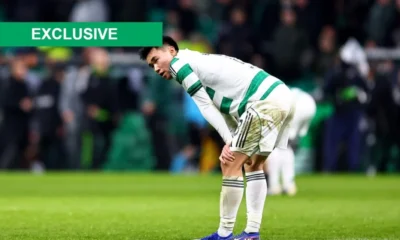
 Blog1 month ago
Celtic issued an £83 million warning amid looming UEFA threats.
-

 Blog1 month ago
SFA Expected to Review Missed Penalty in Rangers v Celtic Clash
-

 Blog5 days ago
Police respond after reported disorder following Middlesbrough vs Millwall clash
-

 Blog10 months ago
“Courtside to Aisle-Side: Tyrese Haliburton and Jade Jones Set New Wedding Date”
-

 Blog2 months ago
£6m star is looking to leave Rangers this summer and has already announced his next club publicly.
-

 Blog2 weeks ago
Rangers victory overshadowed by refereeing controversy