
Blog
Why winning is not what motivates Mikaela Shiffrin as the 2026 Winter Olympics near

As the countdown to the 2026 Winter Olympics continues, Mikaela Shiffrin has offered a revealing insight into what truly motivates her at this stage of her remarkable career. Despite standing atop the world of alpine skiing, the American superstar insists that victories and podium finishes are not what drive her forward.
Shiffrin, now 30, is set to compete in the slalom and giant slalom events in Kranjska Gora on January 3 and 4, 2026. The races come at a pivotal point in the season as she builds toward the Winter Olympics in Cortina next month. Entering the weekend, she leads both the slalom and overall World Cup standings, reinforcing her status as the dominant force in the sport.
Yet, even with medals and records within reach, Shiffrin has made it clear that her focus lies elsewhere. Rather than chasing wins, she is consumed by the pursuit of what she considers the ideal ski run — a performance that perfectly matches the image she holds in her mind of her best possible skiing.
Shiffrin rose to global prominence at a young age and has spent more than a decade redefining what excellence looks like in alpine skiing. Her legacy was cemented when she surpassed Ingemar Stenmark’s long-standing record of 86 World Cup victories, a milestone once thought untouchable. Remarkably, she has continued to push the boundaries since then.
Last season tested her resilience as much as her skill. An abdominal puncture sidelined her for 11 races, threatening to disrupt her momentum. Instead, Shiffrin returned stronger, surpassing the unprecedented 100-win mark and reasserting her dominance. As the 2025/26 season unfolds, she shows no signs of slowing down.
Ahead of her attempt to secure a sixth consecutive slalom victory in Kranjska Gora, Shiffrin featured in a U.S. Ski & Snowboard Team campaign that documents her ongoing journey through the season. In the video, she speaks candidly about her mindset and explains that success, in the traditional sense, is not her primary motivation.
“I want to improve,” Shiffrin said. “There’s an image I have of my best skiing, and I want to get better than that.” She added that the daily grind of repetition and routine is an unavoidable part of the process. “It’s all very repetitive and monotonous, and that’s the name of the game.”
For Shiffrin, the goal is not simply to cross the finish line first but to produce a run that feels complete — one where intention and execution align perfectly. She described the satisfaction that comes from syncing her physical movements with her internal sense of timing and balance.
“I’m just trying to connect my feeling with what I’m actually doing as close as I can,” she explained. “When those two things match completely, that’s the best I’ve ever skied. And that’s the most incredible feeling to have.”
This relentless pursuit of perfection has fueled a career unlike any other. With 106 World Cup wins to her name, Shiffrin sits alone at the top of the all-time list — a record that may stand for generations. Yet even with history firmly on her side, she continues to approach each race as an opportunity to refine her craft rather than add to her medal haul.
Her most recent slalom victory in Semmering, Austria, highlighted that mindset. Coming into the race, Shiffrin had been unbeaten in slalom throughout the season. While she struggled to assert control during the first run, she delivered a remarkable second run to secure another historic win.
Despite the result, the experience was far from enjoyable for the American. Shiffrin voiced serious concerns about the slope conditions, which she felt compromised both performance and safety. She explained that the surface had become unstable after officials injected salt and water in an effort to harden the snow.
According to Shiffrin, the altered conditions affected numerous athletes and introduced unnecessary risk. She called on skiers, coaches, the International Ski and Snowboard Federation, and national governing bodies to work collaboratively to address safety concerns and improve decision-making around course preparation.
As the Olympic spotlight grows brighter, Shiffrin’s comments offer a rare glimpse into the mindset of an athlete who has already achieved everything the sport can offer — and still wants more. Not more wins, but better skiing. For Shiffrin, that pursuit remains the ultimate challenge, and it is what continues to push her forward as she approaches another defining moment in her career.
Speed skating trials and Shiffrin’s streak headline Olympic sports weekend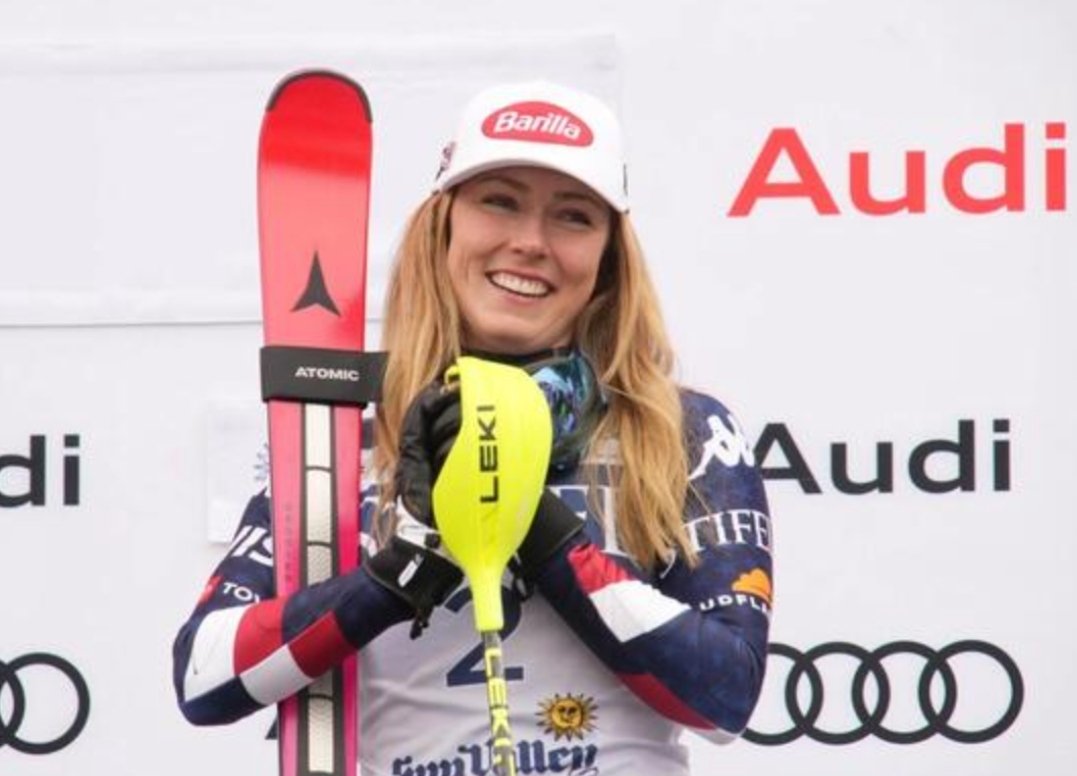
The upcoming weekend promises plenty of excitement across a wide range of Olympic sports, with major qualifying events, World Cup races, and record chases taking place around the world.
In the United States, attention turns to Milwaukee, where the U.S. speed skating trials for the Milan Cortina Winter Olympics get underway on Friday and run through Monday. The competition, held at the Pettit National Ice Center, will be broadcast live on NBC Sports and Peacock. These trials play a crucial role in determining the final U.S. Olympic speed skating team, even though some of the biggest names have already secured their places through strong international performances.
Among the headline acts is Jordan Stolz, currently the world’s top-ranked male skater in the 500m, 1000m, and 1500m. Competing at his home rink, Stolz arrives as one of the favorites in multiple events. Erin Jackson, the reigning Olympic champion in the women’s 500m from the Beijing Games, is another major draw. While both Stolz and Jackson have already effectively locked in Olympic selection based on their results on the World Cup circuit, the trials will finalize the team. Two-time Olympic medalist Brittany Bowe is among the experienced athletes aiming to confirm her place and continue her Olympic journey.
Across the Atlantic, the women’s Alpine skiing World Cup heads to Kranjska Gora, Slovenia, for a technical weekend featuring giant slalom on Saturday and slalom on Sunday. All eyes will be on Mikaela Shiffrin, who continues to build one of the most remarkable careers in the sport’s history. Shiffrin has claimed victory in the last six World Cup slalom races stretching back to last season and now has the opportunity to equal the longest slalom winning streak of her career.
In addition to her slalom dominance, Shiffrin is seeking further improvement in giant slalom, where consistency has been harder to come by this season. Her best result so far is a fourth-place finish, and she will be aiming to turn strong skiing into a podium appearance as the World Cup calendar progresses.
Meanwhile, cross-country skiing fans will be following the Tour de Ski, one of the sport’s most prestigious multi-stage events. With four of the six stages already completed, the Tour now moves to its final weekend at Val di Fiemme in Italy, a venue that will also host events at the 2026 Olympics. Jessie Diggins enters the weekend with a commanding overall lead.
Diggins stands alone as the only North American athlete, male or female, to have won the Tour de Ski, achieving the feat in both the 2020–21 and 2023–24 seasons. An Olympic medalist who has earned gold, silver, and bronze across her career, Diggins has announced that this will be her final competitive season before retirement. She also tops the overall World Cup standings nearly halfway through the campaign, underlining her exceptional form.
In freestyle skiing, Olympic qualification continues in ski halfpipe, with a World Cup event in Calgary marking the third of four U.S. qualifying competitions. The American Olympic team will consist of up to four men and four women. Two-time Olympic medalist Alex Ferreira is currently the only U.S. athlete to have already secured his place. Veteran Nick Goepper, a three-time Olympic medalist in slopestyle, is among eight Americans who qualified for Saturday’s 14-man final. Any U.S. skier who wins in Calgary will automatically clinch an Olympic spot.
Sliding sports also return to the spotlight this weekend. The bobsled World Cup resumes in Winterberg, Germany, with races scheduled for Saturday and Sunday. The United States boasts impressive depth on the women’s side, with three drivers ranked inside the world’s top seven. Three-time Olympic champion Kaillie Humphries recently claimed her first World Cup victory since giving birth to her son Aulden in June 2024. She is joined by reigning monobob world champion Kaysha Love and five-time Olympic medalist Elana Meyers Taylor, all of whom are well positioned to qualify for Milan Cortina. Germany remains a dominant force, with Laura Nolte and Lisa Buckwitz currently the top two drivers in the standings.
Finally, the luge World Cup travels to Sigulda, Latvia, for races on Saturday and Sunday. American athletes Summer Britcher and Ashley Farquharson enjoyed recent success with podium finishes at the last two World Cups in Park City and Lake Placid. Replicating that success in Europe will be a tougher task, as German and Austrian sliders traditionally thrive on their home tracks. With just two World Cups remaining before Olympic selections are finalized, every run will carry added significance.
Would Mikaela Shiffrin and Aleksander Aamodt Kilde Be Getting Married Soon?
Few couples in world sport capture attention quite like Mikaela Shiffrin and Aleksander Aamodt Kilde. Between them, they represent alpine skiing at its very highest level: Olympic champions, World Cup globe winners, and two of the most recognisable figures on the circuit. When elite performance, shared passion, and genuine chemistry intersect, public curiosity is inevitable. That curiosity has only grown in recent months, with fans increasingly asking one question: could wedding bells be coming soon for Shiffrin and Kilde?
The short answer is that nothing has been officially confirmed regarding a wedding date. However, the context surrounding their relationship offers plenty of reason why speculation continues to swirl.
A relationship built on shared understanding
Shiffrin and Kilde went public with their relationship in 2021, though it was clear from the outset that this was not a typical celebrity pairing. Both athletes understood the demands of elite ski racing in a way few others could. Endless travel, early mornings, physical risk, media pressure, and the mental toll of competing at the highest level are realities they both live with every day.
That shared understanding has often been cited as one of the strengths of their relationship. Rather than competing for attention or struggling with conflicting schedules, they have frequently supported each other at races, celebrated victories together, and offered visible encouragement during difficult periods.
Their openness has also resonated with fans. While private about many details, they have not shied away from sharing moments of joy, humour, and vulnerability on social media. These glimpses into their lives have helped turn them into one of skiing’s most beloved couples.
Engagement confirmed, patience prioritised
One key reason marriage speculation exists at all is that Shiffrin and Kilde are already engaged. They confirmed their engagement publicly, a milestone that naturally shifted conversations from “if” to “when.” However, both athletes have been clear that their careers remain the priority for now.
Elite alpine skiing does not lend itself easily to major life events. The World Cup calendar is relentless, stretching across continents and leaving little room for extended breaks. Add Olympic cycles, injury rehabilitation, sponsor commitments, and personal recovery time, and it becomes clear why planning a wedding is not straightforward.
Shiffrin, in particular, has been open about the importance of balance. After navigating personal loss, injury setbacks, and immense competitive pressure in recent seasons, she has spoken about moving at her own pace — both professionally and personally. A wedding, while undoubtedly meaningful, is something she and Kilde appear determined not to rush.
Kilde’s injury recovery factor
Another major factor influencing timelines is Aleksander Aamodt Kilde’s recovery from serious injury. The Norwegian speed specialist has endured a challenging period away from racing, focusing on rehabilitation and long-term health rather than competition results.
Injury recovery at this level is not just physical; it is emotional and psychological. Both Shiffrin and Kilde have spoken about how important patience and perspective have been during this time. It would not be surprising if major life plans, including a wedding, are being shaped around ensuring Kilde’s full recovery and return to confidence — whether that return comes on snow or leads to broader life decisions beyond racing.
Careers still very much in motion
Despite their achievements, neither athlete appears close to stepping away from the sport. Shiffrin continues to redefine what is possible in alpine skiing, adding to her record-breaking World Cup win total and remaining fiercely competitive across disciplines. Her motivation remains strong, and her focus on racing is undiminished.
Kilde, meanwhile, has made clear his determination to return to competition if his body allows. His ambitions, like Shiffrin’s, are not yet complete. With both athletes still deeply invested in their careers, it is understandable that they may choose to delay a large personal event until there is more space to enjoy it fully.
That does not mean marriage is not imminent — only that it will likely happen on their terms, rather than according to external expectations.
Public appearances and subtle hints
Fueling speculation are the small moments fans love to analyse: appearances together at events, affectionate posts, supportive comments, and light-hearted interviews. While neither Shiffrin nor Kilde has hinted directly at a wedding timeline, their comfort as an engaged couple is evident.
They often speak about each other with warmth and respect, and there is a noticeable emphasis on partnership rather than performance. In interviews, Shiffrin has described Kilde as a grounding presence, while Kilde has spoken about admiration for Shiffrin not just as an athlete, but as a person navigating extraordinary pressure.
These comments suggest a relationship built for longevity — even if the exact date of a wedding remains undecided.
The challenge of public expectation
Being one of the most high-profile couples in winter sport comes with an unavoidable downside: constant scrutiny. Every appearance, post, or comment is analysed for hidden meaning. Shiffrin and Kilde have generally handled this gracefully, but they have also been careful not to overshare.
In that sense, the absence of concrete wedding news may be intentional. By keeping details private, they retain control over a moment that is deeply personal. For two individuals who spend much of their lives in the public eye, that privacy may be especially valuable.
So, are wedding bells ringing?
At present, there is no confirmed indication that Mikaela Shiffrin and Aleksander Aamodt Kilde will be getting married in the immediate future. What is clear is that they are engaged, committed, and approaching the next stage of their lives thoughtfully.
Rather than rushing into timelines dictated by fans or media curiosity, they appear focused on health, happiness, and professional fulfillment. When the time is right — whether that is during an off-season, after an Olympic cycle, or following major career transitions — a wedding will likely follow naturally.
Until then, Shiffrin and Kilde continue to represent something rare in elite sport: a partnership built on mutual respect, shared ambition, and patience. Whether marriage comes soon or later, their relationship already stands as one of alpine skiing’s most compelling stories — both on and off the slopes.
‘This Is Not OK’: Shiffrin Wins Again but Tears Into Slalom Course
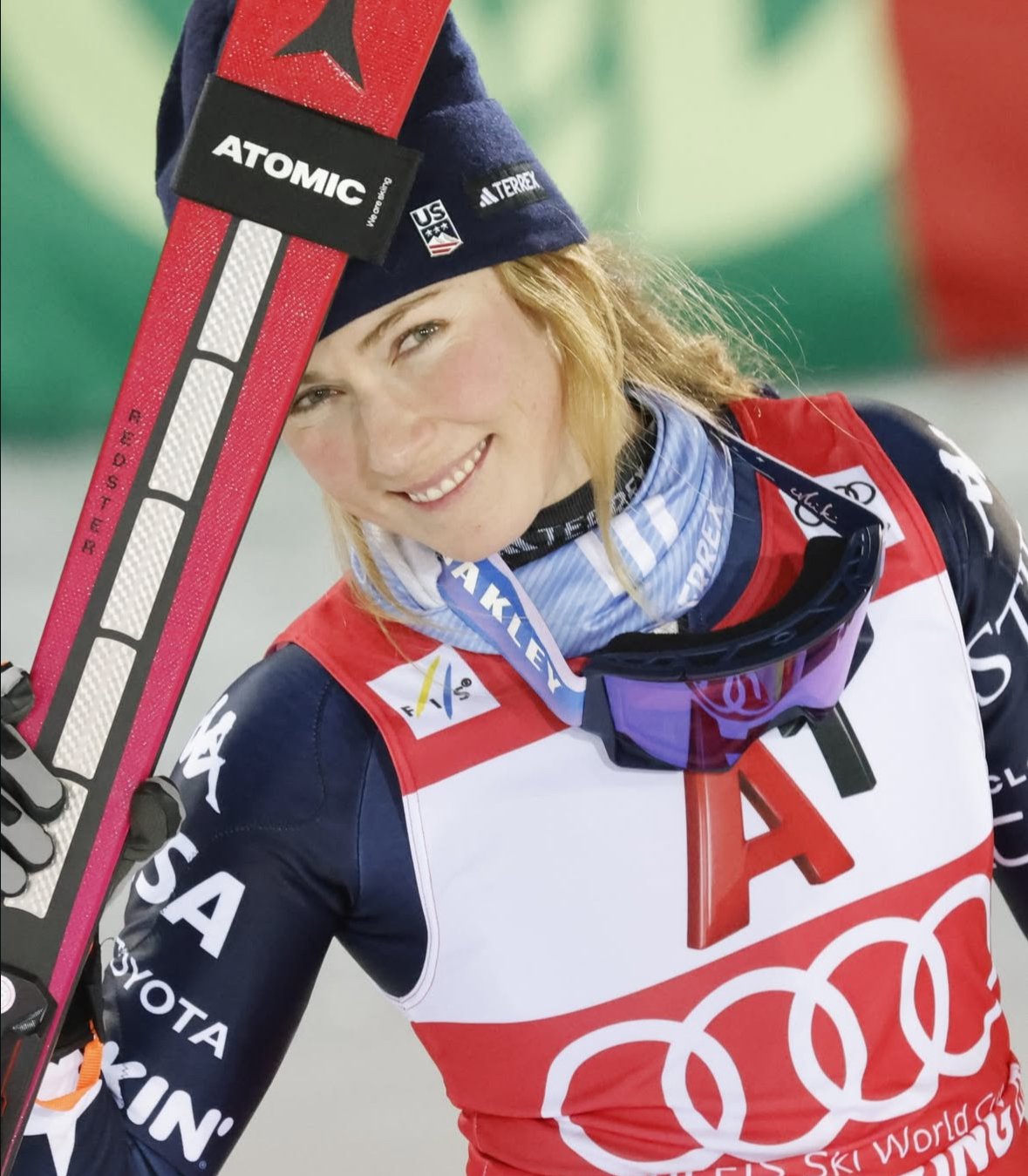
Mikaela Shiffrin claimed her 106th World Cup victory at Semmering but drew criticism for receiving an unfair advantage. | Image: FIS Alpine IG
Mikaela Shiffrin extended her remarkable run in women’s slalom racing on Sunday night, claiming a sixth consecutive World Cup victory in the discipline at Semmering. Yet while the American once again stood on the top step of the podium, her dominant performance was accompanied by strong criticism of what she described as unsafe and unfair course conditions that, in her view, put many competitors at unnecessary risk.
Shiffrin delivered another trademark comeback to secure the win, overturning a modest first run to post the fastest time under the lights. Her combined time was just 0.09 seconds quicker than Switzerland’s Camille Rast, the reigning world champion, who pushed the American all the way to the finish line. Teenage sensation Lara Colturi, the Italian-born Albanian skier who has rapidly emerged as a genuine title contender, finished third, 0.57 seconds adrift.
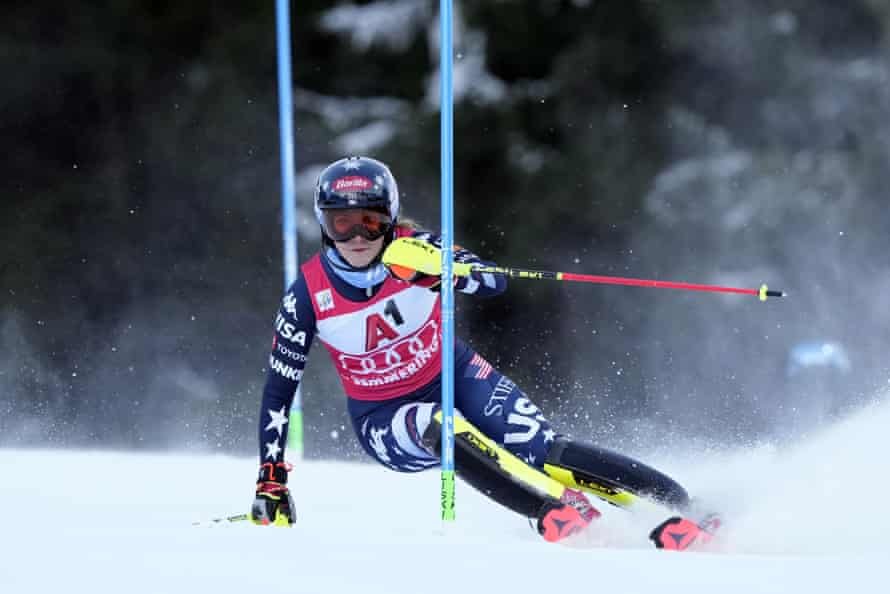
Mikaela Shiffrin was fastest in the second run to edge Swiss skier Camille Rast by 0.09sec. Photograph: Millo Moravski/Agence Zoom/Getty Images
Despite celebrating her 106th career World Cup victory, Shiffrin made it clear afterward that she was deeply unhappy with how the race had unfolded. Speaking to Austrian television, she did not hold back in her assessment of the conditions on the Panorama course. While acknowledging that her early starting position on the first run spared her the worst of the deteriorating surface, she stressed that many of her fellow competitors were not so fortunate.
“For me, starting with a low bib, it wasn’t a huge problem,” Shiffrin explained. “But for the women who had to start later, with bib numbers in the teens, twenties, or even higher, it simply wasn’t OK. The snow was breaking apart badly, and that’s not something athletes should have to deal with at this level.”
Warm temperatures throughout the day forced race organizers to inject water and salt into the snow in an attempt to stabilize the surface. However, those measures proved insufficient. As the afternoon session progressed, large sections of the course began to crumble, particularly in the lower half, making it increasingly difficult—and potentially dangerous—for the later starters to ski aggressively.
The scale of the problem was reflected in the statistics. Only 40 of the 77 athletes who started the opening run managed to make it to the finish. A time deficit of nearly six seconds was still enough to qualify for the second run, underlining just how extreme the conditions had become. Such a high attrition rate is highly unusual in World Cup slalom racing and immediately raised concerns across the field.
Conditions did improve slightly for the night session, which took place several hours later as temperatures dropped. Still, the damage had already been done. Shiffrin described the entire day as mentally draining and emotionally frustrating, not only for herself but for the wider group of competitors.
“It was a very challenging and distracting day,” she said. “I’m thankful that there were no serious injuries, but when you see how the surface was breaking apart, especially in the first run, it’s hard not to be upset. The second run was better, but the overall situation shouldn’t have happened in the first place.”
On the sporting side, Shiffrin’s victory once again demonstrated her resilience and technical mastery. She started the race fourth and was more than half a second off the lead after the first run, having lost significant time in the lower section of the course. Later, she admitted that she had made mistakes by pushing too hard and skiing too round in places where a more direct line was possible.
“It’s a tough slope,” she said. “I probably overskied a bit in the first run. I was trying too hard to make something happen instead of letting the course come to me.”
Under pressure in the second run, however, Shiffrin corrected those errors. She attacked with greater precision, controlled her line more effectively, and stopped the clock with a time that ultimately proved unbeatable. Even then, she admitted she was surprised by the result.
“It didn’t feel good out there,” she said. “It felt like a fight all the way down. I honestly didn’t expect to see the green light when I crossed the line.”
The win marked her fifth straight victory at the start of the season and continued a stretch of dominance that dates back to the end of last winter. Shiffrin closed the previous campaign with a slalom victory and then opened the current Olympic season by winning the first four races, doing so by an average margin of around 1.5 seconds. Sunday’s narrow success was far less comfortable, but no less significant.
With the result, Shiffrin further extended her lead in the slalom standings. She now holds a 220-point advantage over Colturi, with five races still to come—three scheduled for January and two in March—before the Milan–Cortina Winter Olympics. Given that a single World Cup win is worth 100 points, the American has put herself in a commanding position as the season progresses.
Elsewhere, Croatia’s Zrinka Ljutic, last season’s winner at Semmering and the reigning slalom globe holder, finished eighth, more than three and a half seconds behind Shiffrin. It was a solid but unspectacular result for the Croatian, who has struggled to match her best form so far this winter.
For the United States team, the race brought mixed fortunes. Paula Moltzan, who had been seventh after the first run, failed to finish the second after straddling a gate. Her exit came just a day after she suffered a heavy crash in the giant slalom on the same hill, adding to concerns about the demanding conditions at the venue.
Attention now turns to Slovenia, where the women’s World Cup circuit moves next for a giant slalom and slalom in Kranjska Gora. The hope among athletes and coaches alike is that the focus will return to performance rather than course safety.
Beyond the racing itself, Shiffrin’s comments reignited a broader debate about how competitions are staged in increasingly unpredictable weather conditions. As winters grow warmer and snow management becomes more complex, athletes are increasingly vocal about the need for organizers and governing bodies to prioritize safety and fairness over rigid scheduling.
Shiffrin’s frustration was not rooted in self-interest, but in concern for the integrity of the sport and the wellbeing of her competitors. Her message was clear: World Cup racing should challenge the best skiers in the world, but it should never do so at the expense of safety.
-

 Blog4 weeks ago
Celtic issues a fiery VAR statement after Trusty’s red card appeal is dismissed, as furious chiefs release referee audio publicly.
-

 Blog1 month ago
Celtic informed their January signing under Martin O’Neill that he wouldn’t play a single minute this season.
-

 Blog4 weeks ago
Celtic issued an £83 million warning amid looming UEFA threats.
-

 Blog3 weeks ago
SFA Expected to Review Missed Penalty in Rangers v Celtic Clash
-

 Blog10 months ago
“Courtside to Aisle-Side: Tyrese Haliburton and Jade Jones Set New Wedding Date”
-

 Blog1 month ago
£6m star is looking to leave Rangers this summer and has already announced his next club publicly.
-

 Blog3 days ago
Rangers victory overshadowed by refereeing controversy
-

 Blog1 month ago
Auston Trusty under intense Celtic red card investigation amid new Hibs ‘punch’ claims and Rangers’ appeal review.