
Blog
I was alongside Martin O’Neill when he heard the Rangers legend’s remarks – and his reaction said it all

Martin O’Neill’s reaction to comments from a Rangers legend offered a fascinating insight into how deeply his influence is still felt on both sides of the Old Firm divide.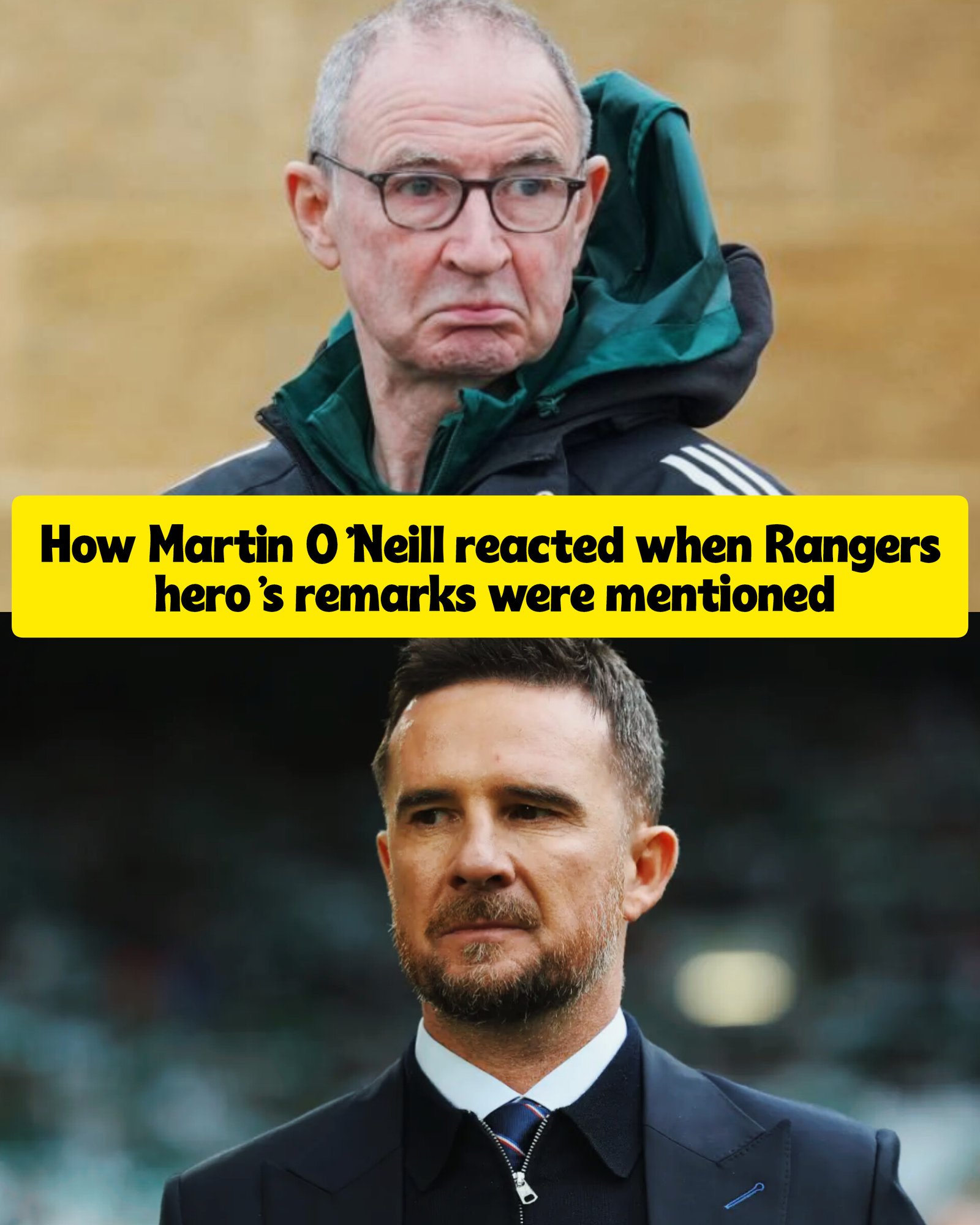
The former Celtic manager was left quietly amused after hearing remarks from ex-Rangers captain Barry Ferguson, who admitted that O’Neill’s return to Parkhead had reignited concerns about Celtic’s growing momentum. Ferguson had previously spoken of his relief when O’Neill ended his first interim stint, but that feeling has since turned into unease as Celtic forced their way back into the title conversation.
The moment those comments landed was revealed by Go Radio presenter Mark Guidi, who happened to be in O’Neill’s company at the time. Guidi explained that he was travelling with the 73-year-old on Monday as they made their way to a small engagement O’Neill had promised to attend. During the drive, Go Radio was playing in the car when Ferguson’s assessment of O’Neill’s return came over the airwaves.
Rather than dismissing the remarks, O’Neill listened intently. According to Guidi, the veteran manager took clear pleasure in hearing that his presence was once again causing discomfort across the city. There was a sense of quiet satisfaction as Ferguson openly acknowledged that while he had been delighted to see O’Neill step aside previously, he was now worried that the experienced manager was back in the Celtic dugout.
Guidi also revealed there was a layer of mutual respect underpinning the exchange. O’Neill, despite his fierce rivalry with Rangers during his most successful Celtic years, has long admired Ferguson as a footballer. In fact, Guidi recalled that O’Neill once wanted to sign Ferguson during his time as Aston Villa manager, underlining the regard he held for the former Ibrox midfielder.
That context made Ferguson’s comments even more enjoyable for O’Neill. Hearing praise and concern rolled into one from a Rangers icon served as validation that his influence remains significant, even years after his original dominance in Scottish football.
The episode highlights how O’Neill’s return has shifted perceptions around the title race. Celtic’s improvement has not gone unnoticed by rivals, and Ferguson’s remarks reflect a broader belief that O’Neill’s experience and authority can still make a decisive difference.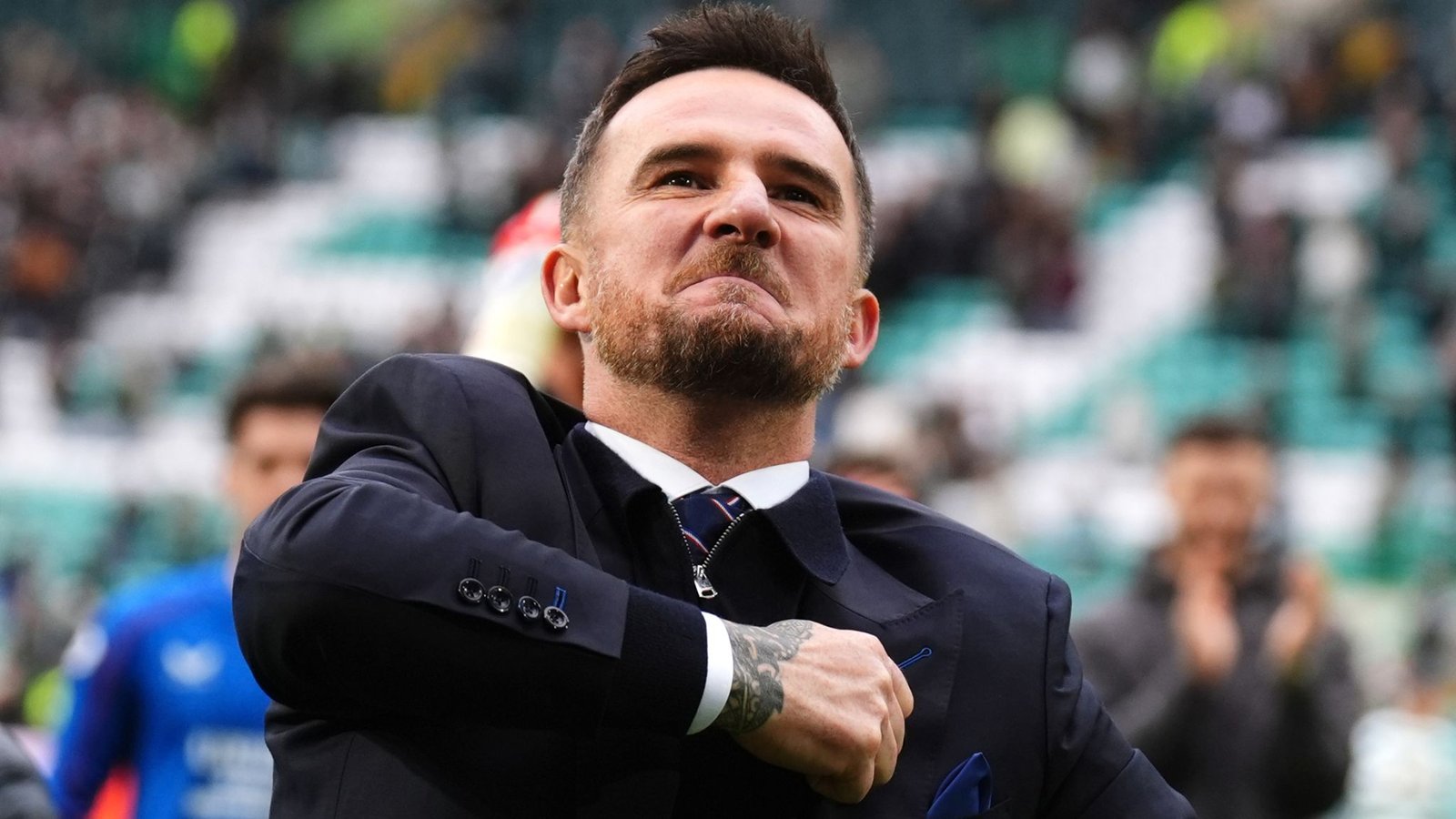
For O’Neill, the reaction was reportedly taken in good spirits, accompanied by a knowing smile rather than any public response. It was a reminder that sometimes the strongest statement a manager can make is simply being back in the job—especially when even former rivals admit they are worried by it.
Sam Allardyce reflects on Nancy departure after ‘schoolteacher’ comment and O’Neill comeback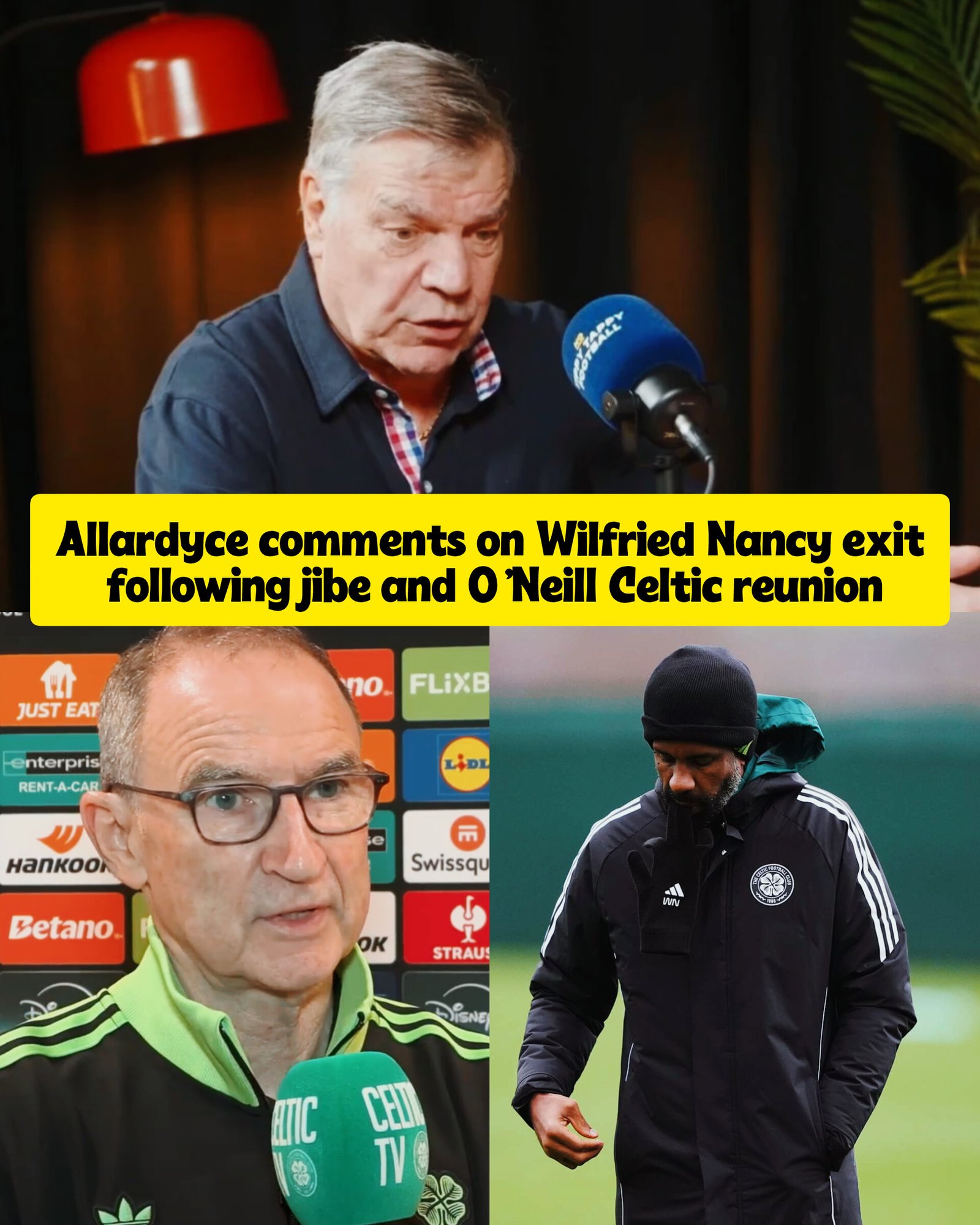
Sam Allardyce has reflected on Wilfried Nancy’s brief and troubled spell at Celtic, as well as Martin O’Neill’s return to the dugout, after being one of the earliest critics of the Frenchman’s appointment.
Allardyce did not hold back when Nancy was installed as Celtic manager in December, voicing his doubts almost immediately. Those concerns only grew after Celtic were beaten by Hearts in Nancy’s first match in charge. Decisions taken around that time, including the club’s choice not to retain Martin O’Neill and Nancy’s use of a tactics board on the touchline, appeared to particularly irritate the former England boss.
As Nancy’s reign unravelled over just 33 days, Allardyce memorably labelled him a “schoolteacher”, a remark that gained traction as results and performances deteriorated. On Monday, that turbulent chapter came to an end, with Nancy dismissed and O’Neill returning to lead the team once again. With the dust settling, Allardyce has now revisited the situation during his latest podcast appearance.
Speaking on The No Tippy Tappy Podcast, Allardyce offered his perspective on O’Neill’s return and the circumstances surrounding his original departure. He suggested that O’Neill appeared less than satisfied when discussing Celtic during a recent appearance on talkSPORT, implying there may still be lingering disappointment over how matters were handled by the club.
According to Allardyce, reading between the lines of O’Neill’s comments suggested frustration that he was not asked to remain in charge until the end of the season. Allardyce highlighted that O’Neill had overseen a strong run of results, winning seven of eight matches, which made the decision to move on from him all the more questionable.
Allardyce also touched on the complexity of the decision-making process at boardroom level. He described the task facing Celtic’s directors as difficult, particularly when attempting to identify the “right” profile for a modern manager. In his view, clubs often get caught up in buzzwords and trends, prioritising labels such as innovative or forward-thinking, rather than focusing on what the team actually needs.
Podcast host Natalie Pike noted that O’Neill’s return was something they had predicted, pointing out the irony of the situation. She also suggested that, with O’Neill back at the helm, Celtic may now be inclined to give him significant influence over decisions moving forward.
Allardyce responded warmly, wishing O’Neill well and describing him simply as “class”. His tone reflected both respect for O’Neill’s achievements and approval of Celtic’s decision to bring him back during a period of instability.
The discussion then turned to the aftermath of Nancy’s departure and the sense of relief among Celtic supporters. Many fans believe O’Neill’s presence will help steady the ship and restore a sense of direction after weeks of uncertainty. There is hope that his return can quickly translate into improved results and a more settled atmosphere around the club.
Former striker Dean Saunders joined Allardyce in praising O’Neill, contrasting him with the archetype of the modern coach. Saunders described O’Neill as intelligent, experienced, and proven, arguing that Celtic could not have anticipated just how badly Nancy’s appointment would unravel.
Allardyce echoed those sentiments, expanding on the value of experience in football management. He acknowledged that there are moments when clubs must be willing to give new managers opportunities to prove themselves. However, he stressed that there are also situations where experience is invaluable and cannot be replaced.
Reflecting on his own younger days, Allardyce admitted that he might once have been less appreciative of experience, recalling how ambition and confidence often dominate when managers are first trying to establish themselves. With time, he suggested, comes a deeper understanding of what is truly required to succeed.
Natalie Pike added that, in her view, Nancy’s biggest mistake may have been failing to keep O’Neill involved during the transition period. She suggested that retaining him even briefly could have provided continuity and support during the early days of Nancy’s tenure.

Martin O’Neill – Credit: Sky Sports
Allardyce strongly agreed, describing O’Neill as the antithesis of what many perceive a modern coach to be. He emphasised that O’Neill is not defined by fashionable coaching trends, but by his ability to manage people, organise teams, and make quick, intelligent decisions.
In Allardyce’s assessment, O’Neill’s strength lies in his sharp football brain and his understanding of dressing-room dynamics. Rather than focusing on elaborate tactical theories, he prioritises clarity, structure, and relationships—qualities Allardyce believes are often underestimated in the modern game.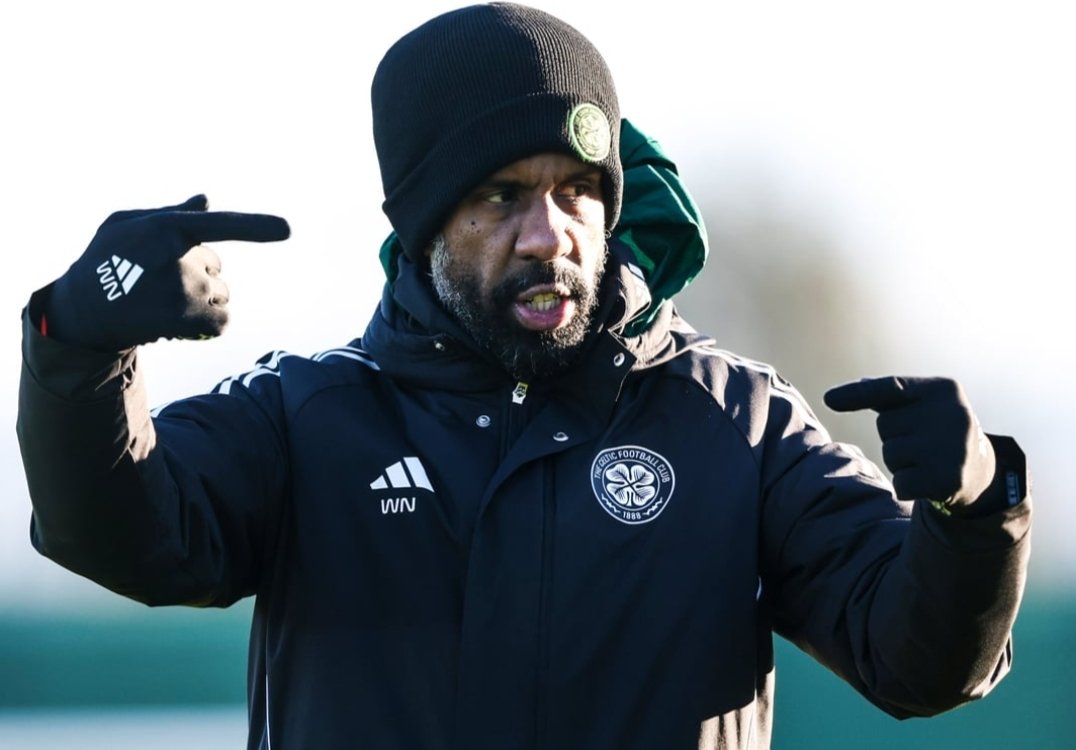
Taken together, the comments from Allardyce and Saunders paint a clear picture of why O’Neill’s return has been so warmly received. After a short-lived experiment that failed to deliver, Celtic have turned back to a familiar figure whose experience and leadership are seen as the safest route back to stability.
For Allardyce, the situation serves as a reminder that while innovation has its place, football remains a results-driven business. At certain moments, particularly in times of crisis, experience and proven ability can outweigh any tactical trend or managerial buzzword.
Why Celtic Cannot Simply Go All-In During the January Transfer Window
At the Celtic AGM held at Parkhead in November, emotions were already running high before Ross Desmond had even begun to speak. As boos and heckles echoed around the Kerrydale Suite, the son of major shareholder Dermot Desmond attempted to offer an explanation for why the Scottish champions operate the way they do in the transfer market. His words, however, were largely drowned out by frustration from shareholders who felt the club’s ambition no longer matched its financial power.
Earlier in the meeting, chairman Peter Lawwell had been forced to leave proceedings altogether as disorder escalated. By the time Ross Desmond addressed the room, the atmosphere was already hostile. Nevertheless, he tried to articulate why modern football economics make squad building far more complicated than many supporters appreciate.
Desmond stressed that Celtic’s board prioritises long-term financial stability over short-term risk. According to him, accusations that the club is hoarding money or prioritising profit over success stem from a misunderstanding of how elite football now operates. He argued that the landscape of European football has changed dramatically since Celtic’s last sustained run at the top level in the early 2000s, creating financial gaps that continue to widen.
While acknowledging that clubs should still aim to outperform their financial standing, Desmond warned that reckless spending could endanger the club’s foundations. If a gamble fails, he said, the consequences could be severe and long-lasting.
Those words landed badly with many supporters. The disappointment of a poor summer transfer window was still fresh, as was the humiliation of losing a Champions League play-off to Kairat, a result that denied Celtic a lucrative place in Europe’s elite competition. Fans struggled to reconcile caution with the club’s recent financial disclosures, which showed cash reserves of more than £77 million.


New Celtic loan signing Julian Araujo of Bournemouth challenges Anthony Ralston for the ball during training at Lennoxtown (Image: Stuart Wallace / Shutterstock)
Many questioned why a club that had narrowly lost to Bayern Munich in European competition the previous season could enter such a decisive tie so underprepared. The absence of natural replacements for Kyogo Furuhashi and Nicolas Kuhn, coupled with the financial windfall Celtic had accumulated, made restraint difficult to accept.
Yet beneath the anger, a broader question remained: was Ross Desmond making a point that simply went unheard? Has modern football reached a stage where clubs like Celtic face greater challenges than ever before when trying to strengthen? And could aggressive spending now create serious problems later?
The Regulatory Reality Celtic Must Navigate
To understand the situation more clearly, it helps to consider the views of Dr Dan Plumley, a senior lecturer in sport business management at Sheffield Hallam University and a specialist in football finance. Plumley has studied how clubs outside Europe’s elite navigate structural disadvantages through smart recruitment and innovative planning. However, he also understands why Celtic must tread carefully.
UEFA’s introduction of the squad cost ratio has fundamentally reshaped spending limits across European football. Under these rules, a club’s total squad costs — including player wages, managerial salaries, transfer amortisation, and agent fees — cannot exceed 70 percent of turnover.
Plumley explains that every financial commitment in the transfer market counts toward that limit. While Celtic are not currently close to breaching the threshold, they cannot afford to push spending too aggressively. Any violation would bring sanctions, fines, and reputational damage, especially once European qualification is secured.
Several high-profile clubs across Europe have already felt the consequences of these rules, with the likes of Aston Villa, Chelsea, Lyon, and Barcelona all receiving substantial penalties. Celtic, Plumley says, are acutely aware of that risk.
This reality places the club in a difficult position. Supporters demand investment, particularly when results falter, but the regulatory environment restricts how freely money can be spent. In that context, the idea that Celtic can simply “attack the transfer market hard” becomes unrealistic.

Sebastian Tounekti during a Celtic training session at Lennoxtown (Image: Andrew Milligan)
Cash Reserves Are Not a Blank Cheque
One of the most common arguments from supporters centres on Celtic’s cash balance. However, Plumley cautions against viewing that figure as disposable income.
Celtic’s turnover stands at approximately £143 million. Their most recent accounts show total wages of £75 million, with player wages alone estimated to exceed £50 million. When these numbers are assessed against UEFA’s limits, the room for manoeuvre is far smaller than it might appear.
The £77 million held in reserve serves multiple purposes beyond transfers. It supports operational costs, buffers against financial shocks, and fluctuates throughout the financial year. It is not, as Plumley puts it, a pot of money waiting to be emptied on new signings.
Celtic Have Spent — And Spent Big
Contrary to the perception that Celtic refuse to invest, the club has committed significant sums in recent seasons. Ahead of the 2022/23 campaign, they paid substantial fees for Alexandro Bernabei, Cameron Carter-Vickers, and Jota. The following year, under Brendan Rodgers, close to £20 million was spent on multiple additions, including Odin Thiago Holm and Maik Nawrocki.
Last season marked an unprecedented outlay. Celtic spent around £40 million, bringing in players such as Adam Idah, Arne Engels, Auston Trusty, and Jota once again. Those investments were made with the security of guaranteed Champions League participation, thanks to Scotland’s coefficient at the time.

Jota celebrates scoring a goal for Celtic at Parkhead earlier this year (Image: Andrew Milligan)
That safety net no longer exists. With qualification now dependent on navigating play-offs, the board has been reluctant to commit heavily before European revenue is secured. Previous failures in qualifiers have left lasting scars, reinforcing a cautious approach.
Profit, Perception, and Frustration
During the summer, Celtic spent £13 million on new players but generated more through sales, including the departures of Kuhn and Idah. From a financial perspective, the club turned a healthy trading profit.
That did little to appease supporters, particularly after Celtic earned nearly £40 million from Champions League participation in the 2024/25 season. Critics argued that money sitting idle serves little purpose if the team is not strong enough to achieve its objectives.
Plumley, however, understands the hesitation. He points out that while Celtic will always be capable of entering the transfer market, it does not mean they can compete freely for elite talent. Qualification for the Champions League remains the single biggest factor that can change their financial outlook, but even that comes with risk.
Spending heavily before qualification could push squad costs beyond sustainable levels if European income fails to materialise. Conversely, holding back may weaken the team’s chances of qualifying at all. It is a delicate balancing act with no easy solution.
A Changing European Landscape
Beyond regulations, football itself has evolved. Commercialisation, global branding, overseas tours, and multi-club ownership models have reshaped recruitment and competition. Many elite clubs now benefit from interconnected networks that funnel talent efficiently across leagues.
Broadcast deals also entrench inequality. The Premier League’s television rights are locked in until 2029, while Champions League agreements extend well into the future. The same clubs are likely to dominate European competitions for years to come.

Major Celtic shareholder Dermot Desmond (Image: Shutterstock)
Even when Celtic qualify for the Champions League, they enter at a disadvantage. Simply spending more does not close the gap.
Lessons From Elsewhere
Some clubs have found alternative paths to success. Norwegian side Bodo/Glimt, despite operating with a turnover of just €30 million, have reached the latter stages of multiple European competitions in recent years.
Plumley believes such examples demonstrate the value of identity-driven recruitment models. Clubs must ask fundamental questions about who they are, where they source players from, and how they create value.
Selling more than you buy can positively impact squad cost calculations, while focusing on younger players with resale potential offers sustainability. These approaches are challenging but viable.
He also points to Hearts as a domestic example. With a turnover significantly lower than Celtic’s, Hearts’ innovative ownership structure and data-led recruitment show how clubs can punch above their weight.
Conclusion
Celtic’s financial strength is undeniable, but so too are the constraints they operate under. Regulatory limits, uncertain European qualification, and a transformed football economy mean reckless spending is no longer an option.
While supporters crave ambition and immediate success, the club’s hierarchy faces decisions with consequences that stretch years into the future. Attacking the transfer market without restraint may satisfy short-term demands, but it risks undermining the stability that has sustained Celtic for decades.
In modern football, prudence is not always popular — but it may be necessary.
Celtic backed to land the best striker in Scotland
Celtic have been urged to move decisively in the January transfer window, with growing pressure on the club to secure a reliable source of goals as key fixtures loom. Ongoing uncertainty surrounding Kyogo Furuhashi’s situation has prompted the Hoops to widen their search, ensuring they are not left exposed if a swift resolution cannot be reached.

Soccer Football – Championship – Leicester City v Birmingham City – King Power Stadium, Leicester, Britain – August 29, 2025 Birmingham City’s Kyogo Furuhashi reacts Action Images/Andrew Boyers EDITORIAL USE ONLY. NO USE WITH UNAUTHORIZED AUDIO, VIDEO, DATA, FIXTURE LISTS, CLUB/LEAGUE LOGOS OR ‘LIVE’ SERVICES. ONLINE IN-MATCH USE LIMITED TO 120 IMAGES, NO VIDEO EMULATION. NO USE IN BETTING, GAMES OR SINGLE CLUB/LEAGUE/PLAYER PUBLICATIONS. PLEASE CONTACT YOUR ACCOUNT REPRESENTATIVE FOR FURTHER DETAILS..

Soccer Football – Premier League – West Ham United v Fulham – London Stadium, London, Britain – December 27, 2025 West Ham United’s Callum Wilson looks dejected after the match Action Images via Reuters/Andrew Boyers EDITORIAL USE ONLY. NO USE WITH UNAUTHORIZED AUDIO, VIDEO, DATA, FIXTURE LISTS, CLUB/LEAGUE LOGOS OR ‘LIVE’ SERVICES. ONLINE IN-MATCH USE LIMITED TO 120 IMAGES, NO VIDEO EMULATION. NO USE IN BETTING, GAMES OR SINGLE CLUB/LEAGUE/PLAYER PUBLICATIONS. PLEASE CONTACT YOUR ACCOUNT REPRESENTATIVE FOR FURTHER DETAILS..

Soccer Football – Champions League – Group E – Celtic v Feyenoord – Celtic Park, Glasgow, Scotland, Britain – December 13, 2023 Feyenoord’s Justin Bijlow makes a save from Celtic’s Kyogo Furuhashi REUTERS/Russell Cheyne

Soccer Football – Premier League – AFC Bournemouth v West Ham United – Vitality Stadium, Bournemouth, Britain – November 22, 2025 West Ham United’s Callum Wilson celebrates scoring their second goal with Jean-Clair Todibo Action Images via Reuters/John Sibley EDITORIAL USE ONLY. NO USE WITH UNAUTHORIZED AUDIO, VIDEO, DATA, FIXTURE LISTS, CLUB/LEAGUE LOGOS OR ‘LIVE’ SERVICES. ONLINE IN-MATCH USE LIMITED TO 120 IMAGES, NO VIDEO EMULATION. NO USE IN BETTING, GAMES OR SINGLE CLUB/LEAGUE/PLAYER PUBLICATIONS. PLEASE CONTACT YOUR ACCOUNT REPRESENTATIVE FOR FURTHER DETAILS..

Soccer Football – Scottish League Cup Final – Hibernian v Celtic – Hampden Park, Glasgow, Scotland, Britain – December 19, 2021 Celtic’s Kyogo Furuhashi celebrates with the trophy after winning the league cup final REUTERS/Russell Cheyne

Soccer Football – Premier League – AFC Bournemouth v West Ham United – Vitality Stadium, Bournemouth, Britain – November 22, 2025 West Ham United’s Callum Wilson reacts Action Images via Reuters/John Sibley EDITORIAL USE ONLY. NO USE WITH UNAUTHORIZED AUDIO, VIDEO, DATA, FIXTURE LISTS, CLUB/LEAGUE LOGOS OR ‘LIVE’ SERVICES. ONLINE IN-MATCH USE LIMITED TO 120 IMAGES, NO VIDEO EMULATION. NO USE IN BETTING, GAMES OR SINGLE CLUB/LEAGUE/PLAYER PUBLICATIONS. PLEASE CONTACT YOUR ACCOUNT REPRESENTATIVE FOR FURTHER DETAILS..

Soccer Football – Scottish Premiership – Celtic v Rangers – Celtic Park, Glasgow, Scotland, Britain – September 1, 2024 Celtic’s Kyogo Furuhashi celebrates scoring their second goal with Alistair Johnston and Nicolas Gerrit Kuhn REUTERS/Russell Cheyne

Soccer Football – Premier League – West Ham United v Brighton & Hove Albion – London Stadium, London, Britain – December 30, 2025 West Ham United’s Callum Wilson in action with Brighton & Hove Albion’s Jan Paul van Hecke REUTERS/Tony O Brien EDITORIAL USE ONLY. NO USE WITH UNAUTHORIZED AUDIO, VIDEO, DATA, FIXTURE LISTS, CLUB/LEAGUE LOGOS OR ‘LIVE’ SERVICES. ONLINE IN-MATCH USE LIMITED TO 120 IMAGES, NO VIDEO EMULATION. NO USE IN BETTING, GAMES OR SINGLE CLUB/LEAGUE/PLAYER PUBLICATIONS. PLEASE CONTACT YOUR ACCOUNT REPRESENTATIVE FOR FURTHER DETAILS..

Soccer Football – Scottish Premiership – Rangers v Celtic – Ibrox, Glasgow, Scotland, Britain – January 2, 2025 Celtic’s Kyogo Furuhashi arrives at the stadium before the match REUTERS/Russell Cheyne

Soccer Football – Premier League – West Ham United v Brighton & Hove Albion – London Stadium, London, Britain – December 30, 2025 West Ham United’s Callum Wilson reacts REUTERS/Tony O Brien EDITORIAL USE ONLY. NO USE WITH UNAUTHORIZED AUDIO, VIDEO, DATA, FIXTURE LISTS, CLUB/LEAGUE LOGOS OR ‘LIVE’ SERVICES. ONLINE IN-MATCH USE LIMITED TO 120 IMAGES, NO VIDEO EMULATION. NO USE IN BETTING, GAMES OR SINGLE CLUB/LEAGUE/PLAYER PUBLICATIONS. PLEASE CONTACT YOUR ACCOUNT REPRESENTATIVE FOR FURTHER DETAILS..
With time working against them, Celtic are increasingly conscious of the risks of delay. Martin O’Neill, back in charge and tasked with steadying the ship, is keen to add firepower as quickly as possible. The congested fixture list and the intensity of the title race mean there is little margin for error, and the club is determined to avoid entering decisive matches without sufficient attacking options.
Against this backdrop, attention has turned to alternative short-term solutions that could offer immediate impact without committing the club to long-term financial or sporting risk. One name now firmly in the conversation is Callum Wilson, who is currently available as a free agent following his departure from West Ham United.
Wilson’s availability has caught the attention of several observers, but it is former Celtic defender Alan Stubbs who has most strongly advocated for the move. Stubbs believes the experienced striker would be an ideal fit for O’Neill’s immediate requirements, citing his proven goalscoring ability, physicality, and understanding of the demands placed on a leading forward.
Speaking to RecordSport, Stubbs made it clear just how highly he rates Wilson. He insisted there is no doubt about the striker’s quality and claimed that, if performing at his best, Wilson would stand out as the top striker in Scottish football. For Stubbs, the question is not about ability, but about timing and opportunity.
He also pointed out that Wilson’s recent contract situation at West Ham reduces the risk involved. Having been on a pay-per-play deal that has now ended, Wilson is available without a transfer fee, making a short-term agreement far more appealing. Stubbs argued that offering the striker a six-month contract until the end of the season would not constitute a gamble, but rather a calculated and sensible move.
From Stubbs’ perspective, Wilson fits the type of player O’Neill has historically been able to get the best out of. He suggested that the Celtic manager will already have a clear idea of the profiles he wants in each position and the responsibilities he expects them to shoulder. Wilson, with his experience and self-belief in front of goal, aligns closely with those expectations.
Stubbs also questioned whether now is the right moment for Celtic to strictly adhere to their usual recruitment model. While the club has enjoyed success by signing younger players with resale value, he believes the current situation demands a different approach. With the season finely balanced, Stubbs feels Celtic need players who have been tested at the highest level and can handle pressure without needing time to adapt.
In his view, this is not the moment to take chances on potential. Instead, Celtic should prioritise certainty, reliability, and leadership, especially in attacking areas where matches can be decided by a single moment of quality. Wilson’s career, built on scoring goals in demanding environments, makes him a compelling option in that regard.
Celtic’s broader recruitment strategy has long been admired for its sustainability, but circumstances have shifted. With confidence fragile and the margin for error shrinking, the balance between long-term planning and short-term necessity has tilted. Experience, once seen as a luxury, is now being viewed as an essential ingredient.
O’Neill’s own track record supports this line of thinking. His most successful Celtic sides often relied on seasoned forwards who understood responsibility, thrived under scrutiny, and could deliver when stakes were highest. He has rarely shied away from placing trust in players with the mental strength to lead the line and carry expectation.
The discussion around Wilson also highlights the contrast between him and Kyogo Furuhashi. Kyogo offers familiarity, movement, and an emotional connection with supporters, while Wilson represents a more pragmatic solution shaped by availability and timing. One embodies continuity, the other certainty.
As the transfer window progresses, Celtic may ultimately decide that addressing their attacking issues requires more than one solution. Bringing in different types of forwards to meet different tactical needs remains a possibility. What is beyond doubt, however, is that patience is wearing thin.
With crucial months ahead and little room for missteps, the focus inside the club is firmly fixed on results. Whether through Wilson, Kyogo, or another option entirely, Celtic know they must act quickly and decisively if they are to maintain momentum and meet expectations during a pivotal phase of the season.
-
 Blog8 months ago
Celtic issues a fiery VAR statement after Trusty’s red card appeal is dismissed, as furious chiefs release referee audio publicly.
-

 Blog4 weeks ago
Former official calls on SFA to contact Rangers over fan scenes during Celtic match, labeling them “completely unacceptable.”
-

 Blog8 months ago
Celtic informed their January signing under Martin O’Neill that he wouldn’t play a single minute this season.
-

 Blog8 months ago
Celtic issued an £83 million warning amid looming UEFA threats.
-

 Blog7 months ago
SFA Expected to Review Missed Penalty in Rangers v Celtic Clash
-

 Blog6 months ago
Police respond after reported disorder following Middlesbrough vs Millwall clash
-

 Blog2 weeks ago
Middlesbrough receive a warning following Steve Gibson’s submission of a £1.5bn proposal.
-

 Blog1 year ago
“Courtside to Aisle-Side: Tyrese Haliburton and Jade Jones Set New Wedding Date”