
Blog
Yet another podium finish as second place is secured in Kranjska Gora

Another race, another trip to the podium. At this point in her remarkable career, consistency at the very top of alpine skiing has become almost routine for Mikaela Shiffrin, yet it never loses its significance. Her second-place finish in Kranjska Gora once again underlined not only her enduring excellence, but also her resilience, adaptability, and relentless competitive drive during a demanding World Cup season.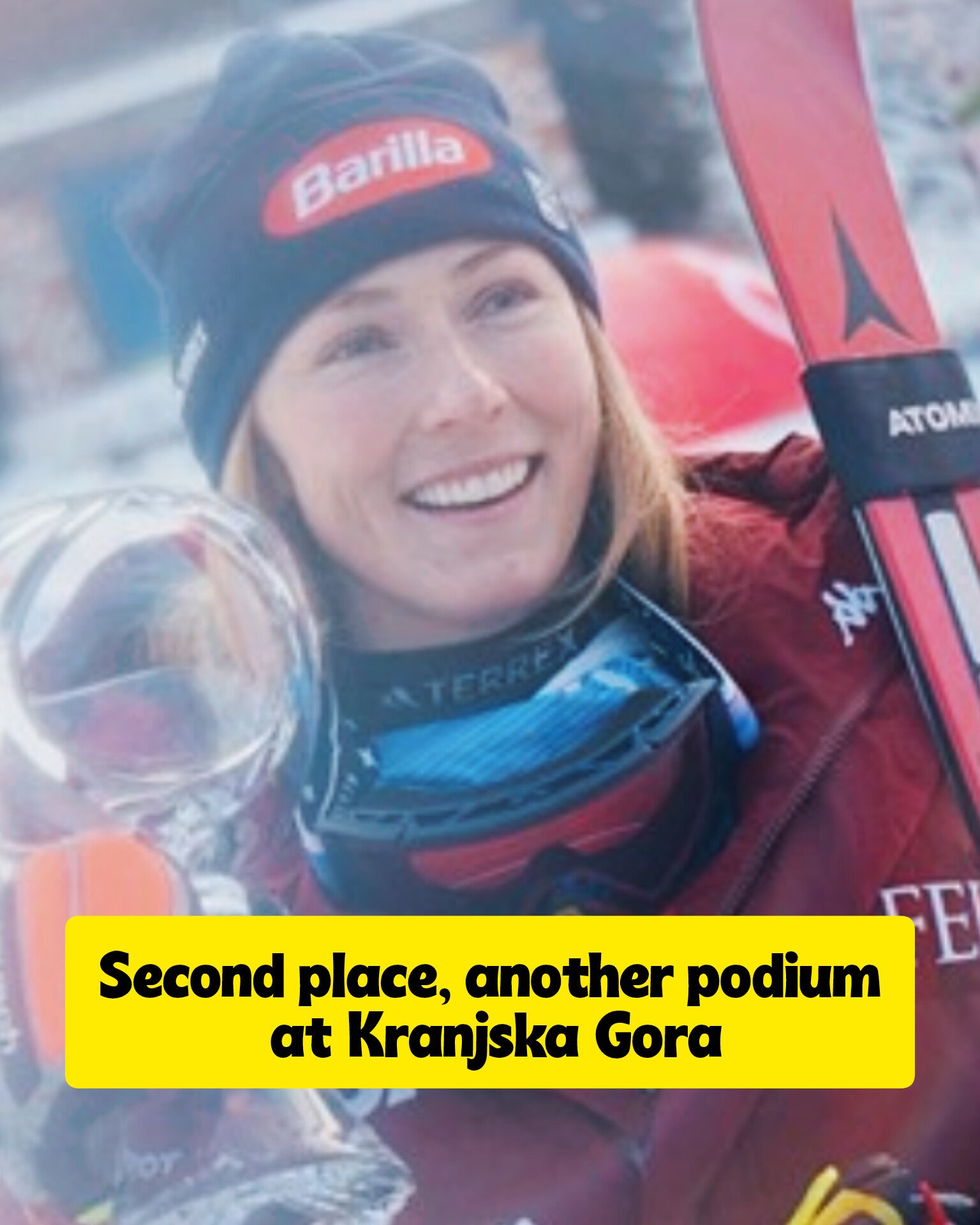
Kranjska Gora has long been a familiar hunting ground for the American star, a venue where she has collected wins, podiums, and valuable experience across multiple disciplines. This latest result, however, carried a slightly different tone. Rather than a dominant victory, it was a measured, hard-earned second place that spoke volumes about where Shiffrin currently stands—balancing recovery, refinement, and ambition as she continues to chase greatness in the latter stages of her career.
From the opening run, Shiffrin showed her intent. She attacked the course with precision, carving clean lines through the technical sections while maintaining composure on a slope that punished even the smallest mistakes. The margins were tight, as they so often are at the elite level, and while she narrowly missed out on the fastest time, her performance positioned her firmly in contention heading into the decisive run.
The second run brought added pressure. Changing snow conditions, mounting expectations, and the knowledge that rivals were pushing hard created a tense atmosphere. Yet Shiffrin thrives in these moments. Her skiing was controlled rather than reckless, calculated rather than desperate. She gave herself the best possible chance to win, and although one competitor ultimately edged her out, the American’s second-place finish felt like a victory of its own.
What makes this podium particularly meaningful is the broader context of Shiffrin’s season. After enduring physical setbacks, emotional challenges, and the natural wear that comes with years at the top of the sport, every strong result now represents more than just points on a leaderboard. It reflects perseverance, self-belief, and an unwavering commitment to improvement.
Shiffrin herself has often spoken about redefining success as her career has progressed. While wins remain the goal, podium finishes—especially those achieved through grit and growth—carry their own satisfaction. Kranjska Gora was a prime example of that philosophy in action. She did not ski perfectly, but she skied intelligently, adjusting her approach where necessary and trusting her instincts when it mattered most.
Her ability to adapt has long separated her from her peers. Over the years, Shiffrin has evolved from a slalom specialist into one of the most complete skiers the sport has ever seen. Even now, she continues to refine her technique, analyze her performances, and search for marginal gains. That mindset was evident throughout the weekend, as she embraced the challenge rather than fixating solely on the final result.
The significance of “another day, another podium” also extends beyond Shiffrin herself. Her presence elevates the competition, pushing rivals to raise their level while providing fans with a standard of excellence that defines modern alpine skiing. Each time she steps into the start gate, she brings with her the weight of history and the excitement of possibility.
Kranjska Gora, with its demanding terrain and passionate crowd, proved once again why it is such a compelling stop on the World Cup circuit. The atmosphere added intensity to the race, and Shiffrin responded with the calm assurance of someone who has learned to thrive amid expectation. Even when victory slipped just out of reach, she remained composed, gracious, and forward-looking.
This second-place finish also served as a reminder that dominance in sport is rarely linear. Peaks and valleys are inevitable, even for the greatest athletes. What defines legends is not an unbroken string of victories, but the ability to remain competitive, relevant, and inspired through every phase of their journey. Shiffrin’s podium in Slovenia was a testament to exactly that.
As the season progresses, results like this build momentum. They reinforce confidence, sharpen focus, and provide valuable feedback ahead of future races. For Shiffrin, each outing is another opportunity to learn—about the snow, the equipment, and herself. The lessons from Kranjska Gora will undoubtedly be carried forward as she prepares for the challenges still to come.
There is also something quietly powerful about consistency. While headlines often celebrate wins, sustained excellence is what truly defines greatness. Standing on the podium once again, Shiffrin demonstrated that even on days when everything does not align perfectly, she remains among the very best in the world.
In the end, second place in Kranjska Gora was not merely another statistic added to an already staggering résumé. It was a snapshot of an athlete still deeply engaged in her craft, still hungry, and still capable of delivering world-class performances under pressure. Another day, another podium—simple words that, in Shiffrin’s case, continue to carry extraordinary meaning.
Mikaela Shiffrin Opens Up About Terrifying Injuries That Almost Ended Her Career

Mikaela Shiffrin admitted she questioned returning to competition after her horror crash
Olympic skiing sensation Mikaela Shiffrin is preparing to compete at the Milan-Cortina Winter Olympics in less than a month, but the 30-year-old American has revealed that there was a moment when she feared her career in Grand Slalom might be over entirely. The two-time Olympic gold medalist recently spoke candidly about the traumatic injuries she sustained during the 2024-2025 season and the grueling road to recovery that almost forced her to retire from elite competition.
In November 2024, while pursuing her 100th World Cup victory, Shiffrin suffered a shocking crash at the Killington Cup in Vermont. The incident, which occurred on a steep section of the course, saw her flip mid-air before slamming into protective barriers. The severity of her injuries required her to be stretchered off the hill, and for many, the sight of the normally fearless skier lying motionless was alarming.
The crash left Shiffrin with a puncture wound in her hip area measuring approximately five centimeters, dangerously close to her colon—by just a millimeter. Beyond the physical trauma, the mental and emotional toll of the injury weighed heavily on her. “When I was returning last year and I was on the cusp of losing my standings in GS, that was the question,” Shiffrin told People. “Can I get myself to a high enough level to earn the World Cup points to keep my standings or not? Because if I don’t, that might be the end of my GS career.”
Shiffrin admitted the road back was not only physically taxing but also mentally exhausting. “I don’t know that I have it in me to work all the way back from that place again,” she added, reflecting on the fragility of a career built on precision, courage, and intense physical conditioning.
The Challenge of Returning to Competition
The process of returning to top-level skiing involves more than just recovering physically; it also requires careful navigation of the World Cup points system, which determines starting positions and competitive priorities. Shiffrin explained the complexity of regaining her competitive standing: “When you don’t race World Cups due to injury, you can freeze your World Cup points. World Cup points is what allows you to have a good bib number, which is what gives you a priority start number. When you return from an injury, your points unfreeze and you lose the injury status. You’re racing again, but you need to be accumulating World Cup points.”
These factors added an extra layer of stress during her comeback. Shiffrin’s dedication to regaining form had to be balanced with the pressure of maintaining her ranking, as any misstep could jeopardize her position in the sport.
Mikaela Shiffrin admitted she questioned returning to competition after her horror crash
The November 2024 crash was not her first serious injury in recent seasons. Earlier, in January 2024, Shiffrin suffered a sprained medial collateral ligament (MCL) and tibiofibular ligament in her left knee following a downhill crash. While she managed to return to competition two months later, that injury kept her out of Grand Slalom races for the remainder of the season, limiting her participation to Slalom events only. That setback made her subsequent injury even more daunting, as it occurred when she had already been rebuilding her competitive edge.
A Narrow Escape at Killington
The crash that would become a defining moment of her career happened while Shiffrin was leading after the first run of the GS and closing in on a milestone 100th World Cup victory. With just five gates remaining on Killington’s steep finish section, she lost the edge on her outside ski, which sent her flipping into a gate before sliding violently into another. Protective fencing helped slow her momentum, but the impact was jarring.
Spectators watched in stunned silence as Shiffrin remained on the course for several minutes while ski patrol administered aid. Eventually, she was taken off the hill on a sled, waving weakly to the crowd as she was assisted to the sidelines. The incident, which Shiffrin later described as feeling like she had been “impaled,” became widely shared online when she posted photos of her bruised hips and pelvis, along with a video of the puncture wound being treated at the hospital.
The Emotional Toll
Recovering from such an injury tested Shiffrin’s mental resilience as much as her physical recovery. Beyond the pain and rehabilitation, she faced the anxiety of competing again while managing the risks to her rankings and career trajectory. The stakes were particularly high in the Grand Slalom discipline, where missing World Cup points could severely compromise her ability to start with a favorable bib number in future competitions.
“I was not thinking I was going to have another injury last season, and that would take me out of GS again,” she admitted. “I was basically on the very edge of being knocked out of the top 30… and that’s a severe disadvantage.” Her honesty provided a rare glimpse into the precarious balance elite athletes must maintain between health, performance, and competitive strategy.
A Triumphant Comeback
Despite the odds, Shiffrin made an extraordinary return to the slopes. Her perseverance culminated in a historic 100th World Cup victory at Sestriere in February 2025, only months after her near-career-ending accident. Since then, she has continued to add to her record, taking her total World Cup wins to 106 this season.
Shiffrin’s career achievements are remarkable: five overall World Cup titles, two Olympic gold medals (plus a silver), and seven World Championship titles. Her resilience in the face of injury demonstrates why she remains one of the most respected and admired figures in winter sports.
Looking Ahead to Milan-Cortina
With the Winter Olympics in Milan-Cortina approaching, Shiffrin is focused on adding another accolade to her illustrious career. Her preparation comes after months of rigorous physical therapy, on-snow training, and mental conditioning. Each day of practice represents a delicate balance of rebuilding confidence and ensuring her body can withstand the rigors of elite competition.
Shiffrin’s story resonates far beyond the ski slopes. It highlights the physical dangers inherent in high-speed alpine skiing, the mental toughness required to overcome career-threatening setbacks, and the relentless dedication needed to perform at the very top. Her willingness to speak openly about her injuries and doubts also provides an important reminder of the human side of professional sport.
Legacy of Courage
The November 2024 crash might have derailed Shiffrin’s Grand Slalom ambitions, but it has also solidified her reputation as one of the most determined athletes in winter sports history. The combination of her skill, resilience, and unyielding competitive spirit has ensured that setbacks, no matter how severe, have not defined her career.
As she heads to Milan-Cortina, Shiffrin will not just be competing for medals; she will be representing the triumph of determination over adversity. Every run down the slopes will carry the weight of past injuries, the precision of her training, and the relentless pursuit of excellence that has marked her career.
Her story serves as an inspiration to aspiring athletes worldwide: that even in the face of terrifying injuries, setbacks, and doubts, perseverance and dedication can lead to extraordinary achievements. Mikaela Shiffrin is not only a champion skier but also a testament to the power of resilience and the human spirit in the world of elite sport.
-

 Blog7 months ago
Celtic issues a fiery VAR statement after Trusty’s red card appeal is dismissed, as furious chiefs release referee audio publicly.
-

 Blog1 week ago
Former official calls on SFA to contact Rangers over fan scenes during Celtic match, labeling them “completely unacceptable.”
-

 Blog7 months ago
Celtic informed their January signing under Martin O’Neill that he wouldn’t play a single minute this season.
-

 Blog7 months ago
Celtic issued an £83 million warning amid looming UEFA threats.
-

 Blog7 months ago
SFA Expected to Review Missed Penalty in Rangers v Celtic Clash
-

 Blog6 months ago
Police respond after reported disorder following Middlesbrough vs Millwall clash
-

 Blog1 year ago
“Courtside to Aisle-Side: Tyrese Haliburton and Jade Jones Set New Wedding Date”
-

 Blog7 months ago
£6m star is looking to leave Rangers this summer and has already announced his next club publicly.