
Blog
Gordon Strachan describes Celtic’s Champions League exit as a “£200m blow.”

Gordon Strachan believes Celtic’s failure to reach the Champions League league phase represents more than just one disappointing result for the Scottish champions. The former Celtic manager has argued that the club’s European setback reflects a broader decline in Scottish football, with several teams struggling to make an impact in continental competition this season.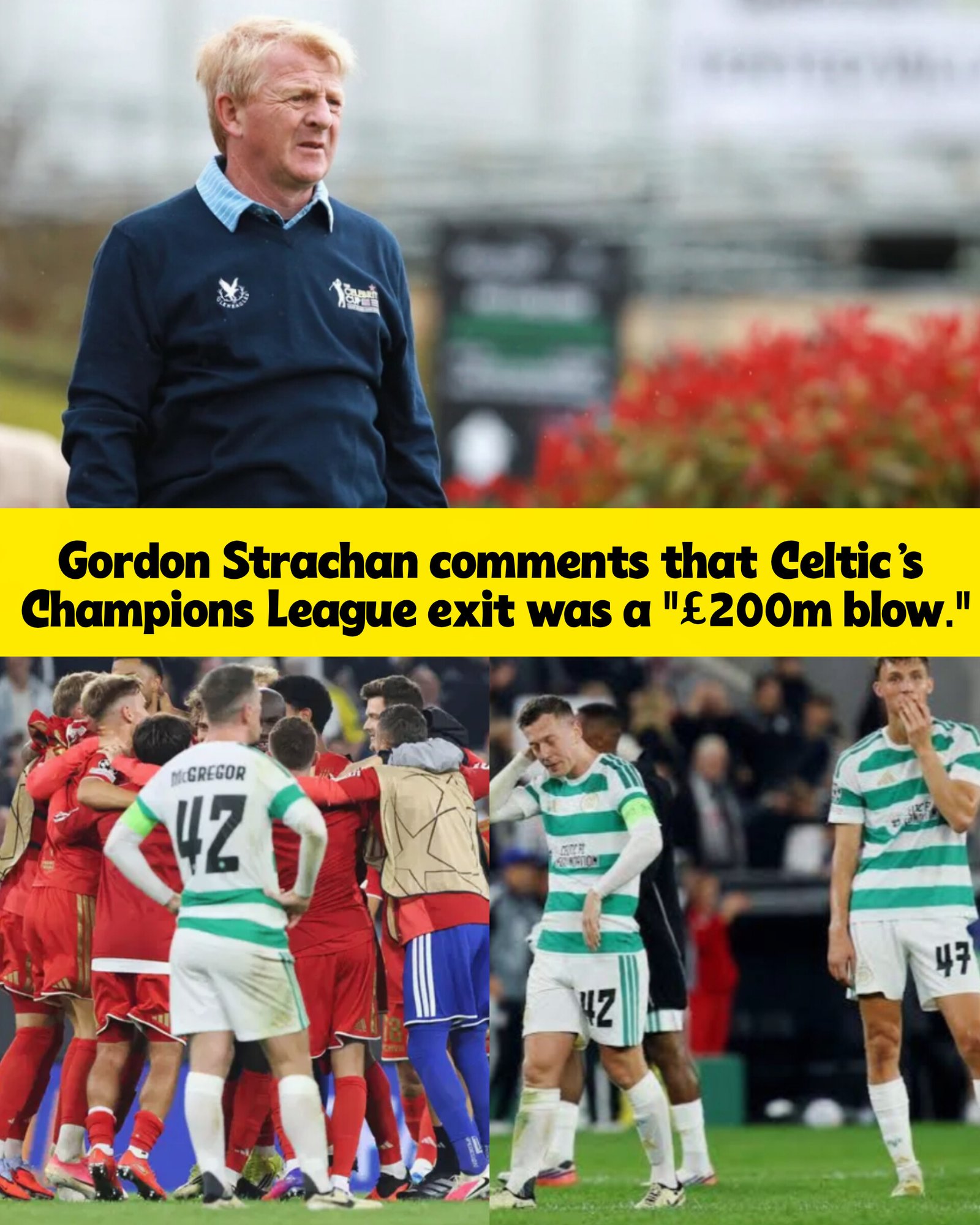
Celtic’s dramatic elimination by LASK has therefore become part of a much bigger conversation about the current strength of the Scottish game and the growing financial gap between clubs north and south of the border.
Strachan pointed to the European struggles experienced by Celtic, Rangers, Hibernian, Motherwell and other Scottish representatives as evidence that the problem cannot simply be placed on one club.
Strachan Questions the Standard of Scottish Football
Speaking about Celtic’s European disappointment, Strachan suggested that playing in the Europa League may actually reflect the level Scottish football currently occupies.
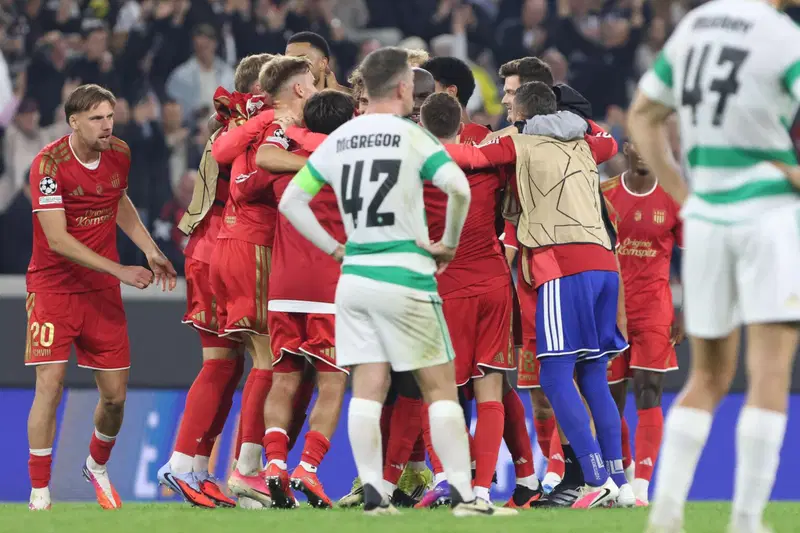
Linz, Austria. 25th Aug, 2026. LINZ, AUSTRIA – AUGUST 25: team LASK celebrates the 5:1 win in the UEFA Champions League Play-off 2nd leg match between LASK and Celtic Glasgow at Oberoesterreich Arena on August 25, 2026 in Linz, Austria. (Photo by Severin Aichbauer/Sports Press Photo/SPP) Credit: SPP Sport Press Photo. /Alamy Live News
“Should they be in the Europa League? I think that’s the standard of Scottish football, to be honest with you,” Strachan said.
The former Hoops boss acknowledged that Hearts had produced an impressive performance to remain involved in the Conference League, while also pointing out that Hibernian and Motherwell had suffered European exits.
Motherwell’s elimination was given some context, however, with Strachan admitting that they had faced a strong opponent and deserved credit for their efforts.
Rangers were also unable to progress, while Celtic suffered their own painful elimination against LASK.
For Strachan, the pattern is important.
He does not believe Celtic’s failure should be treated as an isolated incident. Instead, he sees the collection of Scottish clubs struggling in Europe as part of a decline that has developed over approximately two decades.
“It’s not just Celtic, it’s the Scottish football standard that’s dropped over the last 20 years,” he explained.
Celtic’s LASK Collapse Was Particularly Costly
Although Celtic’s European problems are connected to the wider Scottish football picture, their own defeat against LASK was especially damaging because of the position they had created for themselves.
Martin O’Neill’s team appeared to have one foot firmly inside the Champions League league phase after producing an outstanding first-leg performance at Celtic Park.
The Hoops secured a 3-0 victory in Glasgow, putting themselves in a commanding position ahead of the return fixture in Austria.
Things initially became even more encouraging for Celtic during the second leg.
The Scottish side moved 4-0 ahead on aggregate, leaving LASK facing a huge challenge if they were to overturn the deficit.
However, Celtic ultimately suffered an extraordinary collapse.
LASK fought their way back into the contest and eventually won the tie, sending Celtic into the Europa League instead of the Champions League.
The sporting disappointment was immediately followed by a major financial consequence.
Champions League Exit Could Cost Millions
Qualifying for the Champions League league phase would have provided Celtic with a substantial increase in revenue. Instead, the club must now compete in the Europa League while dealing with the financial consequences of missing out on Europe’s most lucrative club competition.
Strachan believes the financial damage could be enormous.
“It’s certainly financially damaging for this season, because I think that the quotes say the losses are between £25 million and £40 million,” he said.
For any club, losing such an amount would represent a serious financial setback. However, Strachan believes the consequences are particularly significant for Celtic because Scottish clubs operate in a very different financial environment from their English counterparts.
Scottish football does not generate the same level of commercial, broadcasting and matchday income available to Premier League clubs.
That makes Champions League qualification especially important for Celtic.
“That is damaging for any club but especially at Celtic because we, in Scottish football, don’t generate the money that’s generated in England,” Strachan said.
“That money is huge for Celtic.”
The Premier League Comparison
To demonstrate just how significant the reported loss could be, Strachan offered a striking comparison.
He suggested that the £25m to £40m financial shortfall facing Celtic would be comparable to around £200m for a Premier League club.
“That is equivalent to, like, £200 million for a Premier League club,” he said.
The comparison highlights the different financial landscapes in which Scottish and English clubs operate.
While £25m or £40m is already a considerable amount of money, the impact becomes even more significant when measured against Celtic’s financial environment.
Strachan therefore raised an important question about the club’s ability to recover from missing out on the Champions League.
“So that’s the damaging bit about it. How do you recover from that?”
The issue will potentially influence Celtic’s spending, squad planning and ambitions throughout the remainder of the season.
Players Must Accept Responsibility
Despite discussing the wider problems facing Scottish football and the enormous financial implications of Celtic’s European exit, Strachan also believes the players themselves must acknowledge their role in what happened.
The former Celtic manager suggested that, if he were part of the squad or wearing the captain’s armband, his immediate reaction would be to accept responsibility rather than search for external explanations.
“But if I was a Celtic player, or if I was the Celtic captain, I would probably go, ‘Oh wait just a second, it’s us who’s to blame’,” Strachan said.
He believes captain Callum McGregor demonstrated that attitude after the defeat.
McGregor publicly accepted responsibility for Celtic’s collapse, saying that the result was “on us”.
For Strachan, that admission matters because the players were ultimately the ones on the pitch when Celtic surrendered their commanding advantage.
Supporters Will Only Accept So Much
Strachan also warned that explanations will not necessarily ease the frustration felt by Celtic supporters.
Fans can debate tactics, individual errors, injuries, refereeing decisions or the wider state of Scottish football, but the fundamental outcome remains unchanged.
Celtic had a three-goal advantage from the first leg and were still in control during the return fixture before the tie slipped away.
Strachan believes supporters will ultimately judge the result on that basis.
“But no matter what you say to the fans, it’s still a problem. You got beat. They don’t care who’s to blame. You got beat.”
That blunt assessment underlines the difficulty facing Celtic as they attempt to move forward.
Celtic Must Now Focus on the Europa League
The Champions League dream is over for Celtic this season, and the club must now turn its attention towards the Europa League.
The financial consequences of the LASK defeat will remain an important issue, while the sporting disappointment could also shape the team’s campaign.
Martin O’Neill and his players now have to respond on the pitch, knowing that a significant opportunity has disappeared.
For Celtic, the challenge is not only about recovering from one European defeat. It is about managing the financial consequences, rebuilding confidence and trying to ensure that such a dramatic collapse does not define the remainder of the season.

Celebrities compete in the Celebrity Cup Golf Tournament as part of Golf Live at Celtic Manor hotel and golf course Featuring: Gordon Strachan Where: Newport, Wales When: 11 May 2013 Credit: Paul Terry/WENN.com
WENN / SmartFrame Images
Strachan’s comments also place the defeat within the wider debate about Scottish football’s declining European competitiveness.
Celtic’s Champions League exit may have been particularly painful, but Strachan believes the struggles of multiple Scottish clubs show that the problem extends well beyond Parkhead.
For now, Celtic must concentrate on the Europa League and attempt to turn a damaging setback into a campaign that still delivers meaningful success.
-
 Blog7 months ago
Celtic issues a fiery VAR statement after Trusty’s red card appeal is dismissed, as furious chiefs release referee audio publicly.
-
 Blog3 days ago
Former official calls on SFA to contact Rangers over fan scenes during Celtic match, labeling them “completely unacceptable.”
-

 Blog7 months ago
Celtic informed their January signing under Martin O’Neill that he wouldn’t play a single minute this season.
-

 Blog7 months ago
Celtic issued an £83 million warning amid looming UEFA threats.
-
 Blog7 months ago
SFA Expected to Review Missed Penalty in Rangers v Celtic Clash
-
 Blog6 months ago
Police respond after reported disorder following Middlesbrough vs Millwall clash
-

 Blog1 year ago
“Courtside to Aisle-Side: Tyrese Haliburton and Jade Jones Set New Wedding Date”
-
 Blog7 months ago
£6m star is looking to leave Rangers this summer and has already announced his next club publicly.