
Blog
Willie Collum faces claims of “appalling” treatment of a referee as ex-official asks chief, “Where’s the duty of care?”

Willie Collum has come under renewed scrutiny over his handling of Scotland’s referees, with former Grade One official Des Roache accusing the SFA’s head of refereeing of providing what he considers an “appalling” level of care to Matthew MacDermid.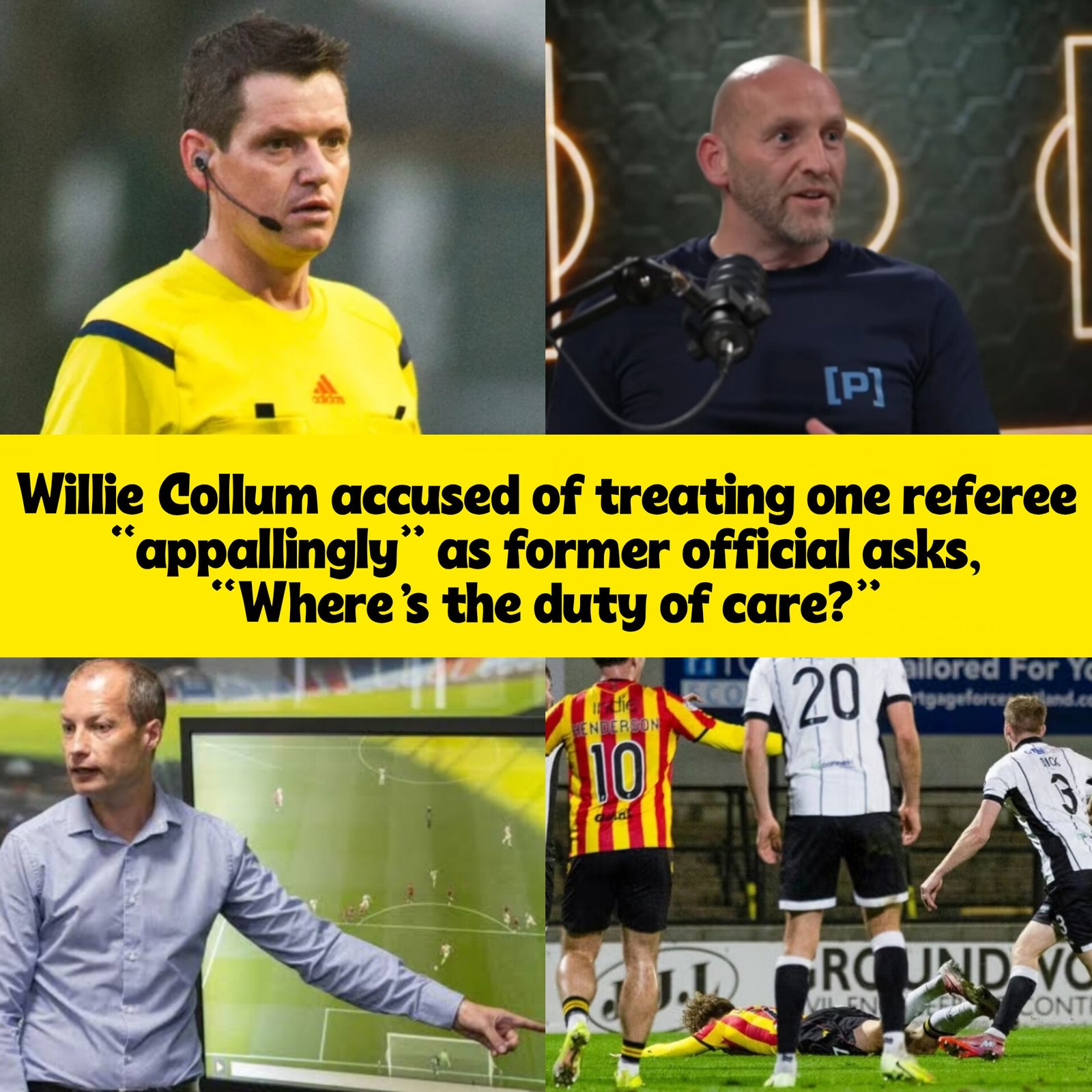
Roache, who has repeatedly questioned Collum’s work since he took charge of refereeing operations, believes MacDermid is being placed in situations that could be damaging to his performances. He has questioned whether enough is being done to support, coach and protect referees when they are struggling for form.
Collum’s position has already attracted criticism from former referee Bobby Madden, who recently claimed that the current refereeing chief had failed to make a positive impact since taking over the role.
The standard of officiating across Scottish football has also been the subject of significant debate, with several controversial decisions generating criticism. Much of that attention has been directed towards Collum because of his responsibility for coaching, developing and organising the country’s referees.
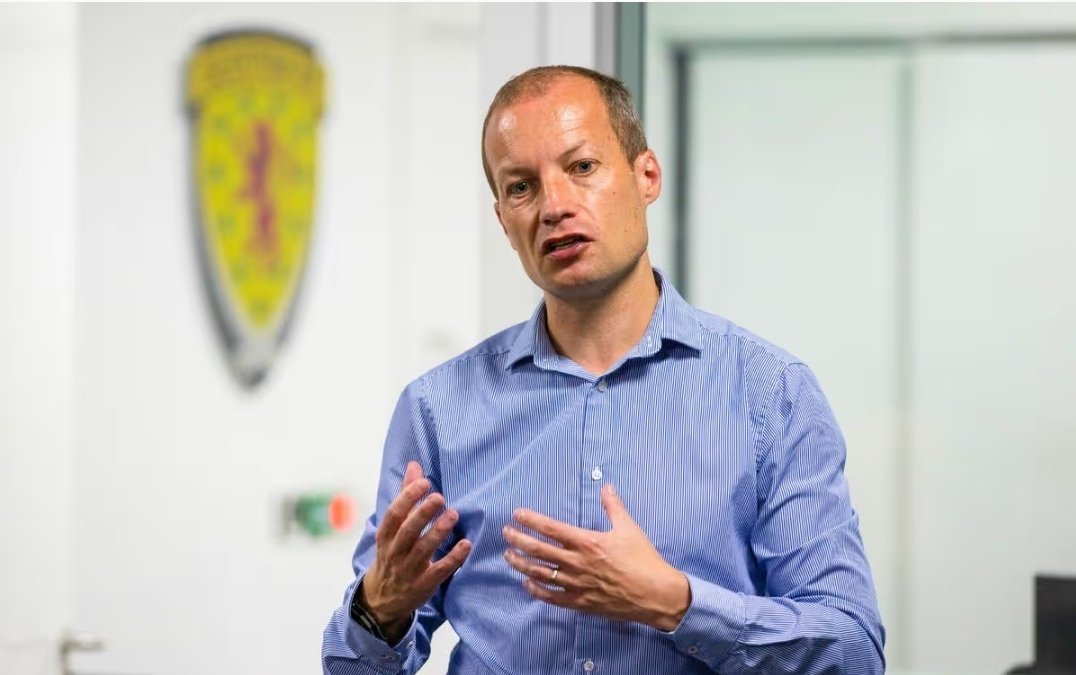
Head of Refereeing Willie Collum (Image: SNS Group / SFA)
Roache has now specifically raised concerns about the treatment of MacDermid, who has recently found himself at the centre of controversy following a contentious penalty decision during Partick Thistle’s victory over Ayr United.
The incident caused widespread discussion, with Partick Thistle manager Mark Wilson subsequently acknowledging that his team had benefited from the decision. For Roache, however, the incident is not simply an isolated refereeing error. Instead, he believes it demonstrates a wider issue with how MacDermid is being managed.
Speaking exclusively about the matter, Roache stressed that his criticism was not directed personally at MacDermid. He insisted that he considers the referee talented and believes his progression to the level he currently occupies demonstrates his ability.
However, Roache compared referees with professional footballers, pointing out that officials can experience periods where their performances are below their usual standards. In the case of referees, mistakes can become even more significant because decisions made during matches can directly influence the outcome.
His concern is that MacDermid has continued to receive appointments for important fixtures despite making a series of errors.

Seb Drozd goes down in the box(Image: SNS Group)
Roache argued that a referee who is repeatedly making mistakes should, in the same way as an out-of-form player, potentially be removed from the spotlight temporarily. That would allow them to receive additional coaching, work on specific weaknesses and rebuild confidence before returning to high-profile matches.
Instead, he believes MacDermid has continued to be placed in demanding fixtures, despite what Roache considers a growing pattern of mistakes.
The controversial Ayr United-Partick Thistle penalty was described as the clearest recent example. The decision was significant enough for even the Partick manager to publicly acknowledge that his side had benefited from the call.
Roache also highlighted the demanding schedule MacDermid had faced around the match.
The referee had travelled to Estonia on the Wednesday to officiate a European fixture. He returned to Scotland on Thursday before going back to work on Friday and then taking charge of the Ayr United versus Partick Thistle match that same evening.
According to Roache, the workload and travel involved would have been extremely tiring for any official.
But the demands did not stop there. The following evening, MacDermid was appointed as the VAR for Dundee’s match against Rangers, meaning he was immediately involved in another high-profile Scottish fixture after the controversial decision the previous night.
Roache believes the accumulation of travel, work and major appointments could have contributed to the pressure placed on the referee.
He argued that the situation would be handled differently if the individual involved was a footballer. A player making repeated mistakes might be left out of the starting lineup for a period, removed from the pressure of competitive matches and given time with coaches to correct their problems.
Roache believes referees should receive similar protection and development when their performances begin to deteriorate.
His strongest criticism concerned what he described as a failure to provide MacDermid with an adequate duty of care.
Roache argued that the referee is not being sufficiently protected, supported or coached, and he placed responsibility for that directly on the person overseeing Scottish refereeing.
He also rejected the suggestion that his comments were simply criticism made with hindsight following the latest controversial decision. Roache said he has been raising concerns about the importance of referee coaching for several years.
His argument is that the quality of officials depends heavily on the quality of coaching they receive. Because Collum is responsible for that coaching structure, Roache believes the SFA refereeing chief must ultimately answer questions about how officials are being managed.
The former official therefore concluded that Collum is not performing particularly well in his current position.
His comments add another layer to the growing debate surrounding Scottish refereeing standards and the leadership responsible for improving them. With controversial decisions continuing to attract attention, pressure on Collum is unlikely to disappear quickly.
For MacDermid, meanwhile, the controversy places renewed focus on whether he should continue receiving major appointments while his performances remain under scrutiny.
Roache’s central argument is that referees, like players, need appropriate rest, coaching and protection when mistakes begin to accumulate. Whether the SFA agrees with that assessment could become an important part of the wider discussion surrounding the management of Scottish officials.
-
 Blog8 months ago
Celtic issues a fiery VAR statement after Trusty’s red card appeal is dismissed, as furious chiefs release referee audio publicly.
-

 Blog2 months ago
Former official calls on SFA to contact Rangers over fan scenes during Celtic match, labeling them “completely unacceptable.”
-

 Blog9 months ago
Celtic informed their January signing under Martin O’Neill that he wouldn’t play a single minute this season.
-

 Blog8 months ago
Celtic issued an £83 million warning amid looming UEFA threats.
-

 Blog8 months ago
SFA Expected to Review Missed Penalty in Rangers v Celtic Clash
-

 Blog7 months ago
Police respond after reported disorder following Middlesbrough vs Millwall clash
-

 Blog1 month ago
Middlesbrough receive a warning following Steve Gibson’s submission of a £1.5bn proposal.
-

 Blog1 year ago
“Courtside to Aisle-Side: Tyrese Haliburton and Jade Jones Set New Wedding Date”