
Blog
Bernard Ponsonby criticizes the Celtic board and Desmond, questioning O’Neill’s decision.

Bernard Ponsonby has publicly criticized the Celtic board, with a particular focus on Dermot Desmond, highlighting concerns over their leadership and communication strategies. His comments come amidst ongoing dissatisfaction among supporters regarding the direction of the club. Additionally, Ponsonby has expressed reservations about the decision to appoint Martin O’Neill on a permanent basis, questioning whether this move aligns with the club’s long-term ambitions.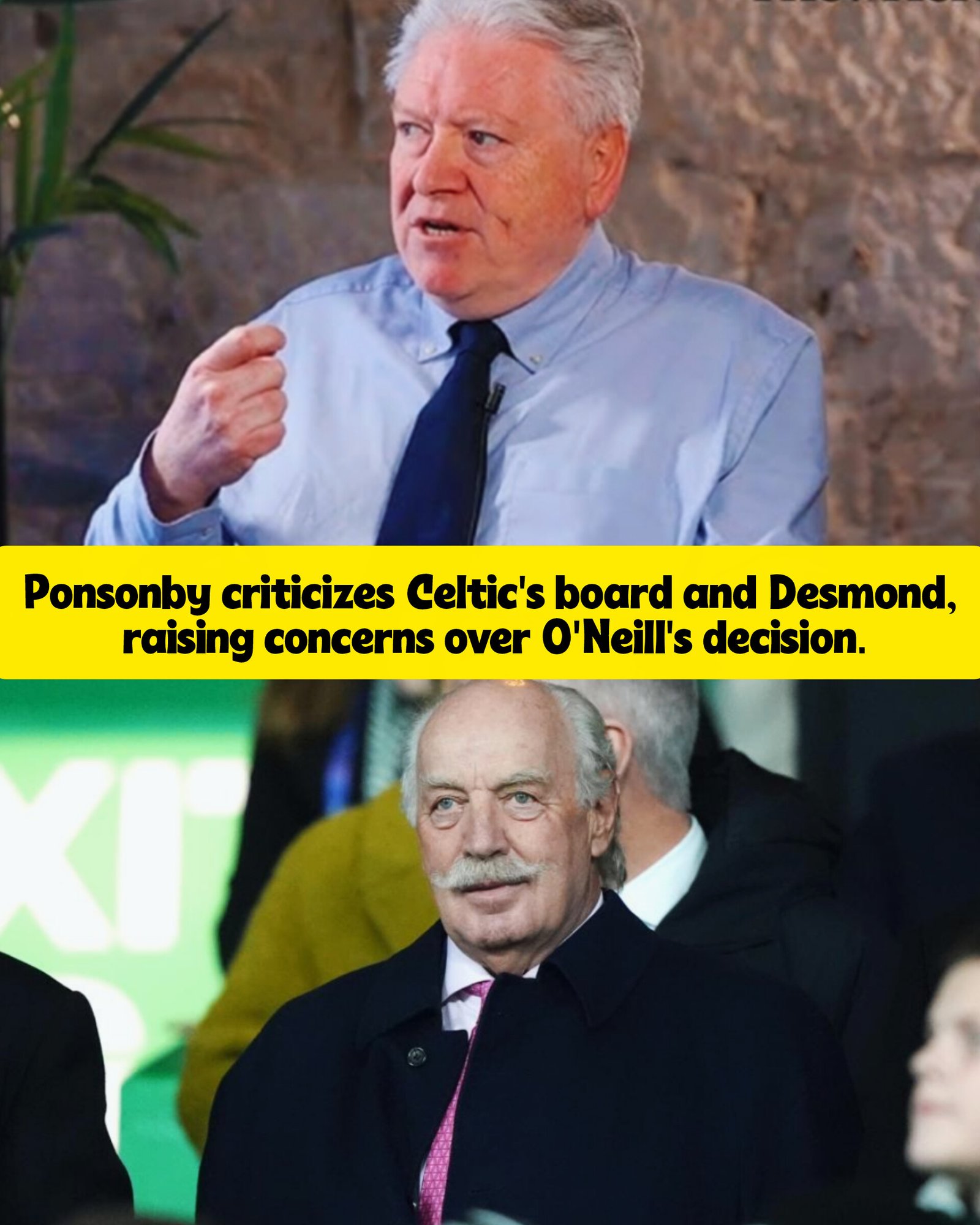
Ponsonby, a seasoned journalist and political broadcaster, is also a well-known supporter of Celtic. His insights into the club’s current predicament reflect his deep familiarity with its history and culture. While acknowledging the club’s historical success and the stability it has maintained over many years, Ponsonby emphasizes that Celtic’s dominance in Scottish football has been largely due to effective management off the pitch. He points out that the club has been able to exert influence and maintain a competitive edge over its rivals because of sound organizational practices over the years.
However, Ponsonby is critical of Celtic’s recent performances in European competitions. He believes that these disappointing results are primarily attributable to a lack of financial investment. He argues that the club has not spent enough money to compete effectively at the higher levels of European football, which has hampered their progress and competitiveness on the continental stage. This underinvestment has been a persistent issue, he claims, and has contributed to the club’s stagnation in European tournaments.
Another significant concern Ponsonby raises relates to the club’s communication—or lack thereof—with its supporters. He pinpoints Dermot Desmond, the major shareholder, as the primary source of this problem. Ponsonby criticizes Desmond for not engaging openly with the fans or providing clear guidance about the club’s future direction. He notes that the only recent statement from the Desmond family was a provocative remark made on the night Brendan Rodgers resigned as manager. Ponsonby suggests that such statements, without context or follow-up, only fuel speculation and mistrust among supporters.
He emphasizes that the credibility of the club’s leadership depends heavily on transparency and consistent communication. Without it, fans feel disconnected and uncertain about the club’s vision. Ponsonby questions what Desmond’s long-term plans are because the absence of clear communication leaves supporters in the dark. He criticizes the way Desmond sends a representative to the club’s annual general meeting (AGM) to deliver a speech that feels distant and disconnected—like a “reading of the riot act” from a land beyond the waves—rather than an honest dialogue. This approach, Ponsonby argues, undermines trust and respect, which are essential for maintaining a united supporter base.
His frustration extends to the current state of discord within Celtic’s fan community. Ponsonby states that in his over 50 years of supporting Celtic, he has never seen such division among supporters or such a toxic atmosphere surrounding the club. The last season, in his view, was particularly difficult—marked by poor performances and internal disagreements—creating a sense of alienation even among lifelong fans. The disconnect between the club’s hierarchy and the supporters has become a significant issue, one that can only be addressed if club leadership is willing to change and genuinely engage with its fans.
Ponsonby expresses hope that the club’s leadership, particularly Desmond, will take steps to improve communication and demonstrate a clearer vision for Celtic’s future. He emphasizes that supporters deserve respect and transparency from those in charge. If Desmond chooses to stay silent or remain disengaged, Ponsonby warns that the cycle of dissatisfaction may continue, and similar issues could recur in the future. For the club to move forward, he believes it is essential for Desmond to come out publicly, share his vision, and foster an environment of openness.
He also highlights the need for a fundamental shift in how Celtic is managed. Based on his observations, Ponsonby feels that the current atmosphere is one of frustration and disillusionment—something he has never seen before in his decades of following the club. The discord is not only between supporters and the club’s leadership but also within the fanbase itself, where divisions have emerged on how best to support the team and address the club’s challenges.
Ponsonby points out that the last season, apart from a few moments of success, was largely disappointing. The overall experience was “horrible,” marred by internal conflicts and a sense of hopelessness. This atmosphere is unfamiliar to him, given his long-standing support for Celtic. He laments that supporters are even falling out with one another, which he describes as a “toxic atmosphere”—a stark contrast to the loyalty and unity that once defined the club’s supporters. For Ponsonby, this internal discord signifies a breakdown in the traditional bond between the fans and the club’s hierarchy.
He stresses that meaningful change can only happen if the club’s leadership is willing to adapt. That includes engaging in honest dialogue, being transparent about plans and ambitions, and fostering a sense of shared purpose. Ponsonby hopes that Desmond will recognize the importance of connecting with supporters and that he will be willing to openly communicate his vision for the club’s future. Without this, Ponsonby fears Celtic risks falling into a cycle of stagnation and dissatisfaction.
Turning his attention to Martin O’Neill, Ponsonby acknowledges that the manager has earned his chance to lead Celtic on a permanent basis, especially after a successful interim period. O’Neill, now 74, has demonstrated qualities that justify giving him the job full-time. However, Ponsonby questions whether the decision to make O’Neill a permanent manager reflects effective long-term planning. He suggests that while O’Neill’s experience and previous successes are undeniable, the decision to appoint him without a clear strategy for the future might not address the deeper issues facing the club.
Ponsonby believes that O’Neill’s appointment, while deserved, does not represent a comprehensive solution. He points out that the issues at Celtic—particularly in European competitions—require a more strategic approach, including a focus on sustainable financial planning and a clear vision for the club’s development over the next several years. He emphasizes that Celtic needs a manager who can be a “two to five-year project,” someone who can oversee multiple transfer windows and build a squad capable of competing at higher levels.
He notes that the current situation is far from ideal, as O’Neill, given his age and the temporary nature of his appointment, may not be the perfect long-term solution. Ponsonby suggests that the club should be aiming for a managerial appointment that can deliver stability and progress over several seasons, rather than a short-term fix. The emphasis should be on making smart signings, developing youth talent, and establishing a sustainable financial model that allows Celtic to compete effectively on the European stage.
In summary, Ponsonby’s critique underscores a fundamental need for Celtic to revisit its management strategies and communication policies. He advocates for greater transparency, clearer articulation of the club’s vision, and a managerial approach that prioritizes long-term growth. While he recognizes the achievements and contributions of both Desmond and O’Neill, he cautions that without strategic planning and honest engagement with supporters, the club risks further discord and decline.
For Ponsonby, the path forward involves rebuilding trust between the club’s hierarchy and its fans, fostering open dialogue, and implementing a sustainable, forward-looking strategy. Only through these measures, he believes, can Celtic restore its unity, competitiveness, and long-term success. If the club’s leadership fails to heed these lessons, there is a real danger that the current dissatisfaction and internal divisions could deepen, potentially jeopardizing Celtic’s future prospects and the loyalty of its passionate supporter base.
-
 Blog7 months ago
Celtic issues a fiery VAR statement after Trusty’s red card appeal is dismissed, as furious chiefs release referee audio publicly.
-
 Blog3 weeks ago
Former official calls on SFA to contact Rangers over fan scenes during Celtic match, labeling them “completely unacceptable.”
-

 Blog8 months ago
Celtic informed their January signing under Martin O’Neill that he wouldn’t play a single minute this season.
-

 Blog8 months ago
Celtic issued an £83 million warning amid looming UEFA threats.
-
 Blog7 months ago
SFA Expected to Review Missed Penalty in Rangers v Celtic Clash
-

 Blog6 months ago
Police respond after reported disorder following Middlesbrough vs Millwall clash
-

 Blog2 weeks ago
Middlesbrough receive a warning following Steve Gibson’s submission of a £1.5bn proposal.
-

 Blog1 year ago
“Courtside to Aisle-Side: Tyrese Haliburton and Jade Jones Set New Wedding Date”