
Blog
Chicago’s trade deadline receives a straightforward and no-holds-barred evaluation from a Bulls reporter.

Chicago Bulls Caught in the Trade Deadline Storm
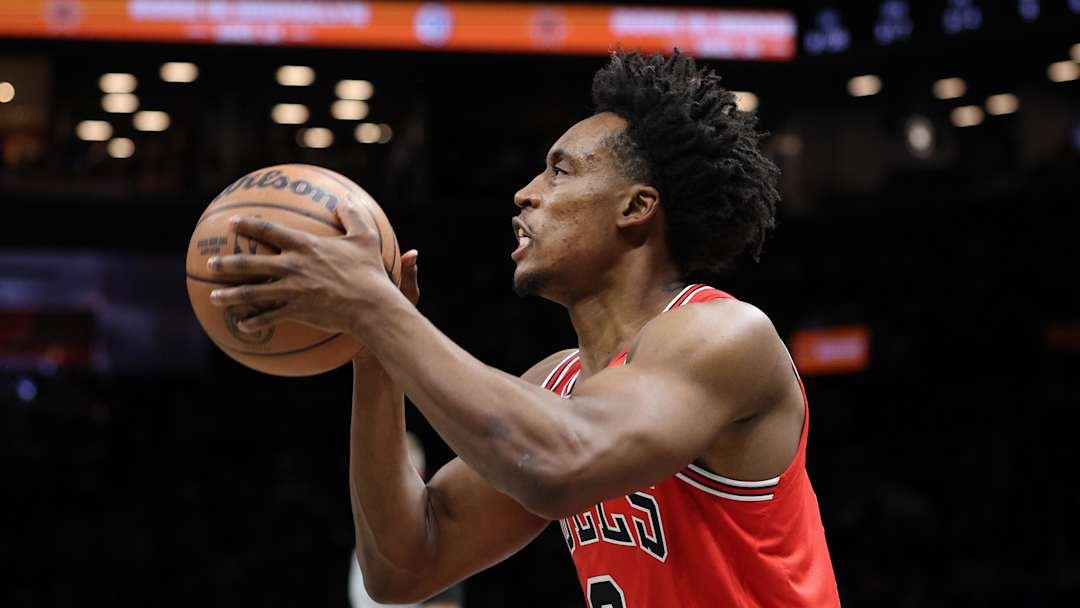
Feb 9, 2026; Brooklyn, New York, USA; Chicago Bulls guard Collin Sexton (2) shoots the ball against the Brooklyn Nets during the first half at Barclays Center. Mandatory Credit: Vincent Carchietta-Imagn Images | Vincent Carchietta-Imagn Images
More than a week has passed since the NBA trade deadline created a frenzy across the league, and the Chicago Bulls were heavily involved in the upheaval. By the time activity concluded, Chicago had completed seven separate deals, parted ways with eight players, and added seven new faces to the roster. In addition to the incoming players, the front office collected nine second-round draft picks as part of the reshuffling.
The sheer volume of transactions made the stretch feel chaotic. There was little opportunity to fully evaluate the consequences in real time as news continued to break. Now, with the All-Star break offering a pause in the schedule, there has finally been a chance to step back and consider what the flurry of moves truly accomplished—and what it may have cost the franchise moving forward.
Joe Cowley Issues a Blunt Grade
During the midseason lull, Chicago Sun-Times reporter Joe Cowley revisited the deadline dealings and delivered a candid evaluation of executive Artūras Karnišovas and his aggressive maneuvering. His assessment was far from glowing. Cowley handed the Bulls a D+ grade, signaling that, in his view, the organization barely scraped by.
Cowley described the performance as technically passing, but only just. He framed the trade deadline as a kind of midterm exam for Karnišovas—one in which the executive may have had a reasonable idea in theory, yet failed in execution and, more critically, acted too late. According to Cowley, the broader implication was that Karnišovas had finally abandoned the long-standing emphasis on maintaining “competitive integrity” and instead steered the team toward a softer version of tanking.
A Shift Toward a Soft Reset?
Cowley’s suggestion that Chicago is drifting into soft-tank territory may sound dramatic, but there is logic behind the claim. The Bulls chose to move on from established contributors such as Ayo Dosunmu, Coby White, and Nikola Vucevic. In exchange, they largely received draft assets rather than cornerstone building blocks.
While the additions of Anfernee Simons, Collin Sexton, and Rob Dillingham provide some intrigue, the overall effect feels more like a reshuffling of comparable talent than a transformative overhaul. The newcomers may offer upside, but none clearly alters the franchise’s trajectory in a significant way.
Lateral Moves Dominate the Deadline
A closer look at the transactions reveals a pattern: Chicago largely exchanged expiring contracts for other expiring contracts. That dynamic reinforces the perception that the team’s activity was mostly lateral. The nine second-round picks serve as a modest bonus, yet beyond that accumulation of future considerations, there is little to suggest a decisive step forward.
Cowley summarized the situation by noting that the seven trades essentially produced a collection of second-rounders and a brief audition period for newly acquired guards, including Jaden Ivey, alongside Dillingham, Sexton, and Simons. Rather than signaling a clear long-term blueprint, the moves appear to create a short-term evaluation window.
Timing Proves Costly
From the outset, Karnišovas faced an uphill climb at the deadline. By holding onto Dosunmu, White, and Vucevic for as long as he did, their market value inevitably diminished. Each player has demonstrated on-court impact, but looming contract uncertainty dampened external demand. Around the league, teams are reluctant to sacrifice meaningful assets for players who might depart in free agency within months.
That hesitation seemed to define Chicago’s trade market. Potential suitors had little incentive to overpay, knowing that patience could yield similar opportunities later. As a result, the Bulls’ leverage weakened considerably by the time they finally chose to act.
Pressure Mounts on the Front Office
Despite the unfavorable conditions, standing still was not a realistic option. Karnišovas faced mounting pressure to initiate change. The roster’s ceiling appeared limited, and incremental tweaks were unlikely to shift the team’s fortunes. Both internally and externally, there was recognition that a pivot was necessary.
Consequently, the Bulls moved decisively—even if the returns were underwhelming. The flurry of deals demonstrated urgency, but urgency alone does not guarantee value. The front office’s hand may have been forced, yet the outcome still invites scrutiny.
The Return Falls Short
On the surface, a D+ grade might seem severe for a deadline that produced draft capital and preserved flexibility. Immediately after the trades, the mood was not entirely pessimistic. The incoming players flashed potential in early appearances, and a string of losses subtly improved Chicago’s lottery positioning. In a narrow sense, that could be interpreted as progress toward a more favorable draft slot.
However, with time to reflect, a larger issue becomes apparent. The problem, as Cowley emphasized, is not solely about what was acquired but about when the reset occurred. By delaying decisive action, the Bulls may have forfeited the chance to secure stronger compensation.
Most notably, Chicago failed to obtain even a single first-round pick while parting with Dosunmu and White. In today’s NBA landscape, first-round selections represent premium currency in any meaningful rebuild. Accumulating second-rounders offers flexibility but rarely guarantees impact. Without higher-value assets, the path to genuine transformation remains uncertain.
Ultimately, the trade deadline left the Bulls occupying an uneasy middle ground. They neither committed fully to a deep rebuild nor made the type of aggressive acquisition that would elevate them into contention. Instead, they reshaped the roster’s margins without delivering a defining breakthrough.
Cowley’s D+ encapsulates that ambiguity. The team did not collapse under pressure, but it also did not maximize its opportunity. The sense lingers that the concept may have been defensible, yet the execution—arriving at least a season late—diminished its effectiveness. In the end, Chicago’s busy deadline produced motion, but not necessarily meaningful progress.
-
 Blog1 month ago
Celtic issues a fiery VAR statement after Trusty’s red card appeal is dismissed, as furious chiefs release referee audio publicly.
-

 Blog1 month ago
Celtic informed their January signing under Martin O’Neill that he wouldn’t play a single minute this season.
-
 Blog1 month ago
Celtic issued an £83 million warning amid looming UEFA threats.
-
 Blog4 weeks ago
SFA Expected to Review Missed Penalty in Rangers v Celtic Clash
-

 Blog10 months ago
“Courtside to Aisle-Side: Tyrese Haliburton and Jade Jones Set New Wedding Date”
-

 Blog1 month ago
£6m star is looking to leave Rangers this summer and has already announced his next club publicly.
-

 Blog1 week ago
Rangers victory overshadowed by refereeing controversy
-

 Blog1 month ago
Auston Trusty under intense Celtic red card investigation amid new Hibs ‘punch’ claims and Rangers’ appeal review.