
Blog
Eckert has yet to give Southampton an answer regarding the Lincoln substitution.

Southampton head coach Tonda Eckert still has some explaining to do over one of the most debated decisions from Saturday’s disappointing draw at Lincoln City.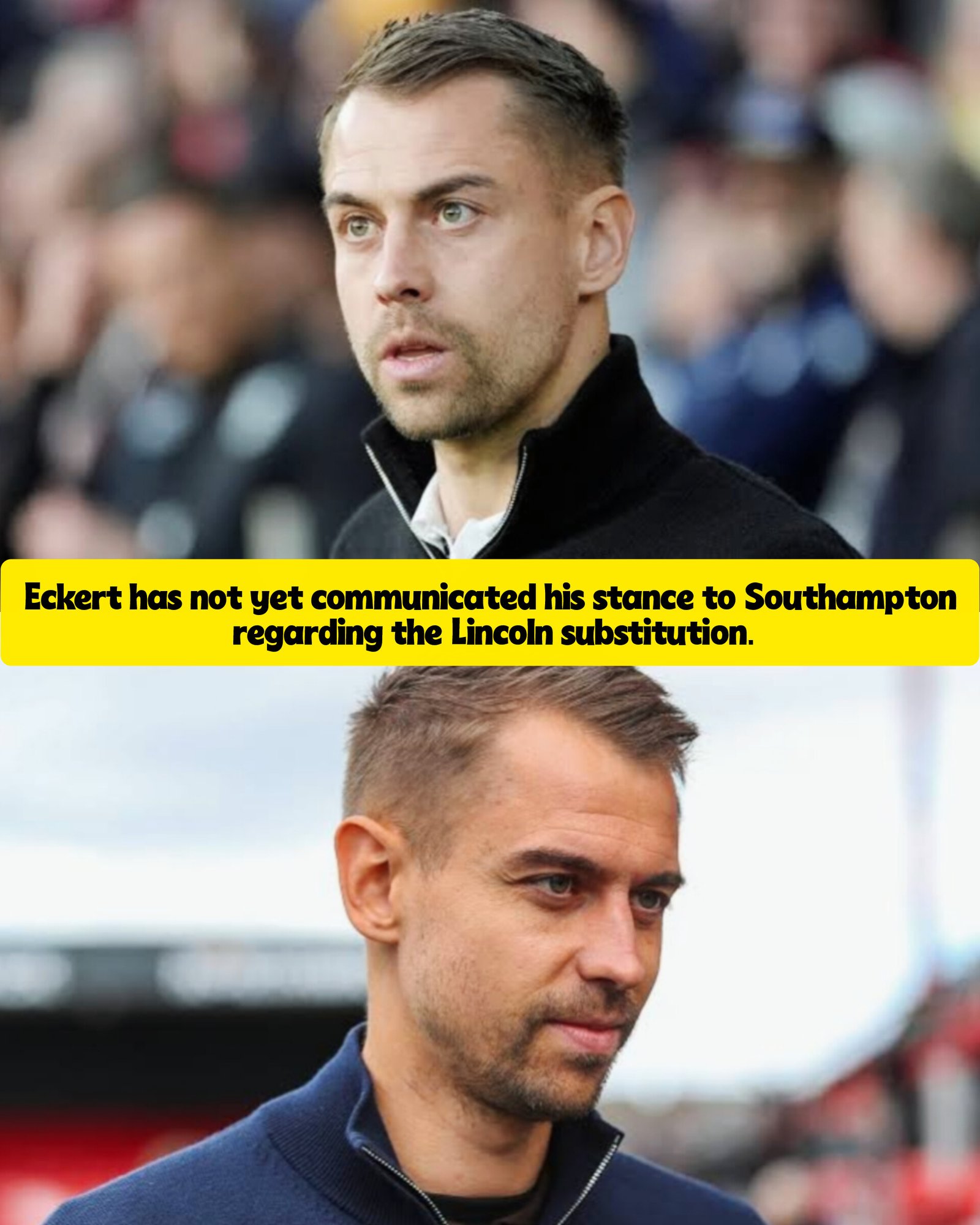
Leo Scienza had just produced the moment that could have changed the entire game. Cutting inside from the left, as he has become accustomed to doing, the Southampton winger curled an effort beyond Lincoln goalkeeper Wickens. The ball struck one post, travelled across the face of goal and then bounced back off the opposite upright.

Lincoln City v Southampton – Sky Bet Championship – ProAmPack Stadium | Lee Keuneke – PA Images/GettyImages
It was an extraordinary effort and, potentially, the warning sign Southampton needed to finish the match strongly.
Instead, it proved to be Scienza’s final contribution.
Moments later, Eckert removed him from the action, with Cyle Larin also having already been substituted in the 62nd minute. The decision has since become one of the major talking points surrounding Southampton’s failure to hold on to their lead.
The central issue for the Saints is becoming increasingly obvious: they are struggling to put games beyond their opponents.
Saturday’s result against Lincoln provided perhaps the clearest example yet.
Southampton had spent large portions of the second half controlling proceedings and looked capable of securing another important away victory. Yet instead of continuing to apply pressure, the visitors made a series of changes that appeared to hand momentum back to Lincoln.
The timing of those substitutions has left supporters questioning whether Eckert got his tactical decisions right.
On the r/SaintsFC match thread, supporters were quick to express their frustration. Importantly, much of the criticism was not directed towards the players introduced from the bench. Instead, fans questioned why Southampton would remove Larin, Scienza and eventually Azaz while holding only a one-goal advantage away from home.
There was a feeling that the changes weakened Southampton at precisely the moment when they needed to remain aggressive.
One supporter suggested that Southampton began to resemble an ordinary mid-table team once the substitutes had been introduced. The Total Saints Podcast subsequently dedicated an entire episode to discussing the substitutions, highlighting just how much debate Eckert’s decisions have generated.
There is, however, a reasonable argument in the manager’s defence.
Scienza has started every league match for Southampton this season, meaning his workload has been considerable. The game at Lincoln came only six days after the previous fixture against Birmingham, and the schedule is becoming increasingly demanding.
Eckert also has access to fitness information that supporters simply do not have. The coaching staff know the physical condition of the players, their workloads and whether someone is approaching a point where injury risk becomes a concern.
That makes the decision to protect Scienza’s fitness understandable to some extent.
Eckert himself has already explained that player management is becoming increasingly important because of the number of matches Southampton are facing.
Asked about his decision to start Jack Stephens and Welington, the Saints boss said: “It’s a long season and there are a lot of games in this block now, so it was a decision with Welly and Jack.”
That logic can be applied to Scienza as well.
However, the criticism remains because of what Southampton did after he left the pitch.
Protecting a key winger’s legs is one thing. Removing the player who was causing Lincoln the most problems and then failing to replace his attacking threat is another.
Nathan Wood was eventually introduced for Kuryu Matsuki in the 84th minute. Rather than helping Southampton regain control, the substitution appeared to encourage Lincoln to push forward.
The home side did not need another invitation.
Just three minutes later, Mikkel Ladefoged found the equaliser in the 87th minute.
That goal was particularly frustrating because Southampton had looked comfortable for much of the second half. They had spent long periods playing in Lincoln territory, but after the changes they stopped applying the same attacking pressure.
Instead of forcing Lincoln backwards, Southampton allowed the hosts to become increasingly direct and physical.
That was exactly the kind of situation Lincoln wanted.
Southampton knew before kick-off how their opponents were likely to approach the contest. Flynn Downes later explained that Lincoln would go long, make the game physical and compete for first and second balls.
Once Southampton stopped threatening consistently, they allowed Lincoln to turn the match into the type of battle they wanted.
The players introduced from the bench also struggled to make the required impact.
Sam Edozie was given 27 minutes but managed only 13 touches during that time. Divin Mubama spent around half an hour on the pitch, yet Southampton were unable to get enough from him in attack.
Lewis Dobbin was the final attacking substitute introduced. Despite his £9 million price tag, he could not make the decisive difference, with one effort eventually being cleared off the line.
It would be unfair to place the entire responsibility for the result on the substitutes, and Downes made that point himself after the match.
The Southampton captain included himself when discussing the issue and said that the players coming into the game also needed to step up.
That was diplomatic from Downes, but the message was clear. Southampton cannot expect their starting XI to carry every game, particularly during a packed schedule. The players coming off the bench must be capable of maintaining the same level of intensity.
Yet there is another statistic that makes the situation more difficult to ignore.
Southampton have now surrendered leads and ended up drawing twice within the space of a week. On both occasions, the advantage disappeared after substitutions were made.
That does not automatically prove the substitutions caused the collapses, but the pattern is difficult for supporters to overlook.
There were also questions surrounding Cameron Bragg’s absence from the matchday action. Bragg had been left out of the starting side to make room for James Ward-Prowse, as Saints Marching highlighted before kick-off, but he ultimately remained unused.
That could become significant when Southampton face Swansea.
The upcoming match presents an even greater tactical challenge. Swansea have conceded just once all season and are unlikely to offer Southampton the same opportunities that Lincoln did.
If Southampton want to compete at the top end of the Championship, they must become much more ruthless when they are in control.
Eckert has not suddenly become a bad head coach because of one poor result or a questionable substitution. His work has already shown signs of progress, and the demanding schedule makes squad management an unavoidable part of the job.
Nevertheless, that should not prevent legitimate questions being asked.
Taking Scienza off when Southampton were on top removed the player Lincoln appeared least capable of containing. If the decision was purely about workload management, Eckert needs to explain why the replacement strategy failed to preserve Southampton’s attacking threat.
The Saints cannot afford to repeatedly sit back and attempt to protect narrow advantages.
The lesson from Lincoln should therefore be straightforward. Southampton need to learn how to finish matches rather than simply trying to survive them.
For Eckert, the challenge is to find the right balance between protecting players, using his substitutes effectively and ensuring Southampton remain the dominant team when they hold a lead.
Against Lincoln, that balance was lost.
The Saints had opportunities to put the match beyond doubt, including Scienza’s remarkable double-post effort, but ultimately allowed their opponents back into the contest.
Now Swansea await, and the margin for error will be smaller.
If Southampton repeat the same mistakes, they could discover that stronger opponents are far less forgiving than Lincoln.
Eckert therefore still owes Southampton supporters a convincing explanation for the decision that changed the momentum of Saturday’s game.
-
 Blog8 months ago
Celtic issues a fiery VAR statement after Trusty’s red card appeal is dismissed, as furious chiefs release referee audio publicly.
-

 Blog1 month ago
Former official calls on SFA to contact Rangers over fan scenes during Celtic match, labeling them “completely unacceptable.”
-

 Blog8 months ago
Celtic informed their January signing under Martin O’Neill that he wouldn’t play a single minute this season.
-
 Blog8 months ago
Celtic issued an £83 million warning amid looming UEFA threats.
-
 Blog8 months ago
SFA Expected to Review Missed Penalty in Rangers v Celtic Clash
-

 Blog7 months ago
Police respond after reported disorder following Middlesbrough vs Millwall clash
-

 Blog1 month ago
Middlesbrough receive a warning following Steve Gibson’s submission of a £1.5bn proposal.
-

 Blog1 year ago
“Courtside to Aisle-Side: Tyrese Haliburton and Jade Jones Set New Wedding Date”