
Blog
Ex-PGMOL referee clarifies his stance following analysis of the Rangers-Aberdeen red-card controversy.

Former PGMOL chief and ex-FIFA referee Keith Hackett has given his verdict on the controversial challenge involving Afeez Aremu during Rangers’ narrow 1-0 victory over Aberdeen on Sunday.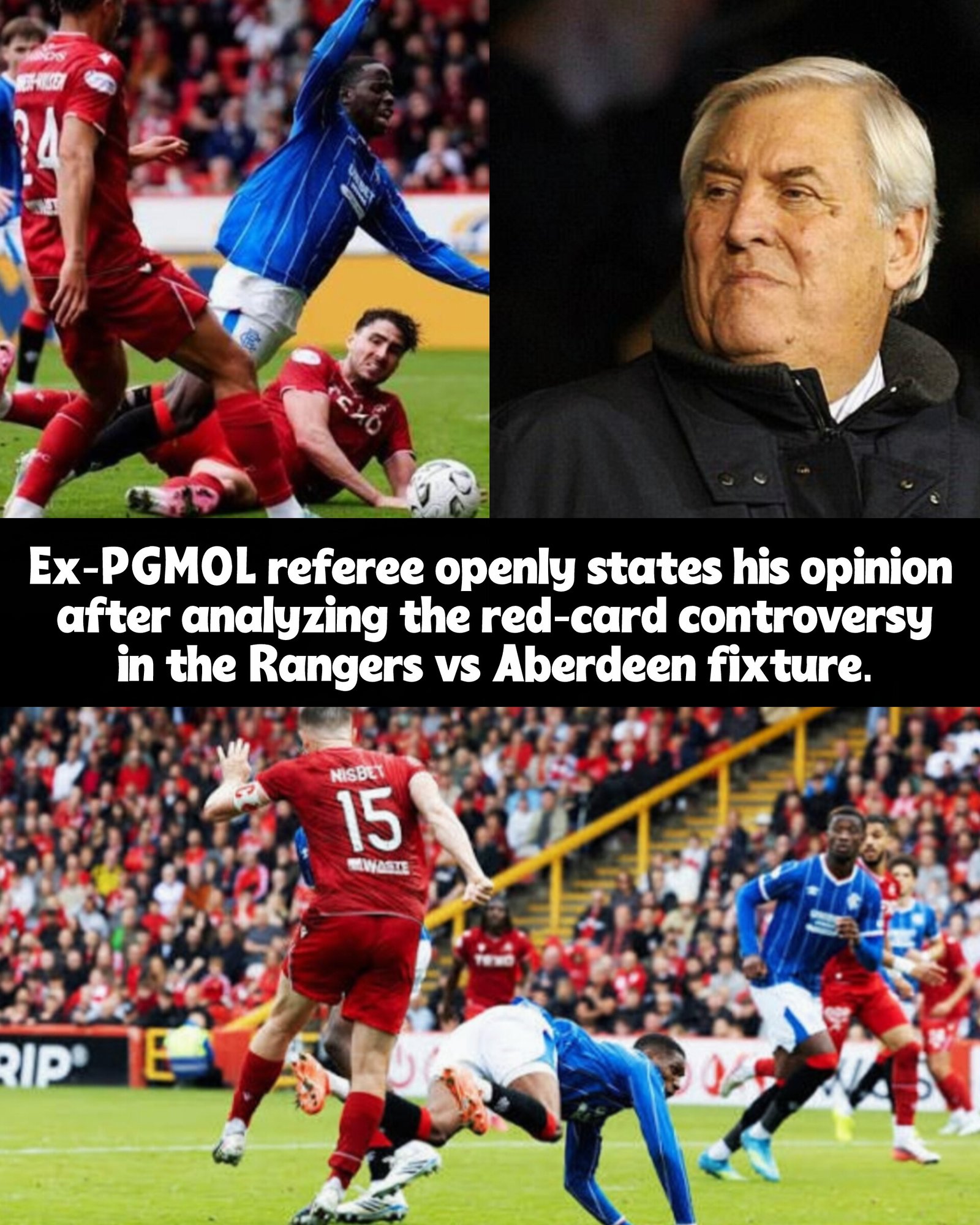
Hackett believes referee Matthew MacDermid made the correct decision by showing Aremu a yellow card rather than sending the Aberdeen midfielder off.
The incident became one of the main talking points from a tense encounter at Ibrox, with Rangers supporters particularly unhappy that the challenge did not result in a red card.
Aremu’s sliding tackle on Cameron Devlin saw the Aberdeen player’s boot make significant contact with the Rangers midfielder’s leg. Given the height and timing of the challenge, there were immediate calls for MacDermid to dismiss the Dons player.
However, after reviewing the footage, Hackett believes the referee’s decision was defensible and that the absence of malicious intent ultimately influenced the outcome.
Aremu Challenge Creates Controversy
Rangers managed to secure an important 1-0 victory over Aberdeen, but the match was far from straightforward.
There were several incidents involving challenges that generated debate, particularly from the home supporters.
The most prominent moment came when Aremu slid into Devlin and caught the Rangers player with his foot.
The contact appeared serious enough to lead many observers to believe that the Aberdeen midfielder could have been shown a straight red card.
MacDermid instead produced a yellow card, a decision that immediately attracted criticism from sections of the Rangers support.
Despite the protests, the referee remained with his original decision.
Hackett has now explained why he believes that was ultimately the correct call.
Keith Hackett Explains His Decision
Speaking exclusively to Football Insider, Hackett admitted that his initial reaction to seeing the challenge was that Aremu should have been dismissed.
However, after watching the incident more carefully, the former official changed his assessment.
Hackett pointed out that Aremu certainly arrived late and with his foot raised, which are factors that can make a challenge particularly dangerous.
Nevertheless, he noted that the contact itself was not quite as severe as it initially appeared.
He explained that Aremu’s foot made contact with Devlin before dropping slightly.
That small detail was important in Hackett’s assessment of the incident.
The former FIFA referee also highlighted the positioning of MacDermid and the involvement of VAR as reasons for believing the correct decision was ultimately reached.
Slow Motion Can Make Challenges Look Worse
One of Hackett’s main arguments was that incidents viewed in slow motion can often appear considerably more dangerous than they actually were during live play.
When a challenge is slowed down frame by frame, every movement can appear exaggerated.
In this case, Hackett believes that the referee had a good view of the incident and was therefore in a strong position to make his decision.
VAR also had the opportunity to examine the challenge from different angles.
After doing so, there was no intervention to overturn the original yellow card.
Hackett therefore believes MacDermid’s decision can be justified.
The former referee acknowledged that the incident was extremely close to the threshold for a red card, but he did not believe it clearly met the required standard.
The Importance of Intent
Hackett placed particular emphasis on the lack of malice in Aremu’s challenge.
According to the former PGMOL chief, the absence of deliberate intent played a significant role in determining whether the tackle should result in a red card.
He argued that, although Aremu entered the challenge late and with his boot relatively high, there was no obvious attempt to deliberately injure Devlin.
That distinction ultimately helped the Aberdeen midfielder avoid a sending-off.
However, Hackett also acknowledged that the situation could easily have gone the other way.
He described the challenge as subjective and suggested that another referee could potentially have reached a different conclusion.
That highlights just how fine the margins were in the incident.
A Red Card Was Still Possible
Although Hackett supports the yellow-card decision, he did not suggest that a red card would have been an unreasonable outcome.
Instead, he stressed that Aremu was fortunate because the challenge contained several characteristics that can immediately put a referee on alert.
Coming into a tackle with the boot raised is particularly dangerous because it creates the potential for serious injury.
Hackett explained that when a player approaches a challenge in that manner, it effectively sends a signal to the referee that the incident could warrant a red card.
Therefore, while Hackett believes MacDermid got the decision right, he also accepts that Aremu came extremely close to being dismissed.
The debate is likely to continue among Rangers and Aberdeen supporters because the incident sits in that difficult area between a clear yellow card and a potential straight red.
Rangers Secure a Much-Needed Victory
Away from the controversy, Rangers will be delighted to have secured three points.
The 1-0 win over Aberdeen was particularly important for Derek McInnes and his players following their disappointing European campaign.
Although the final stages of the match were nervy, Rangers had largely controlled proceedings for much of the contest.
The victory provides McInnes with an opportunity to build momentum and give his team greater confidence.
Winning close matches is often important for teams attempting to establish consistency, and Rangers will hope this result can become the starting point for a stronger run.
However, the manager now faces the challenge of ensuring his players maintain the same level of focus in their upcoming fixtures.
Three Important Games Ahead
Rangers now have Falkirk, Motherwell and St Mirren to face in their next three matches.
On paper, those fixtures represent an excellent opportunity for McInnes’ side to put together a sequence of victories.
Three wins would give Rangers significant momentum and could leave them in a strong position heading into two highly anticipated Old Firm fixtures.
However, none of those matches can be taken for granted.
The pressure surrounding Rangers means every game carries considerable importance, particularly after the club’s struggles in Europe.
McInnes will therefore need his players to approach each fixture with the same determination they showed against Aberdeen.
McInnes Must Build on Aberdeen Win
The most important task for McInnes is now to turn Sunday’s victory into a foundation for something bigger.
A single win will not erase the concerns surrounding Rangers, but a strong run of results could quickly change the atmosphere around the club.
The Aberdeen victory showed that Rangers can grind out results even when they are not at their most fluent.
That resilience could prove valuable as the season progresses.
McInnes will also want his side to become more convincing in front of goal and avoid the nervous moments that occurred late in the Aberdeen match.
If Rangers can combine defensive discipline with greater attacking consistency, they could enter the Old Firm derbies in a much stronger position.
Verdict Leaves Rangers Fans Divided
Hackett’s assessment is unlikely to convince every Rangers supporter.
Many fans believed Aremu’s high challenge was dangerous enough to warrant a red card, particularly because of the amount of contact with Devlin’s leg.
Nevertheless, Hackett’s explanation highlights why refereeing decisions of this nature can be difficult.
The tackle was late, high and potentially dangerous, but there was no clear evidence of malicious intent.
With MacDermid positioned well and VAR reviewing the footage, the decision to remain with a yellow card can therefore be defended.
Ultimately, the incident is another example of how fine the margins can be when determining whether a challenge deserves a yellow or red card.
For Rangers, however, the bigger priority is moving forward.
McInnes now has three winnable fixtures in front of him, and taking maximum points from those matches would provide the perfect platform before the back-to-back Old Firm derbies.
Whether Rangers can take advantage of that opportunity remains to be seen.
-
 Blog8 months ago
Celtic issues a fiery VAR statement after Trusty’s red card appeal is dismissed, as furious chiefs release referee audio publicly.
-

 Blog1 month ago
Former official calls on SFA to contact Rangers over fan scenes during Celtic match, labeling them “completely unacceptable.”
-

 Blog8 months ago
Celtic informed their January signing under Martin O’Neill that he wouldn’t play a single minute this season.
-

 Blog8 months ago
Celtic issued an £83 million warning amid looming UEFA threats.
-

 Blog8 months ago
SFA Expected to Review Missed Penalty in Rangers v Celtic Clash
-

 Blog7 months ago
Police respond after reported disorder following Middlesbrough vs Millwall clash
-

 Blog3 weeks ago
Middlesbrough receive a warning following Steve Gibson’s submission of a £1.5bn proposal.
-

 Blog1 year ago
“Courtside to Aisle-Side: Tyrese Haliburton and Jade Jones Set New Wedding Date”