
Blog
Halliday criticizes Rangers over their summer transfer for the player McInnes highly praised.

Andy Halliday has questioned Rangers’ decision to allow Thelo Aasgaard to leave the club on loan during the summer transfer window, suggesting the Glasgow side may ultimately regret the terms of the agreement.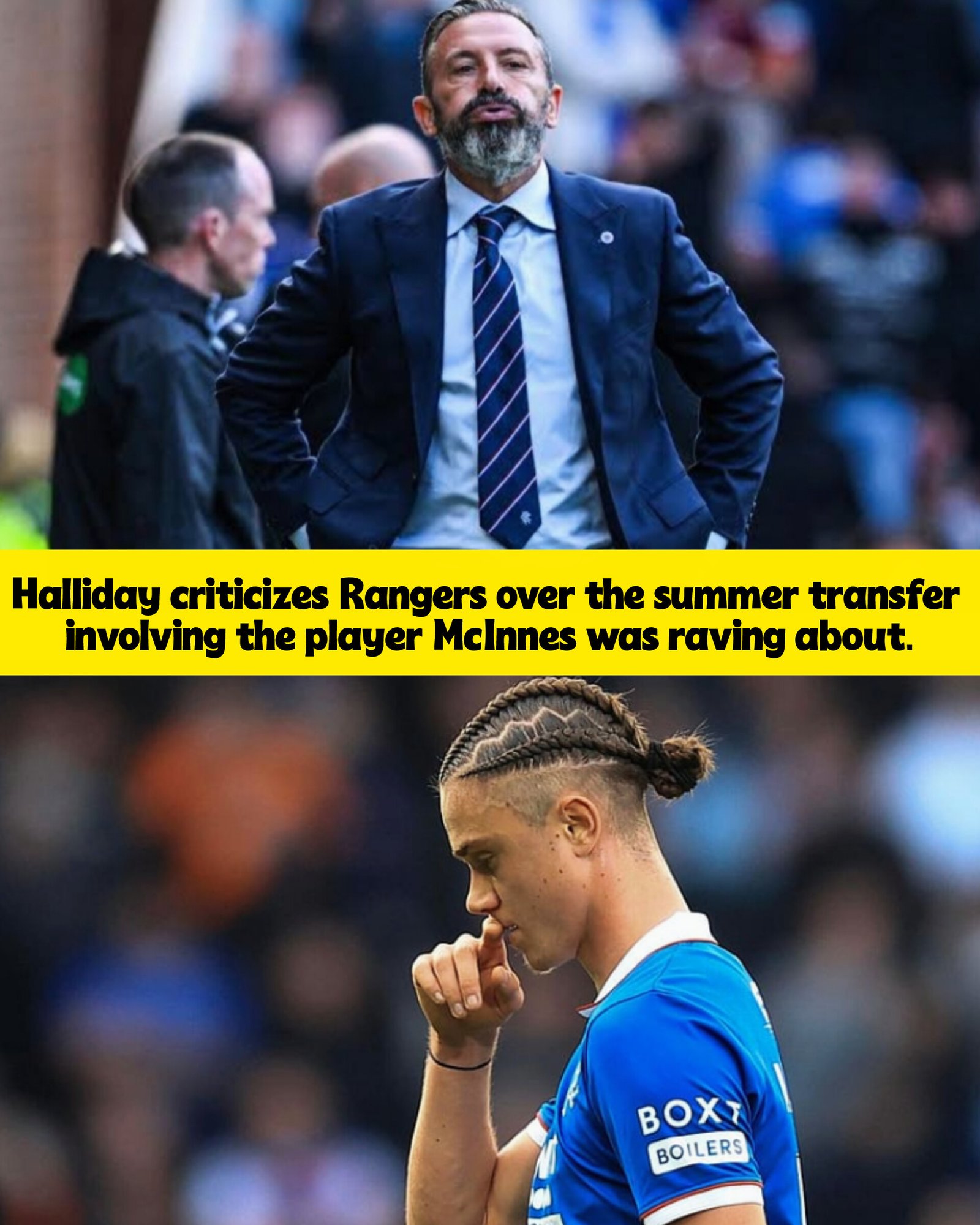
The Norway international completed a temporary move to Anderlecht, joining the Belgian club on a season-long loan from Rangers. While the deal gives Aasgaard an opportunity to play regular football away from Ibrox, Halliday believes the structure of the agreement could leave Rangers facing an unnecessary problem when the current campaign comes to an end.
Aasgaard had appeared to be part of Derek McInnes’ plans when the new Rangers manager arrived. The 24-year-old had particularly impressed the manager with his commitment following Norway’s involvement in the 2026 World Cup.
McInnes was reportedly pleased by Aasgaard’s decision to return to Rangers earlier than expected following his international duties. That appeared to indicate that the midfielder was going to have an important role under the new boss.
However, despite those positive signs, Aasgaard eventually departed Rangers before the transfer deadline, moving to Anderlecht for the remainder of the season.
The arrangement has raised questions because Rangers have not secured a guaranteed permanent transfer.
Anderlecht paid an initial £1 million loan fee and have an option worth £4 million to sign Aasgaard permanently. While that gives Rangers the possibility of bringing in additional money if the Belgian club decides to activate the clause, there is no certainty that will happen.
That is the aspect of the agreement which has particularly frustrated Halliday.
The former Rangers midfielder believes the club should either have demanded a substantial permanent transfer fee or retained Aasgaard rather than agreeing to another loan arrangement containing an option to buy.
Rangers have experienced similar situations with other players in recent seasons. Danilo and Jose Cifuentes, for example, have both spent periods away from Ibrox on temporary deals that included purchase options, only for the players to eventually return to Glasgow.
Halliday believes Rangers should be trying to avoid repeating that pattern.
If Anderlecht decide that Aasgaard has not done enough to justify a permanent move, the Norwegian could simply return to Rangers next summer. That would leave the club having to determine his future all over again, despite having already allowed him to leave during the current campaign.
From Halliday’s perspective, that makes little sense.
If Anderlecht had been willing to pay a significant amount of money upfront for Aasgaard, then Rangers would have had a straightforward reason to approve his departure. Instead, the club accepted a loan arrangement that does not guarantee a permanent exit.
Speaking on Open Goal on September 7, Halliday questioned the logic behind the decision.
“Why are you letting Aasgaard go on loan? Del was raving about him at the start of the season. You don’t let him go on loan,” Halliday said.
He then explained that Rangers should have approached the situation differently if Anderlecht genuinely wanted to secure the player.
“If Anderlecht come in and say here’s £8m up front, fair enough. But don’t go on a loan for a year with an option. Stop letting people go with an option because they’re not going to take it,” he added.
Halliday’s argument is based largely on the uncertainty Rangers have created for themselves.
There is still a possibility that Aasgaard performs well in Belgium and convinces Anderlecht to spend the £4 million required to sign him permanently. If that happens, Rangers will at least have generated a loan fee and eventually received another transfer payment.
However, there is also another possible outcome.
Aasgaard could struggle to establish himself in Belgium, or Anderlecht could simply decide that the midfielder is not worth the agreed permanent fee. In that scenario, Rangers would see the player return to Ibrox and would have to decide whether he remains part of McInnes’ plans.
That could prove particularly frustrating because the manager appeared to value the player earlier in the season.
There were initially understandable concerns among some Rangers supporters about the decision to allow Aasgaard to leave. The squad had limited creative options in the centre of midfield, and losing another attacking-minded player appeared to leave McInnes short of alternatives.
Since then, however, the Rangers manager has found another solution.
Minsu Kim has emerged as an option in the number 10 position, and the South Korean youngster has shown promising signs during his opening three matches playing behind the main striker.
His performances have suggested that Rangers may not be as dependent on Aasgaard as some supporters originally feared.
McInnes also has Badredine Bouanani available as another attacking option. The Algeria international can operate in the advanced midfield position ahead of a deeper double pivot, providing the manager with further flexibility.
That suits the tactical system McInnes has preferred at Rangers.
The Scottish manager has largely used a 4-2-3-1 formation, meaning the attacking midfielder behind the striker has an important role in connecting the midfield with the forward line.
At the beginning of the campaign, Aasgaard appeared well placed to occupy that position. McInnes’ early praise suggested the midfielder could become an important member of the team.
Yet his influence gradually diminished.
As other players became more prominent and McInnes settled on different combinations, Aasgaard’s role became less significant. Once that happened, allowing him to seek regular football elsewhere became easier to understand from a footballing perspective.
There is therefore a reasonable argument that Aasgaard needed a move in order to play consistently.
From Rangers’ perspective, however, the bigger question concerns the financial structure of the deal.
A permanent sale would have provided clarity. Rangers would either have received an agreed transfer fee or kept the player. The current arrangement leaves them waiting to discover what Anderlecht ultimately decide.
The £1 million loan payment provides some immediate financial benefit, but the £4 million option could prove less valuable if it is not exercised.
That is why Halliday believes Rangers missed an opportunity during negotiations.
Had Anderlecht been prepared to offer a sizeable upfront fee, Rangers could have used the money to strengthen their squad elsewhere while removing the uncertainty surrounding Aasgaard’s future.
Instead, they have effectively postponed the decision for another year.
The situation could become even more complicated if Aasgaard impresses in Belgium but Anderlecht still refuse to meet the option price. Rangers would then have to assess whether to bring him back into the squad or search for another buyer.
Equally, if he struggles, his market value could become harder to protect.
For now, McInnes appears comfortable with his attacking midfield options. Kim has provided encouragement in the number 10 role, while Bouanani offers another solution within the manager’s preferred system.
That means Aasgaard’s departure may not have an immediate impact on Rangers’ performances.
Nevertheless, the long-term handling of the transfer remains open to debate.
McInnes clearly saw qualities in Aasgaard, particularly early in his Rangers tenure, but the midfielder’s decreasing influence eventually made a loan move understandable.
The greater concern is whether Rangers could have negotiated a better financial outcome.
A permanent transfer would have offered a cleaner solution, while a substantial upfront fee would have justified allowing the Norway international to leave.
Instead, Rangers have accepted a temporary arrangement with a relatively modest initial payment and an option that Anderlecht are under no obligation to activate.
If the Belgian club decide against making the move permanent, Rangers could be left with the same question they were attempting to answer this summer.
For Halliday, that is precisely why the club’s decision deserves scrutiny.
Aasgaard’s future may ultimately depend on what he produces at Anderlecht, but Rangers will be hoping the gamble does not come back to haunt them.
-
 Blog8 months ago
Celtic issues a fiery VAR statement after Trusty’s red card appeal is dismissed, as furious chiefs release referee audio publicly.
-

 Blog1 month ago
Former official calls on SFA to contact Rangers over fan scenes during Celtic match, labeling them “completely unacceptable.”
-

 Blog8 months ago
Celtic informed their January signing under Martin O’Neill that he wouldn’t play a single minute this season.
-

 Blog8 months ago
Celtic issued an £83 million warning amid looming UEFA threats.
-

 Blog8 months ago
SFA Expected to Review Missed Penalty in Rangers v Celtic Clash
-

 Blog7 months ago
Police respond after reported disorder following Middlesbrough vs Millwall clash
-

 Blog1 month ago
Middlesbrough receive a warning following Steve Gibson’s submission of a £1.5bn proposal.
-

 Blog1 year ago
“Courtside to Aisle-Side: Tyrese Haliburton and Jade Jones Set New Wedding Date”