
Blog
Michael Stewart slams Nick Walsh’s decision after Rangers penalty against St Mirren as “arrogance.”

Nick Walsh has faced renewed criticism following Rangers’ 2-0 victory over St Mirren, with former Scotland international Michael Stewart questioning both the penalty decision and the referee’s response to the players who challenged him.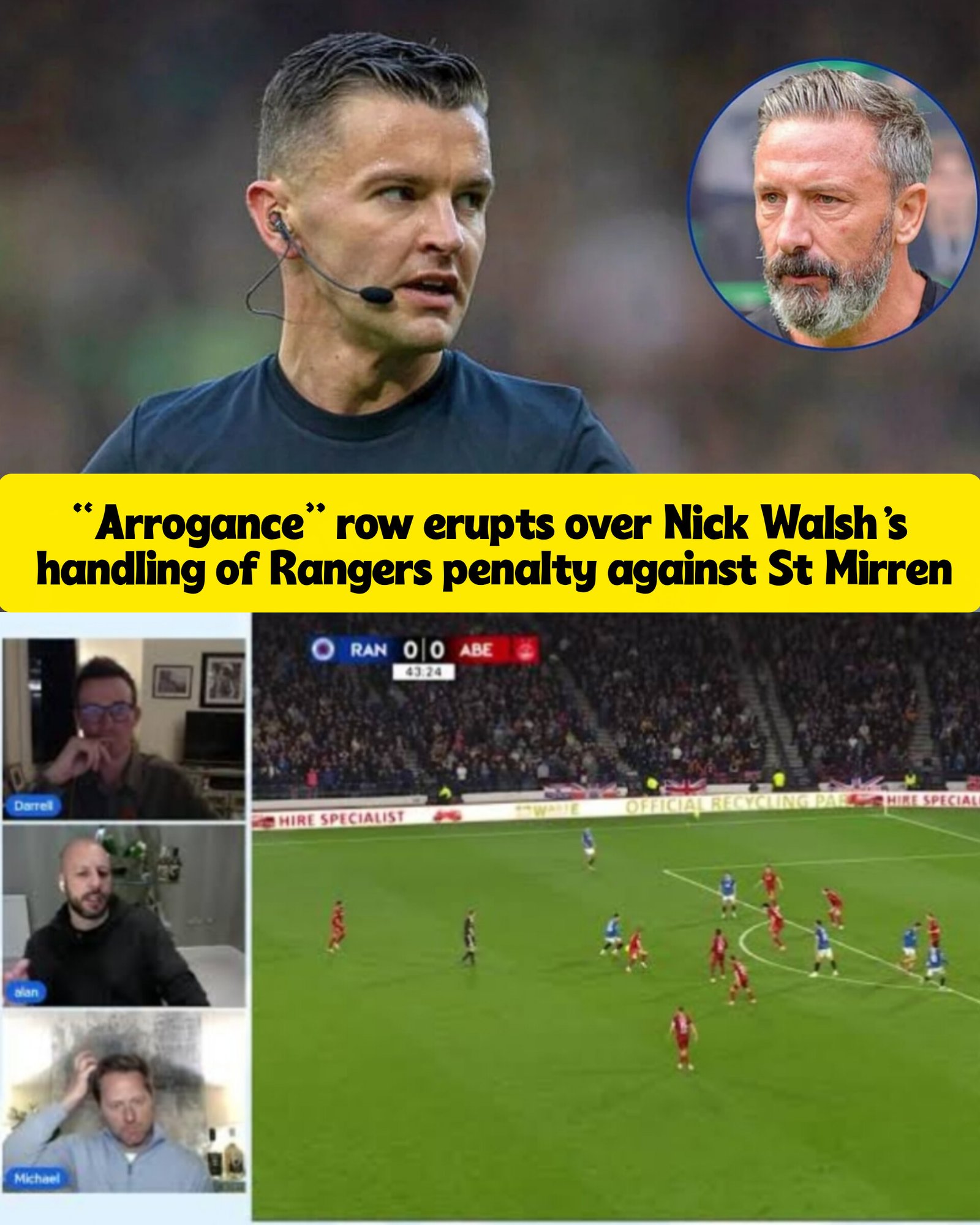
Rangers travelled to Paisley looking to maintain their unbeaten run and keep the pressure on Celtic in the Scottish Premiership. They achieved that objective, taking all three points after Ryan Naderi converted a penalty and Dan Neil added a second goal with a strike that took a deflection on its way into the net.
However, much of the discussion afterwards focused on the incident that led to the opening goal. Walsh awarded Rangers a spot-kick after Samuel Ramos made contact with James Penrice inside the penalty area. The decision attracted criticism, with questions raised about whether the contact was sufficient to justify a penalty.
Rangers manager Derek McInnes and Penrice were among those who considered the decision correct. Their view was not shared by everyone, and the debate has continued beyond the final whistle. Stewart has now added his criticism, arguing that the referee’s behaviour after awarding the penalty was also worthy of attention.
Stewart criticises the referee’s response
Following the decision, Ramos and a number of St Mirren players approached Walsh to express their frustration. The referee did not engage in a lengthy discussion with them. Instead, he gestured for the players to move away and continued with the game.
That reaction became a separate talking point on the Scottish Football Social Club, where Stewart made clear that he disagreed with the penalty award. He described the decision as a serious error and argued that the VAR officials had made matters worse by allowing it to stand.
Stewart also took issue with the way Walsh dealt with Ramos. In his view, the St Mirren player had approached the referee to speak rather than behaving aggressively, and the official’s response showed a lack of respect. Stewart characterised the exchange as dismissive and questioned whether that sort of interaction was appropriate from a match official.
His comments have placed further attention on Walsh, who was already facing scrutiny over the incident itself. The debate is therefore no longer limited to whether Ramos committed a foul on Penrice. It has expanded to include how referees should communicate with players when contentious decisions are made.
The rules around approaching officials
There is, however, another way to interpret Walsh’s actions. Refereeing guidance has increasingly sought to prevent players from surrounding officials whenever a decision goes against their team. Under the approach being applied, the captain is generally the player expected to speak to the referee and seek clarification on behalf of teammates.
That practice is intended to make communication more orderly and to reduce confrontations involving several players at once. From that perspective, Walsh waving Ramos and the other St Mirren players away could be viewed as an attempt to apply the established approach rather than an expression of arrogance.
Ramos was not shown a yellow card for his reaction. If he wanted an explanation, the rules and guidance around communication would allow the team captain to raise the matter with the referee. The fact that players may disagree with a decision does not necessarily mean the official must individually explain it to everyone who approaches.
Stewart’s criticism reflects his interpretation of the exchange, but the wider context matters when assessing the referee’s response. Match officials are expected to maintain control, particularly when several players move towards them after a major decision. Keeping the discussion to the captain can help prevent a match from becoming difficult to manage.
Debate over the penalty continues
The penalty itself remains open to disagreement. Critics believe the contact between Ramos and Penrice was too slight to justify a spot-kick, while those supporting the decision point to the fact that the challenge made contact with the Rangers player and affected his ability to continue towards the ball.
Although the contact appeared limited, the argument in favour of the award is that Ramos did not play the ball and impeded Penrice as he attempted to reach it. That distinction is central to the debate over whether Walsh was justified in pointing to the spot.
Former Rangers defender Alan Hutton also considered the decision a poor one, underlining that criticism has not been confined to Stewart. Nevertheless, the discussion has raised a familiar question about how consistently controversial decisions involving Scotland’s biggest clubs are examined.
For Rangers, the most important outcome was securing another victory. Naderi’s penalty gave them the lead, and Neil’s deflected effort made sure of the result. The win extended their unbeaten sequence and kept them applying pressure at the top of the table for the time being.
-
 Blog9 months ago
Celtic issues a fiery VAR statement after Trusty’s red card appeal is dismissed, as furious chiefs release referee audio publicly.
-
 Blog2 months ago
Former official calls on SFA to contact Rangers over fan scenes during Celtic match, labeling them “completely unacceptable.”
-

 Blog9 months ago
Celtic informed their January signing under Martin O’Neill that he wouldn’t play a single minute this season.
-

 Blog9 months ago
Celtic issued an £83 million warning amid looming UEFA threats.
-
 Blog8 months ago
SFA Expected to Review Missed Penalty in Rangers v Celtic Clash
-

 Blog7 months ago
Police respond after reported disorder following Middlesbrough vs Millwall clash
-

 Blog2 months ago
Middlesbrough receive a warning following Steve Gibson’s submission of a £1.5bn proposal.
-

 Blog1 year ago
“Courtside to Aisle-Side: Tyrese Haliburton and Jade Jones Set New Wedding Date”