Blog
Rangers received a new referee’s red card decision as the SFA raises the VAR standards, making the title chase more difficult.

Rangers have found themselves at the center of another refereeing debate after a controversial decision involving Jayden Meghoma during their high-scoring win over Falkirk. While the incident did not ultimately affect the result, it has reignited criticism of VAR standards and the application of the Denial of a Goalscoring Opportunity (DOGSO) rule in Scottish football.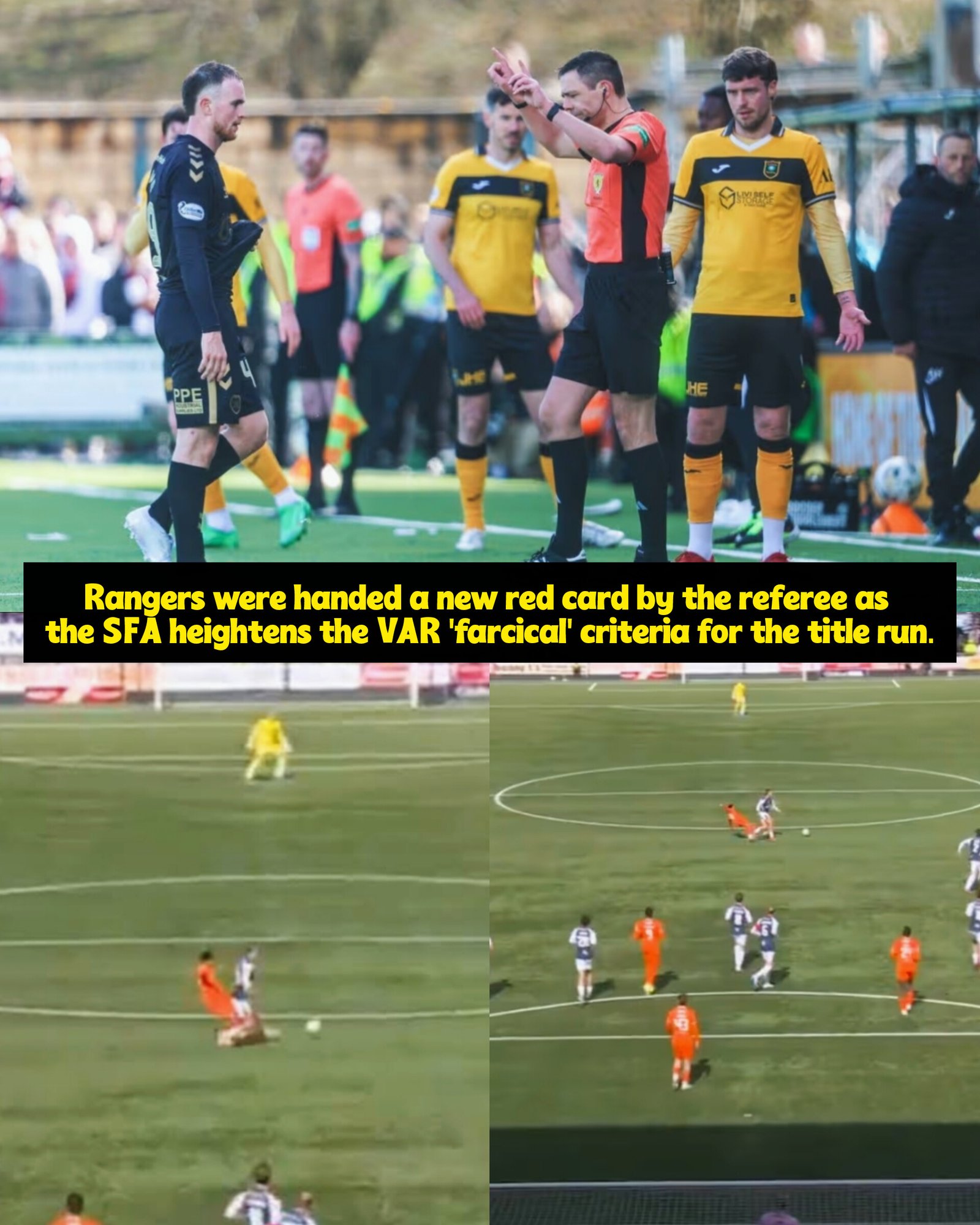
Former referee Steven Conroy has argued that Meghoma should have been sent off—but only when judged against what he described as inconsistent and “farcical” interpretations of the rules in recent matches.
Jayden Meghoma of Rangers is booked vs Falkirk
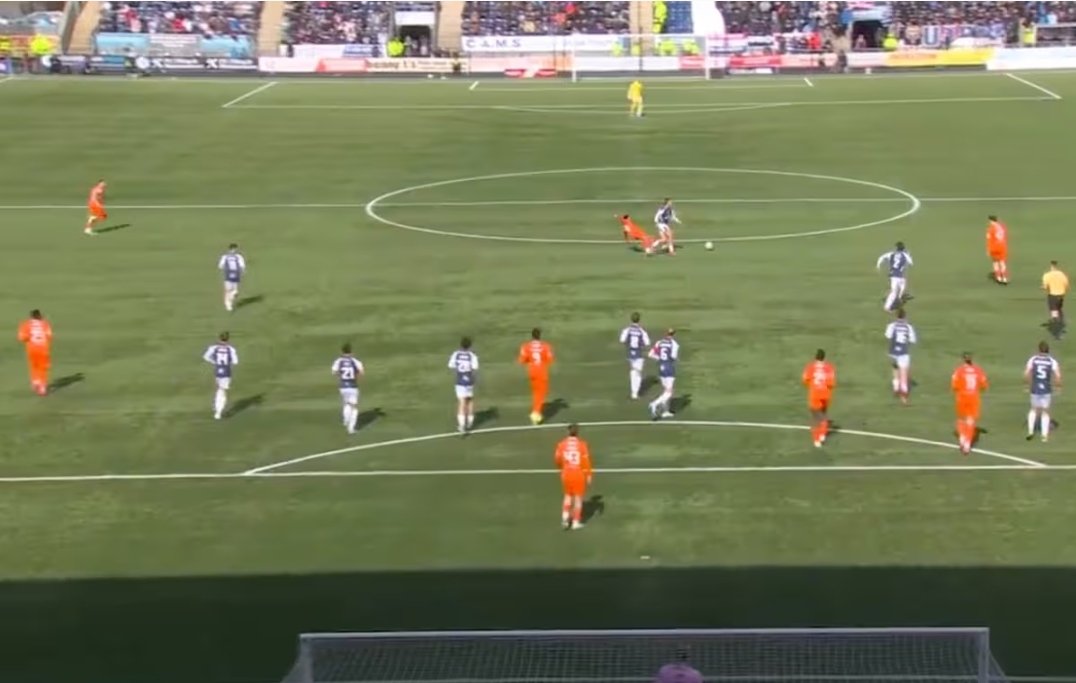
The flashpoint came during a Falkirk counterattack, with Calvin Miller driving forward from inside his own half and appearing to have space ahead of him. Meghoma, on loan from Brentford, stepped in to halt the run before it could fully develop. Despite the challenge potentially stopping a promising attack, referee Don Robertson opted to show only a yellow card.
The decision was reviewed by VAR official Andrew Dallas, who chose not to upgrade the punishment. With defenders James Tavernier and Nicolas Raskin still within the frame and possibly able to recover, the officials judged that the criteria for a red card had not been met. Jack Butland was also positioned further off his line, adding another layer of doubt as to whether a clear goalscoring opportunity had truly been denied.
Rangers went on to win the match 6-3, but the debate surrounding the decision quickly overshadowed the result. Conroy believes that, under normal interpretation, Meghoma’s challenge should not warrant a red card. However, he insists that recent rulings have created confusion and inconsistency, effectively shifting the standard for what constitutes DOGSO.
The controversy stems largely from a similar incident in a previous match involving Heart of Midlothian midfielder Marc Leonard. In that case, Leonard was sent off for pulling back Robbie Muirhead near the halfway line to prevent a breakaway. The decision was made by referee Kevin Clancy after input from VAR—ironically with Robertson involved in that review.
That call was upheld on appeal by the Scottish Football Association, setting what Conroy believes is a dangerous precedent. According to him, if Leonard’s foul was deemed to deny a goalscoring opportunity, then similar incidents—such as Meghoma’s—must now be judged by the same standard.
Speaking on The Ref’s View podcast, Conroy did not hold back in his criticism. He described the current handling of DOGSO as deeply flawed, suggesting that officials have overcomplicated the rule in an attempt to appear precise and analytical. In doing so, he argues, they have created confusion rather than clarity.
He pointed out that, traditionally, DOGSO situations are expected to involve an almost certain chance of scoring, where the attacking player is through on goal with minimal defensive interference. In his view, neither Leonard’s foul nor Meghoma’s challenge meets that threshold. He stressed that for a true DOGSO, the next touch of the ball should realistically result in a goal, something he believes was not the case in either scenario.
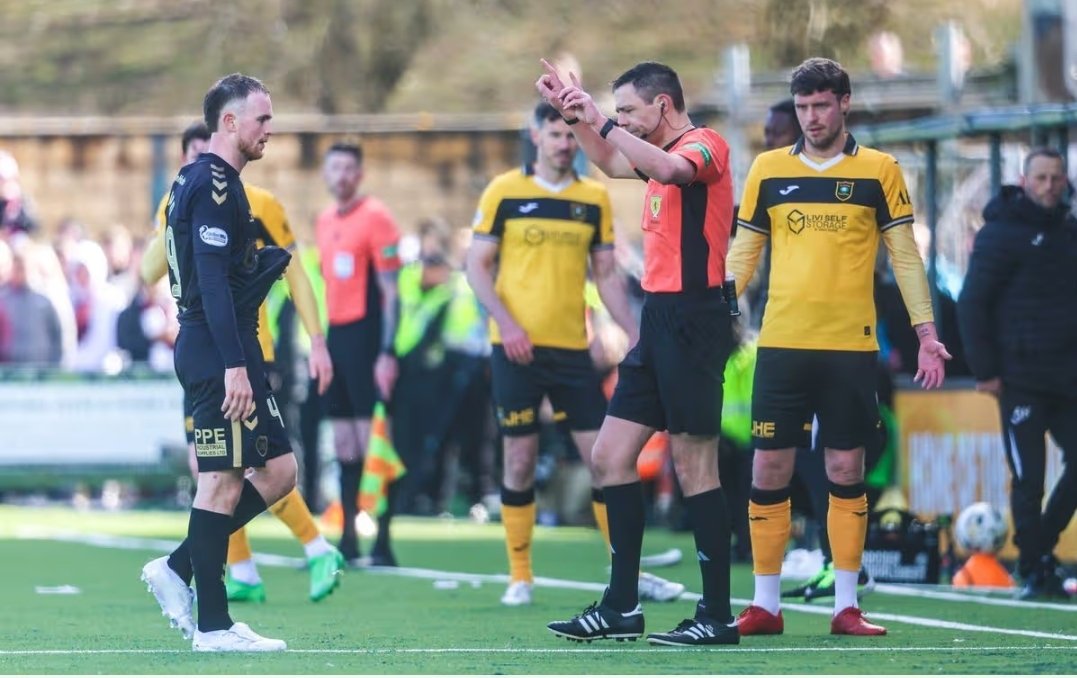
Marc Leonard is sent off(Image: SNS Group)
Conroy also highlighted how unusual it is to see such decisions being made so far from goal. Incidents occurring near the halfway line have historically not been classified as denying a clear scoring chance, yet recent rulings appear to have stretched that interpretation. This, he argues, risks opening the door to even more contentious decisions in the future.
He warned that if the current trend continues, officials may begin awarding red cards in increasingly questionable situations, further undermining confidence in refereeing standards. His frustration was directed squarely at the SFA, whom he accused of creating the confusion through stubbornness and inconsistent application of the rules.
The broader concern is how these decisions could influence the outcome of the season. With the title race intensifying, every major call carries added significance. Inconsistent interpretations of VAR and DOGSO could have a direct impact on results, potentially shaping the destination of the championship.
For Rangers, the immediate consequence was minimal, as they secured victory despite the controversy. However, the debate surrounding Meghoma’s challenge reflects a wider issue within Scottish football—one that shows no sign of fading as the campaign approaches its निर्णing stages.
Ultimately, Conroy’s argument is not necessarily that Meghoma deserved to be sent off under a fair and consistent system, but rather that the system itself has become so muddled that similar incidents are now being judged differently from week to week. Until greater clarity and consistency are achieved, such controversies are likely to persist, leaving players, coaches, and supporters frustrated by decisions that seem increasingly difficult to understand.
-
 Blog7 months ago
Celtic issues a fiery VAR statement after Trusty’s red card appeal is dismissed, as furious chiefs release referee audio publicly.
-
 Blog1 week ago
Former official calls on SFA to contact Rangers over fan scenes during Celtic match, labeling them “completely unacceptable.”
-

 Blog7 months ago
Celtic informed their January signing under Martin O’Neill that he wouldn’t play a single minute this season.
-

 Blog7 months ago
Celtic issued an £83 million warning amid looming UEFA threats.
-
 Blog7 months ago
SFA Expected to Review Missed Penalty in Rangers v Celtic Clash
-
 Blog6 months ago
Police respond after reported disorder following Middlesbrough vs Millwall clash
-

 Blog1 year ago
“Courtside to Aisle-Side: Tyrese Haliburton and Jade Jones Set New Wedding Date”
-

 Blog7 months ago
£6m star is looking to leave Rangers this summer and has already announced his next club publicly.