Blog
Thug received a two-year ban from football after ambushing rival fans in an Airdrie pub.

Airdrieonians F.C. supporter Nathan Dunsmore has been handed a two-year football banning order after rival fans were ambushed at a pub ahead of a Scottish Cup match against St Johnstone F.C..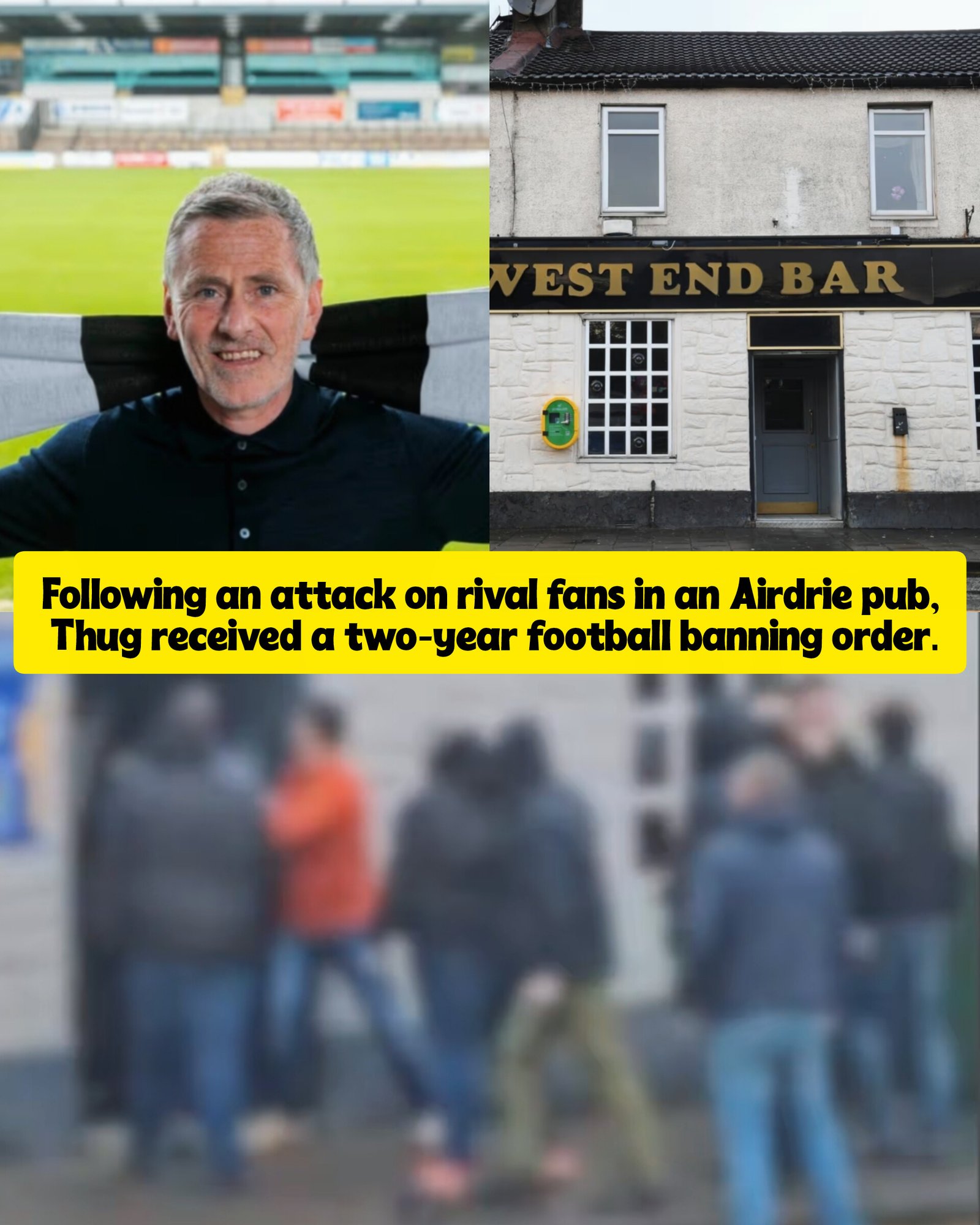
The violent disorder unfolded before the cup clash on January 20, 2024, when a group of Airdrieonians supporters confronted St Johnstone fans gathered inside the West End Bar in Airdrie. Prosecutors told the court that tensions escalated rapidly after the group arrived at the premises, leading to fighting that spilled from inside the pub out onto the street.
At Airdrie Sheriff Court, the court heard that Dunsmore had been among a crowd of supporters seen on CCTV footage approaching the pub while partially concealing their identities.
Prosecutor Annette Ward explained that members of the group had their hoods pulled up and scarves covering parts of their faces as they made their way toward the venue where St Johnstone supporters had gathered before the game.
According to the prosecution, bottles were thrown into the bar shortly before the confrontation erupted. Once the Airdrie supporters reached the pub, an altercation immediately broke out between both sets of fans.
Ward said the confrontation quickly descended into a scuffle involving multiple individuals and eventually moved outside onto the street. During the disorder, one person was assaulted by two unidentified men, though Dunsmore was not accused of carrying out that particular attack.
Dunsmore, 27, admitted a charge of breach of the peace by fighting, shouting and swearing during the disturbance.
The court was told that his behaviour formed part of a wider outbreak of football-related violence involving rival supporters before the Scottish Cup fixture.
Defence solicitor Nicky Matteo said Dunsmore had been abusing alcohol and drugs heavily at the time of the incident and had lost control of his behaviour.
Matteo explained that the accused had been drinking excessively and taking drugs during that period of his life, which contributed significantly to his actions on the day of the disorder.
The lawyer told the court that Dunsmore had effectively been “out of control” when the incident took place.
During proceedings, Sheriff Joseph Hughes criticised Dunsmore after noticing him laughing in the dock while CCTV footage of the violence was shown in court.
The sheriff said Dunsmore appeared to find the incident amusing, something he described as deeply concerning given the seriousness of the behaviour displayed in the footage.
Sheriff Hughes remarked that it looked as though Dunsmore considered the disorder “a bit of fun,” adding that the reaction caused him concern.
In response, defence lawyer Matteo insisted his client had not been laughing at the violence itself but had instead reacted awkwardly out of embarrassment after seeing the way he had been dressed on the day.
The solicitor explained that Dunsmore felt ashamed when watching the footage and was embarrassed by his appearance and conduct during the incident.
Despite the mitigation offered by the defence, the sheriff imposed a prison sentence of one year on Dunsmore.
However, the sentence was backdated because Dunsmore had already been in custody on unrelated matters since May 2024.
As part of the punishment, the court also issued a two-year football banning order preventing him from attending matches during that period.
The banning order means Dunsmore will be prohibited from attending regulated football games and could face further legal consequences if he breaches the restrictions.
The case has again highlighted concerns surrounding football-related disorder in Scotland and the continued problems authorities face in dealing with violent clashes involving rival supporters.
Incidents involving groups of fans gathering before matches have repeatedly drawn criticism from police, football authorities and local communities worried about public safety and antisocial behaviour.
The confrontation at the West End Bar caused alarm among those present, with tensions escalating rapidly once the rival supporters came face to face.
CCTV footage played during the hearing captured scenes of chaos as the groups clashed both inside and outside the pub.
The court heard that the situation deteriorated almost immediately after the Airdrie supporters arrived outside the venue.
The disturbance was serious enough to lead to criminal proceedings against several individuals connected to the disorder.
At an earlier court hearing linked to the same incident, two additional Airdrieonians supporters were also handed two-year football banning orders for their involvement in the trouble.
Authorities hope the banning orders will help deter further violence connected to football matches and send a message about the consequences of disorderly behaviour.
Scottish courts have increasingly used football banning orders in recent years as part of wider efforts to tackle hooliganism and improve safety around matches.
Such orders are designed to prevent individuals linked to violence or public disorder from attending games where tensions between rival supporters could lead to further incidents.
The disorder in Airdrie is one of several cases in recent years where rival groups of football supporters have been involved in violent confrontations before or after fixtures.
Police and prosecutors continue to stress that football rivalry should never be used as an excuse for criminal behaviour or violence in public places.
For Dunsmore, the court’s decision marks another serious consequence stemming from his actions on the day of the Scottish Cup tie.
The sheriff made clear that the behaviour captured on CCTV was unacceptable and warranted both imprisonment and restrictions on attending football matches.
The case also served as a reminder of how quickly situations involving large groups of supporters can escalate into disorder, especially when alcohol and drugs are involved.
While the match itself was intended to be a sporting occasion, events before kick-off instead resulted in violence, criminal convictions and long-term sanctions for those involved.
With multiple supporters now banned from football matches following the incident, authorities will hope the punishments help discourage similar confrontations in the future and reinforce the message that hooliganism will not be tolerated.
-
 Blog7 months ago
Celtic issues a fiery VAR statement after Trusty’s red card appeal is dismissed, as furious chiefs release referee audio publicly.
-
 Blog3 weeks ago
Former official calls on SFA to contact Rangers over fan scenes during Celtic match, labeling them “completely unacceptable.”
-

 Blog8 months ago
Celtic informed their January signing under Martin O’Neill that he wouldn’t play a single minute this season.
-
 Blog7 months ago
Celtic issued an £83 million warning amid looming UEFA threats.
-
 Blog7 months ago
SFA Expected to Review Missed Penalty in Rangers v Celtic Clash
-
 Blog6 months ago
Police respond after reported disorder following Middlesbrough vs Millwall clash
-

 Blog2 weeks ago
Middlesbrough receive a warning following Steve Gibson’s submission of a £1.5bn proposal.
-

 Blog1 year ago
“Courtside to Aisle-Side: Tyrese Haliburton and Jade Jones Set New Wedding Date”