
Blog
The FIS president faces a reelection vote as Shiffrin and Odermatt call for change.

The leadership of the International Ski and Snowboard Federation (FIS) is under intense scrutiny as current president Johan Eliasch prepares to face a re-election challenge, with some of the sport’s biggest stars publicly questioning the direction of the organization.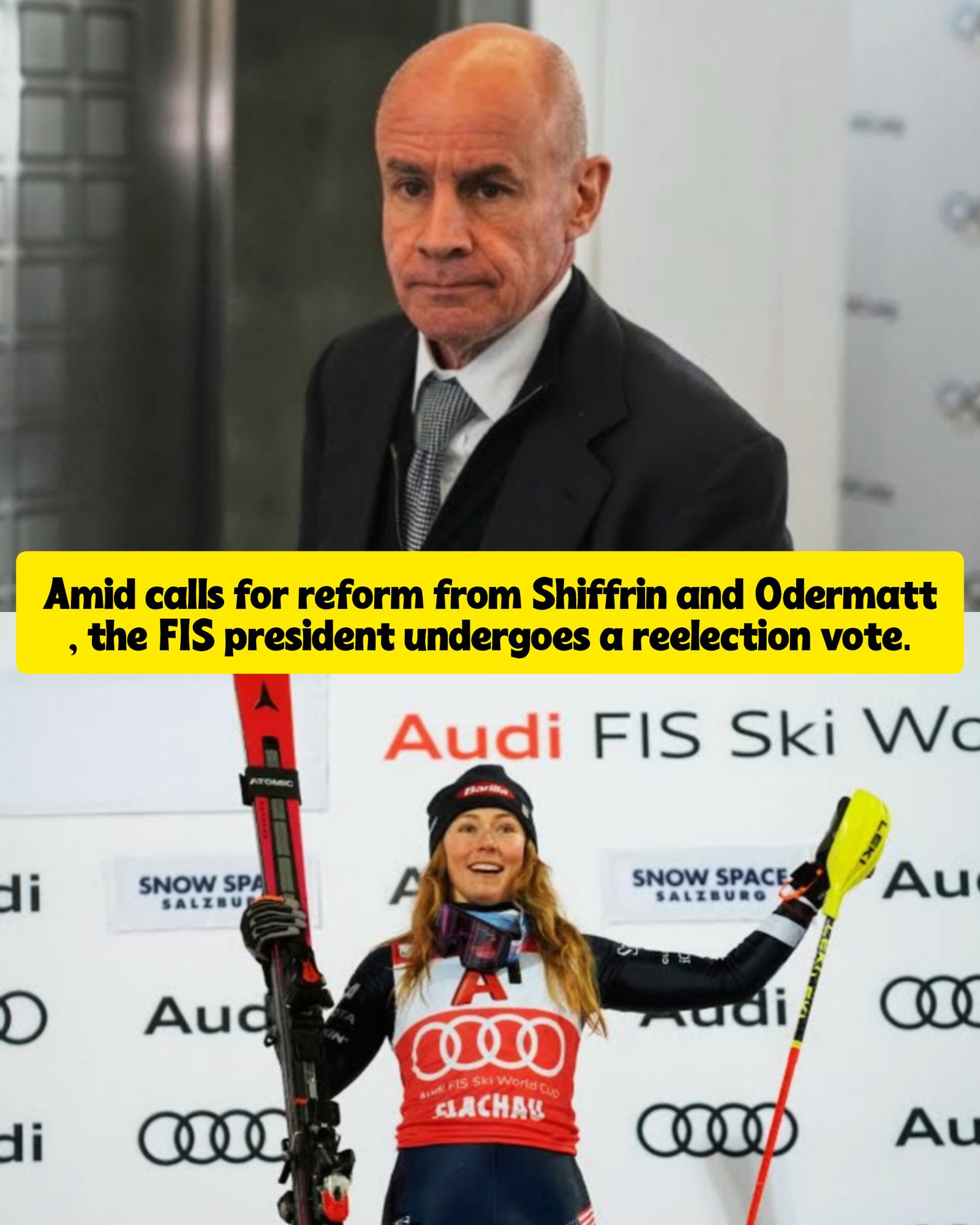
The vote, scheduled to take place in Belgrade, Serbia, comes at a time when divisions within international skiing have become increasingly visible. While it is uncommon for a sitting president of a major Olympic sports federation to face a serious challenge after serving only one complete term, Eliasch finds himself in precisely that position despite having secured a place within the International Olympic Committee during his tenure.
Eliasch, who first took office in 2021, is seeking another term as head of FIS. However, he faces growing resistance from influential skiing nations and prominent athletes who believe the federation needs a different approach moving forward. The opposition is particularly strong among traditional Alpine and Nordic skiing powers, as well as several key North American federations.
Despite the criticism, Eliasch remains confident about his support base. Speaking ahead of the election, he suggested that opposition to his leadership represents only a small minority within the federation. According to the outgoing president, the overwhelming majority of member nations support the vision and reforms he has attempted to implement during his time in charge.
Eliasch argued that while a handful of countries have voiced dissatisfaction, most member federations understand and back the broader objectives he has pursued. He maintains that his efforts have been directed toward modernizing the sport, improving its commercial position, and creating a stronger foundation for future growth.
A billionaire businessman who made his fortune building the Head sports equipment brand into a global success, Eliasch has often found himself at odds with many of skiing’s traditional powerhouses. Several established federations have repeatedly expressed concerns about his management style and the financial direction of the governing body.
One unusual aspect of his re-election campaign is that neither Sweden nor Britain, the two countries of which he is a citizen, supported his candidacy. Instead, he secured eligibility to run through Georgia after obtaining a passport and nomination from the country in accordance with FIS regulations.
When Eliasch first won the presidency in 2021, he enjoyed the backing of several respected figures within the skiing world. Among those publicly supporting him were legendary racers Lindsey Vonn and Aksel Lund Svindal, both long-time athletes associated with the Head brand.
The atmosphere surrounding this election, however, is noticeably different. Two of the sport’s current superstars, Mikaela Shiffrin and Marco Odermatt, have openly criticized the direction in which they believe FIS is heading under Eliasch’s leadership.
The election itself has gradually narrowed to a direct contest between Eliasch and Alexander Ospelt, a lawyer from Liechtenstein. Several other candidates who initially entered the race, including representatives from the United States, Britain, and Denmark, withdrew before the final vote.
Reflecting on the situation, Eliasch said he views the outcome positively regardless of the result. He explained that a victory would allow him to continue pursuing his ambitions for the sport, while a defeat would enable him to step away from the pressures of administration and reclaim more personal time.
Throughout his presidency, Eliasch has emphasized the need for rapid reform. At 64 years old, he has repeatedly stated that he does not believe change can be achieved through slow, incremental measures. Instead, he has attempted to accelerate modernization efforts across the federation.
One of the most significant changes during his tenure involved bringing the commercial rights for FIS competitions under direct organizational control. This included events such as the World Championships and various World Cup circuits. The decision generated legal disputes and angered several member federations, many of which believed the process lacked adequate consultation.
Eliasch has defended those actions by arguing that FIS needed to become more commercially ambitious. He pointed to investments made during his administration, including the acquisition of the Freeride World Tour, the purchase of a travel-related business, and initiatives designed to strengthen digital media production and expand skiing’s global audience.
According to Eliasch, these investments were intended to put the federation’s financial resources to productive use rather than allowing substantial reserves to remain idle. He believes such decisions have positioned FIS for long-term growth and increased relevance in an increasingly competitive sports marketplace.
The current president has gone even further by claiming that the federation achieved more progress during his five years in office than it had accomplished over the previous century. Nevertheless, he also acknowledged that some of his own decisions may have contributed to tensions.
In his view, one mistake was attempting to be overly diplomatic in certain situations. Eliasch suggested that a stronger and more decisive approach might have produced better outcomes and reduced resistance to his reforms.
Critics, however, paint a very different picture. Many of his opponents argue that his leadership style has been excessively centralized and lacking in transparency. Concerns have also been raised regarding spending levels and the federation’s financial health.
Those concerns were formally outlined in a letter circulated to member federations by senior officials from several major skiing nations, including the United States, Canada, Switzerland, Austria, Germany, and Norway.
The letter warned that financial reserves had declined considerably under the current administration. It also highlighted rising operating expenses and questioned whether projected revenues had materialized as expected. Critics believe these trends could create long-term financial challenges if left unaddressed.
Additional uncertainty emerged following the recent departure of Urs Lehmann, who had been appointed as FIS chief executive officer. Lehmann, a former world champion downhill skier from Switzerland, had actually opposed Eliasch in the federation’s presidential election in 2021 before later accepting a leadership role within the organization.
His resignation shortly before the presidential vote added another layer of intrigue to an already contentious election campaign.
The concerns expressed by athletes have become one of the most significant elements of the debate. Throughout his presidency, Eliasch has spoken about narrowing the enormous financial gap that exists between skiing and more commercially successful sports such as tennis.
As the owner of Head, a company with deep involvement in both sports, he has frequently argued that ski athletes deserve greater earning opportunities.
However, Mikaela Shiffrin has expressed disappointment with the progress made on that front. The American superstar stated that many of the promises discussed during previous campaigns have not translated into meaningful improvements for competitors.
According to Shiffrin, there have been few significant advances regarding athlete compensation. She also suggested that future financial contributions from FIS toward prize money could actually decrease rather than increase, raising concerns among competitors.
Olympic freestyle skier Alex Hall echoed similar frustrations. The American athlete, who has won two Olympic medals, said he had consistently advocated for reform over the last five years but felt that little meaningful change had occurred during that period.
Meanwhile, Marco Odermatt, one of Alpine skiing’s dominant figures, publicly indicated that replacing the current leadership might be necessary. The Swiss star suggested that a change at the top of the federation could be the best path forward.
Eliasch rejected the notion that these views represent the broader athlete community. He insisted that many competitors remain supportive of his administration and that comments from a handful of high-profile athletes do not accurately reflect overall sentiment.
His challenger, Alexander Ospelt, has positioned himself as a candidate focused on collaboration, transparency, and stability. As a current member of the FIS Council, Ospelt argues that the federation requires a more realistic financial strategy and stronger communication between member nations.
Ospelt has emphasized the importance of creating a culture in which all federations feel included and supported. He believes skiing should function as a genuine international family, with stronger cooperation helping the sport expand beyond its traditional strongholds.
One of his long-term goals is to increase the diversity of successful nations competing at the highest level. Ospelt argues that the sport becomes more attractive when medals are won by athletes from a broad range of countries rather than being concentrated among a small group of traditional powers.
He has also stressed the need to listen more carefully to athletes. According to Ospelt, when competitors publicly raise concerns, those criticisms should be viewed as valuable feedback rather than dismissed. He believes athlete voices should play a central role in shaping the future of the federation.
From a commercial perspective, Ospelt sees opportunities to strengthen revenue streams through enhanced storytelling and media exposure. He pointed to projects such as ESPN’s documentary series “On the Edge: World Cup Ski Racing,” which followed leading athletes around the Milan-Cortina Olympic cycle.
The series featured some of skiing’s biggest names, including Shiffrin, Lindsey Vonn, Marco Odermatt, and Lucas Pinheiro Braathen, helping audiences connect with athletes on a more personal level.
Ospelt believes initiatives like these can play a key role in growing the sport’s popularity. In his view, fans are more likely to engage with skiing when they understand the personalities, challenges, and journeys of the athletes competing at the highest level.
He argues that athletes must become more visible if the sport hopes to attract new audiences and commercial partners. When competitors are seen only through helmets and goggles, building meaningful connections with fans becomes significantly more difficult.
As delegates prepare to cast their votes in Belgrade, the election represents a pivotal moment for FIS. Whether member federations choose continuity under Johan Eliasch or opt for a different direction with Alexander Ospelt, the outcome will shape the future of international skiing and snowboarding for years to come.
The debate surrounding governance, finances, athlete welfare, and commercial growth has exposed deep divisions within the sport. Yet it has also highlighted a shared desire to ensure skiing remains competitive, relevant, and globally appealing in an increasingly crowded sporting landscape.
-

 Blog7 months ago
Celtic issues a fiery VAR statement after Trusty’s red card appeal is dismissed, as furious chiefs release referee audio publicly.
-

 Blog3 weeks ago
Former official calls on SFA to contact Rangers over fan scenes during Celtic match, labeling them “completely unacceptable.”
-

 Blog8 months ago
Celtic informed their January signing under Martin O’Neill that he wouldn’t play a single minute this season.
-

 Blog8 months ago
Celtic issued an £83 million warning amid looming UEFA threats.
-

 Blog7 months ago
SFA Expected to Review Missed Penalty in Rangers v Celtic Clash
-

 Blog6 months ago
Police respond after reported disorder following Middlesbrough vs Millwall clash
-

 Blog2 weeks ago
Middlesbrough receive a warning following Steve Gibson’s submission of a £1.5bn proposal.
-

 Blog1 year ago
“Courtside to Aisle-Side: Tyrese Haliburton and Jade Jones Set New Wedding Date”