
Blog
Ally McCoist and Steven Gerrard caused a stir over a Celtic penalty swipe, triggering Rangers legends during FA Cup Final coverage.

Ally McCoist and Steven Gerrard appeared to take a subtle swipe at the recent Celtic refereeing controversy while working together on commentary duty during the FA Cup Final.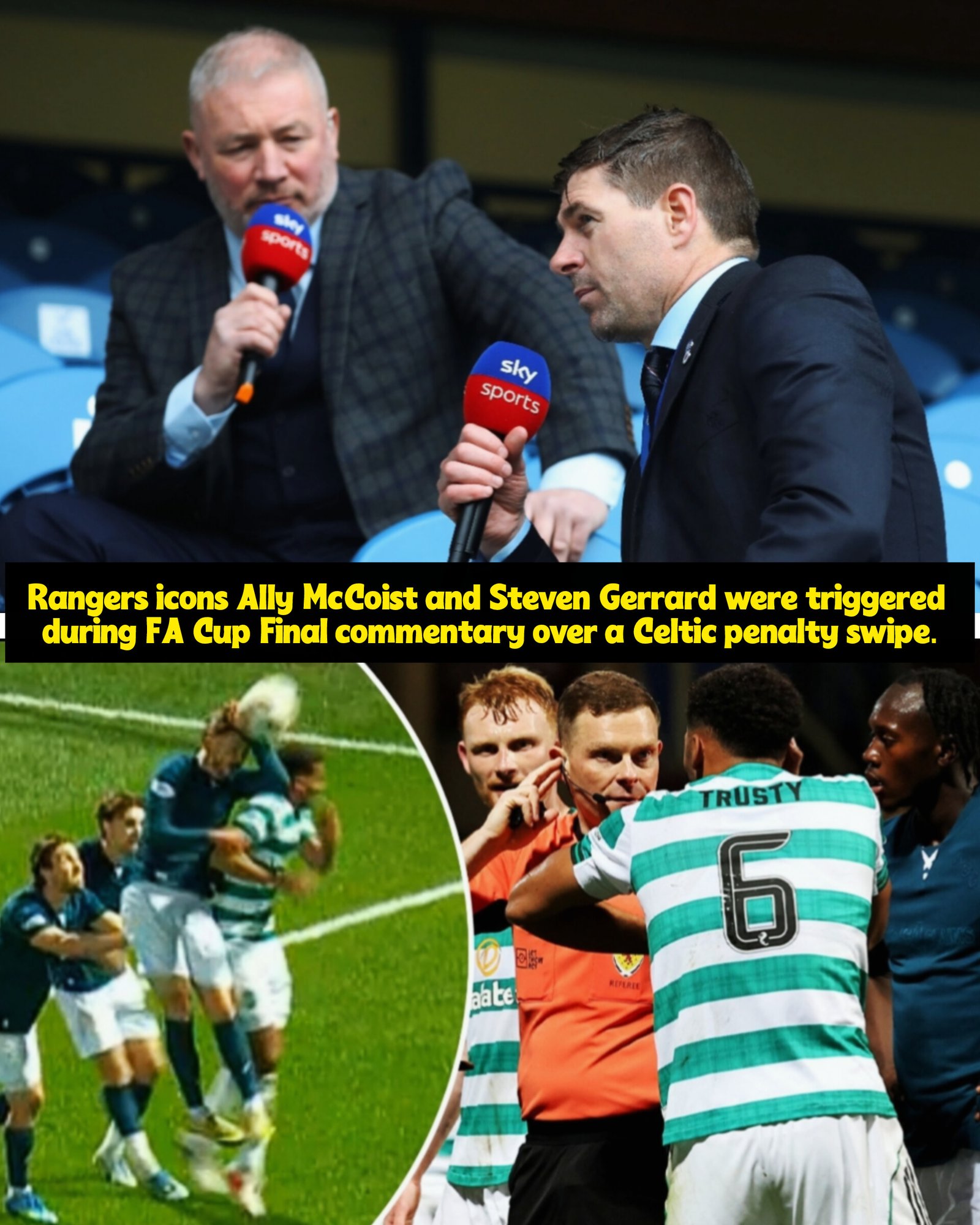
The former Rangers heroes were part of TNT Sports’ broadcast team as Manchester City edged past Chelsea 1-0 at Wembley Stadium on Saturday afternoon.
The moment came midway through the second half with the match still locked at 0-0. Chelsea appealed for a penalty after Enzo Fernandez whipped a cross into the box which struck the arm of Manchester City youngster Nico O’Reilly. However, the referee was unmoved, and VAR did not intervene.
As television replays of the incident were shown, lead commentator Darren Fletcher gave his opinion on the situation and suggested that awarding a penalty for the handball would have been excessive.
Fletcher remarked: “I’ll tell you something. If a penalty is given for that, we may as well all pack up and go home.”
That comment immediately prompted a sharp response from McCoist, who quickly replied: “Wrong country.”
The remark instantly drew laughter from those in the commentary box, with Steven Gerrard joking that his fellow pundit simply could not resist bringing up the Scottish football controversy.
Gerrard laughed and said: “He just couldn’t help himself.”
McCoist then responded in a sarcastic tone, apologising for his comment while clearly standing by the point he was trying to make.
“Sorry about that,” he joked.
However, Gerrard soon revealed that he shared McCoist’s feelings regarding the recent incident in Scottish football.
The former Rangers manager added: “To be fair, I agree with you, by the way.”
Their comments were widely interpreted as a clear reference to the major controversy surrounding Celtic’s dramatic late victory over Motherwell earlier in the week.
That match produced one of the most heavily debated VAR incidents of the Scottish season. Deep into stoppage time at Fir Park, Motherwell midfielder Sam Nicholson was judged to have handled the ball inside the penalty area during a challenge involving Celtic defender Auston Trusty.
Referee John Beaton was alerted to the incident by VAR official Andrew Dallas before reviewing the situation and ultimately awarding a penalty to Celtic.
Kelechi Iheanacho then converted the spot-kick in the dying moments of the game, securing a crucial victory that kept Celtic firmly in the title race heading into the final weekend of the season.
The decision immediately sparked outrage among supporters, pundits and former players, with many arguing that Nicholson’s arm was in a natural position and that the ball had been struck at him from close range.
McCoist was among the loudest critics following the controversial call, openly criticising the officials and insisting the decision damaged the reputation of Scottish football.
Speaking after the match, the Rangers icon described the award as an embarrassment for the game north of the border.
He blasted: “It’s an absolutely dreadful decision that once again makes Scottish football look ridiculous.”
The fallout from the incident has continued to dominate discussion throughout the week, with debate raging over whether VAR is helping or harming the game in Scotland.
Despite the fierce criticism from many quarters, there have also been reports suggesting that head of refereeing Willie Collum supported the decision made by referee John Beaton and the VAR team.
According to those reports, Collum believed the officials had correctly interpreted the handball laws and reached the right conclusion in awarding the penalty.
The controversy surrounding the incident escalated even further after it emerged that referee Beaton had become the subject of online abuse and threats following the game.
The Scottish Football Association released a strongly-worded statement confirming that Beaton had required police protection after personal details, including his home address, were leaked online.
The SFA condemned the behaviour in the strongest possible terms and warned that the growing hostility toward referees was becoming deeply concerning.
The governing body stated that match officials should never face intimidation or threats because of decisions made during football matches, regardless of whether supporters agreed with those calls.
Police Scotland also became involved after the information was circulated online, with investigations launched into the leak of Beaton’s private details.
The incident has intensified wider concerns about the treatment of referees in Scottish football, particularly during a tense and dramatic title race involving Celtic and Hearts.
Many figures within the game have called for calmer discussion around officiating decisions, while others have argued that referees must also be open to criticism when controversial moments occur.
McCoist’s comment during the FA Cup Final therefore quickly attracted attention across social media, with many viewers recognising the reference instantly.
His response reflected the frustration felt by many Rangers supporters and neutral observers who believed the Motherwell decision heavily influenced the title race.
At the same time, Celtic supporters have continued to defend the officials’ decision, arguing that the laws of the game were correctly applied and that criticism of the referee has gone far beyond acceptable levels.
The debate has become one of the defining talking points of the Scottish football season and shows little sign of disappearing anytime soon.
Meanwhile, Manchester City ultimately secured victory over Chelsea at Wembley thanks to a second-half winner, lifting yet another major trophy under Pep Guardiola.
But despite the significance of the FA Cup Final itself, it was McCoist and Gerrard’s brief exchange about Scottish football that generated plenty of discussion among fans online.
Their comments added another chapter to the ongoing fallout surrounding Celtic’s controversial penalty decision and the fierce debate over officiating standards in Scotland.
Every word from Michael Stewart’s fervent speech on referees amidst the VAR chaos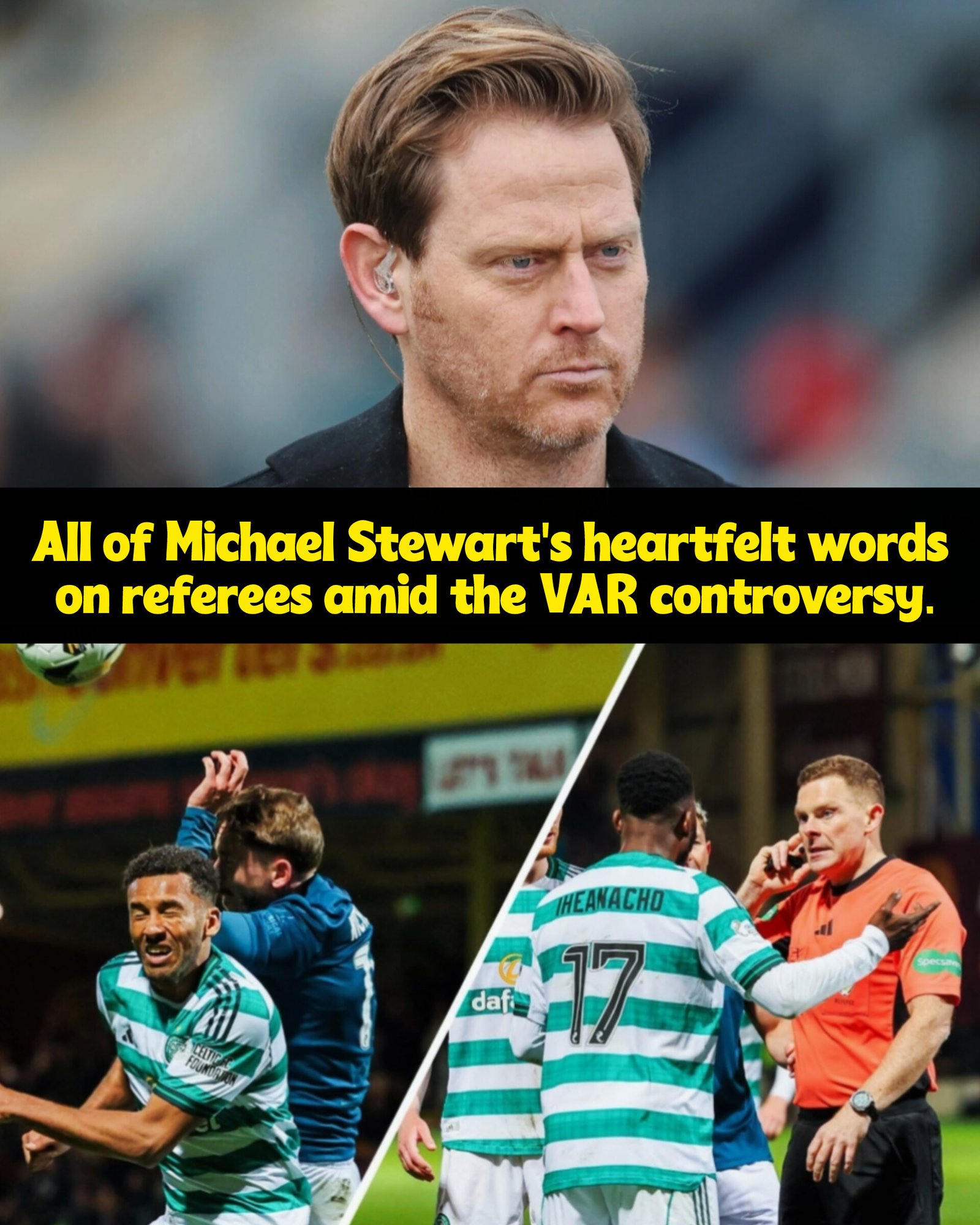
Former Hearts captain Michael Stewart delivered a passionate and strongly-worded assessment of officiating standards in Scottish football following the controversy surrounding the Premiership title race.
The debate around refereeing decisions intensified after Celtic were awarded a highly controversial penalty during Wednesday night’s dramatic clash with Motherwell FC at Fir Park.
That incident ultimately proved crucial in helping Celtic FC secure the Scottish Premiership title under manager Martin O’Neill.
Speaking while previewing Livingston’s meeting with Kilmarnock FC on Premier Sports, Stewart reflected on the dramatic nature of the title battle before turning his attention toward the growing concerns surrounding officiating and VAR decisions.
He began by acknowledging the excitement generated by the title race, describing it as one of the most dramatic and entertaining campaigns Scottish football has witnessed in many years.
According to Stewart, Celtic ultimately emerged victorious in what he considered one of the greatest title races supporters are likely to see.
However, he stressed that another important issue also needed to be addressed and should not simply be brushed aside now that the season has concluded.
Stewart explained that there is an increasing feeling among supporters and observers that officiating decisions have played a significant role in shaping the outcome of the title race.
He argued that it is the responsibility of the media to discuss those concerns in a balanced, clear and professional manner rather than ignoring them.
The former midfielder stated that serious questions are now being asked about how much influence refereeing decisions had on the final destination of the championship trophy.
He pointed out that several controversial incidents in recent weeks had attracted widespread criticism and debate, not just within Scotland but from football figures elsewhere as well.
Stewart noted that many of the people analysing those decisions from outside the Scottish game have no emotional connection to any of the clubs involved.
Because of that, he suggested their opinions carry a certain level of objectivity, as they are not influenced by club loyalties or emotional investment in the title race itself.
According to Stewart, there has been a near-unanimous feeling among many independent observers that some recent officiating calls significantly affected the outcome of the title battle and negatively impacted Heart of Midlothian FC.
He acknowledged the deep frustration currently felt by Hearts supporters, many of whom believe their club has been unfairly treated during the closing stages of the campaign.
Stewart explained that from the perspective of Hearts fans, there is a genuine feeling that something unjust has occurred.
Because supporters are emotionally invested in their club, he said many now feel as though the title was effectively taken away from them due to crucial refereeing decisions.
Importantly, Stewart clarified that he was not accusing officials or governing bodies of deliberate corruption or conspiracy.
He specifically stated that he does not believe cheating has taken place.
Instead, his criticism focused on what he described as incompetence within the officiating structure and wider football hierarchy in Scotland.
Stewart argued that there are serious weaknesses in the current system overseeing refereeing standards and VAR implementation.
He suggested that these shortcomings, combined with the influence exerted by Glasgow’s two biggest clubs, create an unhealthy environment for decision-making.
According to Stewart, both Celtic and Rangers FC possess the ability to place pressure on officials in ways that other Scottish clubs simply cannot.
He claimed that this influence can be both direct and indirect, affecting the atmosphere surrounding refereeing decisions throughout the season.
Stewart argued that this imbalance inevitably impacts how decisions are made during crucial moments.
He suggested that smaller clubs are unable to generate the same level of scrutiny, media attention or pressure that accompanies incidents involving Celtic or Rangers.
Because of that, Stewart believes officials may subconsciously react differently in high-pressure situations involving the Glasgow giants.
He emphasised that the margins separating the teams in this season’s title race were incredibly small, making every major refereeing decision even more significant.
In such a tightly contested championship battle, Stewart argued that a handful of controversial calls in recent matches may ultimately have altered the destination of the title.
He warned that the consequences of those perceptions could extend beyond this season alone.
According to Stewart, there is now a real danger that supporters across Scotland could begin losing faith in the fairness and integrity of the competition.
He expressed concern that younger generations of fans may become increasingly disillusioned with Scottish football if they believe officiating standards are inconsistent or unfair.
That, Stewart suggested, represents a major long-term threat to the game in Scotland.
His comments came amid growing fallout from Celtic’s dramatic title-clinching victory and the wider debate surrounding VAR decisions during the run-in.
The controversial penalty awarded against Motherwell at Fir Park became one of the defining moments of the season and triggered fierce discussion among pundits, supporters and former players.
Stewart’s remarks have since added further fuel to that debate, with many fans agreeing with his concerns while others strongly disagree with his conclusions.
Some supporters believe the former Hearts captain articulated frustrations that many outside Glasgow have felt for years regarding officiating and perceived imbalance within Scottish football.
Others, however, argue that mistakes by referees are part of football and reject the suggestion that larger clubs receive preferential treatment.
Regardless of opinion, Stewart’s speech has become one of the most talked-about reactions to the dramatic Premiership title race.
With scrutiny on refereeing standards and VAR continuing to intensify, the conversation surrounding officiating in Scottish football appears unlikely to disappear anytime soon.
-
 Blog7 months ago
Celtic issues a fiery VAR statement after Trusty’s red card appeal is dismissed, as furious chiefs release referee audio publicly.
-
 Blog3 weeks ago
Former official calls on SFA to contact Rangers over fan scenes during Celtic match, labeling them “completely unacceptable.”
-

 Blog8 months ago
Celtic informed their January signing under Martin O’Neill that he wouldn’t play a single minute this season.
-

 Blog7 months ago
Celtic issued an £83 million warning amid looming UEFA threats.
-
 Blog7 months ago
SFA Expected to Review Missed Penalty in Rangers v Celtic Clash
-

 Blog6 months ago
Police respond after reported disorder following Middlesbrough vs Millwall clash
-

 Blog2 weeks ago
Middlesbrough receive a warning following Steve Gibson’s submission of a £1.5bn proposal.
-

 Blog1 year ago
“Courtside to Aisle-Side: Tyrese Haliburton and Jade Jones Set New Wedding Date”