Blog
Southampton, branded ‘Spygate’ villains, wouldn’t be the first team to be eliminated from the play-offs.

Southampton F.C. Hoping to Avoid Historic Play-Off Punishment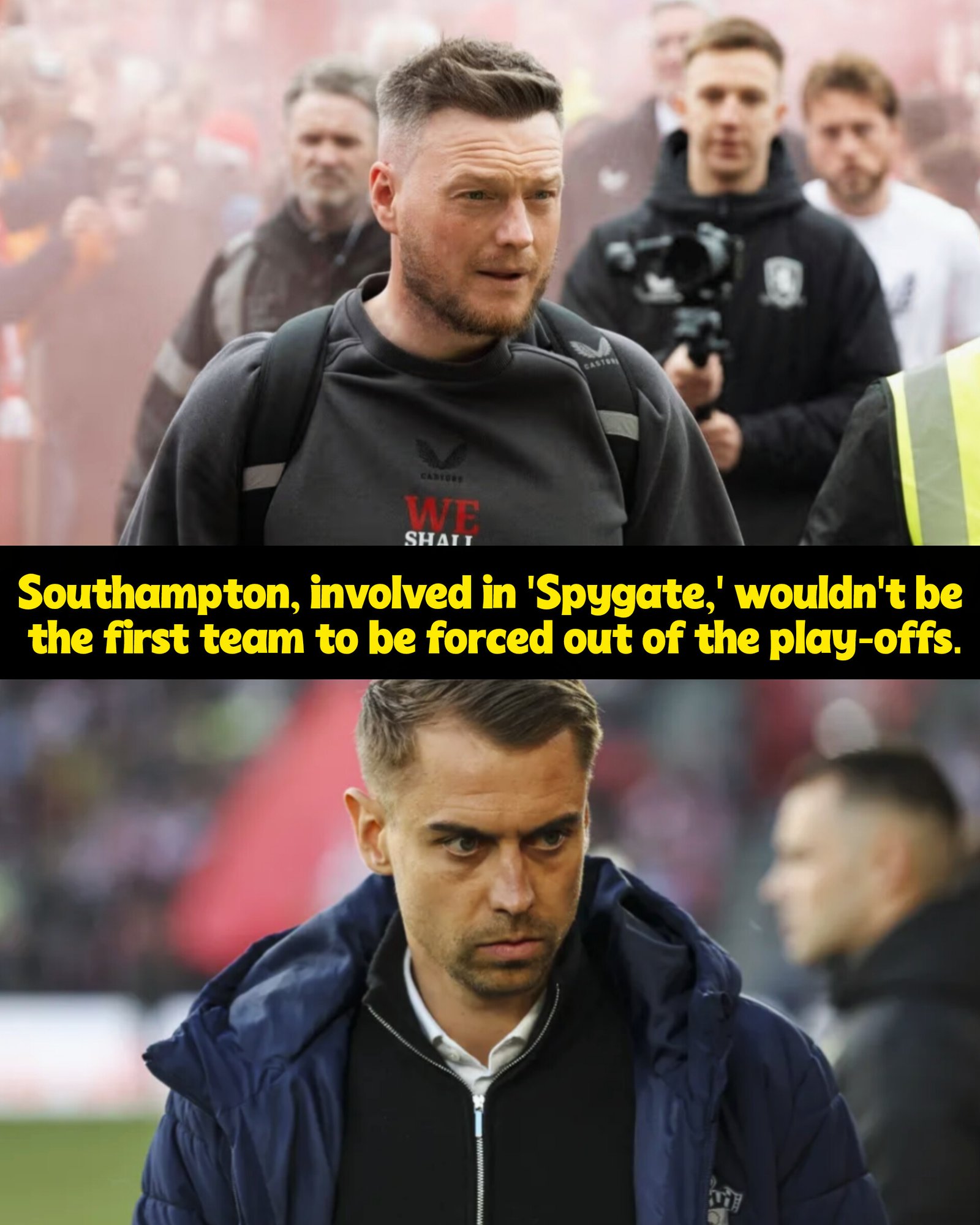
Southampton are anxiously awaiting the outcome of the ongoing “Spygate” investigation, with the club hoping they avoid becoming the latest side to suffer expulsion from the play-offs following alleged wrongdoing.
The Championship side booked their place in this weekend’s play-off final after overcoming Middlesbrough F.C. in a tense semi-final clash. Following a goalless first leg at the Riverside Stadium, Southampton eventually secured a dramatic 2-1 extra-time victory during the return fixture at St Mary’s Stadium.
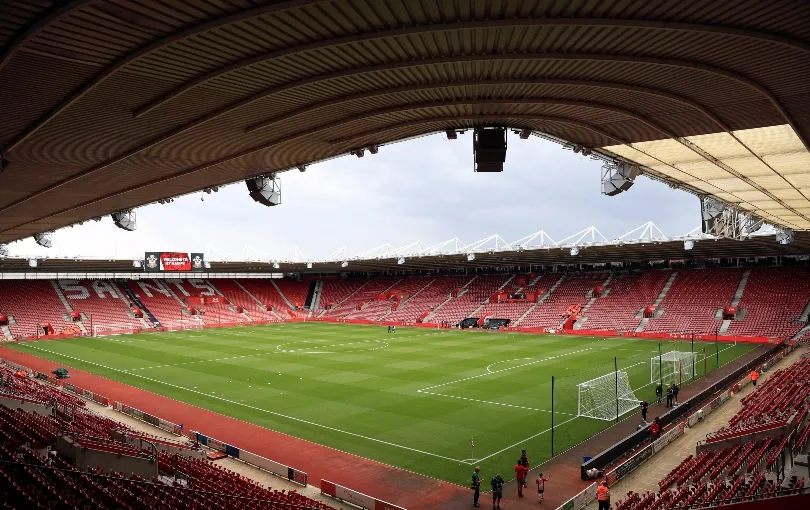
Southampton face a nervous wait for the outcome of the ‘spygate’ hearing (Image credit: PA Media)
That result set up a Wembley showdown with Hull City A.F.C., with both clubs already beginning ticket sales ahead of the highly anticipated final. However, uncertainty continues to surround the fixture as an independent disciplinary commission considers possible sanctions against Southampton over allegations of spying on Middlesbrough training sessions before the semi-finals.
The EFL commission is expected to publish its findings either later on Tuesday or during Wednesday. A variety of punishments remain under consideration should Southampton be found guilty of breaching league regulations. Potential sanctions reportedly include a substantial financial penalty, a future points deduction or even removal from the play-offs entirely.
While expulsion from the competition would be viewed as an extreme punishment, history shows there is already precedent for a club being thrown out of the play-offs after securing promotion on the pitch.
The 1990 Swindon Town F.C. Case
One of the most famous examples occurred back in 1990 involving Swindon Town. At the time, the club had just achieved its highest-ever league finish by ending the Division Two season in fourth place under the management of former Tottenham Hotspur F.C. player and Argentina icon Ossie Ardiles.
Swindon enjoyed a remarkable campaign and carried that momentum into the play-offs. They defeated Blackburn Rovers F.C. 4-2 on aggregate during the semi-finals before defeating Sunderland A.F.C. 1-0 at Wembley Stadium to secure what appeared to be a historic promotion to the top flight of English football for the first time.
However, celebrations surrounding the achievement were overshadowed by serious off-field issues that had been developing throughout the season.
The Football League had already launched an investigation into Swindon in January 1990 over alleged financial irregularities. Originally, a hearing was scheduled to take place before the play-offs began on May 4. That hearing, though, was delayed following legal advice connected to a separate tax fraud case involving chairman Brian Hillier, club accountant Vince Farrar and former manager Lou Macari.
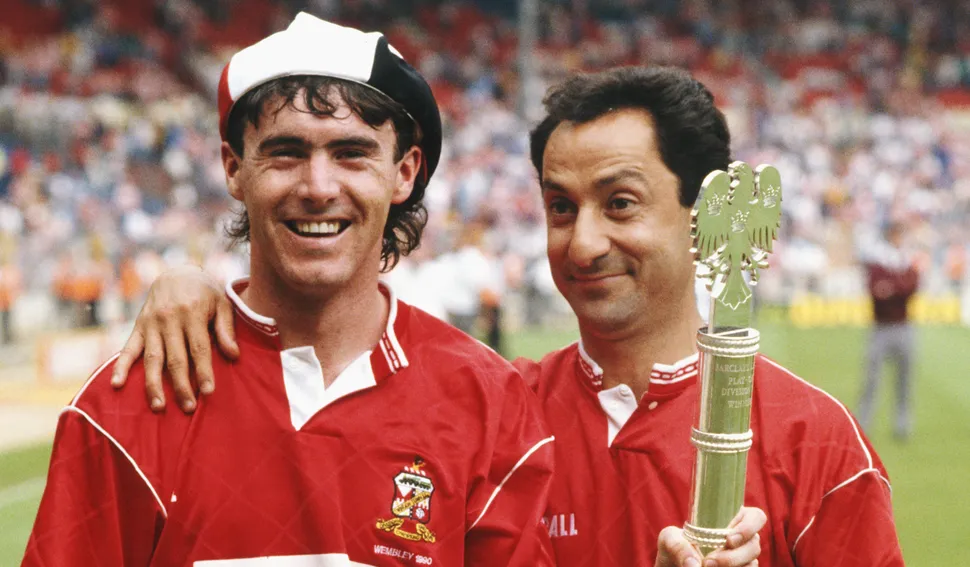
Swindon Town won the second tier play-offs in 1990 – but their joy was short-lived (Image credit: Getty Images)
Eventually, Hillier and Farrar were convicted in relation to the tax case, while Macari was cleared of wrongdoing.
Football League Delivered Severe Punishment
The hearing into Swindon’s alleged financial breaches finally took place on June 7, 1990, ten days after the club’s Wembley triumph. The outcome proved devastating for the Wiltshire side.
Swindon were found guilty of 35 separate counts involving illegal payments. As a result, the Football League decided the club would be demoted to Division Three despite having earned promotion on the pitch.
In an extraordinary twist, Sunderland — the team defeated by Swindon in the play-off final — were instead promoted to the top division.
The decision remains one of the most dramatic disciplinary punishments ever handed out in English football history and serves as a reminder that sporting success can still be overturned if major rule breaches are uncovered.
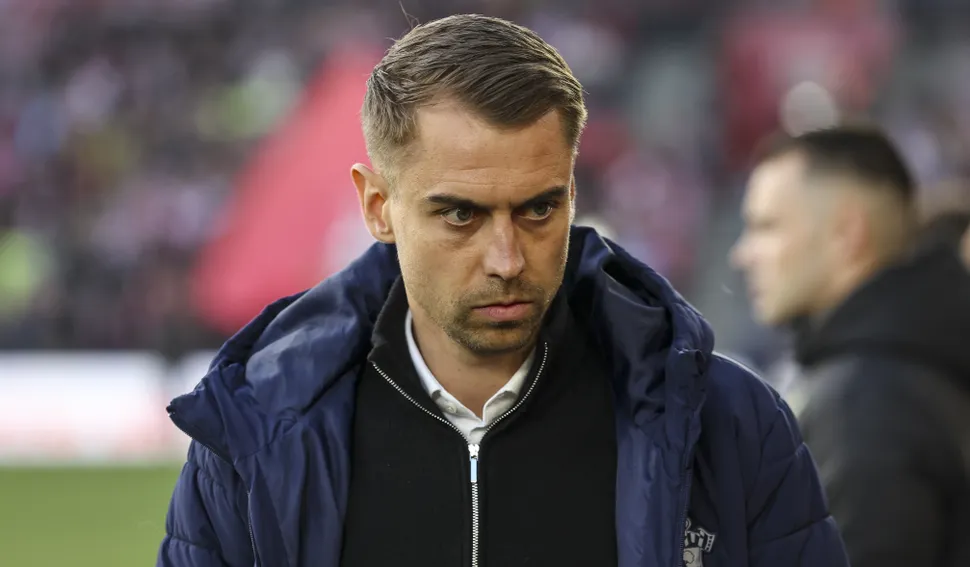
Saints manager Tonda Eckert has faced criticism over the ‘spygate’ row (Image credit: Getty Images)
Although Swindon later appealed against the punishment successfully enough to avoid dropping into Division Three, they were still forced to remain in Division Two rather than taking their place in the top flight.
The aftermath of the scandal significantly damaged the club. Several important players were sold, while Ardiles left the club in February 1991 to take charge of Newcastle United F.C..
Swindon narrowly avoided relegation that season, surviving by only two points amid the chaos created by the punishments and financial problems.
Delayed Top-Flight Dream Eventually Arrived
Despite the setbacks, Swindon eventually achieved promotion to the highest division of English football several years later. Under player-manager Glenn Hoddle, the club won the 1992-93 play-off final in dramatic fashion, defeating Leicester City F.C. 4-3 at Wembley.
That victory finally secured Swindon’s long-awaited place in the top flight. However, their stay at the highest level lasted only a single season, with the club finishing bottom of the table during the 1993-94 campaign.
To this day, it remains Swindon Town’s only appearance in the top division of English football.
Southampton Facing Huge Consequences
The Swindon case has inevitably been revisited as Southampton wait nervously for the outcome of the “Spygate” investigation. Although the circumstances are very different, the precedent demonstrates that football authorities are willing to impose severe sporting punishments if they believe the integrity of competition has been compromised.
Southampton’s alleged offence relates to claims that an employee associated with the club observed or recorded Middlesbrough training sessions before the play-off semi-finals. The accusations have sparked intense debate across English football, particularly given the enormous financial stakes attached to promotion to the Premier League.
Should Southampton be removed from the play-offs, Middlesbrough would likely argue they deserve reinstatement in the final against Hull City. However, any such decision would almost certainly trigger major controversy and possible legal challenges.
At the same time, many observers believe a financial penalty alone may not be viewed as sufficient punishment given the scale of rewards available through promotion.
The EFL therefore faces a hugely difficult balancing act as it attempts to protect the integrity of the competition while also avoiding further disruption to the play-off schedule.
Huge Pressure on the EFL
With Wembley preparations already underway, the timing of the investigation has created enormous pressure on the league and the independent commission. Clubs, players and supporters are all desperate for clarity ahead of the scheduled final.
For Southampton, the situation threatens to overshadow what should have been one of the club’s biggest moments in recent years. Instead of focusing solely on preparing for Hull City, attention remains fixed on the disciplinary process and the possibility of unprecedented consequences.
The comparison with Swindon Town serves as a warning that football authorities have not always hesitated to intervene when serious breaches are uncovered. Whether Southampton suffer a similar fate now remains to be seen.
What is clear is that the “Spygate” controversy has already become one of the most dramatic and controversial stories in recent Championship history, with the final outcome set to shape discussions around sporting integrity for years to come.
-
 Blog7 months ago
Celtic issues a fiery VAR statement after Trusty’s red card appeal is dismissed, as furious chiefs release referee audio publicly.
-
 Blog3 weeks ago
Former official calls on SFA to contact Rangers over fan scenes during Celtic match, labeling them “completely unacceptable.”
-

 Blog8 months ago
Celtic informed their January signing under Martin O’Neill that he wouldn’t play a single minute this season.
-

 Blog7 months ago
Celtic issued an £83 million warning amid looming UEFA threats.
-
 Blog7 months ago
SFA Expected to Review Missed Penalty in Rangers v Celtic Clash
-

 Blog6 months ago
Police respond after reported disorder following Middlesbrough vs Millwall clash
-

 Blog2 weeks ago
Middlesbrough receive a warning following Steve Gibson’s submission of a £1.5bn proposal.
-

 Blog1 year ago
“Courtside to Aisle-Side: Tyrese Haliburton and Jade Jones Set New Wedding Date”