
Blog
Celtic source exposes VAR grievance following Hearts penalty dispute, highlighting overlooked IFAB rule.

The controversy surrounding a late penalty decision in the Scottish Premiership has sparked fresh debate about the role of VAR, with a Celtic insider questioning both the judgment and interpretation of the rules in a crucial title race moment.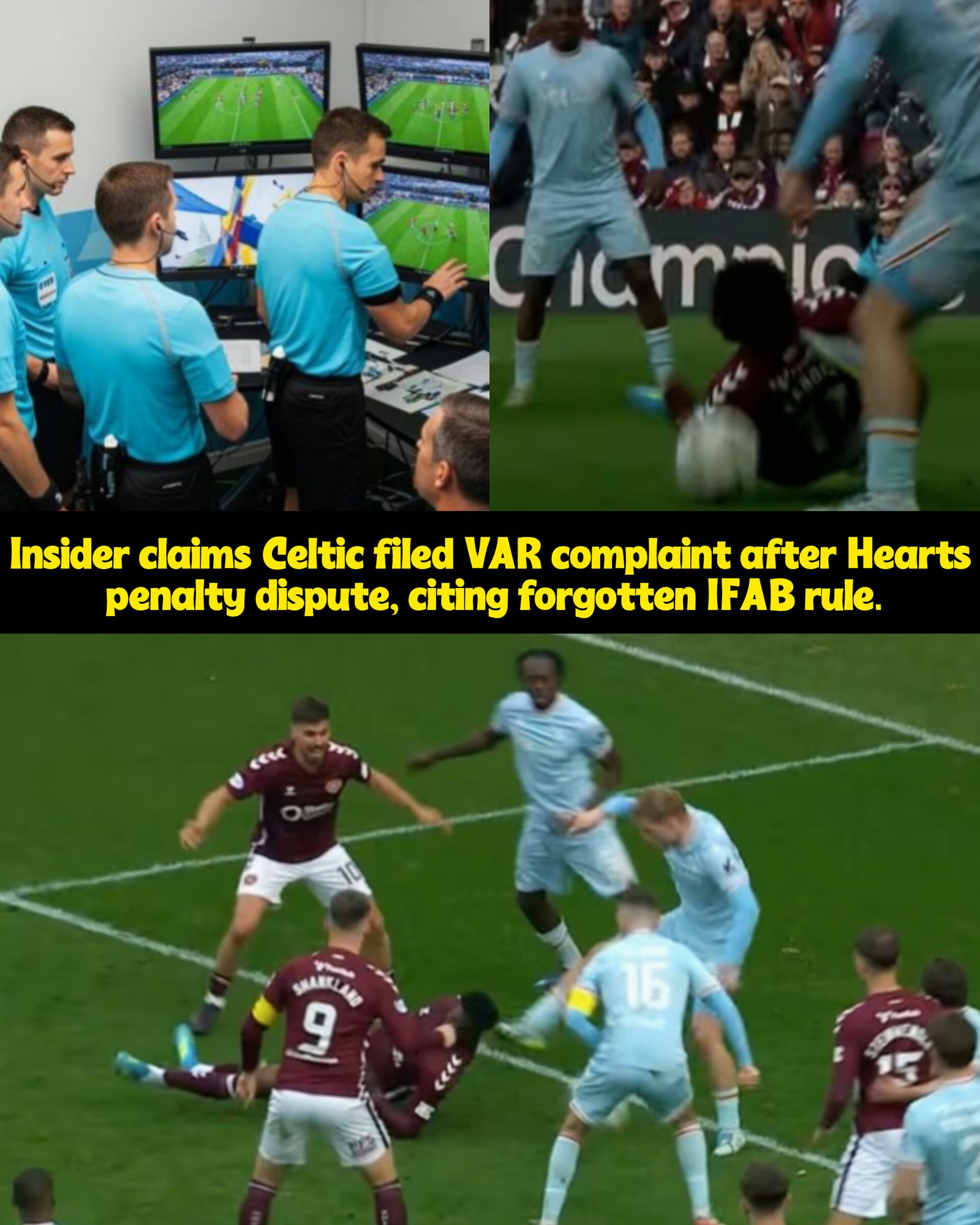
Key figures and flashpoint moment


With the match between Heart of Midlothian and Motherwell finely balanced at 1-1, the decisive moment came late in the game. Defender Stephen Welsh was adjudged to have made contact with the head of substitute Landry Kabore while attempting to clear the ball inside the penalty area.
Initially, referee Matthew MacDermid allowed play to continue, seeing no infringement in real time. However, after intervention from VAR official Steven McLean, the decision was overturned and a penalty was awarded.
Lawrence Shankland stepped up to convert from the spot in the 88th minute, a goal that proved pivotal. The late strike shifted the momentum entirely, and Kabore later added another to seal a 3-1 victory for Hearts, keeping them ahead of both Celtic and Rangers in the title race.
Celtic insider questions VAR influence
Former Celtic player Peter Grant voiced strong concerns about the intervention, arguing that Welsh had little option in the situation. Speaking publicly, Grant suggested the defender had attempted to pull out of the challenge while clearing the ball, but unavoidable contact still occurred.
Grant emphasized that the on-field referee had not considered it a foul, which in his view should have carried significant weight. He criticized the reliance on VAR in such marginal situations, warning that technology could end up playing an outsized role in determining the destination of the league title.
According to Grant, moments like these risk turning decisive matches into what he described as a “shoot-out” influenced by video reviews rather than the referee’s original judgment. His frustration reflects a broader unease among some within the Scottish game about how VAR is being applied, especially in high-stakes fixtures.
Dressing room debate and IFAB rule confusion


After the match, discussions among Motherwell players revealed confusion over a lesser-known rule from International Football Association Board (IFAB). Midfielder Andy Halliday admitted that while he initially believed the decision might be correct, he became aware of an alternative interpretation during post-match conversations.
Halliday explained that some players referenced a rule regarding “dangerous play,” particularly when a player attempts to head the ball while on or close to the ground. Under IFAB guidelines, such an action can be considered risky if it exposes the player to potential injury, even if contact is made while an opponent is legitimately playing the ball.
This raised a key point of contention: if Kabore’s action of going low to head the ball was deemed dangerous, then the incident might instead have resulted in a foul against him rather than a penalty for Hearts. Halliday acknowledged that this nuance was not widely understood among players and suggested that referees should be fully aware and consistent in applying such rules.
Rule interpretation at the heart of controversy
The IFAB rulebook defines dangerous play as any action that threatens injury to a player, including oneself, while attempting to play the ball. This interpretation introduces a grey area in incidents like the one involving Welsh and Kabore.
On one hand, Welsh’s raised boot made contact with an opponent’s head—typically a clear foul. On the other, Kabore’s low positioning could be interpreted as placing himself in danger, complicating the decision.
This duality lies at the center of the debate. Critics argue that VAR should not override on-field decisions in such subjective cases, while others believe the technology correctly identified a foul that warranted punishment.
Title race implications
Beyond the immediate controversy, the incident carries significant implications for the Scottish Premiership title race. Hearts’ victory strengthens their position at the top, while both Celtic and Rangers are left to reflect on how pivotal refereeing decisions—especially those influenced by VAR—could shape the outcome of the season.
For Celtic figures like Grant, the concern is not just about a single call, but about consistency and fairness during a decisive period. As the campaign enters its final stretch, scrutiny on referees and VAR is likely to intensify, with every major decision potentially carrying title-defining consequences.
-
 Blog7 months ago
Celtic issues a fiery VAR statement after Trusty’s red card appeal is dismissed, as furious chiefs release referee audio publicly.
-
 Blog1 week ago
Former official calls on SFA to contact Rangers over fan scenes during Celtic match, labeling them “completely unacceptable.”
-

 Blog7 months ago
Celtic informed their January signing under Martin O’Neill that he wouldn’t play a single minute this season.
-

 Blog7 months ago
Celtic issued an £83 million warning amid looming UEFA threats.
-
 Blog7 months ago
SFA Expected to Review Missed Penalty in Rangers v Celtic Clash
-

 Blog6 months ago
Police respond after reported disorder following Middlesbrough vs Millwall clash
-

 Blog1 year ago
“Courtside to Aisle-Side: Tyrese Haliburton and Jade Jones Set New Wedding Date”
-

 Blog7 months ago
£6m star is looking to leave Rangers this summer and has already announced his next club publicly.