
Blog
Lindsey Vonn uncertain about returning to competitive racing

Lindsey Vonn has admitted that she is still unsure whether she will ever return to competitive skiing, as she continues to reflect on her future following a series of physical setbacks and the natural progression of her career. The decorated American skier, widely regarded as one of the greatest athletes in alpine skiing history, has reached a point where the decision to race again is no longer straightforward, but instead shaped by a combination of physical limitations, personal priorities, and long-term health considerations.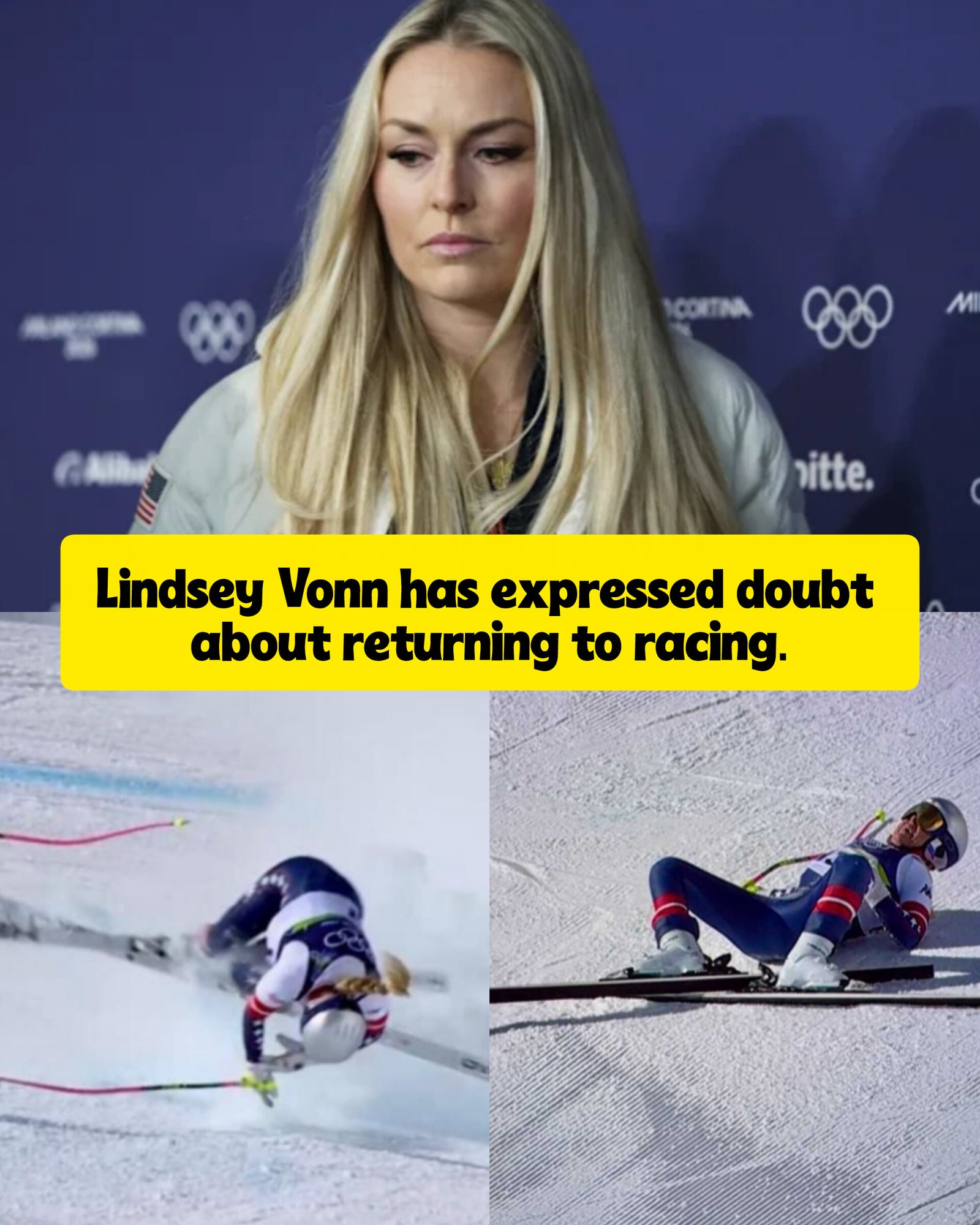
For years, Vonn built her reputation on resilience and determination, repeatedly pushing through injuries that would have sidelined many athletes permanently. However, the cumulative toll of those injuries has left her facing a more complex reality. While her competitive spirit remains intact, the physical demands of elite-level skiing have become increasingly difficult to meet, raising legitimate doubts about whether a return to racing is feasible.
The physical toll of a legendary career
Throughout her career, Vonn endured numerous injuries, many of them severe. From torn ligaments to fractures, her body has been tested in ways that few athletes experience. Despite these challenges, she consistently fought her way back to the slopes, often returning stronger than before. That relentless cycle of injury and recovery became a defining feature of her career.
Now, however, the long-term effects of those injuries are harder to ignore. Recovery times are longer, and the risk of further damage carries greater consequences. Vonn has acknowledged that her body no longer responds the way it once did, making it increasingly difficult to prepare for the rigors of competition at the highest level.
This physical reality has forced her to reassess what is possible. While the desire to compete may still be present, the question is whether her body can sustain the demands required to perform safely and effectively.
A shifting perspective on competition
In earlier stages of her career, Vonn’s mindset was singularly focused on winning. Every decision she made revolved around maximizing performance and achieving success on the slopes. That mentality drove her to extraordinary accomplishments, including Olympic medals and World Cup titles.
However, with time and experience has come a shift in perspective. Vonn has begun to place greater emphasis on quality of life beyond competition. The idea of long-term health, mobility, and well-being has taken on increased importance, influencing how she views the possibility of returning to racing.
This evolution in mindset does not diminish her competitive instincts, but it does introduce a new layer of consideration. The decision is no longer just about whether she can compete, but whether she should.
Emotional and psychological factors
Beyond the physical challenges, there are also emotional and psychological elements at play. Competitive skiing is not just physically demanding; it requires intense mental focus and a willingness to take risks at high speeds. Returning after injuries can create hesitation, even for the most experienced athletes.
Vonn has always been known for her fearlessness, but even she must weigh the psychological demands of stepping back into that environment. Confidence is critical in alpine skiing, and any doubt can impact performance and safety.
At the same time, stepping away from competition can bring its own emotional challenges. For an athlete who has spent most of her life at the top of her sport, the idea of closing that chapter is not easy. The uncertainty she expresses reflects this internal balance between holding on and letting go.
The legacy she has already secured
One factor that sets Vonn apart in this situation is the legacy she has already built. With a career filled with historic achievements, she has little left to prove in terms of results. Her place among the sport’s all-time greats is firmly established.
This reality provides her with a level of freedom that many athletes do not have. She does not need to return to validate her career or achieve recognition. Instead, any decision she makes can be guided by personal fulfillment rather than external expectations.
That said, elite athletes are often driven by more than accolades. The thrill of competition, the pursuit of excellence, and the desire to push boundaries can remain strong even after a career’s peak. For Vonn, balancing that internal drive with practical considerations is a central part of her uncertainty.
The possibility of one more comeback
Despite the doubts, Vonn has not completely ruled out the possibility of racing again. Her history suggests that she is capable of remarkable comebacks, and her determination has surprised many in the past. This leaves open the chance that she could once again defy expectations.
However, any potential return would likely require careful planning and realistic goals. The focus might shift from chasing titles to simply competing on her own terms. Such an approach would allow her to reconnect with the sport she loves while managing the risks involved.
Even so, the decision would ultimately depend on how her body responds and whether she feels confident enough to compete safely. Without those assurances, a return becomes far less likely.
Life beyond the slopes
Another important factor influencing Vonn’s thinking is the range of opportunities available to her outside of skiing. In recent years, she has expanded her presence in media, business, and philanthropy, building a life that extends well beyond competition.
These pursuits provide both fulfillment and stability, reducing the urgency to return to racing. They also offer a different kind of challenge, allowing her to apply the same drive and discipline that defined her athletic career in new ways.
As a result, the decision to race again is not being made in isolation. It is part of a broader evaluation of her future and how she ցանկանում to spend the next phase of her life.
Balancing risk and reward
At the heart of Vonn’s uncertainty is the balance between risk and reward. On one hand, returning to competition could bring excitement, satisfaction, and a sense of closure. On the other hand, it carries the possibility of further injury and long-term consequences.
This balance is particularly significant given her history. Having already experienced the physical cost of elite competition, she is uniquely aware of what is at stake. Any decision must account for both immediate and future implications.
For many athletes, the desire to compete can overshadow these considerations. In Vonn’s case, experience has brought a more measured approach, even if it means leaving the question unanswered for now.
An open-ended future
Ultimately, Lindsey Vonn’s situation remains unresolved. She has not committed to a return, nor has she definitively closed the door on her racing career. Instead, she remains in a period of reflection, weighing her options carefully.
This uncertainty is not a sign of indecision, but rather an indication of the complexity of the choice she faces. After a career defined by pushing limits, she is now taking the time to consider what is best for her overall well-being.
Whether she decides to race again or step away permanently, her legacy in alpine skiing is secure. For now, the question remains open, shaped by both the realities of her physical condition and the evolving priorities of her life beyond the sport.
-

 Blog7 months ago
Celtic issues a fiery VAR statement after Trusty’s red card appeal is dismissed, as furious chiefs release referee audio publicly.
-

 Blog3 weeks ago
Former official calls on SFA to contact Rangers over fan scenes during Celtic match, labeling them “completely unacceptable.”
-

 Blog8 months ago
Celtic informed their January signing under Martin O’Neill that he wouldn’t play a single minute this season.
-

 Blog7 months ago
Celtic issued an £83 million warning amid looming UEFA threats.
-

 Blog7 months ago
SFA Expected to Review Missed Penalty in Rangers v Celtic Clash
-

 Blog6 months ago
Police respond after reported disorder following Middlesbrough vs Millwall clash
-

 Blog2 weeks ago
Middlesbrough receive a warning following Steve Gibson’s submission of a £1.5bn proposal.
-

 Blog1 year ago
“Courtside to Aisle-Side: Tyrese Haliburton and Jade Jones Set New Wedding Date”