
Blog
Willie Collum provides reasons for allowing the disputed Rangers goal to stand.

Willie Collum has provided a detailed explanation regarding the controversial goal scored by Rangers in their match against Falkirk FC, clarifying why the decision to allow it to stand was upheld despite protests from the opposition.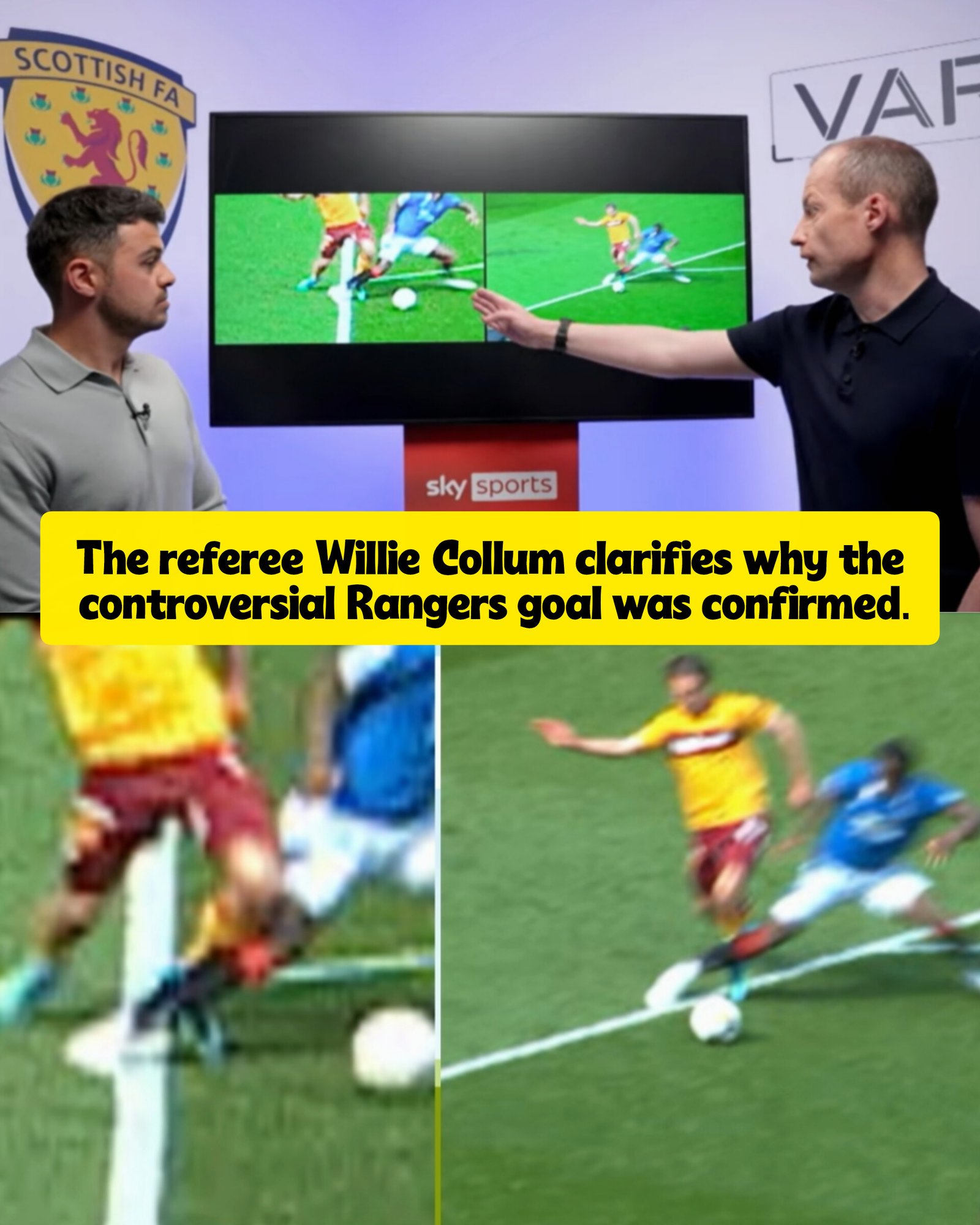
The incident occurred late in the first half, when Tochi Chukwuani found the net in the 42nd minute. Falkirk players immediately questioned the validity of the goal, arguing that the ball had gone out of play in the build-up before it was delivered back into the box. Their appeals sparked debate both on the pitch and after the match, with many seeking clarity on how the decision was reached.
Collum, who serves as the head of referees at the Scottish Football Association, addressed the situation and emphasized that there was no clear evidence available to overturn the original on-field call. According to him, the decision made by the assistant referee at the time of the incident was crucial and ultimately decisive.
Assistant referee’s positioning and call prove decisive
In his explanation, Collum highlighted the importance of the assistant referee’s positioning during the play. The official was stationed close to the goal line and had a clear, unobstructed view of the moment in question. From that vantage point, the assistant referee determined that the ball had remained in play and signaled for the game to continue.
Collum stressed that this initial judgment carried significant weight, particularly given the absence of conclusive evidence to contradict it. He noted that the assistant referee was confident in the call and communicated that clearly to the referee on the field.
Quoting the explanation given during the VAR review, Collum stated that the assistant referee was “very clear” in instructing play to continue. He reiterated that the official’s proximity to the action and strong line of sight made the decision reliable under the circumstances.
VAR unable to provide conclusive evidence
The role of VAR also came under scrutiny following the incident. However, Collum explained that the technology did not offer any definitive proof to suggest that the ball had gone out of play. Without clear visual confirmation, VAR is not permitted to overturn an on-field decision.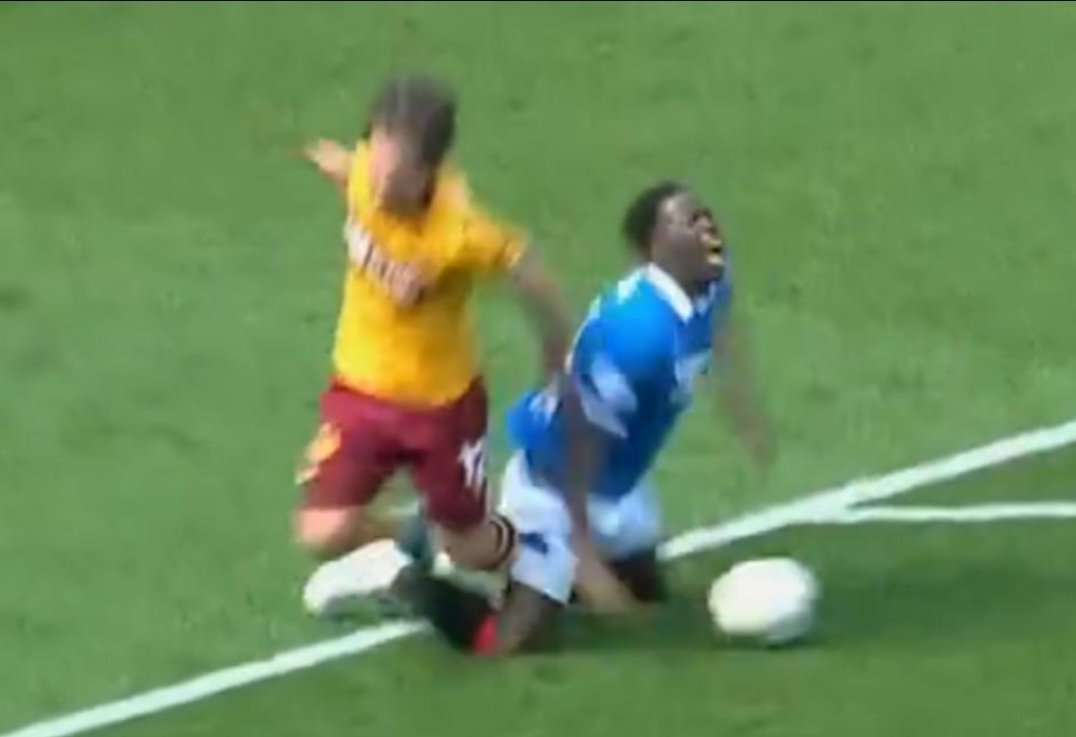
Andrew Dallas, who was serving as the VAR official for the match, communicated directly with referee Don Robertson during the review process. Dallas informed the referee that none of the available camera angles could conclusively determine whether the ball had crossed the line.
One of the primary issues was that the goal-line camera lost track of the ball as it rose too high, meaning it could not capture the critical moment. Meanwhile, the wider 18-yard camera angle also failed to provide a clear view, leaving officials without the evidence required to intervene.
Dallas made it clear in his communication that there was no footage capable of proving the ball was out of play. This lack of conclusive evidence meant that VAR had no grounds to recommend overturning the original decision made by the on-field officials.
On-field decision ultimately upheld
Given the circumstances, Collum explained that the correct protocol was followed. When VAR cannot identify a “clear and obvious” error, the original decision must stand. In this case, the assistant referee had judged the ball to be in play, and there was nothing available to definitively prove otherwise.
Collum acknowledged that the situation was extremely difficult to judge, even when reviewing the footage after the fact. He went as far as to describe it as “impossible” to determine conclusively whether the ball had crossed the line, reinforcing the idea that the officials had acted appropriately based on the information available.
He concluded that the on-field call was correctly supported and that the goal was rightly awarded in accordance with the rules and VAR protocol. While the decision remained controversial among supporters and players, Collum’s explanation underlined that the officials had followed the correct procedures.
Goal sparks dramatic turnaround in match
Chukwuani’s goal proved to be a turning point in the game. At the time it was scored, Rangers were in a challenging position, but the goal shifted the momentum significantly. It provided the catalyst for a remarkable comeback performance.
Under the guidance of manager Danny Rohl, Rangers went on to produce an impressive attacking display. They ultimately secured a 6-3 victory over Falkirk, turning what had been a contentious moment into the foundation for a dominant result.
The match itself became memorable not only for the high number of goals but also for the debate surrounding the key decision. While Falkirk were left frustrated by the outcome of the incident, Rangers capitalized fully on the opportunity, demonstrating resilience and attacking quality in the remainder of the game.
Ongoing debate highlights challenges of officiating
The incident serves as another example of the challenges faced by referees and VAR officials in modern football. Even with advanced technology, there are moments where definitive answers remain elusive. In such cases, the reliance on the judgment of on-field officials becomes paramount.
Collum’s explanation sheds light on the decision-making process and the limitations of VAR, particularly when camera angles fail to capture crucial moments clearly. It also reinforces the principle that decisions cannot be overturned without solid evidence.
While debates over controversial calls are unlikely to disappear, this case illustrates how officials are guided by established protocols designed to ensure fairness and consistency. In this instance, despite the uncertainty surrounding the ball’s position, the decision to allow the goal was deemed correct within those guidelines.
-
 Blog7 months ago
Celtic issues a fiery VAR statement after Trusty’s red card appeal is dismissed, as furious chiefs release referee audio publicly.
-
 Blog3 weeks ago
Former official calls on SFA to contact Rangers over fan scenes during Celtic match, labeling them “completely unacceptable.”
-

 Blog8 months ago
Celtic informed their January signing under Martin O’Neill that he wouldn’t play a single minute this season.
-
 Blog7 months ago
Celtic issued an £83 million warning amid looming UEFA threats.
-
 Blog7 months ago
SFA Expected to Review Missed Penalty in Rangers v Celtic Clash
-

 Blog6 months ago
Police respond after reported disorder following Middlesbrough vs Millwall clash
-

 Blog2 weeks ago
Middlesbrough receive a warning following Steve Gibson’s submission of a £1.5bn proposal.
-

 Blog1 year ago
“Courtside to Aisle-Side: Tyrese Haliburton and Jade Jones Set New Wedding Date”