
Blog
SFA finally delivers Celtic penalty verdict after VAR guidance changes following Motherwell handball error.

The Scottish FA has acknowledged that Celtic should have been awarded a penalty during their 2-0 victory over Motherwell, with refereeing officials subsequently changing the guidance given to VAR teams on similar handball situations.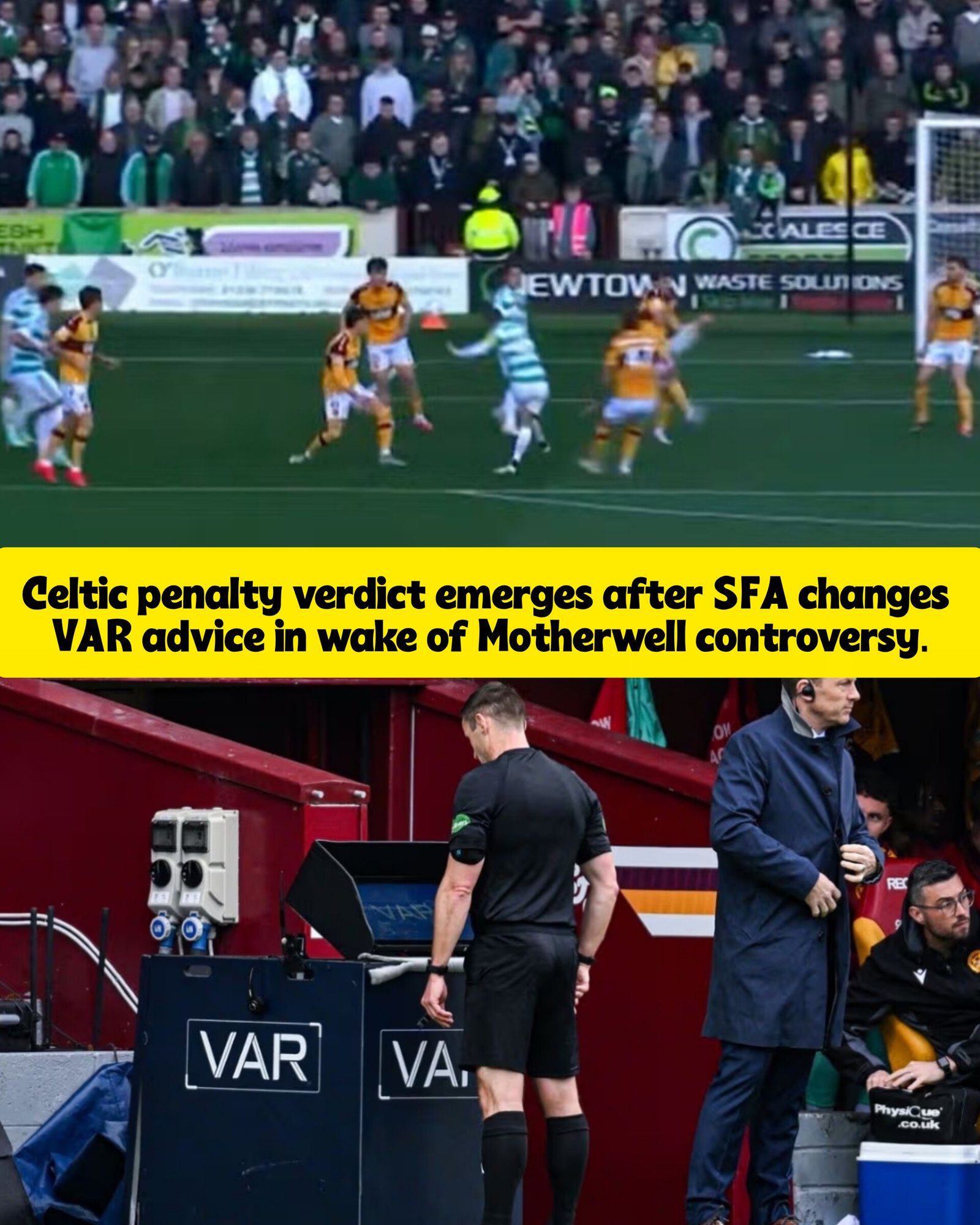
The controversial incident occurred during Celtic’s Premiership meeting with Motherwell at Fir Park. Hoops captain Callum McGregor had an attempt at goal blocked by Lukas Fadinger, with the ball appearing to make contact with the Motherwell defender’s hand.
Referee Steven McLean decided there was no offence and allowed play to continue, awarding Celtic a corner after the ball went out. VAR official Don Robertson also chose not to intervene, meaning McLean was never asked to review the incident on the pitch.
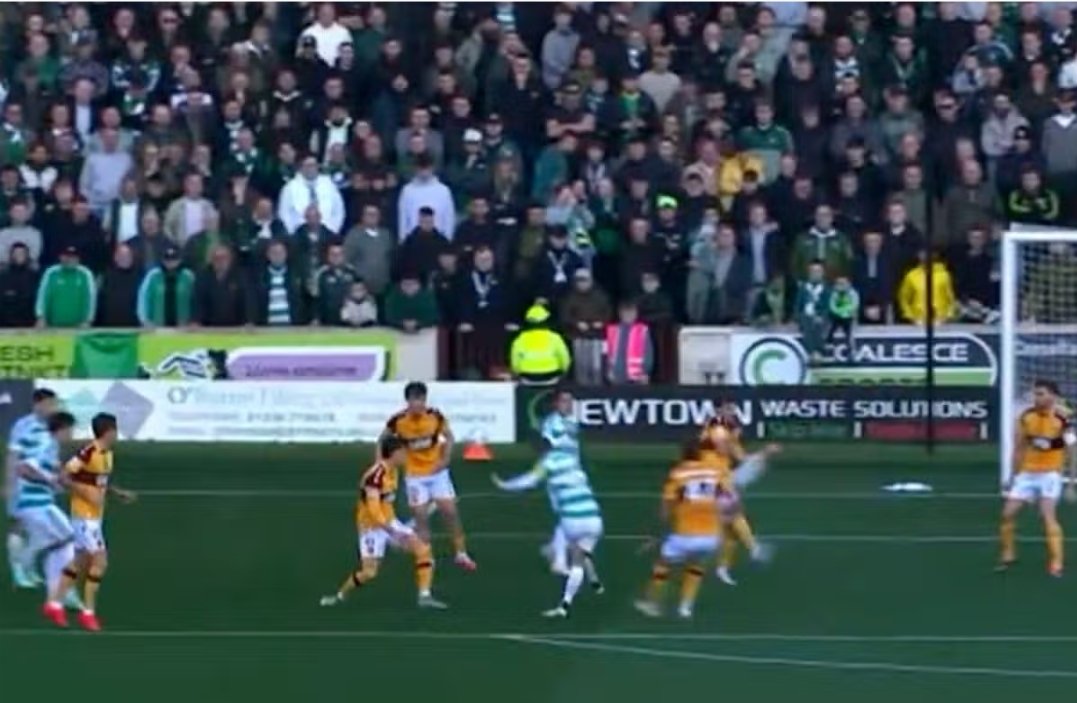
Lukas Fadinger blocks a shot from Celtic captain Callum McGregor
However, Willie Collum, the SFA’s Head of Refereeing Operations, has now admitted that the decision was incorrect. More importantly for future matches, he confirmed that the organisation has altered its coaching instructions to VAR officials following a review of the incident.
Celtic penalty decision now admitted as an error
Speaking on Sky Sports’ VAR Review Show, Collum explained that there was considerable sympathy for Fadinger because the defender appeared to be attempting to avoid the ball.
The Motherwell player was turning his body as McGregor’s shot came towards him and raised his leg in an attempt to block the effort. His elbow was tucked close to his body, which made the situation more complicated for the officials.
Despite that, Collum believes Fadinger created a penalty risk by allowing his arm to move away from his body. After reviewing the footage, the SFA concluded that the incident should have resulted in a penalty for Celtic.
Collum said the distance travelled by the ball was important. McGregor’s effort was not struck from extremely close range, giving Fadinger time to react before the ball reached him.
The refereeing chief also highlighted that the attempt was clearly directed towards goal. In his view, those factors meant the position of the defender’s arm became significant when assessing whether the contact should be punished.
VAR guidance has now changed
The biggest development from the incident is that the SFA has changed how VAR officials are being coached on comparable handball decisions.
Collum explained that, while the defender’s elbow was tucked in, his arm itself was not in a natural position close to his body. Once the ball had travelled a reasonable distance and struck the extended arm, officials believed the player had taken a risk.
That assessment has now been incorporated into the coaching given to VAR teams.
Collum was asked whether the proximity between McGregor’s shot and Fadinger should have protected the Motherwell defender from punishment. He accepted that the elbow position could provide some sympathy, but insisted that the arm was still extended.
The SFA therefore does not consider the incident to have been an extremely close call. Instead, its current coaching position is that VAR should identify the situation and recommend a penalty when the on-field officials fail to award one.
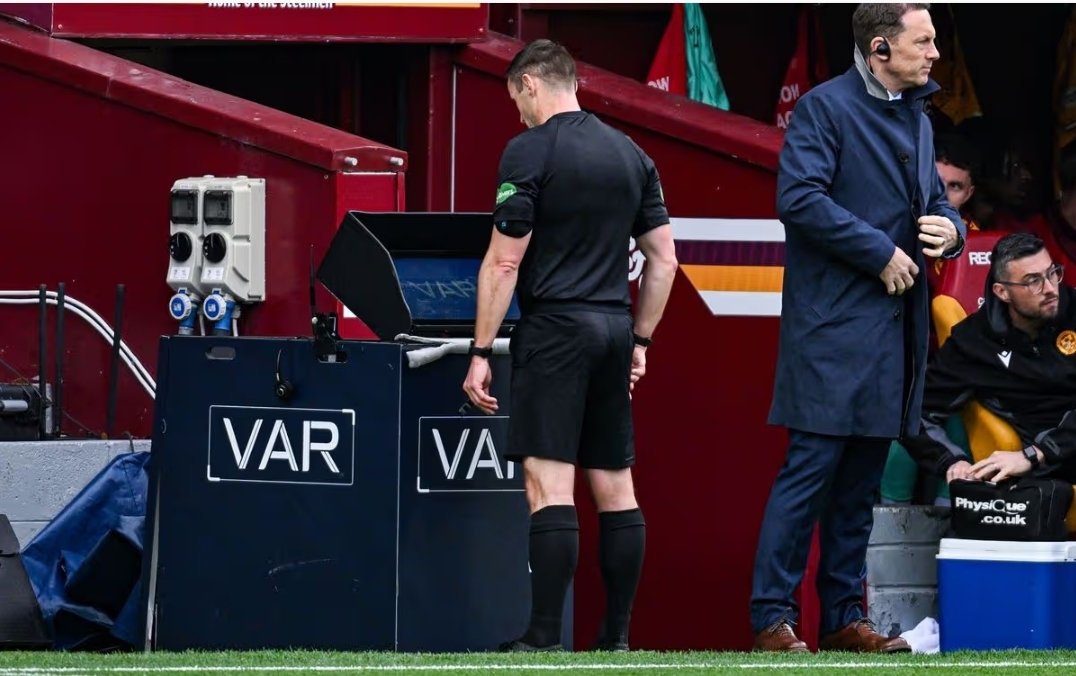
Referee Steven McLean consults the VAR monitor before ruling out Motherwell’s Ibrahim Said’s strike for a foul in the build up
What happened during the match?
Celtic ultimately secured a 2-0 victory at Fir Park, meaning the penalty decision did not prevent them from taking all three points.
However, the incident remained contentious because McGregor’s effort appeared to strike Fadinger’s hand inside the penalty area. McLean’s original decision was not to intervene, while Robertson did not instruct him to visit the pitchside monitor.
Under the updated interpretation explained by Collum, the VAR team should have intervened and advised the referee to award Celtic a spot-kick.
The admission is significant because it confirms that the decision was not simply a matter of interpretation that officials were comfortable defending. Instead, the SFA has accepted that the correct outcome should have been a penalty and has adjusted its coaching accordingly.
Another VAR debate for Scottish football
The incident adds to the continuing debate surrounding handball decisions and VAR consistency in Scottish football. Supporters have frequently questioned why similar situations can produce different outcomes depending on the referee or VAR team involved.
Collum’s explanation provides greater clarity on what officials are now expected to consider. The position of the arm, the distance the ball travels and whether the player has made himself unnaturally bigger are all relevant factors.
In Fadinger’s case, the SFA believes the arm being away from the body was enough to create a penalty offence despite the defender attempting to turn away from the shot.
For Celtic, the ruling offers belated confirmation that their appeal had merit. The club did not receive the penalty during the match, but the SFA’s subsequent review has now acknowledged the error.
The bigger question will be whether the revised VAR coaching produces greater consistency in future fixtures for referees, clubs, players and supporters alike. Celtic supporters will certainly hope that similar incidents are handled differently after the SFA’s intervention.
-
 Blog8 months ago
Celtic issues a fiery VAR statement after Trusty’s red card appeal is dismissed, as furious chiefs release referee audio publicly.
-
 Blog1 month ago
Former official calls on SFA to contact Rangers over fan scenes during Celtic match, labeling them “completely unacceptable.”
-

 Blog8 months ago
Celtic informed their January signing under Martin O’Neill that he wouldn’t play a single minute this season.
-
 Blog8 months ago
Celtic issued an £83 million warning amid looming UEFA threats.
-
 Blog8 months ago
SFA Expected to Review Missed Penalty in Rangers v Celtic Clash
-

 Blog7 months ago
Police respond after reported disorder following Middlesbrough vs Millwall clash
-

 Blog1 month ago
Middlesbrough receive a warning following Steve Gibson’s submission of a £1.5bn proposal.
-

 Blog1 year ago
“Courtside to Aisle-Side: Tyrese Haliburton and Jade Jones Set New Wedding Date”